How-to
Can You Take Vacuum-Sealed Bags Through TSA? What the Rules Say and How to Avoid a Repack (2026)
Yes, TSA allows vacuum-sealed clothes bags, but it does not encourage them. What the rule says, why bags get opened, the pump battery rules and how to pack.

By Daniel Brooks, Technology & Buying Guide Editor at Top10Gadgets
Updated 7 min readHow we test
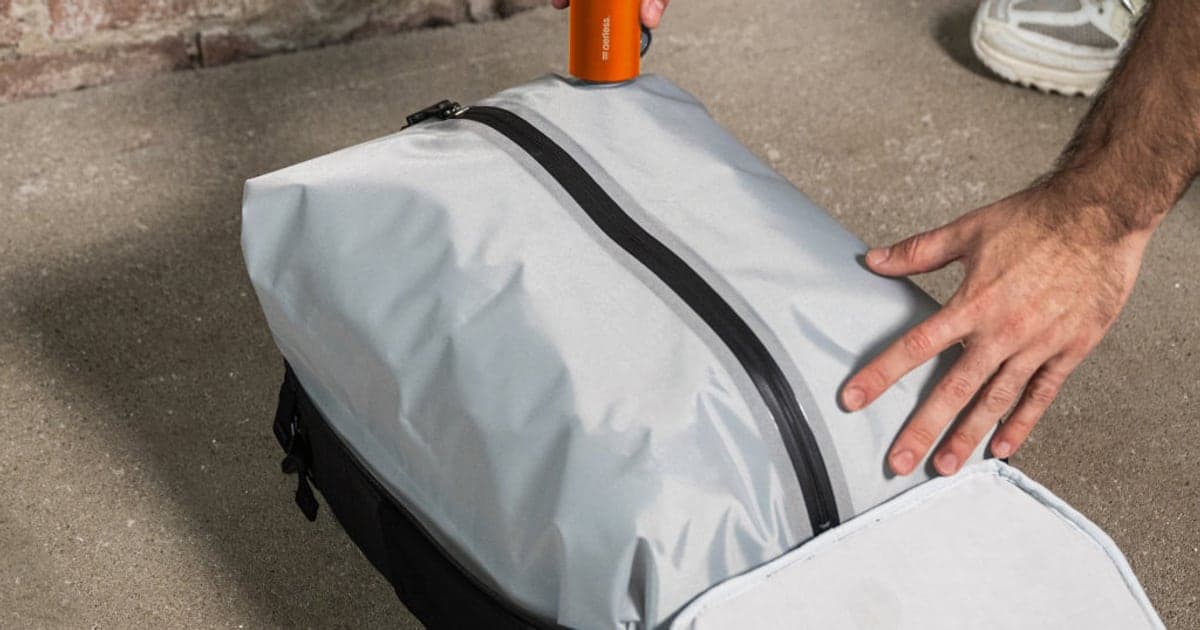
Yes, you can take vacuum-sealed bags through airport security in the US. TSA allows vacuum-sealed clothes bags in both carry-on and checked luggage, but its own guidance says they are "allowed but not encouraged", because a bag that alarms may have to be opened. That is the whole risk: not confiscation, but a compressed bag that expands at the checkpoint and will not fit back in your case. If you pack with a portable pump, such as the one in the Aerless Vacuum Kit, and leave a little room, the risk becomes a minor delay.
What the TSA rule actually says
TSA's "What Can I Bring?" list has an entry for vacuum-sealed bags. It gives the same answer for both kinds of luggage:
| Allowed? | TSA's note | |
|---|---|---|
| Carry-on bags | Yes, special instructions | Allowed but not encouraged; may be opened if it alarms |
| Checked bags | Yes, special instructions | Allowed but not encouraged; may be opened if it alarms |
The full text is two sentences: "Vacuum-sealed clothes bags are allowed but not encouraged. If they alarm, the TSA officer may need to open them for inspection." Like every entry on that list, it ends with the line that the final decision rests with the officer at the checkpoint.
Two things follow from that. Vacuum bags are not banned, so you will not lose them. And the rule covers clothes; whatever else is in the bag still follows the normal rules, so liquids over 3.4 ounces, sharp objects and other restricted items are no more allowed for being sealed in plastic.
Why vacuum bags get opened at security
A vacuum bag turns a pile of soft clothes into a hard, flat block. On an X-ray image, that block is dense and uniform, which can make it harder for an officer to see what is inside. Travel writers who have covered the rule, and travellers on packing forums, describe this as the usual reason a compressed bag is pulled for a hand search.
The search itself is quick. The trouble comes after. Once the seal is broken, air rushes back in and the clothes return to full size. A carry-on that zipped shut at home may no longer close, and there is nowhere at the checkpoint to compress the bag again. Travellers' accounts online, including a widely shared Reddit post about having to cut compressed bags open at a checkpoint, describe exactly this: a bag that no longer fits, and a scramble to repack or check it.
The pump matters more than the bag
The rules for the bag are simple. The rules for the pump that comes with many travel vacuum kits are stricter, because it runs on a lithium battery.
- Carry it in the cabin. The FAA's PackSafe guidance says portable electronic devices containing lithium batteries should be carried in carry-on bags, where the crew can deal with an overheating battery.
- If it must go in checked luggage, the device has to be completely switched off and protected so it cannot turn on by accident.
- Spare lithium batteries never go in checked bags. They must travel in the cabin.
Airlines outside the US follow similar lithium battery rules set by the international aviation bodies, so the pump-in-your-carry-on habit works everywhere. Some brands call their pump "TSA-approved"; TSA does not certify gadgets like this, so read that as "allowed in the cabin under the battery rules".
There is a practical upside. A pump in your carry-on is also your fix if a bag is opened at security: you can compress it again at the gate. That is the real advantage of a battery pump over bags that need a home vacuum cleaner.
How to pack vacuum bags so security is not a problem
- Pack only clothes in the vacuum bags. Keep toiletries, liquids, electronics and anything sharp out of them, so there is nothing in the bag to make an officer look twice.
- Use several smaller bags rather than one big brick. Thinner, flatter bags show up more clearly on a scan than one solid block, and if one is opened, only one has to be repacked.
- Leave room in the case. Pack so the suitcase still closes with one bag partly re-inflated. If it only shuts with everything at maximum compression, you are one inspection away from a gate check.
- Put the vacuum bags on top or at one end. If an officer needs to look, they can lift a bag out without unpacking everything else.
- Carry the pump in your carry-on, charged. It is both a battery rule and your repair kit if a bag is opened.
- Weigh the packed bag before you leave. Compression saves space, not weight, and many airlines outside the US set carry-on weight limits.
- Give yourself extra time at security on your first trip with vacuum bags, until you know how your local checkpoint handles them.
Our travel section covers the gear itself; the Aerless review looks at how much space one kit really saves.
Can you put vacuum bags in checked luggage?
Yes. TSA allows vacuum-sealed clothes bags in checked bags as well as in carry-on, and so do airlines; the only part that must stay out of the hold is a battery pump.
Checked luggage follows the same TSA rule. If a checked bag is opened for inspection, TSA staff repack it and typically leave a notice of inspection inside; nobody will re-compress your vacuum bags for you. Leave room so the case can close over a re-inflated bag, and keep the pump in your carry-on as the battery rules require.
Outside the US, airport security is run by each country's own authority, and there is no single international rule on vacuum bags. Clothes in vacuum bags are generally treated like any other clothes, and the same practical risk applies: a dense bag may be opened. The lithium battery rules for the pump are broadly the same worldwide. If you are flying from an airport you do not know, check its security page before you pack.
On the way home, vacuum bags are most useful and most likely to cause trouble, because you have more to carry and less time to repack. A battery pump lets you compress everything in the hotel room, which a home-vacuum bag cannot.
Troubleshooting
A bag was opened at security and will not fit back. Step aside, compress it again with the pump if you have one, and repack at the side of the screening area. If you cannot, ask whether you can check the bag at the gate rather than miss the flight.
The bag loses its vacuum during the trip. Check that the zip was closed along its whole length and that the valve cap is clean and seated. A bag can also look slightly puffier at cruising altitude, where cabin pressure is lower, and settle again on the ground; one that keeps filling with air has a leak in the zip or valve.
The pump will not run. Charge it fully before leaving home; most need a few hours for the first charge. If it fails mid-trip, most valve bags also work with an ordinary vacuum cleaner, and a hotel may be able to lend one.
Our verdict
Vacuum-sealed clothes bags are allowed through TSA in carry-on and checked luggage, but they are "not encouraged", and a bag that alarms may be opened. Plan for that rather than hope it does not happen: use a few flatter bags instead of one brick, pack only clothes in them, leave room in the case, and carry a charged pump in the cabin. Packed that way, the worst outcome is a few minutes at the checkpoint. For a kit that includes the pump, see our Aerless Vacuum Kit review.
Frequently asked questions
Are vacuum-sealed bags allowed in carry-on luggage?
Yes. TSA lists vacuum-sealed clothes bags as allowed in both carry-on and checked bags, with special instructions: they are allowed but not encouraged, and if a bag alarms, the officer may need to open it for inspection. The final decision always rests with the officer at the checkpoint.
Will TSA open my vacuum-sealed bags?
Only if something alarms or the officer cannot clear the bag from the scan. Tightly compressed clothes make a dense block on the X-ray image, which travellers report can lead to a bag check. If a bag is opened, it will usually expand, so pack with spare room or carry a way to compress it again.
Can I bring a vacuum bag pump on a plane?
A small battery-powered pump is a portable electronic device. The FAA says devices with lithium batteries should travel in carry-on bags; if one goes in checked luggage, it must be completely switched off and protected from turning on. Spare lithium batteries are never allowed in checked bags.
Does TSA PreCheck change the rules for vacuum bags?
No. PreCheck changes how you are screened, not what is allowed. Vacuum-sealed clothes bags are still allowed but not encouraged, and a PreCheck officer can still open one if it alarms. Packing so a bag can be inspected and repacked quickly matters just as much in the PreCheck lane.
Do airport X-ray machines damage vacuum-sealed clothes?
No. Baggage X-ray screening passes through fabric without harming it, whether the clothes are compressed or not. The only effect of screening on a vacuum bag is the chance that an officer opens it, which lets air back in and undoes the compression.
More on Vacuum bags at airport security

About the author
Daniel Brooks, Technology & Buying Guide Editor
Daniel Brooks edits the buying guides and comparisons at Top10Gadgets, and covers the sleep, supplement and travel categories where products are hardest to tell apart. Daniel approaches every purchase like a careful shop…
- Buying guides and product comparisons
- Budget and value-for-money products
- Sleep products
- Travel gear
- Subscriptions and return terms
Writing for Top10Gadgets since 2026Full profile