Sports & Fitness / Golf accessories
FlightPath Golf Tee Review: What the Shark Tank Tee Does, What Testing Shows and Whether It's Worth $20
A reusable polycarbonate golf tee with an angled head and an aiming arrow, pitched on Shark Tank. Owners like its durability, but an independent launch-monitor test found wooden tees went further.

By Ethan Walker, Hardware & Gadget Tester at Top10Gadgets
Updated 30 min readHow we test
Quick answer
Yes, if you want a tough, reusable tee that lasts longer than wood and you like an alignment aid, but not if you are buying it for extra yards. FlightPath golf tees are well made in the US, owners like them, and the offer page's $19.99 for eight undercuts FlightPath's own store.
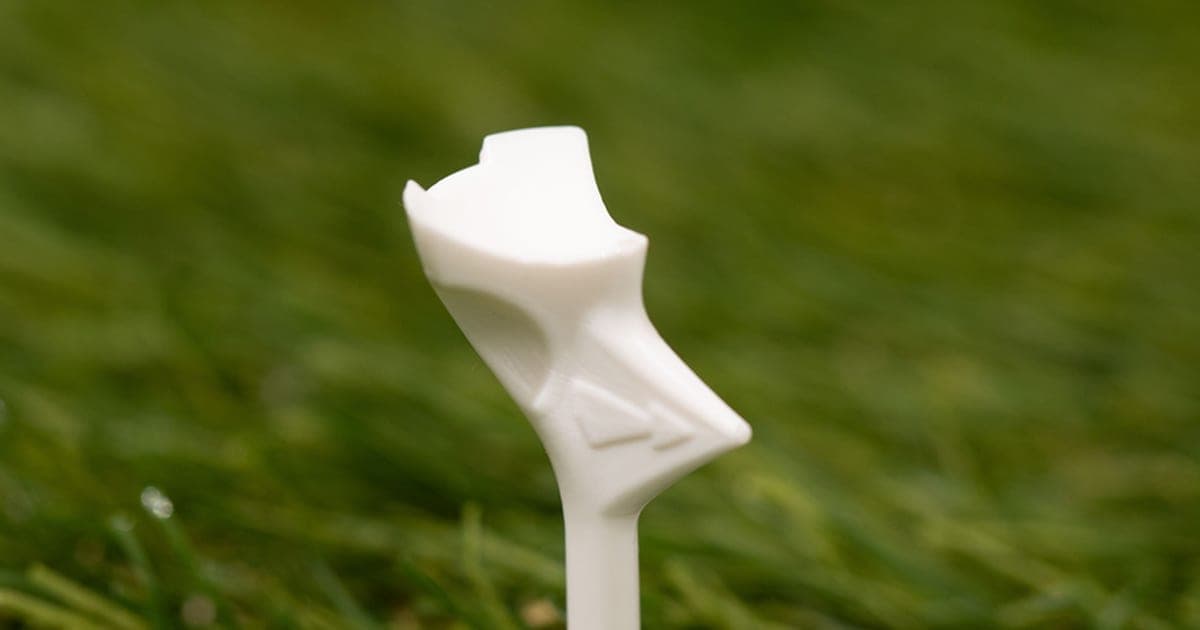
Score 5.3/10$19.99 at FlightPath
Check price at FlightPath (opens FlightPath in a new tab)We may earn a commission if you buy through our links.
- Best for
- Golfers who break or lose a lot of wooden tees and want one that lasts
- Not for
- Anyone buying mainly for extra distance or straighter drives
$19.99 at FlightPath
Check price at FlightPath (opens FlightPath in a new tab)We may earn a commission if you buy through our links.
On this page · 14 sections
- 01Our verdict
- 02The short version
- 03Pros & cons
- 04How it works
- 05Who it's for
- 06How much do FlightPath tees cost, and what's in a pack?
- 07Does FlightPath work, and what does testing show?
- 08Are FlightPath's claims true?
- 09Are FlightPath tees better than wooden or bamboo tees?
- 10Are FlightPath tees legit, and what should you check before buying?
- 11What do owners say, and how did we score FlightPath?
- 12How to use FlightPath for the best results
- 13What else do people ask about golf tees?
- 14Frequently asked questions
Our verdict
Yes, if you want a tough, reusable tee that lasts longer than wood and you like an alignment aid, but not if you are buying it for extra yards. FlightPath golf tees are well made in the US, owners like them, and the offer page's $19.99 for eight undercuts FlightPath's own store.
But MyGolfSpy's independent launch-monitor test found wooden tees went further, and four FlightPath tees broke. FlightPath scores 5.3 out of 10, held back by distance and "independent testing" claims the evidence does not support, a rules question about its aiming arrow, and a price of about $2.50 per tee.
The short version
- A reusable polycarbonate golf tee with an angled, low-contact head and an aiming arrow.
- Made in the US; pitched on Shark Tank (no deal).
- $19.99 for 8 tees on 3 October 2026; $49.98 for 24 and $74.97 for 40, each bundle with a ball marker. FlightPath's store: $24.99 for 8.
- 90-day money-back guarantee.
- MyGolfSpy's 2020 test: wooden tees produced more distance; four FlightPath tees broke.
- Best trait: durability and a pleasant visual aid at address.
- Biggest drawback: no reliable evidence it adds distance or accuracy.
- Our score: 5.3 out of 10.
Pros & cons
FlightPath is a real, successful golf brand, not a fly-by-night gadget. The question is whether its performance promises hold up, and the best independent evidence says they do not.
What we like
- Durable polycarbonate tee that owners say lasts many rounds, unlike wooden tees that snap
- Minimal-contact angled head and an arrow you can point down your target line
- Made in the US by a golf company that has sold millions of dollars of tees
- 90-day money-back guarantee on the offer page
- Cheaper here than at FlightPath's own store: $19.99 vs $24.99 for 8 tees
What we don't
- MyGolfSpy's independent 2020 test found standard wooden tees produced more distance
- Four FlightPath tees broke during that test, contradicting "nearly unbreakable"
- "Proven through independent testing" is not supported by any published independent data on the page
- The page's aiming arrow sits awkwardly with the rule that tees must not indicate line of play; FlightPath says it conforms
- About $2.50 a tee, vs a few cents for wooden tees
- Harder to balance the ball on than a wooden tee, according to the same test
Sold by FlightPath
FlightPath Golf Tees$19.99
How it works
A golf tee's job is to hold the ball up for a driver or wood. FlightPath redesigns the top of the tee to change how the ball sits and leaves it.
Aim the arrow
Step 1: Each FlightPath tee has a pointed head shaped like an arrow. You push the tee into the ground with the arrow pointing toward your target.
Tee it at a slight angle
Step 2: FlightPath recommends inserting the tee leaning slightly toward the target, so the angled platform sits under the ball like a small ramp.
Hit as normal
Step 3: The ball rests on a small contact area rather than a cup. FlightPath says this reduces the friction and spin the tee adds at impact, for longer, straighter drives.
The theory is that a traditional cup-shaped tee grips the ball slightly, adding friction and spin as the club strikes. FlightPath's head supports the ball on a smaller area, angled toward the target. In practice, the ball is gone from the tee within a tiny fraction of a second, and the club's face and path dominate what happens next.
Who it's for
FlightPath suits golfers who go through a lot of wooden tees, who like the idea of one reusable tee per round, and who find an arrow pointing down the fairway helps them line up. It also suits gift buyers looking for something different for a golfer.
It does not suit golfers expecting a measurable jump in distance or a cure for a slice. Those come from technique, club fitting and the ball, not the tee.
Why FlightPath appeals
Golfers will try almost anything for a few more yards. A tee is cheap compared with a new driver, so a tee that promises "longer, straighter drives" is an easy gamble. The Shark Tank appearance, the engineer-founder story, a long-drive champion endorsement and robot testing all add credibility.
There are practical attractions too. Wooden tees snap, scatter and get lost; a tough plastic tee you can use all round is tidier. And the arrow gives you something to aim with at address.
A typical first round with FlightPath
On the first tee you push the tee in, point the arrow down the fairway, lean it slightly forward and balance the ball on the small platform. It may take a couple of tries the first few times. After your drive, the tee is usually still in the ground or a few feet away, intact, and you put it back in your pocket. By the back nine it is part of your routine. Whether your drives are longer is hard to judge without measurement; what you will notice is that you are not reaching for a new tee every hole.
Who gets the most value
Golfers who currently buy lots of wooden tees and dislike broken ones get the most from FlightPath. Players who like a pre-shot routine with an alignment cue may find the arrow helps them focus, even if it does not change ball flight.
As a gift
At $19.99 for eight, FlightPath makes a neat stocking filler or golf-day prize. The red box looks smart, and it gives the recipient something new to try. Frame it as a fun, durable tee rather than a distance booster.
Who will notice the least difference
Golfers who already use bamboo or durable plastic tees, players who tee off from mats, and those who play a handful of rounds a year will notice little benefit. Their tee costs are already low, and durability matters less.
Golfers chasing a specific fix, such as a slice, a low ball flight or inconsistent contact, will also see little change. Those problems come from the swing and the setup, and a lesson or a few range sessions focused on fundamentals will help far more than any tee. FlightPath can be a pleasant part of a routine, but it will not do the work of practice.
- Golfers who break or lose a lot of wooden tees and want one that lasts
- Players who like a visual aid at address and enjoy trying new gear
- Gift buyers looking for a novel stocking filler for a golfer
Who should skip it
- Anyone buying mainly for extra distance or straighter drives
- Competitive players who need certainty on equipment rules without checking with their committee
- Budget-minded golfers happy with free or cheap wooden tees
- Golfers who already find it fiddly to tee the ball up
How much do FlightPath tees cost, and what's in a pack?
FlightPath tees cost $19.99 for a pack of eight on the offer page on 3 October 2026, about $2.50 a tee, with 24 for $49.98 and 40 for $74.97, both including a free ball marker. FlightPath's own store listed eight at $24.99. The tees are white polycarbonate with an angled launch platform and an aiming arrow, in 3.25-inch and 2.75-inch lengths.
A pack contains eight white polycarbonate tees in a red slide-out box. Multi-pack bundles on the offer page add a free ball marker.
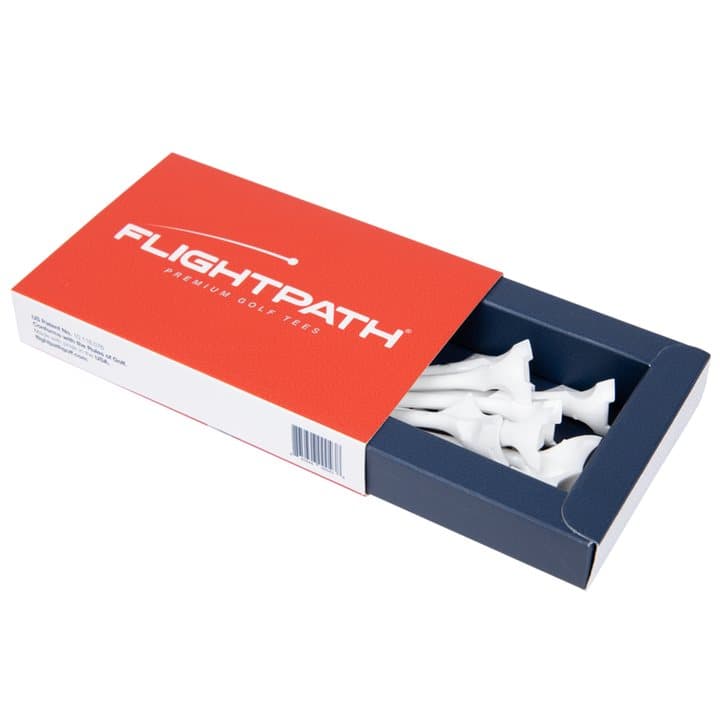
A pack of eight tees
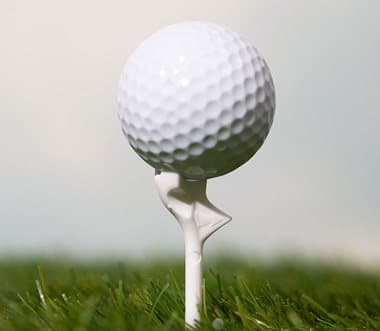
A ball sitting on the tee
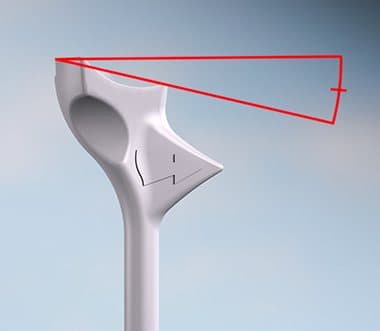
The angled launch platform
Specifications
| Spec | FlightPath (brand figures) |
|---|---|
| Material | Impact-resistant polycarbonate |
| Lengths | 3.25 in and 2.75 in (store) |
| Pack size | 8 tees |
| Head | Angled launch platform, "directional diamond" design, aiming arrow |
| Durability claim | 100+ hits per tee; "nearly unbreakable" |
| Rules | Conforms to USGA and R&A rules (brand); USGA conformance letter (company) |
| Made in | USA (page says Grand Haven, Michigan) |
| Guarantee | 90 days (offer page) |
FlightPath price and bundles
On 3 October 2026 the offer page our link opens showed:
| Package | Total | Tees | Per tee | Extra |
|---|---|---|---|---|
| 1 pack | $19.99 | 8 | $2.50 | — |
| Buy 2, get 1 free | $49.98 | 24 | $2.08 | Ball marker |
| Buy 3, get 2 free | $74.97 | 40 | $1.87 | Ball marker |
The page shows "retail" prices of $74.95 for one pack, which we did not see charged anywhere. FlightPath's own store listed one pack of 8 at $24.99, two packs at $49.98, and three packs with a free hat at $74.99, and also sells an optional 24-month tee warranty.
What this means for you: the offer page is $5 cheaper than FlightPath's store for a single pack. Ignore the "retail" figure.
Is $2.50 a tee good value?
Wooden tees cost a few cents each and are often free at the course. FlightPath has to last 50 to 100 times longer than a wooden tee to cost the same per drive. Owners say theirs last many rounds, and the brand claims 100+ hits. If that holds for you, the cost per drive is comparable; if you lose tees in the rough, it is not.
Cost over a season
Assume 14 drives a round and 30 rounds a season, about 420 drives.
| Tee | How long one lasts | Tees needed | Approximate season cost |
|---|---|---|---|
| Wooden tee, a few cents each | 1 to 3 drives | 150 to 420 | A few dollars to around $15 |
| Bamboo tee | Several drives | 50 to 100 | A few dollars |
| FlightPath at $2.50 | 100+ hits if not lost (brand) | 4 to 8, allowing for losses | About $10 to $20 |
If you keep track of your tees, FlightPath's cost over a season is similar to buying wooden tees. If you lose a few a round, it costs more. Either way, the difference is small compared with green fees and balls; the real question is whether you value the durability and the arrow.
Who makes it
FlightPath Golf was co-founded by Daniel Whalen, a lifelong golfer and licensed professional engineer, according to the page. The page says the tees are made in Grand Haven, Michigan; FlightPath's store data lists the business in Altamonte Springs, Florida. The company also sells swing grips, golf ink markers and even a solid silver tee.
On Shark Tank, FlightPath's representatives reported more than $11.8 million in lifetime sales but left without a deal, with the Sharks questioning the price of about $25 for eight tees, according to AOL's coverage.

FlightPath Golf TeesScore 5.3/10
Best for: Golfers who break or lose a lot of wooden tees and want one that lasts
$19.99 at FlightPath · Price checked October 3, 2026
Check price at FlightPath (opens FlightPath in a new tab)We may earn a commission if you buy through our links.
Does FlightPath work, and what does testing show?
For durability, mostly yes; for distance, no. MyGolfSpy's 2020 test compared FlightPath with a wooden tee and two other performance tees over 120 drives each on a GCQuad launch monitor, and found wooden tees consistently produced more distance. FlightPath launched slightly higher, was the hardest to balance the ball on, and four FlightPath tees broke. Owners still like their toughness and alignment cue.
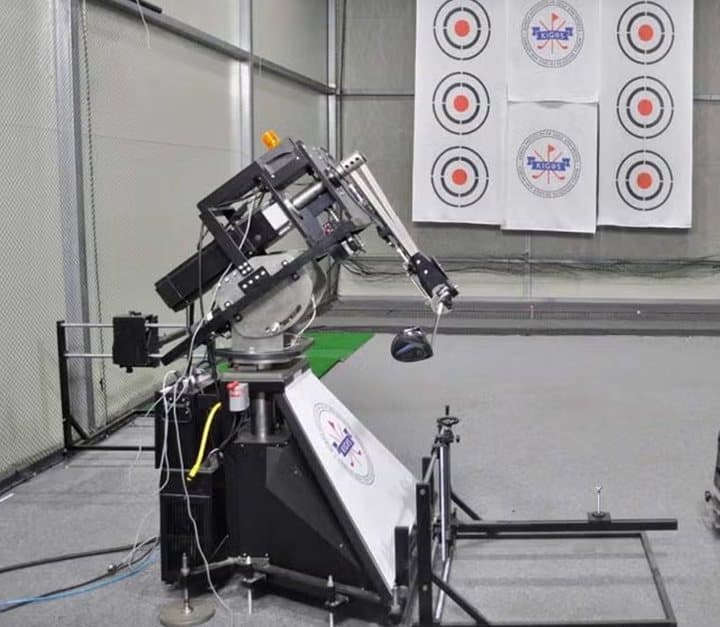
The robot testing shown on the page
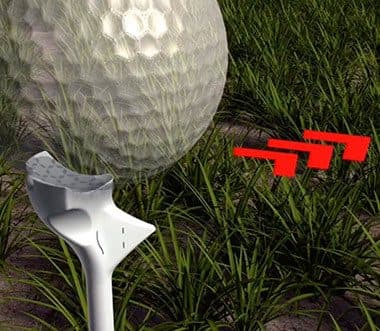
The tee's directional design
Nobody on our team has used FlightPath. This section draws on independent testing, the physics of the tee shot and owner reviews.
MyGolfSpy's independent test
MyGolfSpy's 2020 golf tee test compared FlightPath with a standard wooden tee and two other performance tees, using a Foresight Sports GCQuad launch monitor, a PING G410 LST driver and Bridgestone Tour B X balls, with 120 drives per tee. According to search summaries of the test, which we could not open in full:
- Wooden tees consistently produced more distance than FlightPath and the other performance tees.
- FlightPath launched slightly higher than wood.
- Four FlightPath tees broke during testing, more than the other alternatives.
- FlightPath was the most difficult to tee the ball up on without it falling off.
This is a single test from 2020, and FlightPath's design may have changed. But it is the most rigorous independent data we found, and it does not support the distance claim.
The physics of the tee
At impact, a driver contacts the ball for less than a millisecond, and the ball leaves the tee almost instantly. Launch, spin and direction are dominated by club speed, face angle, path and where on the face you strike the ball. Tee height matters, because it changes where you strike the ball and your angle of attack. The tee's head shape plays a much smaller role.
A quick primer on spin
Backspin is created mainly by the loft of the clubface and how it meets the ball; a driver typically produces a few thousand revolutions per minute. Sidespin, which curves the ball left or right, comes from the face being open or closed relative to the swing path. Too much backspin makes drives balloon; too little makes them fall out of the sky. Golfers who want more distance usually look for higher launch with lower spin, achieved through tee height, an upward strike and a well-fitted driver.
FlightPath's claim is that its head adds less friction and spin than a cupped tee. Even if that is true, the effect is tiny compared with the spin the clubface creates, which is why tests struggle to find a difference.
Why owners may genuinely see better drives
When golfers try a new tee, several things often change at once: they tee the ball at a slightly different height, take more care with alignment, and swing with more confidence. Any of these can produce better drives, independent of the tee's design. That is not a reason to dismiss owners' experiences; it is a reason to separate what the tee does from what the golfer does.
FlightPath's own testing
The page says FlightPath was "robotically tested" and "proven through independent testing", and shows a swing robot. It does not publish the results, who ran the tests, or the conditions. Without that, we cannot weigh the claim.
What a fair test would look like
A convincing test would use a swing robot or many golfers, a launch monitor, hundreds of shots with each tee at matched tee heights, randomised order, and published results including dispersion, not just best drives. Results showing a consistent gain in carry distance or a tighter dispersion would support FlightPath's claims. Until such data is published, independent tests are the best guide.
What owners report
Owners on the page describe durability, less drag, longer drives and straighter shots; one +2 handicap golfer says he gained 10 to 20 yards over five rounds. These are personal experiences, often over a short period, and golfers' drives naturally vary. A new tee can also change tee height or setup, which can matter more than the tee's design.
Durability in practice
Owners say a single tee lasts many rounds. MyGolfSpy's test found some break. Tees are also easy to lose in long grass; a bright colour from FlightPath's range may help.
What the arrow can and cannot do
An arrow pointing at your target gives your eyes a reference at address, much like an intermediate target a golfer might pick a few feet ahead of the ball. That can help you set up square. It cannot steer the ball once it is struck. If your alignment is already good, the arrow adds little; if your feet and shoulders aim elsewhere, the ball will follow your swing, not the arrow.
Are FlightPath's claims true?
FlightPath's main claims are not supported. We found no published independent data showing it increases accuracy and distance, and MyGolfSpy's test found wooden tees went further. A tee cannot correct a slice or hook, since straightness depends on clubface and swing path. "Nearly unbreakable" overstates it, as four broke in testing, and the aiming arrow raises a question under rules on indicating the line of play.
"Proven through independent testing to increase your accuracy and distance"
We found no published independent data supporting this. The most rigorous independent test we found, MyGolfSpy's, found wooden tees produced more distance.
"Hit further and straighter than ever before" and "laser-like precision"
Straightness depends on your clubface and swing path. A tee cannot correct a slice or hook. Owners who report straighter shots may be benefiting from better alignment or confidence.
"Nearly unbreakable" and "lasts 100+ hits"
Tough and long-lasting compared with wood, by owners' accounts, but not unbreakable: four broke in MyGolfSpy's test.
"Directional diamond design reduces friction in the direction you hit"
The page says the head shape eliminates almost all friction between ball and tee in the direction of the shot. Some friction reduction is plausible from a smaller contact area. Whether it changes ball flight measurably is the question independent testing has not answered in FlightPath's favour.
"Tournament legal; conforms to USGA and R&A rules"
The Rules of Golf allow a tee no longer than 4 inches, and the Equipment Rules say a tee must not be designed to indicate line of play, unduly influence the ball's movement, or otherwise assist the stroke. FlightPath says it conforms and holds a USGA conformance letter. Its own page, though, sells the arrow as "Smart Arrow Technology" to help you aim. If you play competitive golf, check with your committee or the governing body's resources before using it in an event. The R&A's Rule 6 covers playing from the teeing area; tee specifications are in the Equipment Rules.
"Trusted by pros" and the World Long Drive champion
The page names Maurice Allen, a long-drive champion, as a user. Endorsements are common in golf marketing and do not show the tee improves distance.
"As seen on Shark Tank"
True. FlightPath appeared on Shark Tank but did not get a deal.
"Made in the USA"
The page says the tees are made in Grand Haven, Michigan. We have no reason to doubt it, though the company's store lists a Florida address.
Claims scorecard
| Claim | Our read |
|---|---|
| Reusable, durable polycarbonate | Accurate, by owners' reports |
| Longer drives | Not supported by independent testing |
| Straighter drives, laser precision | Unsupported; depends on your swing |
| Proven by independent testing | No published independent data on the page |
| Nearly unbreakable | Not supported; some broke in testing |
| Tournament legal | Company says it conforms; check with your committee |
| As seen on Shark Tank | True; no deal |
| Made in USA | Plausible |
Are FlightPath tees better than wooden or bamboo tees?
Wooden tees cost a few cents each, conform to the rules and produced more distance in MyGolfSpy's test, but break often. Bamboo tees are stronger than wood, inexpensive and biodegradable, solving breakage cheaply without the arrow. FlightPath lasts far longer than wood and offers an alignment cue, at about $2 to $2.50 a tee. Spending on a lesson or fitting may add more distance.
| Tee | Typical cost | Lasts | Distance evidence | Best for |
|---|---|---|---|---|
| FlightPath | About $2 to $2.50 each | Many rounds | Independent test favoured wood | Durability, alignment cue |
| Wooden tee | A few cents each | Often one or a few drives | Baseline | Cost, simplicity |
| Bamboo tee | A few cents each | Longer than wood | Similar to wood | Eco-conscious, durable |
| Plastic step or castle tee | Low | Many rounds | Similar to wood | Consistent tee height |
| Other performance tees | $1 to $3 each | Varies | Little independent support | Trying something different |
FlightPath vs wooden tees
Wooden tees are cheap, conforming, and in MyGolfSpy's test produced more distance. They break often. FlightPath lasts longer and gives an alignment cue but costs far more per tee.
FlightPath vs bamboo tees
Bamboo tees are stronger than wood, inexpensive and biodegradable. They do not offer the arrow but solve the breakage problem cheaply.
FlightPath vs step or castle tees
Plastic tees with a fixed step help you tee the ball at the same height every time, which arguably matters more for consistency than head shape. They are inexpensive.
FlightPath vs other "zero friction" tees
Several brands sell tees with prongs, bristles or minimal-contact heads, all promising less friction and more distance. MyGolfSpy's 2020 test included other performance tees, and wooden tees still came out ahead on distance. The category as a whole has little independent evidence behind its distance claims.
Spending the money elsewhere
If distance is your goal, a lesson, a driver fitting or a launch-monitor session to optimise tee height and attack angle is likely to make far more difference than a tee. If you are looking at grips instead, our SwitchGrips review covers counterweighted grips whose offer page lists FlightPath Golf as its contact.
Other gadgets we have reviewed
Our sports and fitness section will cover more training aids and golf accessories as we review them. For other gadgets, see our CupStation review and CordBrick review. For other gadgets aimed at active people, see our RUNNR running shorts review and our KeySmart key organiser review.
If you want a durable tee with an aiming arrow, the FlightPath offer page (opens FlightPath in a new tab) was cheaper than FlightPath's own store when we checked.
FlightPath Golf TeesScore 5.3/10
Why people buy it: Durable polycarbonate tee that owners say lasts many rounds, unlike wooden tees that snap
$19.99 at FlightPath · Price checked October 3, 2026
Check price at FlightPath (opens FlightPath in a new tab)We may earn a commission if you buy through our links.
Are FlightPath tees legit, and what should you check before buying?
FlightPath is a real US-made product that appeared on Shark Tank and has many happy owners, with a 90-day money-back guarantee. Before buying, judge it on durability and alignment rather than extra distance, which the best independent test did not show. If you play competitions, check whether the aiming arrow is acceptable under your rules, and choose the length that suits your driver or fairway woods.
Do not expect extra distance
The best independent test we found did not show a distance gain.
What to do: buy FlightPath for durability or as a fun alignment aid, and judge it on those terms.
Competition use
The rules question around the aiming arrow is worth settling before an event.
What to do: if you play in club or tournament competitions, ask your committee whether FlightPath tees are permitted, and carry wooden tees as a backup.
Teeing up
MyGolfSpy found FlightPath the hardest tee to balance a ball on.
What to do: practise at the range first. Push the tee in at the recommended slight angle and set the ball carefully on the platform.
Choosing a length
The store sells 3.25-inch and 2.75-inch tees.
What to do: choose the longer tee for a modern driver and the shorter for fairway woods and hybrids. Keep the tee height you are used to; changing it can affect your drives more than the tee itself.
Price and the "retail" figure
The page's "retail" price of $74.95 for eight tees is not a real reference.
What to do: compare the $19.99 offer with FlightPath's $24.99 store price and buy the smallest pack that suits you.
Returns
The page offers a 90-day money-back guarantee.
What to do: use the tees for several rounds, and request a return within 90 days if you do not like them. Keep your order confirmation.
How to buy FlightPath the smart way
- Decide whether you want durability and an alignment aid rather than distance, then open the FlightPath offer page (opens FlightPath in a new tab).
- Choose one pack of eight unless you are buying gifts.
- Check the total and shipping before paying.
- Decline add-ons you did not plan to buy.
- Keep your order confirmation and note the 90-day return date.
- Try the tees at the range before a competition.
- Keep some wooden tees in your bag as a backup.
Who should buy the bundles
The 24 and 40-tee bundles make sense for golf societies, prizes, or a group of friends who all want to try them. For one golfer, a single pack of eight is plenty to last a season if you look after them. The ball marker in the bundles is a small bonus, not a reason to buy more.
What do owners say, and how did we score FlightPath?
FlightPath scores 5.3 out of 10: claim accuracy 0.6, build durability 1.2, price competitiveness 1.0, usability 1.2 and owner satisfaction 1.3, each out of 2. The offer page shows five-star testimonials praising durability and straighter, longer drives, including a +2 handicap golfer reporting 10 to 20 extra yards. MyGolfSpy's independent test did not find a distance gain.
Reviews on the page
The offer page shows four five-star testimonials. Owners praise durability, less drag and straighter, longer drives; one +2 handicap golfer reports 10 to 20 extra yards over five rounds, while acknowledging results may vary. Another says the tees straightened out an occasional hook most of the time.
Owner reviews elsewhere
FlightPath's store collects owner reviews through a review platform with many pages of reviews. We did not find an independent rating platform with a meaningful number of FlightPath reviews.
Independent testing
MyGolfSpy's 2020 test, as summarised in search results, found wooden tees produced more distance and that FlightPath tees broke more often than other alternatives.
What the reviews agree on
Owners are consistently positive about durability and feel. Independent testing is not positive about performance. The gap between owner impressions and measured results is common with golf accessories, where confidence and expectation affect how we perceive our shots.
How to read golf gadget reviews
Look for reviews that mention measured data, from a launch monitor or a rangefinder over several rounds, rather than impressions after one good day. Distance off the tee varies with weather, course firmness and swing; a 10 to 20 yard gain over a few rounds can easily be variation. Independent tests that hit many shots with each option are the most reliable evidence.
The founder story
The page tells how Daniel Whalen, a 2-handicap golfer by 17 who became a licensed professional engineer, wondered why tees had not changed in a century, analysed the physics and built prototypes with his father. It is a likeable story and explains the product's engineering angle. It does not, by itself, show the design improves drives.
What we would test with FlightPath in hand
If we test it ourselves, we will hit drives with FlightPath and wooden tees at matched heights on a launch monitor, compare ball speed, spin, launch and dispersion, count breakages over several rounds, and time how long it takes to tee up. We will update this review with the results.
How we scored FlightPath
Every score on the site follows the five criteria on our how we test page.
| Criterion | Score | Why |
|---|---|---|
| Claim accuracy | 0.6 / 2 | Distance, precision, "independent testing" and "unbreakable" claims unsupported |
| Build durability | 1.2 / 2 | Tough polycarbonate; some broke in testing |
| Price competitiveness | 1.0 / 2 | Cheaper than the brand's store; far more than wooden tees |
| Usability | 1.2 / 2 | Simple; harder to tee up in testing; arrow aids alignment |
| Owner satisfaction | 1.3 / 2 | Positive owner reviews; strong sales |
| Total | 5.3 / 10 |
The score would rise with published independent test data supporting the distance claim, or marketing focused on durability and alignment rather than distance.
What we did, and did not, do
We read the offer page, FlightPath's store data, MyGolfSpy's tee test as summarised in search results, Shark Tank coverage and the R&A's rules, all on 3 October 2026. Nobody on our team has used FlightPath, and no figures here come from our own testing.
How to use FlightPath for the best results
Use the 3.25-inch tee for a driver and the 2.75-inch tee for fairway woods and hybrids. Stand behind the ball, pick your target line and push the tee in with the arrow pointing at the target, leaning it slightly forward as the instructions show. Set the ball gently at a consistent height, about half the ball above the top of the clubface for a driver.
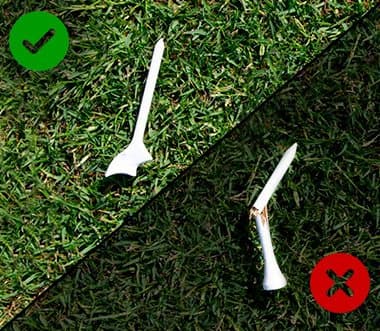
- Choose the right length: 3.25 inches for a driver, 2.75 inches for fairway woods and hybrids.
- Stand behind the ball and pick your target line.
- Push the tee in with the arrow pointing at your target.
- Lean it slightly toward the target, as the brand's instructions show.
- Set the ball gently on the platform at your usual tee height.
- Take your normal swing; do not change your setup for the tee.
- Pick the tee up after each drive; it is easy to lose.
Finding the right tee height
For a driver, many coaches suggest about half the ball above the top edge of the clubface at address. Keep that height consistent from tee to tee. A launch-monitor session can help you find the best height for your swing.
Tee height by club
| Club | Typical tee height | Suggested FlightPath length |
|---|---|---|
| Driver | About half the ball above the clubface top edge | 3.25 in |
| Fairway wood | Ball just above the ground, or slightly teed | 2.75 in, pushed in deep |
| Hybrid | Low, ball barely raised | 2.75 in, pushed in deep |
| Iron on a par 3 | Very low, mainly for a clean lie | 2.75 in, pushed in almost fully |
These are common starting points, not rules. Your swing and clubs may suit slightly different heights.
Using the arrow without breaking rules
If you play casual rounds, the arrow is simply a visual aid. In competitions, follow your committee's guidance. Either way, your alignment comes mostly from your feet, hips and shoulders, so practise lining those up too.
A simple drill at the range is to lay a club on the ground along your target line, set up parallel to it, and use the FlightPath arrow as a second check. Over time you can rely on the club less and the arrow more, then neither.
Keeping track of tees
Bright colours are easier to spot in the grass. Many golfers keep FlightPath tees in a dedicated pocket so they do not mix with wooden ones.
When to replace a tee
Replace a tee if the head is cracked, chipped or bent, as it may not hold the ball steadily. A damaged head can also tip the ball at an angle, which affects your strike. Check tees after a mishit that strikes the tee hard.
On hard or frozen ground
Plastic tees can be hard to push into firm ground. Make a starter hole with a wooden tee or pitchfork first, rather than forcing it.
Troubleshooting
| Problem | Likely cause | What to try |
|---|---|---|
| Ball falls off | Tee too upright or ball not centred | Lean the tee slightly forward and set the ball gently in the middle of the platform |
| Drives balloon | Tee too high or hitting up too steeply | Lower the tee a little |
| Topped or low drives | Tee too low | Raise the tee so half the ball is above the clubface |
| Tee snaps | Hard strike into the tee or cold weather | Replace cracked tees; push the tee in a little further |
| Hard to insert | Firm or frozen ground | Make a starter hole first |
Tees for juniors and beginners
Beginners often struggle to tee the ball at a consistent height. A plain step tee can help more than a performance tee. Juniors also lose tees often, so inexpensive wooden or bamboo tees make sense until they settle into a routine.
Course etiquette
Broken wooden tees litter tee boxes. A durable tee you pick up after every drive reduces that litter, which is a fair point in FlightPath's favour. Whatever you use, pick up broken tees and repair any marks.
Caring for your tees
Rinse off mud after a round and keep tees in a pocket or pouch away from heavy items that could crack them. A small zip pocket in your bag kept just for FlightPath tees makes them easy to find and stops them rattling loose among wooden ones. Plastic can become more brittle in very cold weather, so inspect tees after winter rounds.
FlightPath Golf TeesScore 5.3/10
Before you buy: Check the final price, shipping and return terms at checkout.
$19.99 at FlightPath · Price checked October 3, 2026
Check price at FlightPath (opens FlightPath in a new tab)We may earn a commission if you buy through our links.
What else do people ask about golf tees?
Most questions are about distance and rules. Independent tests, including MyGolfSpy's, have found little or no benefit from performance tees over wooden ones; tee height affects distance more than tee design. For a driver, about half the ball above the clubface is a common starting point. Plastic tees are legal if they are no longer than 4 inches and are not designed to indicate the line of play.
Does the type of tee affect distance?
Independent tests, including MyGolfSpy's, have found little or no benefit from performance tees compared with wooden ones. Tee height affects distance more than tee design.
How high should I tee the ball?
For a driver, about half the ball above the top of the clubface is a common starting point. Higher tees encourage an upward strike; lower tees suit a more level strike.
Are plastic golf tees legal?
Yes, if they meet the Equipment Rules: no longer than 4 inches and not designed to indicate line of play, unduly influence the ball or assist the stroke. Many plastic tees conform.
Why do wooden tees break so often?
Wood is brittle in thin sections, and a driver strikes the tee or the ground near it. Bamboo and plastic tees last longer.
Are performance tees worth it?
For most golfers, they are a fun accessory rather than a performance upgrade. Buy them for durability or feel, not for guaranteed yards.
What is the best way to add distance off the tee?
Improving clubhead speed and quality of strike, getting a driver fitted, and optimising tee height and launch on a launch monitor are far more effective than changing tees.
Can a tee fix a slice?
No. A slice comes from an open clubface relative to your swing path. Lessons and practice address it; a tee cannot.
Are FlightPath tees eco-friendly?
They are plastic, but reusable over many rounds, which reduces the number of wooden tees used. Pick them up after each drive so they do not end up on the course.
Do FlightPath tees work with irons?
You can tee up an iron on a par 3 with a shorter tee pushed most of the way into the ground. The 2.75-inch tee is the better choice. With irons the ball sits very low, so the head shape matters even less.
Can I use FlightPath at the driving range?
Yes, on grass tees. Range mats usually have their own rubber tees, so you may not be able to use FlightPath there.
What tee length do pros use?
Many professionals use long tees with drivers to tee the ball high and hit up on it, within the 4-inch limit. The right length for you depends on your driver and swing.
Do colours matter?
Only for visibility. A bright tee is easier to find after a drive, which saves money and reduces litter.
Is FlightPath worth it?
As a durable, reusable tee with a handy alignment cue, at $19.99 for eight from the offer page, it is a reasonable buy for golfers who like it. As a way to add distance, the independent evidence says no. Buy it for what it reliably does.
Does FlightPath help senior golfers or slower swingers?
Golfers with slower swing speeds often benefit most from optimising launch and spin, but that comes from tee height, driver loft and shaft choice. A fitting session will do far more for a slower swinger than a change of tee. FlightPath's durability is still a plus if you dislike broken tees.
Will FlightPath damage my driver?
There is no reason to expect it to. The tee is plastic and much softer than a driver face. As with any tee, a very hard strike on the tee itself can mark the sole slightly over time.
Can I buy FlightPath in stores?
FlightPath sells online through its own store and offer pages like the one our link opens, and has worked with other golf brands. Availability in shops varies, so online is the most reliable route.
Frequently asked questions
Do FlightPath tees really add distance?
FlightPath says so, citing robot testing. MyGolfSpy's independent 2020 test, using a launch monitor and 120 drives per tee, found standard wooden tees produced more distance. Any difference from a tee is likely small compared with your swing and strike.
Are FlightPath tees legal in tournaments?
FlightPath says its tees conform to the Rules of Golf and that it holds a USGA conformance letter. The Equipment Rules say a tee must not be designed to indicate line of play, and FlightPath markets an aiming arrow, so competitive players should check with their committee.
How much do FlightPath tees cost?
On 3 October 2026 the offer page showed $19.99 for 8 tees, $49.98 for 24 with a ball marker, and $74.97 for 40 with a ball marker. FlightPath's own store listed 8 tees at $24.99. Bundles add a free ball marker.
Are FlightPath tees unbreakable?
No. They are tough polycarbonate and owners say they last many rounds, but MyGolfSpy reported four breaking during its test. Expect them to last much longer than wood, not forever. Replace any tee with a cracked head, which can break on impact.
Was FlightPath on Shark Tank?
Yes. FlightPath pitched on Shark Tank with more than $11 million in lifetime sales but left without a deal; the Sharks questioned charging about $25 for eight tees. FlightPath is made in the USA, and owners like the toughness and the alignment arrow.
How do you use a FlightPath tee?
Point the arrow at your target and insert the tee leaning slightly forward, toward the target, as FlightPath's instructions show. Set the ball on the head at your usual height and swing as normal. If you play competitions, check whether the arrow is acceptable under your rules.
What lengths do FlightPath tees come in?
FlightPath's store lists 3.25-inch and 2.75-inch tees. The longer tee suits drivers with large heads; the shorter suits fairway woods and hybrids. Push the shorter tee in deeper for hybrids, and keep your tee height consistent from shot to shot.
What is the return policy?
The offer page shows a 90-day money-back guarantee. Keep your order confirmation and packaging. Try them over a few rounds, compare with your usual wooden tees, and decide within the 90 days whether the durability and alignment arrow are worth the price to you.
We may earn a commission if you buy through our links.
Prices accurate as of October 3, 2026. Check the seller's checkout for current pricing, promotions and terms.
What we checked: No hands-on use. Claims, prices, guarantee, founder story and testimonials from the FlightPath offer page our link opens (getflightpath.io) on 2026-10-03. Store prices, tee lengths and company location from FlightPath's own store data the same day. MyGolfSpy's 2020 golf tee test results as summarised in search results (the full page blocked access), Shark Tank coverage, and R&A guidance on the Rules of Golf were read the same day.

About the author
Ethan Walker, Hardware & Gadget Tester
Ethan Walker covers hardware for Top10Gadgets: audio, computing, phone accessories, chargers, tools, car gadgets and sports equipment. Ethan believes a product should be judged on what happens when people actually use it…
- Headphones and speakers
- Chargers and phone accessories
- Tools and emergency gear
- Car accessories
- Durability and real-world performance
Writing for Top10Gadgets since 2026Full profile