Beauty Gadgets / Exfoliation devices
PMD Microderm Review: Is the Personal Microderm Worth It Compared With a Salon Treatment?
A handheld microdermabrasion device from PMD Beauty with spinning discs and gentle suction. It can make skin feel smoother, but 'the exact same results' as a clinic treatment overstates things, and the guarantee wording conflicts.

By Ryan Mitchell, Consumer Technology Writer at Top10Gadgets
Updated 29 min readHow we test
Quick answer
Yes, if you want gentle, regular exfoliation at home for dull or rough skin and you do not have acne, rosacea or very reactive skin. PMD is a well-known brand, the device combines discs and suction like salon microdermabrasion, and the offer page undercut PMD's own store when we checked.
Score 7.0/10$99.99 at PMD Beauty
Check price at PMD Beauty (opens PMD Beauty in a new tab)We may earn a commission if you buy through our links.
- Best for
- People with dull, rough or uneven skin who want regular, gentle exfoliation at home
- Not for
- Anyone with active acne, rosacea, eczema, psoriasis, cold sores or broken skin on the area
$99.99 at PMD Beauty
Check price at PMD Beauty (opens PMD Beauty in a new tab)We may earn a commission if you buy through our links.
On this page · 14 sections
- 01Our verdict
- 02The short version
- 03Pros & cons
- 04How it works
- 05Who it's for
- 06How much does PMD cost, and which model should you choose?
- 07Does PMD work, and what does the evidence say?
- 08Are PMD's claims true?
- 09Is PMD better than professional microdermabrasion or chemical exfoliants?
- 10Is PMD legit, and what should you check before buying?
- 11What do owners say, and how did we score PMD?
- 12How to use PMD for the best results
- 13What else do people ask about microdermabrasion?
- 14Frequently asked questions
Our verdict
Yes, if you want gentle, regular exfoliation at home for dull or rough skin and you do not have acne, rosacea or very reactive skin. PMD is a well-known brand, the device combines discs and suction like salon microdermabrasion, and the offer page undercut PMD's own store when we checked. But "the exact same results" as an in-office treatment overstates it, the page gives three different guarantees, and the 20-year warranty applies to authorised sellers. PMD scores 7.0 out of 10, held back by marketing claims and guarantee confusion.
The short version
- At-home microdermabrasion: a spinning crystal disc plus gentle suction.
- Three models: Classic ($99.99), Pro ($149.99) and Elite Pro ($199.99) on 4 October 2026, free shipping.
- PMD's own store listed the Classic from about $111 and the Elite Pro from about $209 on promotion.
- Interchangeable discs from very sensitive to coarse; face and body caps.
- About three minutes, once a week, according to PMD.
- Professional microdermabrasion goes deeper; home devices are gentler.
- The page gives a 14-day, a 30-day and an 8-week guarantee.
- 20-year limited warranty for purchases from authorised sellers.
- Not for active acne, rosacea, eczema, broken skin or recent isotretinoin use.
- Best trait: an established, adjustable way to exfoliate at home.
- Biggest drawback: overstated "same as a clinic" claims and confusing guarantees.
- Our score: 7.0 out of 10.
Pros & cons
PMD Personal Microderm is one of the better-established gadgets sold through this kind of offer page. The issues are mostly about how it is marketed and the small print around returns and warranty.
What we like
- Combines spinning exfoliating discs with suction, the same basic method as salon microdermabrasion, at lower intensity
- Interchangeable discs from very sensitive to coarse, with face and body caps
- Established brand sold by major beauty and electronics retailers
- Offer page prices ($99.99 to $199.99) were lower than PMD's own store on the day we checked
- Quick routine: about three minutes, once a week
What we don't
- "The exact same results as a $150+ in-office treatment" overstates it; dermatologist treatments go deeper
- The page lists a 14-day, a 30-day and an "8 weeks or your money back" guarantee
- The 20-year warranty covers purchases from authorised sellers, according to retailer listings
- Customer figures conflict: 4 million, 1 million and "over 1,000,000" on the same page
- Not for active acne, rosacea, eczema, broken skin or recent isotretinoin use
Sold by PMD Beauty
PMD Personal Microderm$99.99
How it works
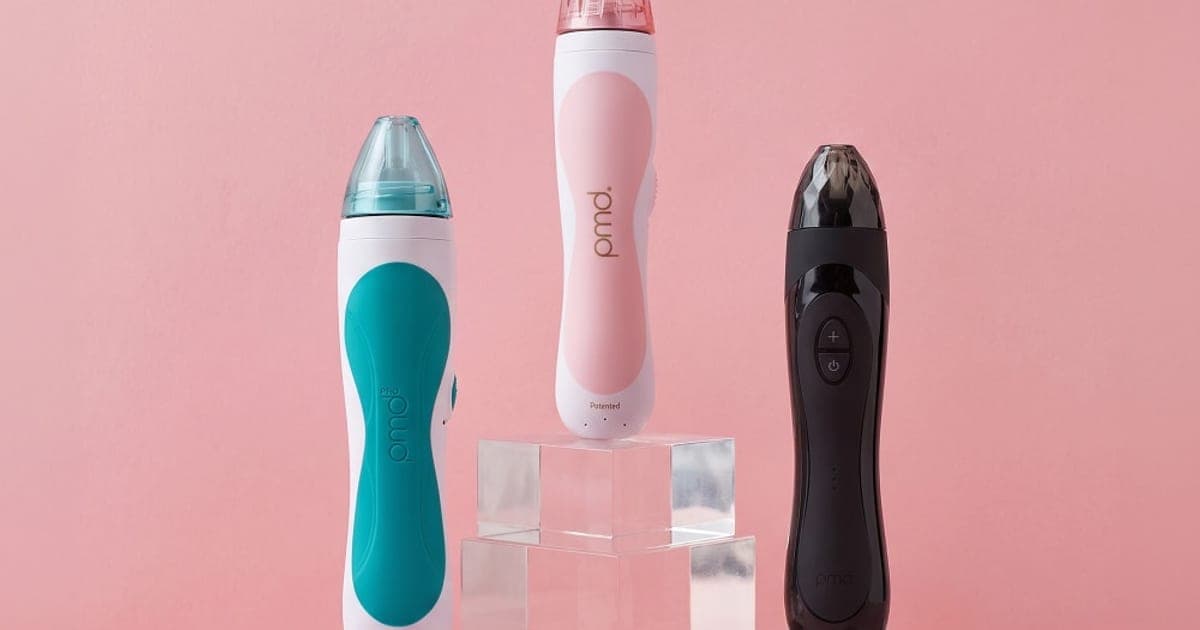
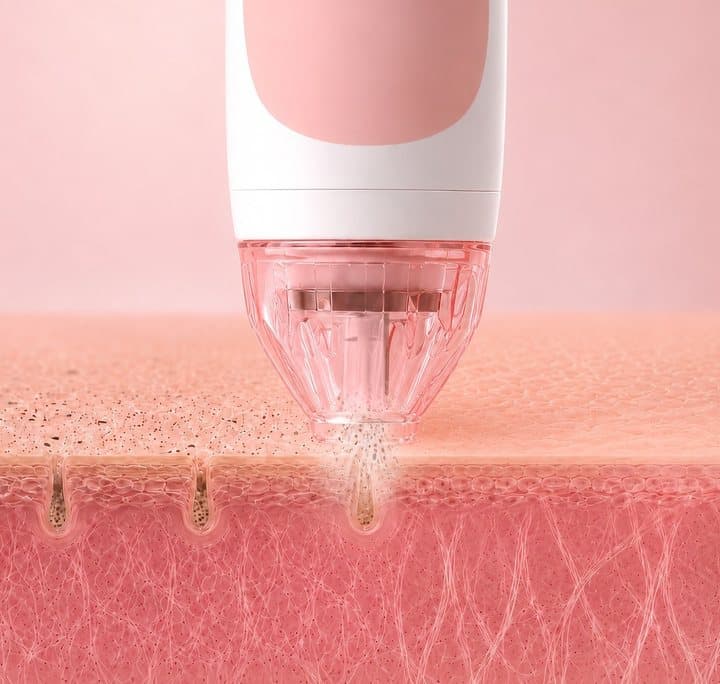
PMD Personal Microderm looks like a chunky electric toothbrush with a clear cap at the top. Inside the cap sits a small spinning disc coated with fine aluminium oxide crystals. A motor turns the disc and creates suction through the cap.
Choose a disc and cap
Step 1: Fit the gentlest disc and the face cap the first time. Stronger discs and the body cap are for later sessions and tougher skin on elbows, knees and feet.
Glide over clean, dry skin
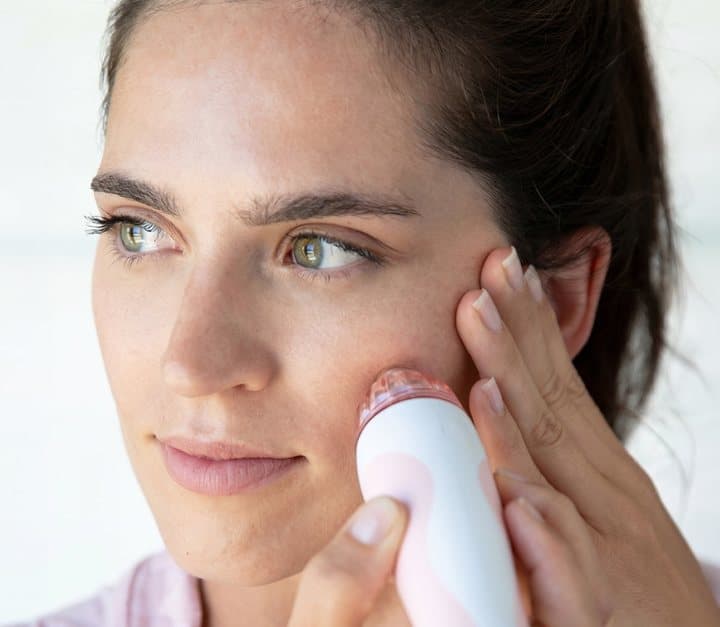
Step 2: Switch it on and glide it in short upward strokes. The disc spins to buff away dead skin while suction lifts the skin gently and clears debris.
Moisturise and protect
Step 3: Rinse, apply a gentle moisturiser and use sunscreen the next day. The page suggests once a week for about three minutes.
Exfoliation
The spinning disc buffs away the outermost layer of dead skin cells. Skin naturally sheds these cells, but they can build up and make skin look dull and feel rough. Removing them can reveal smoother, brighter-looking skin underneath. Different discs have coarser or finer crystals, which control how much is removed.
Suction
The suction gently lifts the skin into the cap so it meets the disc and draws away loosened dead skin. PMD says this suction also stimulates the skin's natural collagen production. In professional microdermabrasion, suction is a standard part of the process; whether a home device's gentler suction stimulates meaningful collagen is less clear.
Why weekly
Skin needs time to recover after exfoliation. Overdoing it can strip the protective barrier, causing redness, sensitivity and breakouts. PMD recommends once a week, which matches common advice for physical exfoliation devices.
Your skin barrier
The outer layer of skin acts as a barrier that keeps moisture in and irritants out. Exfoliation thins this layer temporarily. That is what makes skin feel smooth, but it also means skin is more vulnerable for a day or two. Gentle cleansers, a good moisturiser and daily sunscreen help the barrier recover between sessions.
Classic, Pro and Elite Pro
The FAQ says all three deliver the same core results. The Classic is the best-seller and suits first-time users; the comparison chart says it suits very sensitive to moderate skin. The Pro offers stronger suction and an extra coarse disc for more experienced users. The Elite Pro is cordless, has three speeds, adjustable suction and a blackhead cap.
What the discs are made of
PMD's discs are coated with aluminium oxide crystals, the same abrasive used in many professional crystal microdermabrasion machines. In professional "crystal" systems, loose crystals are blown onto the skin and vacuumed away; in "diamond-tip" systems, a fixed abrasive tip does the work. PMD's fixed disc is closer to the diamond-tip approach, which avoids loose particles and is simpler to use at home.
Why spinning matters
A spinning disc exfoliates evenly as you glide, rather than relying on your own scrubbing pressure. That consistency is one advantage over manual scrubs, which people often press too hard with. The trade-off is that spinning abrasion can irritate quickly if you linger, which is why the instructions stress short strokes.
The patent
The device in the images is marked as patented. PMD was one of the first companies to sell a spinning-disc, suction-based home microdermabrasion device, and the brand has been on the market for many years.
Who it's for
PMD suits people whose skin looks dull or feels rough, those with mild uneven texture, and anyone who enjoys salon facials but wants a cheaper weekly routine. It also works on rough patches on the body, such as elbows, knees, hands and heels.
It is not suitable for people with active acne, rosacea, eczema, psoriasis or other inflamed skin conditions, or for those recently treated with strong acne medicines. It will not erase deep wrinkles, scars or stubborn pigmentation.
Why PMD appeals
Professional microdermabrasion sessions typically cost $100 or more each, and the page cites $150 or more. Most people need a series. A device that costs about the price of one or two sessions and can be used weekly at home for years is appealing. PMD is also a recognisable brand, sold by beauty retailers and electronics stores, which gives more confidence than an unknown gadget.
The routine is quick. Three minutes once a week is easy to fit in, and many owners describe it as a satisfying part of their skincare.
There is also the reassurance of choice. With several disc strengths and caps, you can start gently and adjust over time, rather than being stuck with a single intensity. That flexibility is one reason PMD has stayed popular.
A typical weekly routine
On Sunday evening, you cleanse your face and pat it completely dry. You fit the gentlest disc and the face cap, switch on and glide the device across your forehead, cheeks and chin in short upward strokes, avoiding the eye area. It takes about three minutes. Your skin feels smooth and slightly warm. You rinse, apply a gentle moisturiser and go to bed. The next morning, you apply sunscreen, because freshly exfoliated skin is more sensitive to the sun.
A typical first two months
In the first week, skin often feels noticeably smoother straight away, which is encouraging. Some people see mild redness for an hour or two. Over the next few weeks, with weekly sessions, skin may look more even and makeup may sit better. Around weeks six to eight, owners usually know whether it suits them. If your skin feels raw, breaks out or stings with products, cut back to every ten days or two weeks, or stop.
For mature skin
Two testimonials come from women aged 61 and 73. One describes skin that felt like sandpaper becoming smoother; another says she has used PMD for years and saved thousands compared with salon treatments. Mature skin can benefit from gentle exfoliation, but it is often thinner, so starting with the gentlest disc is especially important.
For blackheads and pores
The Elite Pro includes a blackhead cap, and one testimonial describes gradual improvement in blackheads around the nose. Exfoliation can help keep pores clearer, but deep or stubborn blackheads may need a salicylic acid product or a professional extraction.
For the body
The body cap is larger and suits elbows, knees, hands and feet. These areas tolerate coarser discs. Avoid areas with eczema, cuts or irritated skin.
Common reasons people buy it
From the testimonials and marketing, buyers usually want one of a few things: to brighten dull skin, to smooth rough texture, to help skincare products work better, to manage blackheads, or to replace regular salon microdermabrasion. Some buy it mainly for rough elbows, knees and heels.
Men
Microdermabrasion works on all skin, and some men use it to smooth rough skin and help with ingrown hairs. Avoid the beard area if you shave daily, as freshly shaved skin is sensitive; treat it on a non-shaving day.
Before an event
Some people use PMD before a special occasion for a fresh, smooth look. Do it at least two to three days beforehand, not the same day, so any redness settles.
Oily and combination skin
People with oily or combination skin often enjoy how smooth and clear their skin feels after exfoliation, and some find makeup lasts better. Oily skin is not the same as acne, though: if you have active inflamed spots, wait until they settle.
Dry skin
Dry skin can look flaky and dull, and gentle exfoliation helps moisturisers absorb into a smoother surface. Dry skin is also more easily irritated, so the gentlest disc and a rich moisturiser afterwards matter most.
- People with dull, rough or uneven skin who want regular, gentle exfoliation at home
- Anyone who has enjoyed salon microdermabrasion and wants a cheaper weekly top-up
- People with rough patches on elbows, knees, hands or feet
Who should skip it
- Anyone with active acne, rosacea, eczema, psoriasis, cold sores or broken skin on the area
- People who have taken isotretinoin in the last six months, or use strong retinoids without advice
- Anyone expecting deep wrinkle, scar or pigmentation correction like a dermatologist's treatment
- People with a changing, growing or bleeding mole, who should see a dermatologist first
How much does PMD cost, and which model should you choose?
On 4 October 2026 the offer page listed the PMD Microderm Classic at $99.99, the Pro at $149.99 and the Elite Pro at $199.99, all with free shipping and below PMD's own store. The Classic suits beginners and sensitive skin, the Pro adds stronger suction and a coarser disc, and the Elite Pro is cordless with three speeds. Each includes the device, discs, caps and a charger.
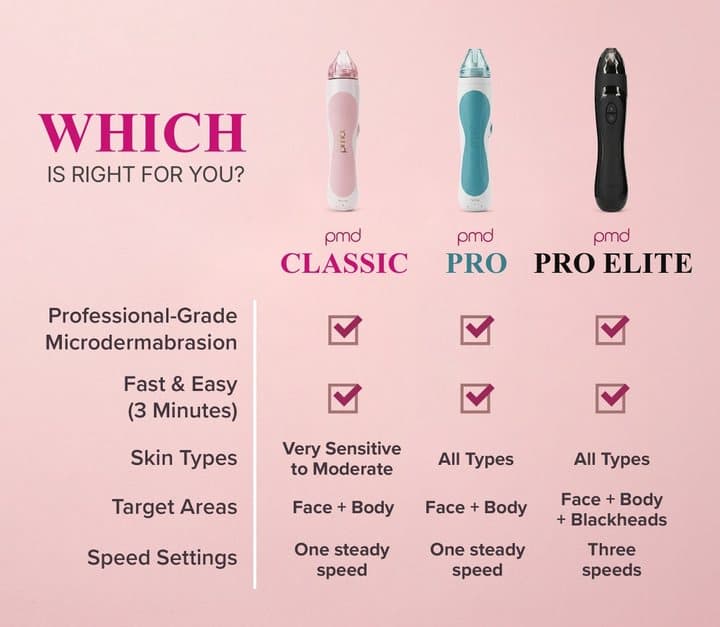
Which PMD model is which
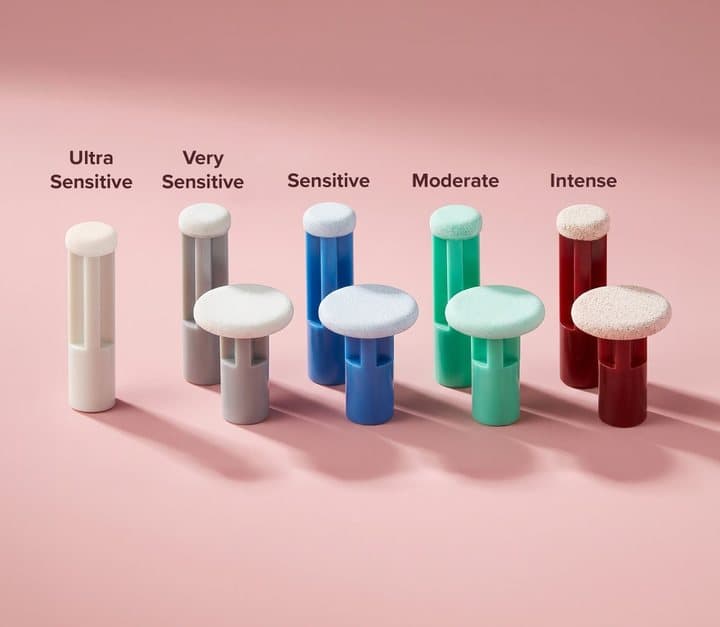
Disc strengths from ultra sensitive to intense
The Elite Pro kit
What is included
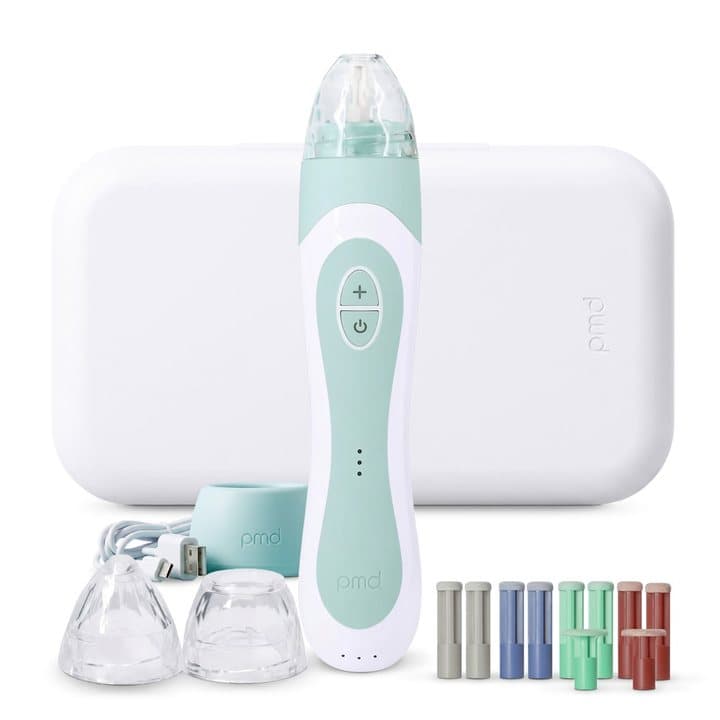
According to the page, the Elite Pro includes the device, face cap, body cap, blackhead cap, very sensitive, sensitive, moderate and very coarse discs, a charger, a base and a travel case. The Classic and Pro come with fewer discs and caps; check "What's included?" on the order page for each model.
PMD price and models
On 4 October 2026 the PMD Microderm offer page (opens PMD Beauty in a new tab) listed:
| Model | Price | Shown against | Key extras | Shipping |
|---|---|---|---|---|
| Microderm Classic | $99.99 | $139.99 | Entry model, one speed | Free |
| Microderm Pro | $149.99 | $199.99 | Stronger suction, extra coarse disc | Free |
| Microderm Elite Pro | $199.99 | $299.99 | Cordless, three speeds, blackhead cap | Free |
PMD's own store listed the Classic at about $111 to $127 on promotion (from $159), and the Elite Pro at about $209 to $239 on promotion, or $299 at full price. The offer page was cheaper on the day we checked. The page also offers buy-now-pay-later plans.
Replacement discs
Discs wear out with use and need replacing. PMD sells replacement disc packs. Factor this ongoing cost in, although it is modest compared with salon treatments.
Filters
The device uses small filters in the cap area to catch dead skin. These need cleaning and occasional replacement. Check what the bundle includes and whether replacements are sold separately.
Colours and styles
The images show the Classic in pink, the Pro in teal and the Elite Pro in black and other colours. PMD's own store lists several colour options. Colour does not affect performance.
Is it good value?
Compared with professional microdermabrasion at $100 or more per session, PMD pays for itself after one or two uses if it suits your skin. Compared with a simple exfoliating cleanser or chemical exfoliant, it is more expensive. For most first-time buyers, the Classic offers the best value; the Elite Pro's extra features matter mainly if you want cordless use or the blackhead cap.
Where else it is sold
PMD devices are sold through the brand's own store and through beauty and electronics retailers. Buying from a well-known retailer may make returns and warranty claims simpler, and some retailers have their own return windows. Compare the offer page's price with those retailers, as prices change often.
The warranty
The page advertises an industry-leading 20-year warranty. Retailer listings describe this as a 20-year limited warranty covering manufacturer defects on purchases from authorised sellers. One retailer listing describes a one-year manufacturer warranty for parts and labour. Before buying, ask whether the offer page is an authorised seller and keep your proof of purchase.
Which model is best value?
For most people, the Classic does the job. It has the core disc-and-suction technology, the face and body caps and a range of discs for sensitive to moderate skin. The Pro suits people who have used microdermabrasion before and want a little more intensity. The Elite Pro's cordless design and speed settings are conveniences rather than necessities; the blackhead cap is useful if blackheads are your main concern.
Buy now, pay later
The page offers interest-free payment plans. These can help spread the cost, but missed payments can bring fees. Only use them if you are sure you can make every payment on time.

PMD Personal MicrodermScore 7.0/10
Best for: People with dull, rough or uneven skin who want regular, gentle exfoliation at home
$99.99 at PMD Beauty · Price checked October 4, 2026
Check price at PMD Beauty (opens PMD Beauty in a new tab)We may earn a commission if you buy through our links.
Does PMD work, and what does the evidence say?
PMD uses the same basic method as salon microdermabrasion, spinning discs plus suction, at lower intensity. The American Academy of Dermatology explains that microdermabrasion removes the top layer of skin and that, after a series of treatments, skin can look smoother and brighter, though professional treatments go deeper. PMD's 8-week trial figures are mostly self-reported, and the page does not publish the method or sample size.
Microdermabrasion in general
Microdermabrasion is a long-established cosmetic treatment. The American Academy of Dermatology explains that it removes the top layer of skin and that, after a series of treatments, the complexion can appear smoother, brighter and more even. It also notes that the microdermabrasion a dermatologist performs goes a bit deeper than at-home kits.
At-home versus professional
Professional machines use stronger suction and crystals, and are operated by trained staff who adjust settings to your skin. Home devices are deliberately gentler to be safe without training. That means home results are generally milder and build up over time. "The exact same results" as an in-office treatment is an overstatement.
PMD's clinical figures
The page cites an 8-week clinical trial led by dermatologist Dr Mark Taylor, in which 100% of users reported smoother, softer skin, 91% a brighter complexion and 85% improved skin density. These are mostly self-reported impressions. The page does not give the number of participants, the method, a comparison group or a publication, so we cannot judge the trial's quality. Coverage also mentions a separate panel test of 30 women by a beauty magazine with similar self-reported results.
"Absorb 20x deeper"
The page says removing dead skin helps skincare absorb 20 times deeper. Exfoliation can help products spread and penetrate a little better, but we found no evidence for a 20-fold figure.
Collagen
The page says suction triggers natural collagen production. Some studies of professional microdermabrasion have found changes in collagen after repeated treatments. Whether a home device's gentler suction does the same to a meaningful degree is not established.
Self-reported results
Most of the trial figures on the page are what participants reported, such as feeling smoother or noticing brightness. Self-reported improvements are useful but subjective, and people who expect a product to work tend to report positive changes. Objective measurements, such as skin imaging, would carry more weight. The page mentions "significantly improved skin density" for 85% but does not say how it was measured.
Realistic expectations
Expect smoother, softer skin after each session and possibly a brighter, more even look after several weeks of weekly use. Expect mild redness for a short time afterwards. Do not expect deep wrinkles, acne scars or significant pigmentation to disappear.
What a fair trial would show
A strong study would compare PMD with a sham device that feels similar but does not exfoliate, in a defined group of adults, measuring skin texture and tone with imaging over at least eight weeks, and publish the results. The page's figures do not meet that standard. Microdermabrasion's broader track record and the American Academy of Dermatology's description give more confidence than the page's statistics.
Who sees the most change
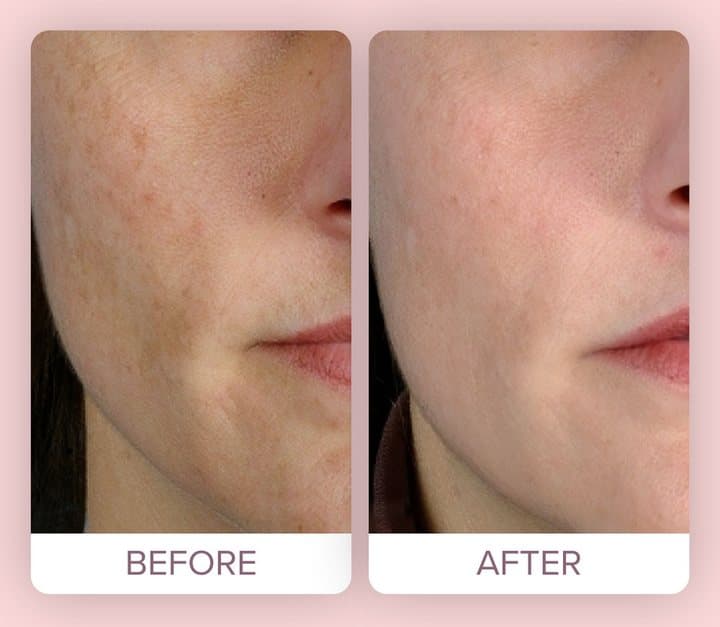
People with rough, dull or congested skin from dead cell build-up tend to notice the most difference, often after the first session. People with deeper wrinkles, scarring or melasma notice much less, because those concerns sit deeper or have other causes. Expectations based on before-and-after photos, which are chosen by the seller, may lead to disappointment.
Why results plateau
After a few weeks, the dramatic smoothness of the first sessions becomes the new normal. That is not the device stopping working; it is maintaining the result. If you stop using it, dead skin gradually builds up again over a few weeks.
Are PMD's claims true?
PMD's core claim, smoother and brighter-looking skin with regular use, is reasonable for at-home microdermabrasion. Some claims overstate it. "The exact same results as a $150+ in-office treatment" is not supported, because professional treatments go deeper. "Clinically proven" rests on an 8-week trial whose details are not published, customer figures conflict between 4 million and 1 million, and the page lists three different guarantees.
"The #1 home skincare device"
Unverified. PMD is a popular, well-known device, but the ranking is not sourced.
"The exact same results as a $150+ in-office treatment"
Overstated. Professional treatments go deeper, according to the American Academy of Dermatology.
"Clinically proven" and "8-week clinical trial"
Partly supported. Results are reported, but details of the trial are not published on the page.
"Absorb 20x deeper"
Not supported by evidence we could find.
"Fades dark spots and sun damage"
Overstated. Exfoliation can make mild discolouration less noticeable over time; stubborn spots usually need targeted treatments and sun protection.
"4,000,000+ happy customers" and "1 million+ women"
Inconsistent. The same page gives both figures.
"Used in spas and clinics, including The Ritz-Carlton, JW Marriott, Mandarin Oriental"
Unverified. The page gives no details.
"20-year warranty"
Supported for authorised-seller purchases, according to retailer listings, but conditions apply.
"8 weeks or your money back"
Inconsistent with the 14-day badge and the 30-day FAQ answer on the same page.
Claims scorecard
| Claim | Our view |
|---|---|
| Same results as in-office | Overstated |
| Clinically proven | Partly; trial details not published |
| Absorb 20x deeper | Not supported |
| Fades dark spots | Overstated |
| Customer numbers | Inconsistent |
| 20-year warranty | Conditional on authorised seller |
| Guarantee length | Inconsistent (14 days, 30 days, 8 weeks) |
Is PMD better than professional microdermabrasion or chemical exfoliants?
PMD is gentler and cheaper over time than professional microdermabrasion, which costs $100 or more per session but goes deeper with a trained operator, so PMD suits maintenance between sessions. Chemical exfoliants such as glycolic acid and salicylic acid are inexpensive and well studied, and salicylic acid is especially good for blackheads. Some people use both, on different days, rather than choosing one.
| Option | Typical cost | Strength | Notes |
|---|---|---|---|
| PMD Personal Microderm | $99.99 to $199.99 | Mild to moderate | Weekly, adjustable discs |
| Professional microdermabrasion | $100+ per session | Moderate to strong | Trained operator, goes deeper |
| Chemical exfoliants (AHA, BHA) | $15 to $40 | Mild to moderate | Daily or weekly; gentle on many skins |
| Retinoids | $15 and up | Long-term renewal | Strong evidence for texture |
| Scrubs and cleansing brushes | $10 to $50 | Mild | Can irritate if overused |
| Dermaplaning | Low to moderate | Mild | Removes fine hair and dead skin |
PMD vs professional microdermabrasion
Professional sessions are stronger and supervised, and can be combined with other treatments. They cost more each time. PMD is a good option for maintenance between professional sessions or as a gentler alternative.
PMD vs chemical exfoliants
Chemical exfoliants such as glycolic acid (an AHA) and salicylic acid (a BHA) dissolve the bonds between dead skin cells. They are inexpensive and well studied, and salicylic acid is especially good for blackheads. Some people prefer them to physical exfoliation; others use both, on different days. Do not use strong acids on the same day as PMD.
PMD vs a washcloth or konjac sponge
A soft washcloth or konjac sponge offers very gentle physical exfoliation for almost nothing. For people with sensitive skin who only want a little extra smoothness, these may be enough. PMD offers a stronger, more controlled exfoliation for people who want visible results.
PMD vs a cleansing brush
Sonic cleansing brushes clean and lightly exfoliate daily. They are gentler than microdermabrasion and suit people who want everyday cleansing rather than weekly exfoliation. PMD is more intensive.
PMD vs microneedling and peels
Professional microneedling and chemical peels target deeper concerns such as scars and pigmentation. They involve more downtime and cost more. At-home microneedling rollers carry infection and injury risks if used incorrectly. PMD is a gentler surface treatment.
PMD vs retinoids
Retinoids have the strongest evidence for improving texture and fine lines over months. They can make skin more sensitive, so combine them with PMD cautiously and seek advice if using prescription strength.
PMD vs other beauty devices we have reviewed
We have reviewed other at-home beauty devices, including MyoGlow, EraSilk, Pluxy and the heated eyelash curler. More are in our beauty gadgets category.
If PMD suits you, compare today's PMD Microderm prices (opens PMD Beauty in a new tab) with PMD's own store before you buy; the offer page was cheaper when we checked.
PMD Personal MicrodermScore 7.0/10
Why people buy it: Combines spinning exfoliating discs with suction, the same basic method as salon microdermabrasion, at lower intensity
$99.99 at PMD Beauty · Price checked October 4, 2026
Check price at PMD Beauty (opens PMD Beauty in a new tab)We may earn a commission if you buy through our links.
Is PMD legit, and what should you check before buying?
PMD is a well-known brand sold widely through beauty and electronics retailers, but the page lists a 14-day, a 30-day and an 8-week guarantee, and its 20-year warranty covers purchases from authorised sellers. Before buying, ask which guarantee applies and whether this offer page is an authorised seller. Do not use it on active acne, rosacea, eczema or broken skin, or within six months of isotretinoin.
Skin conditions
What to do: do not use it on active acne, rosacea, eczema, psoriasis, cold sores, warts, sunburn or broken skin. If you have a mole that is changing, growing or bleeding, see a dermatologist first.
Isotretinoin and retinoids
The American Academy of Dermatology warns that people who have taken isotretinoin in the past six months have a higher risk of complications, including scarring.
What to do: wait at least six months after isotretinoin, and pause retinoids and strong acids for a few days before and after using PMD.
Sun sensitivity
What to do: use a broad-spectrum sunscreen daily, especially after exfoliating.
Darker skin tones
People with darker skin can be more prone to dark marks after irritation.
What to do: start with the gentlest disc, use light pressure and do not go over the same area repeatedly.
Guarantee and warranty
What to do: ask which return period applies (14 days, 30 days or 8 weeks) and whether the seller is authorised for the 20-year warranty. Keep your confirmation and packaging.
Diabetes and slow-healing skin
People with diabetes or conditions that slow wound healing may be more at risk if the skin is broken.
What to do: ask your doctor first, and avoid using it on the feet if you have reduced sensation.
Pregnancy
Hormonal changes in pregnancy can make skin more sensitive and prone to pigmentation.
What to do: use the gentlest disc, protect your skin from the sun, and check with your doctor or midwife if you have concerns. Avoid starting strong new treatments during pregnancy without advice.
Shared use
What to do: do not share discs between people; each user should have their own to avoid spreading bacteria or skin infections.
How to buy PMD the smart way
- Decide on the model; most first-time buyers need the Classic. Then go to the PMD Microderm order page (opens PMD Beauty in a new tab).
- Compare the price with PMD's own store and major retailers.
- Ask which return period and warranty apply to this seller.
- Start with the gentlest disc and use it once a week.
- Keep your confirmation for returns and warranty claims.
What do owners say, and how did we score PMD?
PMD scores 7.0 out of 10: claim accuracy 1.0, build and durability 1.5, price competitiveness 1.5, usability 1.6 and owner satisfaction 1.4, each out of 2. Its Trustpilot profile had only seven reviews when we checked, too few to be meaningful, but PMD devices have long been popular through retailers. The page's testimonials describe smoother skin, including from a 73-year-old long-term user.
Owner ratings
PMD's Trustpilot profile had only seven reviews when we checked, too few to be meaningful. PMD devices are sold widely through beauty and electronics retailers, and coverage cites large numbers of retailer ratings, which we have not verified directly. Complaints on Trustpilot concern warranty paperwork, slow support and a battery fault on a different PMD device; praise mentions long-term reliability.
The testimonials on the page
The page shows four testimonials (two repeated): a 61-year-old whose rough skin improved, a user who saw results after two uses, a user whose breakouts and skin tone improved, and a 73-year-old long-term user who says it saved thousands. They are selected by the seller.
What we would want to know from owners
Useful owner reviews would describe skin type and age, which model and disc they used, how often, what changed after two months, any side effects, and how the device held up over a year or more. Warranty experiences would also help, given the conditions attached to the 20-year promise.
Why we score it where we do
PMD is a real, established device using a recognised method, and the offer page price was good. It loses points for claiming the same results as a clinic, for unsupported figures such as 20-times absorption, for inconsistent customer numbers and for three different guarantee periods on one page. Clearer, consistent terms and a published trial would lift the score further.
How we scored PMD
Scores follow the five criteria on our how we test page, each worth up to 2 points.
| Criterion | Score | Why |
|---|---|---|
| Claim accuracy | 1.0 | Real method, but "same as clinic", 20x and inconsistent figures |
| Build and durability | 1.5 | Established brand; long warranty with conditions |
| Price competitiveness | 1.5 | Offer page cheaper than PMD's own store |
| Usability | 1.6 | Simple, quick weekly routine |
| Owner satisfaction | 1.4 | Long-standing popularity; little independent data checked |
| Total | 7.0 |
What we did, and did not, do
Nobody on our team has used PMD. We checked the offer page our link opens, PMD's own store, retailer warranty information and dermatology guidance on microdermabrasion. We did not test the device or measure results.
How to use PMD for the best results
Start with the most sensitive disc and the face cap, on clean, completely dry skin. Glide in short upward strokes, lifting the device at the end of each one, and keep it moving so suction does not leave marks. Stay away from the eyes and any irritated areas, use it about once a week for three minutes, and apply a gentle moisturiser and sunscreen afterwards.
- Start gentle. Use the most sensitive disc and the face cap for your first sessions.
- Clean and dry. Use it on clean, completely dry skin.
- Short upward strokes. Glide in short strokes, lifting the device at the end of each one.
- Avoid delicate areas. Stay away from the eyes, lips and any irritated skin.
- Do not repeat strokes. One pass per area is enough at first.
- Moisturise. Apply a gentle, fragrance-free moisturiser afterwards.
- Protect. Use sunscreen the next day and every day.
What redness is normal
Mild pinkness that fades within an hour or two is normal. Redness that lasts more than a day, stinging, broken skin, small bruises from suction or spots appearing afterwards mean you were too intense: use a gentler disc, lighter pressure, faster strokes or less frequent sessions.
Avoiding suction marks
Suction can leave small red marks or bruises if the device stays in one place, particularly on thin skin under the eyes or on the neck. Keep the device moving and avoid these areas or use the gentlest setting.
Building up
After a few weeks without irritation, you can try the next disc strength. Many people never need more than the sensitive or moderate disc on the face.
Cleaning
Remove and rinse the cap and filter after each use, and let them dry. Replace discs when they look worn.
Combining with skincare
Apply hydrating serums after PMD rather than strong actives. Leave retinoids and acids for other days.
Body routine
On elbows, knees and heels, use the body cap and a moderate or coarse disc. Soften very thick skin on the heels with a warm soak and dry thoroughly first. Follow with a rich body cream. Avoid shins and other areas after shaving.
Hydration first
Dehydrated skin is more easily irritated. Drink enough water, use a hydrating moisturiser during the week, and avoid using PMD on skin that feels tight or flaky from cold weather or other treatments.
PMD Personal MicrodermScore 7.0/10
Before you buy: Check the final price, shipping and return terms at checkout.
$99.99 at PMD Beauty · Price checked October 4, 2026
Check price at PMD Beauty (opens PMD Beauty in a new tab)We may earn a commission if you buy through our links.
What else do people ask about microdermabrasion?
Most questions are about results and frequency. At-home microdermabrasion can make skin feel smoother and look brighter with regular use, though results are milder than professional treatments. Most guidance suggests once a week, because more often can irritate skin. It may soften the look of very fine lines by smoothing the surface, but deeper lines need treatments that work deeper in the skin.
Does at-home microdermabrasion work?
It can make skin feel smoother and look brighter, especially with regular use. Results are milder than professional treatments.
How often should you do microdermabrasion at home?
Most guidance suggests once a week. More often can irritate skin.
Does microdermabrasion help with fine lines?
It may soften the look of very fine lines by smoothing the surface and improving how light reflects. Deeper lines need treatments that work deeper in the skin.
Can I use it on my neck and chest?
Many people do, carefully, with the gentlest disc. Skin on the neck is thinner, so use light strokes and avoid suction marks.
Can microdermabrasion help acne scars?
Mild scarring may look slightly better over time. Deeper scars need professional treatments such as laser or microneedling.
Is microdermabrasion safe for sensitive skin?
It can be with the gentlest settings, but people with very reactive skin or rosacea should avoid it.
Can it cause breakouts?
Some people get a few spots after starting, especially if skin is irritated or products are applied immediately afterwards. Reduce frequency and use gentle products.
Should I use PMD before or after cleansing?
After. Cleanse, dry your skin completely, then use PMD on dry skin, as the instructions say. Moisturise afterwards.
Can I use PMD if I have sensitive skin?
Possibly, with care. Start with the very sensitive disc, use it every ten days to two weeks rather than weekly at first, and keep strokes light and quick. If your skin stays pink for more than a few hours, stings with your usual products or develops patches of irritation, it is not suiting you. Reactive conditions such as rosacea are a reason to skip it altogether.
Will it help my moisturiser work better?
Removing dead skin can help moisturisers and serums spread more evenly and feel as if they sink in better. That is a real, if modest, benefit. Choose gentle, hydrating products straight afterwards rather than strong actives, which can sting on freshly exfoliated skin.
Is it painful?
It should not be. PMD describes a gentle sanding and suction sensation, and the American Academy of Dermatology describes home microdermabrasion as feeling like sanding but not painful. Pain means the disc is too coarse, the suction too strong for that area or the device is being held still.
Can I use it on dark circles or under the eyes?
Avoid the thin skin directly under and around the eyes. Suction and abrasion can cause bruising or irritation there.
Can teenagers use PMD?
Teenagers often have oily or acne-prone skin, and microdermabrasion over active spots can spread bacteria and worsen inflammation. For teenage skin, a gentle cleanser and a salicylic acid product are usually better first steps. If a teenager wants to try PMD for rough texture without active acne, use the gentlest disc and supervise the first sessions.
Should I stop if I get a few spots?
A few small spots in the first weeks can happen as pores clear, but frequent or inflamed breakouts suggest irritation. Reduce frequency, switch to a gentler disc and avoid heavy products afterwards. If breakouts continue, stop and let your skin settle for a few weeks before deciding whether to try again more gently and much less often than before, if at all.
How long does a PMD last?
PMD advertises a 20-year limited warranty for authorised purchases, and long-term owners in the testimonials describe years of use. Discs and filters need replacing; the motor should last much longer with care.
Can microdermabrasion remove dark spots?
It can help mild uneven tone look more even over time. Darker spots, melasma and sun damage usually need sun protection plus targeted treatments such as vitamin C, retinoids or professional procedures.
Is PMD legit?
Yes. PMD Beauty is an established brand sold by major retailers. The offer page's claims are overstated, and its guarantee wording is inconsistent.
Is PMD worth it?
For people with dull or rough skin and no inflamed skin conditions, it is a reasonable investment at the offer page price. Start with the Classic and gentlest disc.
Frequently asked questions
What is the PMD Personal Microderm?
It is a handheld at-home microdermabrasion device from PMD Beauty. A spinning disc coated with aluminium oxide crystals exfoliates dead skin while gentle suction lifts the skin and removes debris. It comes in Classic, Pro and Elite Pro versions.
How much does PMD cost?
On 4 October 2026 the offer page our link opens listed the Classic at $99.99, the Pro at $149.99 and the Elite Pro at $199.99, all with free shipping. PMD's own store listed the Classic from about $111 and the Elite Pro from about $209 on promotion, or $299 at full price.
Is it as good as professional microdermabrasion?
It uses the same basic method at lower intensity. The American Academy of Dermatology says professional treatments go deeper, but home kits can make skin appear smoother and brighter after a series of treatments. PMD suits maintenance between professional sessions.
How often should I use it?
PMD recommends once a week for about three minutes. Using it more often can irritate skin. Start with the gentlest disc and build up slowly. If redness lasts more than a day, use a gentler disc, lighter pressure or fewer sessions.
Which model should I buy?
The Classic suits beginners and sensitive skin. The Pro adds stronger suction and a coarser disc. The Elite Pro is cordless with three speeds, adjustable suction and a blackhead cap. Check what each model includes on the order page.
What is the return policy?
The page is inconsistent: a 14-day badge, a 30-day FAQ answer and an 8-week results guarantee in the headline. Ask which applies before buying and keep your confirmation. Do not count on the longest one until support confirms it in writing.
Does the 20-year warranty apply?
PMD's 20-year limited warranty covers defects on purchases from authorised sellers, according to retailer listings. Ask whether this offer page is an authorised seller. Keep your receipt and order confirmation, because Trustpilot complaints about PMD mention warranty paperwork.
Is it safe for sensitive skin?
PMD includes very sensitive discs and recommends starting with the gentlest. Avoid it on irritated, broken or inflamed skin, and stop if your skin becomes sore. Skip it entirely if you have active acne, rosacea or eczema, or have taken isotretinoin in the past six months.
We may earn a commission if you buy through our links.
Prices accurate as of October 4, 2026. Check the seller's checkout for current pricing, promotions and terms.
What we checked: No hands-on use. Claims, model differences, included parts, FAQ answers, guarantee wording, clinical figures, testimonials, prices and images from the PMD Microderm offer page our link opens (getpmdmicroderm.com) on 2026-10-04. Store prices from PMD Beauty's own store data the same day. Warranty details from retailer listings. Microdermabrasion guidance from the American Academy of Dermatology. PMD's Trustpilot profile had only seven reviews, so we did not rely on it.

About the author
Ryan Mitchell, Consumer Technology Writer
Ryan Mitchell covers new and innovative gadgets for Top10Gadgets: AI devices, wearables, smart accessories, digital services and the beauty tech sold through viral adverts. Ryan likes to find a gadget before it goes main…
- New and innovative gadgets
- AI devices and wearables
- Smart accessories
- Beauty tech
- App and subscription terms
Writing for Top10Gadgets since 2026Full profile