Comparison
Vacuum Bags vs Compression Cubes vs Rolling Clothes: Which Packs the Most? (2026)
Vacuum bags, compression cubes, rolling or folding: which fits the most in a carry-on? What an independent test found, and which method suits which trip.

By Daniel Brooks, Technology & Buying Guide Editor at Top10Gadgets
Updated 7 min readHow we test
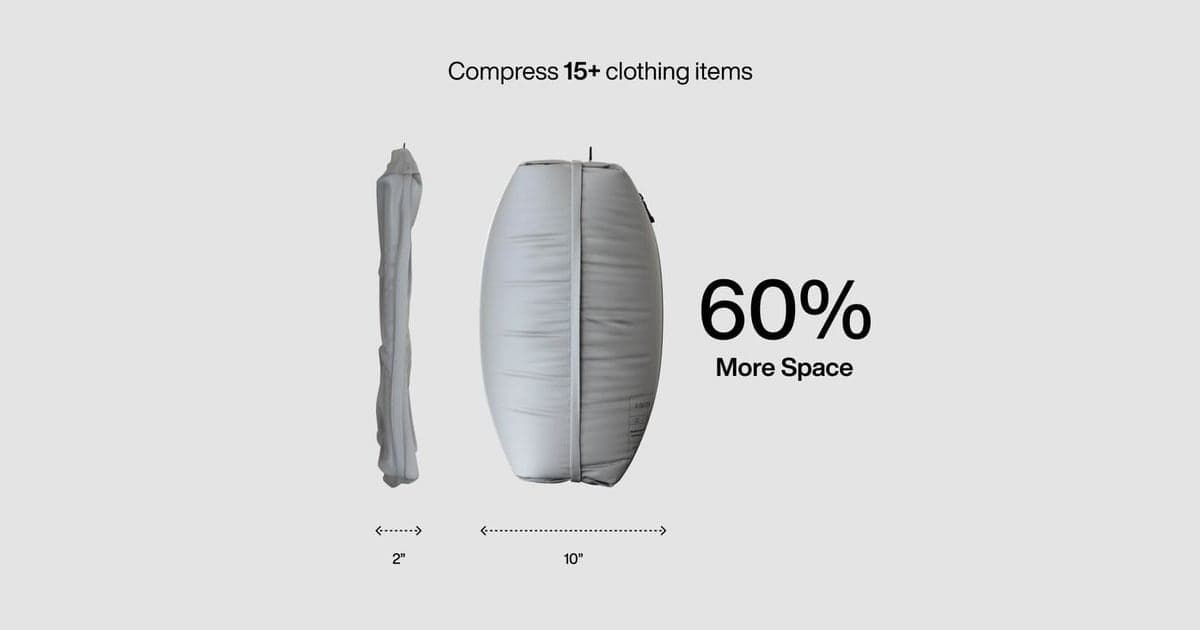
For an everyday holiday wardrobe, plain folding fits the most into a carry-on, and vacuum bags fit the least; for bulky winter clothes, vacuum bags win. That is the short version of an independent test by Which? and of how each method works. Compression cubes are for organisation more than space, and rolling is the way to keep clothes uncreased. If you are weighing up a pump kit such as the one in our Aerless vacuum bags review, the table below shows where it fits.
| Method | Best at | Space saved | Creasing | Organisation | Cost |
|---|---|---|---|---|---|
| Folding | Fitting the most everyday clothes | Most in Which?'s test | Some | Low | Free |
| Rolling | Keeping clothes uncreased | Close second | Least | Low | Free |
| Compression cubes | Organising by category | Less than folding in the test | Low | High | About $30 to $60 a set |
| Vacuum bags | Bulky coats, knits, fleece | Least for everyday clothes; most for bulky items | Most | Medium | $1 to $160, depending on bag and pump |
What an independent test found
In August 2026, Which?, the UK consumer organisation, packed four cabin bags with exactly the same clothes in the same order, using each method in turn, then filled the gaps with pairs of socks. The bags were two under-seat bags (40 x 25 x 20 cm) and two larger cabin bags (55 x 40 x 20 cm), sized for budget airline allowances.
| Method | Garments packed, four bags | Pairs of socks | Total items |
|---|---|---|---|
| Folding | 129 | 47 | 176 |
| Rolling | 121 | 41 | 162 |
| Compression cubes | 118 | 66 | 184 |
| Vacuum bags | 113 | 38 | 151 |
Folding was best or joint best in all four bags and fitted 16 more garments than vacuum packing. Rolling came second but creased clothes least. Compression cubes fitted fewer garments than folding, though the gaps around each cube swallowed a lot of socks. Which?'s verdicts were blunt: folding "no faff and free", compression cubes not worth it for regular holidays, vacuum bags "not useful for holiday packing".
Two details matter when you read those results. Which? used roll-up vacuum bags, which you squeeze by hand, not bags with a pump. And it packed an everyday holiday wardrobe into small cabin bags, not a winter coat into a large suitcase. The test tells you what works for a typical holiday carry-on; it does not cover every trip.
Why vacuum bags lost the test, and when they win
A vacuum bag turns soft clothes into a hard slab. Slabs do not bend into corners or around a suitcase's handle tubes, so they leave gaps that soft, folded clothes would have filled. The bag itself takes up room, and Which? found the clothes inside came out wrinkled. With ordinary T-shirts and trousers, which are not very airy to begin with, the space saved by removing air is smaller than the space lost to the shape.
Bulky clothes change the maths. A down jacket, a fleece or a stack of chunky sweaters is mostly air, and compressing it saves far more than any folding can. Eagle Creek, which sells both compression cubes and compression bags, recommends bags for winter coats and seasonal gear, and cubes as "a happy medium" for everything else. That is the right way to think about vacuum bags: a tool for the two or three bulkiest items in your case, not the whole wardrobe.
Pump bags also differ from the roll-up bags Which? tested. A battery pump, like the one in the Aerless kit, does the squeezing for you, without the effort Which? found hand-rolling took on larger bags, and lets you compress the bag again for the trip home. Nobody has published a test showing how much more it fits, and it does not change the slab problem or the creasing. Our explainer on whether vacuum bags make luggage lighter covers the other catch: compression saves space, never weight.
Compression cubes: organisation first, space second
A compression cube is a zipped fabric box with a second zip around its middle. Pack the cube, close the main zip, then close the second one to squeeze it thinner. Eagle Creek says this compresses a cube to up to half its original size.
In practice, cubes save less than that suggests, because a suitcase full of cubes has gaps between them, and Which?'s £50 set fitted 11 fewer garments than folding. Which? also found them easy to overfill and fiddly to close. Their real value is organisation: one cube for tops, one for underwear, one for dirty laundry, so you can live out of a bag without unpacking it. They crease clothes less than vacuum bags and need no pump.
Rolling vs folding
Folding fitted the most in Which?'s test and is the fastest method. It works best in hard cases that open fully with square corners; in a backpack that opens halfway, folded clothes get pushed out of shape.
Rolling creased clothes the least and suits soft holdalls and backpacks, where cylinders fill a round-ish space. It takes longer, and long rolled items may need rerolling to fit a rectangular case.
The two combine well. Fold bulky and stiff items such as jeans and sweaters, roll T-shirts, dresses and anything that creases, and use rolled socks and underwear to fill corners.
Which method suits your trip?
| Trip | Best approach |
|---|---|
| Summer carry-on, budget airline | Fold, roll creasables, no extra gear |
| Living out of a bag, moving often | Packing cubes for organisation, folded or rolled inside |
| Winter trip, coats and knits | Vacuum bags for the bulkiest two or three items, fold the rest |
| Trip with shopping on the way home | A couple of vacuum bags with a pump, kept for the return leg |
| Business trip with shirts and suits | Fold or roll carefully, no compression |
How to combine methods in one bag
- Start with the bulkiest items. Vacuum-pack only coats, fleeces or heavy knits, and lay those slabs flat at the bottom.
- Fold the core wardrobe. Fold trousers and jeans flat on top of the slabs, edge to edge.
- Roll anything that creases. Shirts, dresses and T-shirts go in as rolls on the next layer.
- Fill every gap. Socks, underwear and chargers go into corners and around the handle tubes.
- Use one or two cubes if you like order. A cube for underwear and one for dirty laundry is enough for most people.
- Check the zip and the weight. The bag should close without force and stay within your airline's weight limit.
Our step-by-step guide to using Aerless vacuum bags covers packing and stacking the slabs, and our travel section will compare more packing gear as we review it.
Are vacuum packing cubes a waste of money?
Not always, but they are a compromise. "Vacuum cubes" are fabric or plastic packing cubes with a valve or a built-in pump, sold as a cross between a cube and a vacuum bag. They compress more than an ordinary compression cube and stay more organised than a bare vacuum bag, but they cost more than either, and the Which? test above suggests that for an everyday holiday wardrobe, plain folding fits as much. They earn their price only if you regularly pack bulky layers and want them sorted by type. For thin summer clothes, ordinary compression cubes do the same job for less.
Our verdict
For most holidays, folding is the best way to pack a carry-on: it fitted the most clothes in the only independent head-to-head we found, costs nothing and takes the least time. Roll anything that creases. Compression cubes are worth it for organisation, not for space. Vacuum bags are a specialist tool: they lost the everyday-wardrobe test, but nothing else shrinks a winter coat or a stack of sweaters as much. If that is the problem you have, see our Aerless Vacuum Kit review for what one pump kit really saves.
Frequently asked questions
Are vacuum bags better than compression cubes?
For bulky winter clothes, usually yes: a vacuum bag squeezes a puffer or a stack of sweaters far flatter than a cube's second zip can. For an everyday holiday wardrobe, no: in Which?'s 2026 test, compression cubes fitted 118 garments across four cabin bags and vacuum bags 113, and cubes keep clothes organised and less creased.
Is it better to roll or fold clothes in a suitcase?
Folding fits slightly more; rolling creases less. In Which?'s test, folding fitted 129 garments across four cabin bags and rolling 121, but rolled clothes came out with fewer creases. Folding works best in hard cases that open flat with square corners; rolling suits soft holdalls and backpacks.
Do compression packing cubes actually save space?
Less than their marketing suggests. Eagle Creek says the second zip compresses a cube to up to half its size, but in Which?'s test the cubes fitted 11 fewer garments than simple folding, because the gaps around each cube waste space. Their real strength is organisation: one cube per clothing type.
What is the best way to pack a carry-on?
For most trips, fold clothes flat in a case that opens fully, fill gaps with socks and underwear, and roll anything that creases easily. Add packing cubes only if you value organisation, and vacuum bags only for a few bulky items such as a coat or fleece. Weigh the packed bag before you leave.
Do vacuum bags wrinkle clothes more than packing cubes?
Yes. Pressing the air out locks every fold into the fabric. Eagle Creek, which sells both, warns that clothes in a compression bag become hopelessly wrinkled until washed or ironed, and Which? found vacuum-packed clothes came out creased. Cubes and rolling are gentler on shirts and dresses.
More on Vacuum bags vs compression cubes

About the author
Daniel Brooks, Technology & Buying Guide Editor
Daniel Brooks edits the buying guides and comparisons at Top10Gadgets, and covers the sleep, supplement and travel categories where products are hardest to tell apart. Daniel approaches every purchase like a careful shop…
- Buying guides and product comparisons
- Budget and value-for-money products
- Sleep products
- Travel gear
- Subscriptions and return terms
Writing for Top10Gadgets since 2026Full profile