Drones / Beginner drones
Sparkcopter Review: Not a DJI Spark, but a Familiar Folding Toy Drone, and Who Will Enjoy It
A small folding drone with a phone-holding controller, matching a budget design tested as the Eachine E58. A fun first drone for practice, but the video is toy-level and the price is high.

By Ryan Mitchell, Consumer Technology Writer at Top10Gadgets
Updated 26 min readHow we test
Quick answer
Yes, as a practice toy, if you know what you are buying and are happy to pay a premium. Sparkcopter is a small folding drone with a phone controller and three speed modes, a friendly way to learn basic flying indoors or on still days.
Score 3.3/10$99.00 at G Com Pte Ltd
Check price at G Com Pte Ltd (opens G Com Pte Ltd in a new tab)We may earn a commission if you buy through our links.
- Best for
- First-time flyers who want a small, inexpensive-feeling drone to practise on
- Not for
- Anyone who thinks Sparkcopter is related to DJI's Spark or performs like it
$99.00 at G Com Pte Ltd
Check price at G Com Pte Ltd (opens G Com Pte Ltd in a new tab)We may earn a commission if you buy through our links.
On this page · 14 sections
- 01Our verdict
- 02The short version
- 03Pros & cons
- 04How it works
- 05Who it's for
- 06Is Sparkcopter related to DJI's Spark?
- 07How well will Sparkcopter fly and film?
- 08How much does Sparkcopter cost, and what do the add-ons include?
- 09Is Sparkcopter better than a beginner drone from an established brand?
- 10Do you need a licence to fly Sparkcopter?
- 11Is Sparkcopter legit, and what should you check before buying?
- 12How did we score Sparkcopter?
- 13How to use Sparkcopter: indoor practice and first outdoor flights
- 14Frequently asked questions
Our verdict
Yes, as a practice toy, if you know what you are buying and are happy to pay a premium. Sparkcopter is a small folding drone with a phone controller and three speed modes, a friendly way to learn basic flying indoors or on still days. It is not a DJI Spark, and its page shares every photo and bullet with the seller's DroneX Pro and Drone Ultra, matching a budget design tested as the Eachine E58. No camera, flight time or range figures are given. Sparkcopter scores 3.3 out of 10, held back by price, missing specs and refund terms.
The short version
- What it is: a pocket-sized folding drone with a controller, Wi-Fi camera view and three speed modes.
- Price: $99 for one on 4 October 2026, with a five-pack for $297 preselected. Delivery was listed as free.
- Best trait: a light, simple drone to learn basic control on.
- Biggest drawback: the same budget design sells under several names, and the name borrows from a DJI drone it has nothing to do with.
- Our score: 3.3 out of 10.
Pros & cons
The pros are about learning to fly. The cons are about the name, the missing numbers and the price.
What we like
- Folds down small and comes with a controller that holds your phone for a live view
- Three speed modes help beginners start slowly
- Light and forgiving, so small crashes rarely end the fun
- A sensible way to find out whether drone flying is for you before spending more
- Free delivery, and the seller names a registered company with a Singapore address
What we don't
- Not connected to DJI's Spark, despite the similar name
- Same photos and bullets as the seller's DroneX Pro and Drone Ultra, matching a design that sold for much less as the Eachine E58
- No camera resolution, flight time, range or weight on the page
- No GPS, so it drifts outdoors and has no automatic return
- Add-on images show a large drone's camera and a different drone in the case
- Refunds need a returns number first, and you pay return postage to an overseas seller
Sold by G Com Pte Ltd
Sparkcopter$99.00
How it works
Sparkcopter flies on four propellers driven by small electric motors, with a gyroscope and flight controller keeping it level. The controller sends your stick inputs by radio, while the camera streams to your phone over the drone's own Wi-Fi.
Charge, unfold and connect
Step 1: Charge the flight battery, unfold the arms, attach your phone to the controller and connect the phone to the drone's Wi-Fi to see the camera view.
Take off and hover
Step 2: Use one-key take-off or the sticks to lift off to a low hover. A gyroscope keeps the drone level while you get used to the controls.
Fly short, careful sessions
Step 3: Practise in the slowest speed mode, film short clips to your phone, and land as soon as the low battery warning starts.
Who it's for
Sparkcopter suits a first-time flyer, or a teenager with an adult around, who wants to practise take-offs, hovering and simple manoeuvres without risking an expensive drone. It is not a camera drone in any serious sense.
- First-time flyers who want a small, inexpensive-feeling drone to practise on
- Teenagers learning to fly, with an adult around
- Buyers who like this offer page and accept the price premium
Why Sparkcopter appeals
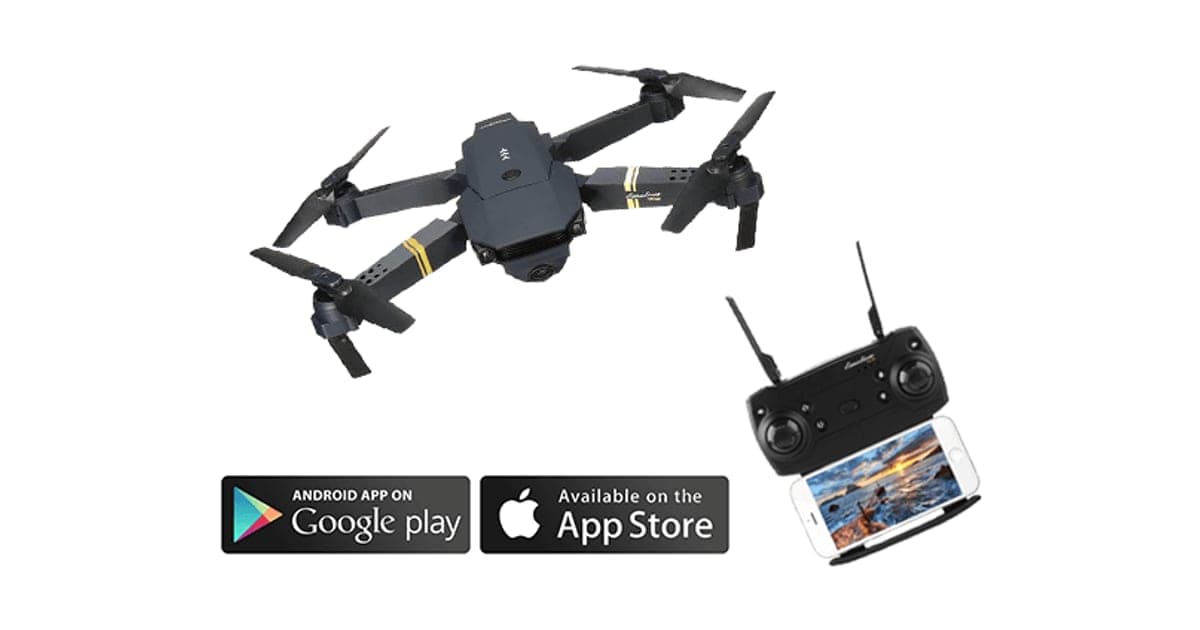
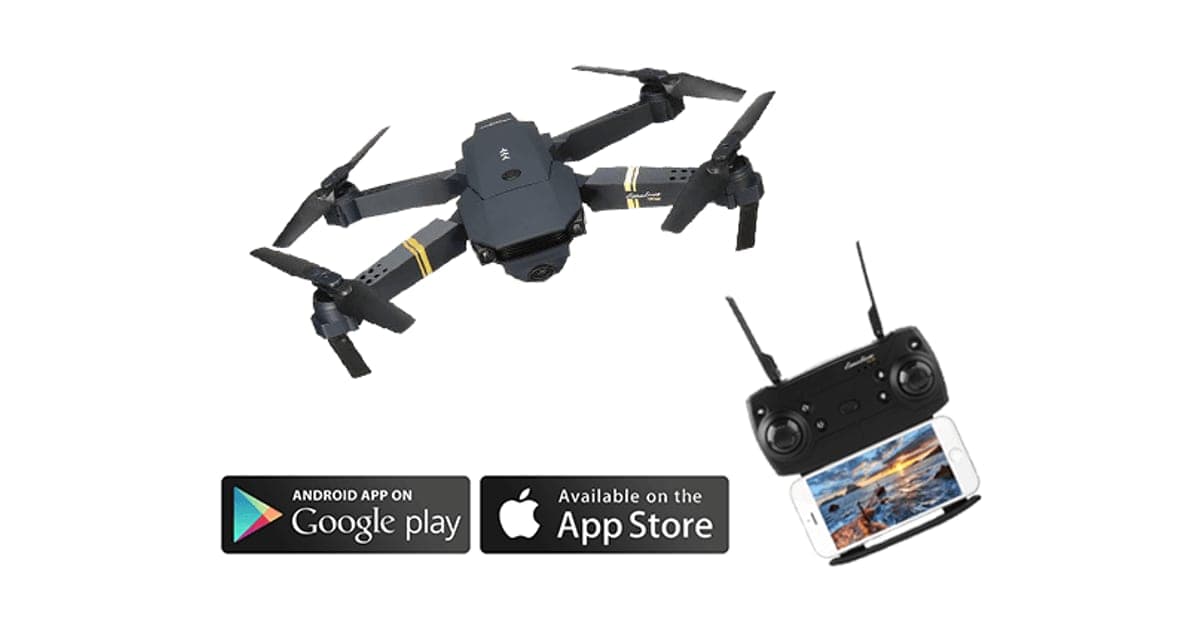
The name does a lot of work. DJI, the best-known drone maker, sold a small drone called the Spark, and "Sparkcopter" sounds like a relative. The page adds the familiar promise of "professional-quality footage" and "see the world and shoot like a pro", next to a photo of a sleek, dark folding drone.
The practical appeal is real, though. A drone that folds into a pocket and comes with physical control sticks is far easier to learn on than a phone-only toy, and three speed modes let you start gently.
Who gets the most value
Learners get the most from Sparkcopter. Flying a light, non-GPS drone teaches you to control it by hand, which is the core skill of drone flying. Pilots who learn on a toy usually handle a GPS drone more calmly when automation fails or the signal drops.
Teenagers
Teens often enjoy a small drone as a first gadget for filming and flying with friends. Agree the rules first: where they can fly, how high, and never near people, roads or airports. Our DroneX Pro review covers the same design under another name, with more on its history and testing.
Content creators
If you want drone shots for social media, the camera on a toy of this type will disappoint. Phone cameras now outperform tiny drone cameras by a wide margin. A sub-250 g GPS drone with a stabilised camera is the minimum for footage you would want to post.
Who should skip it
Skip Sparkcopter if you expected a DJI product, want usable aerial video or plan to fly outdoors in anything but calm air.
- Anyone who thinks Sparkcopter is related to DJI's Spark or performs like it
- People who want good aerial photos or video
- Pilots who plan to fly outdoors in wind or over long distances
- Shoppers who can buy the same design under its original name for less
Is Sparkcopter related to DJI's Spark?
No. DJI's Spark was a small, GPS-equipped camera drone that DJI has since discontinued, while Sparkcopter is sold by G Com Pte Ltd and matches a budget folding design tested as the Eachine E58. The Sparkcopter page uses the same photos and bullets as the seller's DroneX Pro and Drone Ultra pages. The similar name is the only link to DJI that we could find.
What the DJI Spark was
DJI's Spark was a compact drone launched in the late 2010s, with GPS, obstacle sensing, a stabilised camera and gesture control. It was aimed at people who wanted a small but capable camera drone. It is no longer sold new by DJI. None of its features, such as GPS and a stabilised camera, appears on the Sparkcopter page.
Why the name matters
Drone buyers often search by brand. A name that sounds close to a well-known product can catch people who half-remember it, and adverts can borrow some of its reputation without making any direct claim. Sparkcopter's page never says it is made by DJI, but the name invites the association. If you saw "Spark" in an advert and assumed DJI, it is worth pausing before you order.
Features the DJI Spark had that Sparkcopter does not list
The Spark was built around GPS positioning, a two-axis mechanical gimbal, downward vision sensors, obstacle sensing at the front and intelligent flight modes such as gesture launch. None of these appears in Sparkcopter's bullets. The only overlap is a small, portable body and a phone app. That gap is why price comparisons between the two make little sense.
Three names, one design
On 4 October 2026, the Sparkcopter, DroneX Pro and Drone Ultra pages showed the same black folding drone with yellow motor rings, the same controller with a phone, the same headline and these six bullets: precision flight performance technology, ultra-wide camera angle, see the world and shoot like a pro, finely tuned control at your command, three speed modes, and portable to follow you on travels.
Our Drone Ultra review compares the three pages' prices side by side.
What the design really is
A German drone site, drohnen.de, tested DroneX Pro and found it identical to the Eachine E58, then about €39 to €50, compared with €99 for DroneX Pro. It measured 7 to 9 minutes of flight, a practical range of 50 to 60 m and a weight of about 100 g, and described the photos as washed out and low in contrast. It rated the drone 68%, fine for children and beginners.
Prices across the three pages
On the day we checked, one drone cost $99 on all three pages. Bundles differed: two Sparkcopters cost $159, the same as two Drone Ultras, against $144 on the DroneX Pro page. If you are set on buying this design from this seller and want more than one, compare all three pages first.
The original DroneX
The same seller also sells the original DroneX, covered in our DroneX review, with a 480p camera, about 8 minutes of flight and 70 m of range at $99. The family resemblance is strong.
Add-on images from other drones
The page code offers a 720P camera upgrade pictured with a large drone's gimbal camera, propellers that look longer than a pocket drone's, and a case pictured with a different, larger folding drone inside. In our view, these images do not show what fits Sparkcopter.
How well will Sparkcopter fly and film?
Expect toy-level performance: about 7 to 9 minutes per battery, a practical range of tens of metres, a camera likely below 720p and no GPS, based on testing of the matching E58. In still air, with some practice, it hovers and flies well enough to be fun. Outdoors in wind, it drifts and can be carried away. Video is fine for a quick look on a phone, not for keeping.
Flight time and charging
A small 500 mAh battery gives a few minutes of flight. Charging takes about an hour. Spare batteries make a real difference, as does flying gently rather than at top speed.
Range and signal
Drohnen.de's measured practical range for the E58 was 50 to 60 m. The video feed to your phone uses Wi-Fi and usually fails before the controller's radio link. Keep the drone close enough to see clearly with your own eyes.
Camera
A 720P camera is sold as an add-on, which suggests the standard camera is lower. Tiny sensors, a fixed lens and no stabilisation mean shaky, soft footage that records to your phone over Wi-Fi.
What the camera is good for
Despite its limits, the camera has uses. It lets you see what the drone sees, which makes flying more immersive, and it can capture fun clips of a garden party or a dog running around. Children love seeing their house from above. Just treat the footage as a souvenir rather than something to edit into a polished video.
Indoor flying
Indoors, light toy drones are at their best. With no wind, a gyroscope and altitude hold are enough to keep the drone steady. A large room, a hall or a gym is an ideal place to practise.
Outdoor flying
Outdoors, the lack of GPS matters. The drone cannot fight wind to hold its position, so even a light breeze pushes it sideways. On calm days in an open space, outdoor flights can be fun. On breezy days, leave it at home.
Altitude hold
E58-type drones usually include altitude hold, which uses a pressure sensor to keep the drone at a steady height when you centre the throttle stick. It makes hovering much easier for beginners, because you only need to correct sideways drift. It is not perfect: draughts indoors and temperature changes outdoors can make the height wander slowly.
Lights
Many drones of this design have LED lights on the arms, which help you see which way the drone is facing. Front and rear lights in different colours make orientation easier, especially at a distance. If yours has them, learn which colour is the front before your first outdoor flight.
Tricks
E58-type drones usually include one-key take-off and landing, headless mode and 360-degree flips. Flips are a favourite with younger pilots and a good way to learn that the drone recovers quickly when you let go of the sticks.
How much does Sparkcopter cost, and what do the add-ons include?
On 4 October 2026, with the United States selected, one Sparkcopter cost $99, shown as half of $198, with free delivery. The five-pack for $297 was preselected. A 3-year warranty cost $24, and add-ons included a $24 camera upgrade, $9 propellers and a $29 case. Drohnen.de priced the matching E58 at €39 to €50 when DroneX Pro was €99.
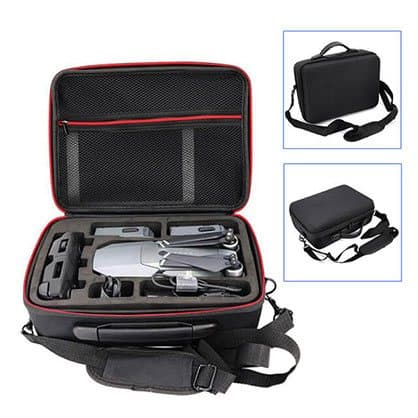
The $29 Protection Travel Case add-on image, shown with a different drone inside
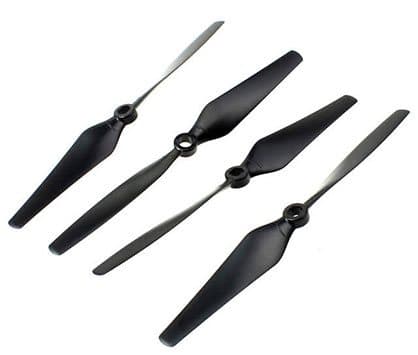
The $9 Extra Propeller Blades Set add-on image
Sparkcopter price and bundles
| Package | Total | Per drone |
|---|---|---|
| 1 Sparkcopter | $99 | $99.00 |
| 2 Sparkcopter | $159 | $79.50 |
| Buy 2, get 1 free (3) | $197 | $65.67 |
| 4 Sparkcopter | $249 | $62.25 |
| Buy 3, get 2 free (5), preselected | $297 | $59.40 |
One drone is enough for most people. You can check today's packages on the Sparkcopter order page (opens G Com Pte Ltd in a new tab).
The add-ons
- 720P Camera Upgrade: $24 (from $89). Ask what you would actually receive and whether it fits.
- Extra Propeller Blades Set: $9 (from $29). Useful, if they fit this drone.
- Sparkcopter Protection Travel Case: $29 (from $79). A padded pouch protects a pocket drone well enough.
Reading the bundle prices
The five-pack works out at $59.40 per drone, which sounds like a saving. It only makes sense if you genuinely want five drones, for example for a club or a group of children. For a single learner, the extra drones add cost without benefit, while spare batteries and propellers would be far more useful.
Spare batteries
No spare battery is offered, though it is the most useful extra for a toy drone. What to do: ask support whether spare batteries are sold, and what they cost.
The "regular price"
The page shows $198 crossed out next to $99 with a countdown. We found no evidence of Sparkcopter selling at $198.
Who sells it
The order page and impressum name G Com Pte Ltd, at 137 Market Street in Singapore, with a company registration number, email and phone number. The footer says "G Com Pte Ltd - Hong Kong". We found no independent rating profile for the store. With the United States selected, the order page said charges would appear as drone720x.com.

SparkcopterScore 3.3/10
Best for: First-time flyers who want a small, inexpensive-feeling drone to practise on
$99.00 at G Com Pte Ltd · Price checked October 4, 2026
Check price at G Com Pte Ltd (opens G Com Pte Ltd in a new tab)We may earn a commission if you buy through our links.
Is Sparkcopter better than a beginner drone from an established brand?
No, except for the fold-up size. For learning indoors, the Ryze Tello holds its position better thanks to vision sensors, and drohnen.de recommended it and the Parrot Mambo as better value. For filming, a sub-250 g GPS drone is in a different league. The matching Eachine E58 costs less under its own name. Sparkcopter's main advantage is buying from this page.
| Drone | GPS | Stabilised camera | Folds | Best for |
|---|---|---|---|---|
| Sparkcopter | No | No | Yes | Practice and fun |
| Eachine E58 | No | No | Yes | The same toy, often cheaper |
| Ryze Tello | No, vision sensors | Electronic only | No | Steady indoor learning |
| Tactic AIR Drone | No, optical flow | No | Yes | Steadier toy hover, dual camera |
| Sub-250 g GPS drone | Yes | Yes | Usually | Real aerial video |
Who should spend more
If you know you want aerial photos and you are comfortable learning on a more capable drone, spending more upfront saves money in the end. A toy that disappoints after a few weeks, followed by a GPS drone, costs more than buying the GPS drone first. The toy route makes most sense for children, for people unsure whether they will enjoy flying, and for practising manual control.
Sparkcopter vs the Eachine E58
Buying the original design from a retailer with simple returns usually costs less, with easy access to spare parts. If you like the design, this is the clear winner.
Sparkcopter vs the Ryze Tello
The Tello's downward sensors keep it steady indoors, which helps nervous beginners. It is widely used for simple coding lessons too. It does not fold, and its battery life is also short, but it is easier to fly.
Sparkcopter vs the Tactic AIR Drone
The seller's Tactic AIR Drone has optical flow positioning and a second, downward camera, which should make it steadier in a hover. It costs the same $99 for one.
What makes a good beginner drone
Look for a light, inexpensive drone with propeller guards, altitude hold, several speed modes and readily available spare parts. A physical controller is easier than phone-only controls. For outdoor flying, optical flow or GPS makes life easier. And always look for clear specifications: flight time, weight, camera resolution and range. Sparkcopter's page misses that last test.
Learning on a simulator
Some pilots practise on drone simulator apps or computer programs before flying real drones. Simulators let you crash as often as you like at no cost, and teach the stick movements. They are no substitute for real flying, but they can shorten the learning curve.
Sparkcopter vs a GPS drone
A sub-250 g GPS drone holds position outdoors, returns home if the signal drops and records smooth video. It costs several times more, but it is what Sparkcopter's marketing describes. Browse our drone reviews to compare more options.
If you still prefer Sparkcopter, check today's packages on the Sparkcopter offer page (opens G Com Pte Ltd in a new tab) and choose one drone.
SparkcopterScore 3.3/10
Why people buy it: Folds down small and comes with a controller that holds your phone for a live view
$99.00 at G Com Pte Ltd · Price checked October 4, 2026
Check price at G Com Pte Ltd (opens G Com Pte Ltd in a new tab)We may earn a commission if you buy through our links.
Do you need a licence to fly Sparkcopter?
Not a licence as such, but most countries have rules. In the US, recreational flyers must pass the FAA's free safety test, and drones under 250 g need no registration. In the UK, camera drones of 100 g or more need a Flyer ID and Operator ID. In the EU, camera drones generally require operator registration. Everywhere, keep it in sight, low, and away from people and airports.
United States
The FAA's guidance for recreational flyers explains the free Recreational UAS Safety Test, which every recreational flyer must pass and carry proof of. Drones under 250 g flown purely for fun do not need registration. Fly below 400 feet, within sight, and follow airspace restrictions.
United Kingdom
From 1 January 2026, anyone flying a drone of 100 g or more outdoors needs a Flyer ID, and a camera drone of that weight also needs an Operator ID from the Civil Aviation Authority. The E58 design is listed at 96 to 100 g, so weigh your drone with its battery to check.
European Union
Camera drones generally require operator registration under EASA rules unless certified as toys. EASA's registration requirements explain the exceptions.
Flying at the beach or in the mountains
Beaches and hilltops are tempting for drone video, but they are usually windy, and sand and salt spray damage motors. Light toy drones struggle in coastal and mountain winds. If you try, pick a calm moment, stay low and close, and land at the first sign of drift. Many beaches and nature reserves also restrict drones to protect wildlife.
Flying near home
Flying in your own garden is usually fine if you stay within your boundary, keep low and avoid neighbours. If your home is near an airport, a hospital helipad or a military site, check the airspace rules first, because restrictions can apply even to tiny drones.
Respecting privacy
Do not fly over neighbours' gardens, film people without permission or hover near windows. Even a small camera drone can make people uncomfortable, and respecting privacy keeps drone flying welcome.
Flying in parks
Many parks restrict or ban drones. Check signs and local council or park authority rules before flying.
Is Sparkcopter legit, and what should you check before buying?
Sparkcopter is a real product from a named seller, and a drone should arrive if you order. Before buying, know it is not a DJI product, compare it with its twins and the original design, change the preselected five-pack, and know that refunds need a returns number and that return postage is yours to pay. Each point below ends with one action.
Read the product title carefully
Offer pages often use long titles packed with appealing words. Sparkcopter's says "brilliant foldable lightweight drone for a professional-quality footage". What to do: look for the specification numbers instead of the adjectives, and if there are none, assume the most basic version of the design.
Do not buy it as a DJI drone
What to do: if you want a DJI drone, buy from DJI or an authorised retailer.
Check the selected bundle
The five-pack for $297 was preselected. What to do: change it to one drone before entering your details.
Membership offers
The page code contains text for a "Gadget Discount Club" membership, free for 30 days and then "a small fee of $9 may apply". We did not see it on the order page with the United States selected. What to do: read every checkbox and post-purchase page.
Refunds and returns
The page code promises a 30-day guarantee with a full refund or replacement, less shipping and handling. The terms focus on defective or damaged products, which may be returned within two years once you have a returns number. Return postage is at your cost and is not reimbursed.
What to do: test the drone indoors on the day it arrives, and contact support straight away if anything fails.
Battery safety
What to do: charge the battery only with the supplied cable, while someone is nearby, on a hard surface, and stop using it if it swells.
App permissions
Toy drone apps may ask for access to your camera, photos, storage and location. Camera and storage access are needed to save footage, and location is sometimes needed for Wi-Fi connections on Android. What to do: grant only what the app needs to work, and be cautious with apps that ask for contacts or other unrelated permissions.
Buying as a gift
If Sparkcopter is a gift, the recipient may not know it is not a DJI product. What to do: be clear about what it is, include a spare battery if available, and charge it before giving it, so the first flight can happen straight away.
How to buy Sparkcopter the smart way
- Compare the price with the same design under other names.
- Open the Sparkcopter order page (opens G Com Pte Ltd in a new tab) and select your country.
- Change the preselected five-pack to one drone.
- Ask about spare batteries; skip the camera add-on until support explains it.
- Note the card statement name, drone720x.com, and save your order email.
- Check the rules where you live before flying outdoors.
How did we score Sparkcopter?
Sparkcopter scores 3.3 out of 10: claim accuracy 0.4, build durability 0.9, price competitiveness 0.3, usability 1.1 and owner satisfaction 0.6, each out of 2. It works as a beginner toy, which testers of the matching design rated fairly. But the name invites confusion with DJI, the "professional-quality footage" claim is unrealistic, specs are missing and the price is about double the original design's.
What owners and testers say
We found no Trustpilot profile for the gadgetxaura.com store and no independent reviews for Sparkcopter by name. Several top-ranking pages are sponsored articles. Drohnen.de's testing of the matching E58 found it fun for beginners but weak in image quality, range and flight time. Owners of E58-style drones often praise the size and the controller, and complain about short flights, laggy video, drifting and broken propellers.
How the score breaks down
We use the five criteria on our how we test page, each out of 2.
| Criterion | Score | Why |
|---|---|---|
| Claim accuracy | 0.4 / 2 | "Professional-quality footage" is unrealistic for this design; add-on images mislead; name echoes DJI |
| Build durability | 0.9 / 2 | Light toy build; propellers and hinges are weak points |
| Price competitiveness | 0.3 / 2 | About double the original design's price |
| Usability | 1.1 / 2 | Controller and speed modes help beginners; no GPS |
| Owner satisfaction | 0.6 / 2 | Fun as a toy, limited as a camera |
| Total | 3.3 / 10 |
What we did, and did not, do
Nobody on our team has flown Sparkcopter. We read the Sparkcopter, DroneX Pro and Drone Ultra offer pages with the United States selected, their code and the seller's terms on 4 October 2026, along with drohnen.de's test, FAA, UK CAA and EASA rules and the top-ranking Sparkcopter pages.
How to use Sparkcopter: indoor practice and first outdoor flights
Learn indoors first, in the slowest mode with propeller guards, until you can hover, turn and land on a target. Then move outdoors on a calm day in an open space, keep the drone low and close, and land at the first battery warning. Short, focused sessions build skill faster than long, aimless ones, and keep the drone in one piece.
- Set up a practice area. A large room or hall, cleared of breakables, with pets out.
- Fit guards and check propellers. Each propeller must sit on the correct motor.
- Calibrate on a flat surface. Follow the leaflet's gyro calibration before take-off.
- Practise one control at a time. Height, then rotation, then forward and back, then sideways.
- Land on a target. A cushion or mat makes a good landing pad and a clear goal.
- Go outdoors only on calm days. Choose an open space away from people, roads and trees.
- Land at the first warning. Low battery means lost power soon after.
Choosing the right weather
Calm, dry days with light cloud are ideal: no wind, no glare and soft light for video. Avoid rain, strong sun low in the sky, which can blind you to where the drone is, and any wind you can feel on your face. Early mornings and evenings are often the calmest times of day.
Charging between flights
Toy drone batteries get warm in flight. Wait 10 to 15 minutes before recharging, charge on a hard surface away from anything flammable, and do not leave charging batteries unattended. If a battery comes back hot, swollen or smelling odd, retire it.
Keeping a spare set of propellers on you
Propellers are the part that breaks most often. Carry a spare set and the small tool or screwdriver that came with the drone. Swapping a cracked propeller in the field takes a minute and saves the rest of the session.
Practice games
Set up two chairs and fly between them, or try landing on a book from a hover. Count how many smooth landings you can make in a row. Games like these build precision quickly and keep practice fun for teenagers.
Flying around trees and buildings
Trees and buildings block Wi-Fi and create swirling air near their edges. Keep well clear, especially at first. A drone stuck in a tree is a common end to a toy drone's life, and climbing to retrieve it is riskier than the drone is worth.
Losing sight of the drone
If you lose sight of the drone, let go of the sticks so it hovers, if it has altitude hold, and look around carefully. If it has a one-key return or landing button, use landing rather than flying blind. Toy drones do not return home on their own.
Your first video
Wait until you can fly smoothly. Then fly slowly in a straight line in good light, with the sun behind you, and keep clips short. Jerky movements and wind show up badly on small cameras.
Looking after the drone
Wipe off dust and grass after outdoor flights, check the arms and hinges, and replace chipped propellers. Store it folded in a pouch, with the battery removed and partly charged.
Setting up the app
Install the app the leaflet names, switch on the drone, join its Wi-Fi network from your phone's settings, then open the app. Some phones try to leave networks without internet; turn that setting off for the drone's network. If the video still does not appear, close and reopen the app with the drone switched on.
Taking photos versus video
Most toy drone apps take photos and video by tapping an icon. Photos are often sharper than video frames because the camera can use its full resolution for a single shot. If you want a still of your house from above, take a photo while hovering steadily, rather than grabbing a frame from a video.
Practice drills for steady improvement
Try these in order, moving on only when each feels easy. Hover at waist height for a full minute without touching anything. Rotate a full circle on the spot. Fly forward three metres, stop and hover, then fly back. Fly a slow square, keeping the nose pointing forward. Fly the same square with the nose always pointing towards the centre. The last drill is hard, and mastering it means you are ready for most beginner drones.
Flying in a sports hall or gym
Large indoor spaces are ideal for toy drones: no wind, high ceilings and lots of room. Some drone clubs hire halls in winter for exactly this reason. Ask before flying in a shared space, keep away from lights and other people, and bring guards.
Sharing the drone with friends
If friends want a go, hand over the controller only once the drone has landed, and give a quick briefing: which stick does what, the slowest mode, and the land button. Stand beside a new pilot so you can take over. Most crashes happen in the first few seconds of a new pilot's turn, when they push the sticks too hard.
Cleaning after outdoor flights
Grass, dust and sand collect around the motors. After outdoor sessions, switch the drone off, remove the battery and gently brush the motors and propellers with a soft, dry brush. Do not use water. A clean drone runs cooler and flies more smoothly. Check the propellers for nicks while you clean, and swap any that are chipped, because a damaged blade makes the drone vibrate, drift and drain its battery faster. Store the spares in a small bag or box so they do not bend in transit.
When something goes wrong
If it drifts on take-off, land and recalibrate. If it wobbles, check the propellers. If the video drops, fly closer and check your phone is still on the drone's Wi-Fi. If it flies away in wind, follow it on foot while you can still see it, and never chase it into a road.
Other questions about toy drones
Most questions are about battery life, cameras, age suitability and how toy drones compare with camera drones. Expect several minutes per battery, video for fun rather than keeping, teenage and older pilots or supervised younger ones, and a big jump in price and capability for GPS camera drones. The answers below cover what buyers most often ask.
What age is a toy drone suitable for?
Many are labelled 14 and up, mainly because of propeller and battery safety. Younger children can fly with an adult's help in a safe space.
Can a toy drone fly in the rain?
No. Water can damage the electronics and battery. Land and dry it if you are caught in a shower.
Can I use a toy drone at night?
Some have lights, but flying at night makes it hard to see the drone, and rules in many countries restrict night flying. Daylight is safer while learning.
How high can a toy drone fly?
Physically, perhaps tens of metres before the signal weakens. Legally, the US limit is 400 feet, but a light toy drone is hard to see and control long before that. Keep it low.
What happens if the battery dies in flight?
The drone loses power and falls. Many toys warn you with flashing lights or the controller beeping. Land as soon as you see the warning.
Can I buy replacement parts?
For widely copied designs like the E58, propellers, arms and batteries are commonly sold. Check fit before buying, because similar-looking drones can differ.
Are toy drones safe around pets?
Pets may chase or attack a buzzing drone, and propellers can hurt them. Keep pets out of the room or garden while flying.
SparkcopterScore 3.3/10
Before you buy: Check the final price, shipping and return terms at checkout.
$99.00 at G Com Pte Ltd · Price checked October 4, 2026
Check price at G Com Pte Ltd (opens G Com Pte Ltd in a new tab)We may earn a commission if you buy through our links.
Frequently asked questions
Is Sparkcopter made by DJI?
No. DJI made a small drone called the Spark, which it has since discontinued. Sparkcopter is sold by G Com Pte Ltd and uses the same photos and bullet points as the seller's DroneX Pro and Drone Ultra pages. It matches a budget folding design tested as the Eachine E58, not any DJI drone.
Is Sparkcopter the same as DroneX Pro?
The Sparkcopter, DroneX Pro and Drone Ultra offer pages share the same product photo, headline and six bullets. A German drone site tested DroneX Pro as identical to the Eachine E58. We cannot inspect current parts, but expect the same toy performance from each name.
How long does Sparkcopter fly?
The page does not say. Testing of the matching Eachine E58 found about 7 to 9 minutes per battery and about an hour to recharge. Wind, cold and fast flying shorten that. Spare batteries are the best way to extend a session.
How much does Sparkcopter cost?
With the United States selected on 4 October 2026, the offer page listed one Sparkcopter for $99, two for $159, three for $197, four for $249 and five for $297. The five-pack was preselected. Delivery was listed as free, and a 3-year warranty add-on cost $24.
Does Sparkcopter have GPS?
The page does not mention GPS, and the matching E58 design has none. Without GPS, the drone cannot hold its position outdoors or return home automatically, so it drifts in wind. Indoors and in still air it is much easier to control.
Do I need to register Sparkcopter?
In the US, recreational drones under 250 g do not need FAA registration, but you must pass the free Recreational UAS Safety Test. In the UK, camera drones of 100 g or more need IDs from the CAA. In the EU, camera drones generally require operator registration.
Is Sparkcopter a good first drone?
It can be a fun way to learn the basic controls indoors or on still days, and small crashes are rarely costly. If you mainly want to film outdoors, a sub-250 g GPS drone from an established brand is a better first purchase, though it costs more.
We may earn a commission if you buy through our links.
Prices accurate as of October 4, 2026. Check the seller's checkout for current pricing, promotions and terms.
What we checked: No hands-on use. Features, photos, prices with the United States selected, the preselected bundle, add-ons and their images, warranty and card statement name from the Sparkcopter offer page our link opens (gadgetxaura.com) on 2026-10-04, plus the bundle and add-on data in the page's own code, compared with the seller's DroneX Pro and Drone Ultra pages the same day. Refund and cancellation terms from the same site's terms page. Drohnen.de's DroneX Pro and Eachine E58 test, FAA, UK CAA and EASA rules and the top-ranking Sparkcopter pages were read the same day.

About the author
Ryan Mitchell, Consumer Technology Writer
Ryan Mitchell covers new and innovative gadgets for Top10Gadgets: AI devices, wearables, smart accessories, digital services and the beauty tech sold through viral adverts. Ryan likes to find a gadget before it goes main…
- New and innovative gadgets
- AI devices and wearables
- Smart accessories
- Beauty tech
- App and subscription terms
Writing for Top10Gadgets since 2026Full profile