Auto Gadgets / Night driving glasses
ClearView Review: Do Yellow Night Driving Glasses Help You See, or Just Feel Brighter?
Yellow-tinted aviator glasses sold as a night driving aid. They are cheap and fit over your glasses, but a driving-simulator study found yellow lenses did not help spot pedestrians or reduce glare.

By Ethan Walker, Hardware & Gadget Tester at Top10Gadgets
Updated 26 min readHow we test
Quick answer
No for night driving, which is what ClearView is sold for. These yellow-tinted aviators can make a scene look warmer and brighter, and some drivers like them in daytime haze or fog.
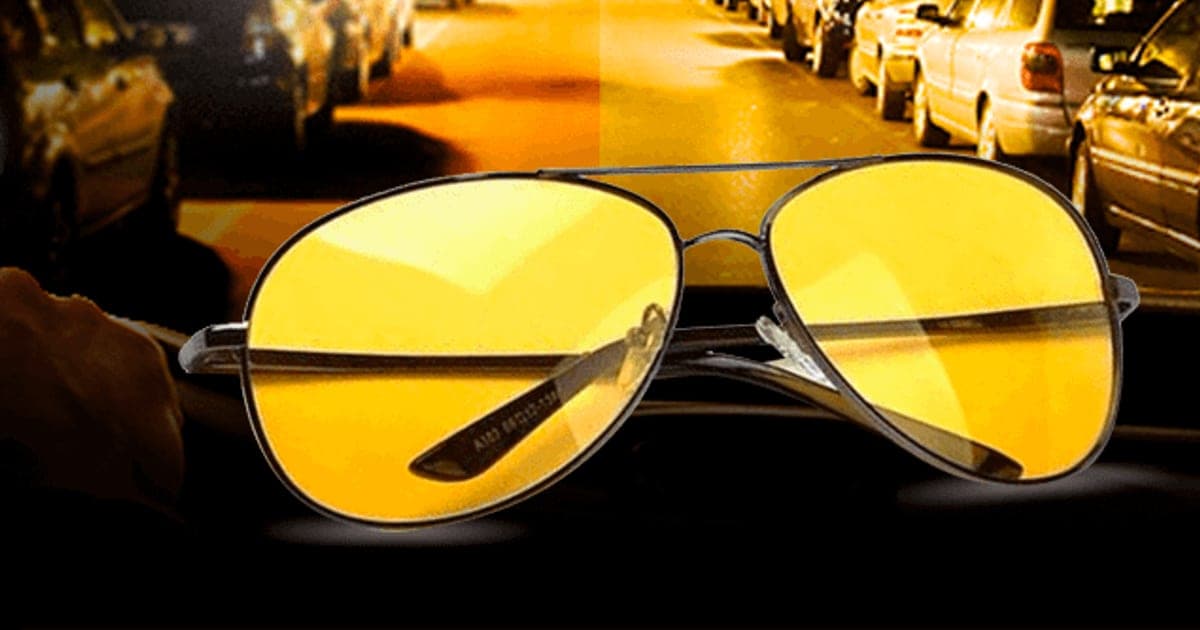
Score 3.2/10$49.00 at G Com Pte Ltd
Check price at G Com Pte Ltd (opens G Com Pte Ltd in a new tab)We may earn a commission if you buy through our links.
- Best for
- Drivers who want yellow-tinted glasses for daytime haze, overcast days or fog, and like how they look
- Not for
- Anyone buying them to see better when driving at night
$49.00 at G Com Pte Ltd
Check price at G Com Pte Ltd (opens G Com Pte Ltd in a new tab)We may earn a commission if you buy through our links.
On this page · 14 sections
- 01Our verdict
- 02The short version
- 03Pros & cons
- 04How it works
- 05Who it's for
- 06Do ClearView night driving glasses actually help you see at night?
- 07Why can yellow lenses feel brighter but make night vision worse?
- 08How much do ClearView glasses cost, and what are the add-ons?
- 09What actually helps with night driving glare?
- 10Are ClearView glasses safe to wear, and what should you check before buying?
- 11How did we score ClearView?
- 12How to use ClearView glasses safely
- 13What else do drivers ask about night driving glasses?
- 14Frequently asked questions
Our verdict
No for night driving, which is what ClearView is sold for. These yellow-tinted aviators can make a scene look warmer and brighter, and some drivers like them in daytime haze or fog. But a driving-simulator study in JAMA Ophthalmology found yellow lenses did not help drivers spot pedestrians at night or reduce headlight glare, and any tint lets less light into your eyes. UV protection is even sold separately. At $49 they are cheap for this seller, but not for what they do. ClearView scores 3.2 out of 10, held back by claims the evidence contradicts.
The short version
- What it is: yellow-tinted aviator glasses sold as a night driving aid, wearable alone or over your own glasses.
- Price: $49 for one pair on 4 October 2026, with a five-pack for $135 preselected. Delivery was listed as free.
- Best trait: a warm, high-contrast look some people enjoy in daytime haze.
- Biggest drawback: research found yellow lenses do not improve night driving vision, and tints cut light in the dark.
- Our score: 3.2 out of 10.
Pros & cons
The pros are about comfort and style in daylight. The cons are about the job ClearView is actually sold for.
What we like
- Yellow lenses can make scenes look brighter and warmer, which some drivers find comfortable in daytime haze or fog
- Aviator style that the page says you can wear alone or over your own glasses
- Lower price than most products from this seller, at $49 for one pair
- Free delivery, and the seller names a registered company with a Singapore address
What we don't
- A driving-simulator study in JAMA Ophthalmology found yellow lenses did not improve pedestrian detection at night or reduce the effect of headlight glare
- Any tinted lens cuts the light reaching your eyes, which is the opposite of what you need in the dark
- UV protection is sold as an $8 add-on, so the base pair may not block UV
- No lens material, light transmission figure or safety standard stated on the page
- Refunds need a returns number first, and you pay return postage to an overseas seller
Sold by G Com Pte Ltd
ClearView$49.00
How it works
Yellow lenses absorb much of the blue light in the spectrum. Blue light scatters more in haze and on wet roads, so filtering it can make scenes look crisper and warmer. The catch is that a filter can only remove light. It cannot add any.
Yellow lenses filter blue light
Step 1: The yellow tint absorbs much of the blue end of the light spectrum. Scenes look warmer, and some people perceive more contrast, especially in haze.
Wear them alone or over glasses
Step 2: The page says you can wear ClearView on its own or over your existing glasses, like other fit-over driving glasses.
Less total light reaches your eyes
Step 3: Because the tint absorbs part of the light, your eyes receive less light overall. In daylight that can feel comfortable. At night, it reduces how much you can see.
Who it's for
ClearView suits a driver who wants yellow-tinted glasses for overcast days, haze or fog in daylight, and who enjoys the look. It does not suit anyone hoping to see better at night, and that is the main use the page promotes.
- Drivers who want yellow-tinted glasses for daytime haze, overcast days or fog, and like how they look
- People who have read the evidence and still want to try the warmer view for comfort
- Buyers who want inexpensive fit-over glasses for occasional daytime use
Why ClearView appeals
Night driving is stressful for many people. Oncoming headlights, especially bright LED and high-mounted lights on newer cars, can leave you squinting and blinking for a second or two. The ClearView page speaks directly to that: "drive safer at night", "excluding blue light removes night-time glare", "clear view at night and in bad weather".
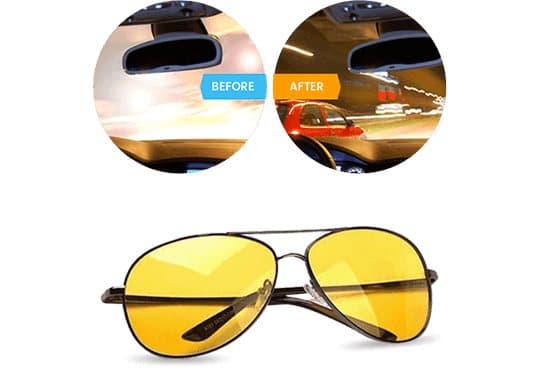
The before-and-after images are persuasive. One side shows a dim street and harsh headlights, the other the same scene looking warm and clear. Many people who try yellow glasses say the world looks brighter through them, so the promise feels true when you first put them on.
Who gets the most value
If you drive often on hazy, overcast or foggy days and like the warmer view, yellow lenses can make daytime driving feel more comfortable. Some cyclists and shooters use yellow lenses for similar reasons in flat light. In daylight there is plenty of light to spare, so losing some to the tint matters less.
Older drivers
Night vision naturally gets worse with age. The pupil shrinks, the lens yellows and scatters more light, and the retina receives less light overall. Older drivers are often the target of night driving glasses, but they are the people who can least afford to lose more light. If night driving has become harder, an eye test is the right first step.
Drivers with cataracts or other eye conditions
Increasing glare, halos around lights and blurry night vision can be early signs of cataracts and other conditions. Tinted glasses can mask the symptom without addressing the cause. See an optometrist if night driving is getting harder.
Who should skip it
Skip ClearView if your aim is better night vision, if glare is getting worse, or if you would wear them instead of your prescription.
- Anyone buying them to see better when driving at night
- Drivers who struggle with glare, halos or poor night vision, who should see an optometrist instead
- Older drivers, who already have less light reaching the retina at night
- People who need prescription lenses and would wear these as a substitute
Do ClearView night driving glasses actually help you see at night?
No. A driving-simulator study published in JAMA Ophthalmology found that yellow-lens night driving glasses did not improve how quickly drivers detected pedestrians and did not reduce the effect of oncoming headlight glare. The researchers noted that any tinted lens cuts out part of the light, which is like wearing sunglasses at night. Some drivers feel scenes look brighter, but feeling and seeing better are not the same.
What the offer page claims
The headline reads "Drive safer at night with ClearView glasses, state-of-the-art night vision aid". The six bullets are: safer night driving at low cost, excluding blue light removes night-time glare, clear view at night and in bad weather, wear alone or over existing glasses, enhance contrast and depth perception and reduce glare, and easy to use night driving aid.
The images show yellow aviators with a split night scene labelled before and after, and a second image of oncoming headlights, harsher on the before side and warmer on the after side.
What the JAMA Ophthalmology study found
In 2019, researchers led by Alex Hwang at Harvard Medical School's Schepens Eye Research Institute tested yellow-lens night driving glasses in a driving simulator. The study in JAMA Ophthalmology had 22 participants detect pedestrians at night, with and without yellow lenses and with and without simulated oncoming headlight glare.
The yellow lenses did not make pedestrian detection faster, and they did not reduce the negative effect of headlight glare on detection. The authors concluded their findings do not support eye care professionals recommending yellow-lens night driving glasses.
Why the researchers think they feel better than they work
Coverage of the study in Review of Optometry reports Dr Hwang's explanation: yellow, red or blue lenses all cut out a portion of light, which basically equals wearing sunglasses at night. People may feel scenes look brighter, but their vision is not really improved. The researchers also raised the concern that this false sense of better vision could make drivers overconfident.
"Excluding blue light removes night-time glare"
Yellow lenses do reduce blue light. But glare at night comes from bright light sources against a dark background and from light scattering in your eye and on your windscreen. Reducing all the light that reaches your eye reduces the glare a little, and reduces everything else you need to see by the same amount. The study found no net benefit for spotting pedestrians.
"Enhance contrast and depth perception"
Yellow lenses can increase perceived contrast between some colours, which is why they are popular in flat daylight and haze. The page gives no evidence for better depth perception. In darkness, contrast sensitivity depends mostly on how much light reaches the retina, which a tint reduces.
"Clear view at night and in bad weather"
In daytime fog or haze, some people prefer yellow lenses because blue light scatters most. At night in rain, the bigger problems are wet windscreens, worn wiper blades and dirty glass. Fixing those does more than any tint.
What the study did not test
The simulator study looked at pedestrian detection with and without glare, which is one of the most important night driving tasks. It did not test every lens, every driver or every road. But it is the best controlled evidence available, and it found no benefit for the main promise made by night driving glasses. Until a better study shows otherwise, the burden of proof sits with the sellers, and the ClearView page offers none.
Why the before-and-after images are not evidence
The page's before-and-after images are photographs, not measurements. A camera's exposure, colour balance and editing can make any scene look brighter or warmer. The "after" side looks clearer because of how the image was processed, not because the photo shows what a driver can see. Real evidence comes from testing what people detect, which is what the simulator study did.
What eye care advice generally says
Eye care sources such as All About Vision's guide, Night driving glasses: help or hoax?, generally recommend clear lenses with an anti-reflective coating for night driving, rather than tinted lenses. In some countries, driving rules also advise against tinted lenses at night. Check the guidance where you live.
Why can yellow lenses feel brighter but make night vision worse?
Yellow lenses change how colours and contrast look, so a scene can seem brighter and sharper even though less light is actually reaching your eyes. In daylight that trade-off is harmless. At night, your eyes are already working with very little light, and losing more of it makes dim objects such as pedestrians in dark clothing harder to see. The comfort is real; the safety benefit is not.
How your eyes see in the dark
At night your pupils widen and your retina relies more on rod cells, which are sensitive to dim light but not to colour. Every bit of light matters. A tint that removes a portion of the light reduces what the rods have to work with, regardless of colour.
Why scenes look brighter through yellow
Yellow lenses let through the parts of the spectrum the eye is most sensitive to in daylight, and block blue. Colours shift towards yellow and some edges appear more defined. The brain interprets this as clearer and brighter. That perception is why many people swear by yellow lenses, and why the study's result surprises them.
Headlight glare and your windscreen
Much of the glare you notice comes from light scattering on smears, scratches and grime on the windscreen and on your glasses. Modern LED headlights are bright and blue-white, and high-mounted lights on taller vehicles hit eye level. Cleaning the inside of the windscreen and your glasses removes a surprising amount of glare at no cost.
Recovery time after glare
After bright headlights pass, your eyes take a moment to readjust. This recovery time gets longer with age. Tinted lenses do not shorten it. Looking slightly to the right edge of your lane as a car approaches, rather than at its lights, reduces the dazzle.
Why marketers focus on blue light
Blue light has become a popular target in product marketing, from screen glasses to night driving lenses. Blue light does scatter more than other colours in haze, and very bright blue-white headlights can be uncomfortable. But at night the main problem is too little light overall, with a few very bright points in your view. Filtering blue light cannot fix a shortage of light.
Overconfidence
The study authors warned that people who feel they see better might drive faster or take more risks at night. Feeling more comfortable is pleasant, but it is not the same as having more time to react to someone stepping into the road.
How much do ClearView glasses cost, and what are the add-ons?
On 4 October 2026, with the United States selected, one pair of ClearView glasses cost $49, shown as half of $98, with free delivery. The five-pack for $135 was preselected. Add-ons included a $4 case, an $8 UVA and UVB protection option and a $9 car charger, and a 3-year warranty cost $9. Yellow-tinted aviators are widely sold for much less in shops and online.
ClearView price and bundles
| Package | Total | Per pair |
|---|---|---|
| 1 pair | $49 | $49.00 |
| 2 pairs | $69 | $34.50 |
| Buy 2, get 1 free (3) | $98 | $32.67 |
| 4 pairs | $123 | $30.75 |
| Buy 3, get 2 free (5), preselected | $135 | $27.00 |
Most drivers need one pair. You can check today's packages on the ClearView order page (opens G Com Pte Ltd in a new tab).
What you get for $49
The page does not list the box contents. The photos show a single pair of yellow aviators with metal frames. There is no mention of a case, cloth or lens specification, and the case is sold separately for $4. Compared with optical shops, where frames and lenses come with labelled UV protection and standards, you get much less information for your money.
UV protection, sold separately
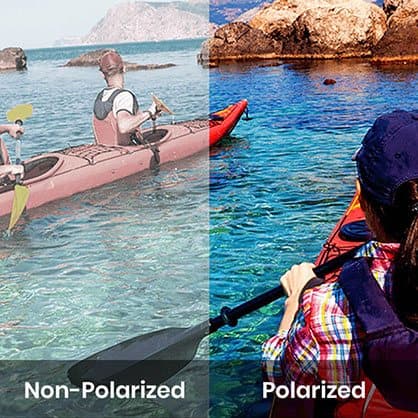
The page code offers "UVA & UVB Protection" for $8, shown reduced from $19, illustrated with a polarized versus non-polarized comparison. That suggests the standard pair is not sold as UV-protective. If you plan to wear ClearView in daylight, which is the only time the tint makes sense, UV protection matters for your eyes. What to do: if you buy, ask support to confirm in writing what the standard lenses block, and whether the add-on means UV protection, polarization or both.
The other add-ons
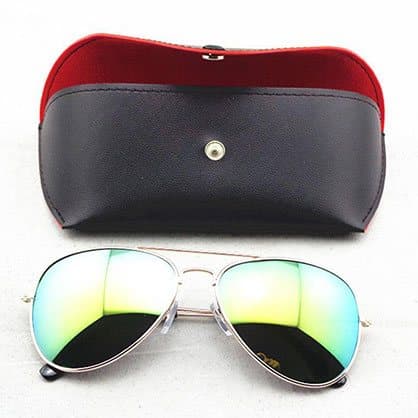
- Eyeglass Leather Case: $4 (from $9). The image shows a black and red case with different, mirrored sunglasses.
- Fast Car Charger: $9 (from $14). A USB car charger, unrelated to glasses.
The "regular price"
The page shows $98 crossed out next to $49 and a 30-minute countdown. We found no evidence of ClearView selling at $98. Yellow-tinted driving glasses are common and sold at many price points, so compare carefully.
Who sells it
The order page and impressum name G Com Pte Ltd, at 137 Market Street in Singapore, with a company registration number, email and phone number. The footer says "G Com Pte Ltd - Hong Kong". We found no independent rating profile for the store. With the United States selected, the order page said charges appear as perfectchoicebase.com, shown in capitals.

ClearViewScore 3.2/10
Best for: Drivers who want yellow-tinted glasses for daytime haze, overcast days or fog, and like how they look
$49.00 at G Com Pte Ltd · Price checked October 4, 2026
Check price at G Com Pte Ltd (opens G Com Pte Ltd in a new tab)We may earn a commission if you buy through our links.
What actually helps with night driving glare?
An eye test, clean glass, anti-reflective lenses if you wear glasses, and well-aimed headlights do more for night driving than any tinted lens. These fixes cost little or nothing, and some, such as cleaning the inside of your windscreen, take five minutes. If glare has become worse recently, an optometrist can check for cataracts and other treatable causes.
| Fix | Cost | What it does |
|---|---|---|
| ClearView yellow glasses | $49 | Changes colour and contrast; reduces total light |
| Eye test and updated prescription | Often low or covered | Corrects blur that makes glare worse |
| Anti-reflective coating on your glasses | Added to new lenses | Reduces reflections and halos from your own lenses |
| Clean windscreen inside and out | Almost free | Removes film that scatters headlight glare |
| New wiper blades | Low | Stops streaks that smear lights in rain |
| Headlight check and aim | Low | Improves what you see and reduces dazzle for others |
ClearView vs an eye test
Uncorrected short-sightedness, astigmatism and early cataracts all make night glare worse. A small prescription change can make a real difference after dark. An optometrist can also tell you whether you are safe to drive at night. This is the clearest case where a rival plainly wins.
ClearView vs anti-reflective lenses
If you wear glasses, reflections on your own lenses can create ghost images of headlights. An anti-reflective coating reduces those reflections and lets slightly more light through. Clear, coated lenses are what eye care professionals usually recommend for night driving.
ClearView vs a clean windscreen
The inside of a windscreen collects a greasy film from plastics and breath. At night, that film scatters headlight glare across the glass. A microfibre cloth and glass cleaner, used regularly, cut glare noticeably. Of all the night driving fixes, a cloth is the best value.
ClearView vs daytime sunglasses
For daytime driving, proper sunglasses with labelled UV protection, and polarization if you like, reduce glare from roads and water. They should come off at dusk. If you like the yellow look for overcast days, choose a pair clearly labelled for UV protection.
ClearView vs better headlights on your own car
Dirty, yellowed or misaimed headlights reduce how far you can see. Cleaning and polishing cloudy headlight covers, replacing dim bulbs with legal equivalents and having the aim checked during a service can improve your view at night. Ask a garage to check the aim if oncoming drivers flash you often.
ClearView vs choosing when you drive
For drivers who find night driving genuinely hard, the most effective change can be driving less at night. Planning longer trips in daylight, using public transport after dark, or sharing driving with someone who sees well at night avoids the problem entirely. That is not a gadget, but it is the advice many eye care professionals give older drivers.
Other car gadgets we have reviewed
If you are equipping a car, our React ChargeHub review covers a charger with an escape tool, and our CupStation review looks at a cup holder expander. From the same seller, our SmartCar review covers an OBD2 code reader and our iTrack review a plug-in GPS tracker.
If you still want ClearView for daytime use, check the current packages on the ClearView offer page (opens G Com Pte Ltd in a new tab) and choose one pair.
ClearViewScore 3.2/10
Why people buy it: Yellow lenses can make scenes look brighter and warmer, which some drivers find comfortable in daytime haze or fog
$49.00 at G Com Pte Ltd · Price checked October 4, 2026
Check price at G Com Pte Ltd (opens G Com Pte Ltd in a new tab)We may earn a commission if you buy through our links.
Are ClearView glasses safe to wear, and what should you check before buying?
ClearView is a real product from a named seller, and a pair of glasses should arrive if you order, but it is not a safe night driving aid. Wear it in daylight only, confirm what the lenses block, change the preselected five-pack, and know that refunds need a returns number and that return postage is yours to pay. Each point below ends with one action.
Do not wear tinted lenses at night
The research does not support yellow lenses for night driving, and any tint reduces the light reaching your eyes. What to do: if you buy ClearView, keep it for daytime haze or fog, and take it off at dusk.
Check what the lenses block
The page gives no lens material, light transmission or UV rating, and sells UV protection separately. What to do: ask support what the standard lenses block, and do not wear them as sunglasses unless UV protection is confirmed.
Check the fit over your glasses
Fit-over glasses must sit comfortably without pressing on your own frames or slipping. The page gives no dimensions. What to do: measure the width of your current glasses and ask support for ClearView's inside frame width before ordering.
Check the selected bundle
The five-pack for $135 was preselected. What to do: change it to one pair before entering your details.
Membership offers
The page code contains text for a "Gadget Discount Club" membership, free for 30 days and then "a small fee of $9 may apply". We did not see it on the order page with the United States selected. What to do: read every checkbox and any page that appears after payment.
Who should not drive at night at all
If you see halos, struggle to make out the road edges or feel dazzled for several seconds after a car passes, you may not be safe to drive at night until your eyes are checked. What to do: stop driving at night until an optometrist has examined your eyes, and follow their advice about what is safe.
Glasses that are too dark
Some yellow and amber lenses are darker than others. The page does not state ClearView's light transmission. What to do: if the lenses look noticeably dark indoors, do not use them in poor light at all, even in daytime fog.
Children and passengers
Yellow glasses are sometimes bought as a fun accessory for passengers. That is harmless in daylight. What to do: make sure the person driving is not wearing tinted lenses after dark.
Refunds and returns
The page code promises a 30-day guarantee with a full refund or replacement, less shipping and handling. The terms focus on defective or damaged products, which may be returned within two years once you have a returns number. Return postage is at your cost and is not reimbursed.
What to do: check the glasses for scratches and fit on the day they arrive, and contact support immediately if there is a problem.
How to buy ClearView the smart way
- Decide whether you want yellow glasses for daytime use; skip them if night vision is the goal.
- Open the ClearView order page (opens G Com Pte Ltd in a new tab) and select your country.
- Change the preselected five-pack to one pair.
- Ask support whether the standard lenses block UV, and add the $8 option only if you understand what it adds.
- Note the card statement name, perfectchoicebase.com, and save your order email.
- Inspect the lenses and fit the day they arrive.
How did we score ClearView?
ClearView scores 3.2 out of 10: claim accuracy 0.3, build durability 0.9, price competitiveness 0.6, usability 1.0 and owner satisfaction 0.4, each out of 2. Its central claim, safer night driving, is contradicted by the best available study, and the page leaves out lens details. The glasses are inexpensive for this seller, but yellow aviators are widely available for less. We found no independent owner ratings for ClearView.
What owners say
We found no Trustpilot profile for the gadgetxaura.com store and no independent retailer reviews for ClearView. Most top-ranking pages for "ClearView glasses" are sponsored articles that repeat the claims. Owners of yellow night driving glasses in general often say scenes look brighter and that oncoming lights feel softer. That matches what the researchers describe: the perception changes, while measured detection does not improve.
How the score breaks down
We use the five criteria on our how we test page, each out of 2.
| Criterion | Score | Why |
|---|---|---|
| Claim accuracy | 0.3 / 2 | "Safer night driving" is contradicted by a controlled study; no lens specs |
| Build durability | 0.9 / 2 | Simple metal aviator frame; material and lens quality not stated |
| Price competitiveness | 0.6 / 2 | $49 is modest for this seller but high for yellow-tint aviators |
| Usability | 1.0 / 2 | Easy to wear, but unsafe for the main use promoted |
| Owner satisfaction | 0.4 / 2 | No independent ratings for ClearView |
| Total | 3.2 / 10 |
What we did, and did not, do
Nobody on our team has used ClearView. We read the offer page our link opens with the United States selected, its code and the seller's terms on 4 October 2026, along with the 2019 JAMA Ophthalmology study on yellow-lens night driving glasses, coverage of that study, an eye care guide to night driving glasses and the top-ranking ClearView pages.
How to use ClearView glasses safely
Use ClearView in daylight haze, overcast weather or fog if you like the view, and take it off at dusk. Do not use it to drive at night, keep the lenses clean and scratch-free, and get an eye test if night driving has become harder. Those steps give you the comfort some people enjoy without the trade-off in the dark.
- Keep them for daylight. Use them on hazy or overcast days if the warmer view helps you feel comfortable.
- Take them off at dusk. As light fades, switch to clear lenses or none.
- Never use them as a substitute for prescription glasses. Wear your prescription, and use fit-over glasses only on top if they fit well.
- Clean the lenses gently. Use a microfibre cloth and lens cleaner, not your shirt or paper towels, which can scratch.
- Store them in a case. Scratches scatter light and make glare worse.
- Clean your windscreen. Glare from the inside film often matters more than any lens.
- Book an eye test. If night driving feels harder than it used to, let an optometrist check why.
Getting the most from yellow lenses in daylight
Yellow lenses work best when light is flat and grey: early mornings with mist, overcast afternoons and light haze. In bright sun, they can feel glaring because they let through more light than proper sunglasses. Try them in the conditions where you most often struggle, and switch to standard sunglasses on bright days.
Combining ClearView with your prescription
If you wear prescription glasses, ClearView has to sit on top. Check that the combination does not press on your nose or ears and that your own frames are not pushed out of position, which can blur your vision. If the fit is poor, prescription lenses with a light yellow tint for daytime use, made by an optician, are more comfortable and safer.
Driving at night more safely
Dim your dashboard lights, keep the windscreen clean inside and out, replace worn wiper blades, and make sure your own headlights are clean and correctly aimed. When a car approaches with bright lights, look towards the right edge of your lane until it passes. Leave more distance and slow down on unlit roads.
Night driving habits that help
Give your eyes a few minutes to adjust before setting off in the dark, especially after leaving a bright shop or office. Keep the cabin dark, with the dashboard and any screens dimmed, so your eyes stay adapted to the road. Take breaks on long night drives, because tiredness slows your reactions and makes glare feel worse. If you feel dazzled, slow down and increase your distance from the car ahead until your vision recovers.
Passengers can help too. Ask a passenger to watch for pedestrians and cyclists on unlit stretches, and agree that you will stop for a break if either of you feels the driving has become stressful. A short rest at a lit service area often does more than any accessory.
Fog and heavy rain
In fog, use dipped headlights and fog lights where appropriate, slow down and increase your following distance. Yellow lenses in daytime fog may feel helpful to some drivers. At night in fog, keep to clear lenses.
Checking your eyes regularly
Most eye care professionals recommend regular eye tests for adults, more often as you get older or if you have diabetes or a family history of eye disease. Mention night driving problems specifically, because some conditions show up first as glare and poor vision in the dark.
Using them for daytime fog
If you like ClearView in daytime fog, use it alongside safe fog driving: dipped headlights, fog lights where appropriate, lower speed and longer gaps. If fog thickens towards evening, take the glasses off as light fades.
Caring for fit-over glasses
Fit-over frames take more strain because they sit over another pair. Put them on and take them off with both hands, and store them flat in a case. Check the hinge screws occasionally.
ClearViewScore 3.2/10
Before you buy: Check the final price, shipping and return terms at checkout.
$49.00 at G Com Pte Ltd · Price checked October 4, 2026
Check price at G Com Pte Ltd (opens G Com Pte Ltd in a new tab)We may earn a commission if you buy through our links.
What else do drivers ask about night driving glasses?
Most questions are about whether any glasses help at night, whether blue light filters matter, and what to do about increasing glare. No tinted glasses are shown to improve night driving vision, blue light filtering does not add light, and worsening glare is a reason to see an optometrist. The answers below cover the questions that come up most when drivers compare night driving glasses and other fixes.
Are there any glasses that help with night driving?
Clear lenses with an up-to-date prescription and an anti-reflective coating are the best-supported option for people who need glasses. They do not filter light; they reduce reflections and correct blur.
Do blue light glasses help with headlights?
Blue light filtering glasses for screens usually have a lighter tint or a coating. They remove some blue light but also reduce total light. There is no good evidence they make night driving safer.
Why do LED headlights seem so bright?
Modern LED and high-intensity headlights produce bright, blue-white light, and taller vehicles place lights closer to eye level. Many drivers report more glare than in the past. Clean windscreens, good eyesight and looking away from oncoming lights help.
Is it illegal to wear tinted glasses at night?
Rules vary. In some countries, official driving guidance advises against wearing tinted lenses at night or when visibility is poor. Check the guidance in your country.
Can glare at night be a sign of cataracts?
Yes. Increasing glare and halos around lights, especially at night, are common early symptoms of cataracts. Other conditions can also cause them. An optometrist can examine your eyes and refer you if needed.
Does polarization help at night?
No. Polarized lenses reduce reflected glare from flat surfaces like water and roads in daylight, but they are tinted and reduce light. They should not be used for night driving.
Are yellow lenses good for anything?
Many people like yellow lenses for daytime activities in flat or hazy light, such as cycling, skiing in overcast conditions or shooting sports. The warmer, higher-contrast look can feel clearer in those conditions.
Do yellow lenses help in snow?
In daytime snow under grey skies, some people find yellow or amber lenses make bumps and edges easier to see, which is why they are popular for skiing in flat light. On bright, sunny snow, darker lenses with UV protection are more comfortable. At night in snow, the same advice applies as on any road: clear lenses only.
Can I wear ClearView while cycling or walking at night?
The same problem applies. A tint reduces the light reaching your eyes, which makes potholes, kerbs and people harder to see in the dark. Cyclists and walkers are better served by good lights, reflective clothing and clear eyewear if they need eye protection.
Do night vision cameras in cars help?
Some higher-end cars offer infrared night vision systems that show pedestrians and animals on a screen. Unlike tinted glasses, these add information rather than removing light. They are factory options, not add-ons, and drivers still need to watch the road, but they show the difference between real night vision technology and a coloured lens.
Should I buy night driving glasses as a gift?
We would not recommend them as a gift for someone who struggles at night, because they may rely on them instead of getting their eyes checked. If someone wants yellow lenses for daytime sports or style, choose a pair with labelled UV protection from a known retailer.
What should older drivers do about night driving?
Have regular eye tests, ask about cataracts if glare has worsened, plan routes on well-lit roads, avoid driving when tired and consider driving less at night if it feels stressful. Many older drivers simply schedule longer journeys for daylight.
You can find more driving gadgets in our auto gadget reviews.
Frequently asked questions
Do night driving glasses work?
The evidence says no for seeing better at night. A 2019 driving-simulator study in JAMA Ophthalmology found yellow-lens night driving glasses did not improve how quickly drivers detected pedestrians or reduce the effect of oncoming headlight glare. Some wearers feel scenes look brighter, but tinted lenses reduce the light reaching your eyes.
Are yellow-tinted glasses safe for driving at night?
They are not recommended. Any tint cuts the amount of light entering your eyes, which matters most in the dark. Researchers have also suggested drivers may feel more confident without actually seeing better, which could encourage riskier driving. Clear lenses with anti-reflective coating are the usual advice for night driving.
How much do ClearView glasses cost?
With the United States selected on 4 October 2026, the offer page listed one pair for $49, two for $69, three for $98, four for $123 and five for $135. The five-pack was preselected. Delivery was listed as free, and a 3-year warranty add-on cost $9.
Do ClearView glasses have UV protection?
The page does not say the standard pair blocks UV. A separate UVA and UVB protection option is sold as an $8 add-on, illustrated with a polarized lens comparison. If you want sunglasses for daytime driving, choose a pair clearly labelled for UV protection.
What helps with night driving glare?
An up-to-date eye test, clear lenses with anti-reflective coating if you wear glasses, a clean windscreen inside and out, correctly aimed headlights, and looking towards the right edge of your lane when cars approach. Glare that is getting worse can be a sign of cataracts, so mention it to an optometrist.
Is ClearView legit?
It is a real product sold by G Com Pte Ltd, which lists a Singapore address, company number, email and phone. The concerns are the night-driving claims, which the research does not support, the preselected five-pack, the missing lens details and refund terms that leave return postage to you.
Can I wear ClearView over my glasses?
The page says you can wear them alone or over existing glasses. Fit depends on the size of your frames, and the page gives no dimensions. Fit-over glasses also add weight and can slip. If you wear prescription glasses, an anti-reflective coating on your own lenses is a better answer to glare.
We may earn a commission if you buy through our links.
Prices accurate as of October 4, 2026. Check the seller's checkout for current pricing, promotions and terms.
What we checked: No hands-on use. Claims, photos, prices with the United States selected, the preselected bundle, add-ons, warranty and card statement name from the ClearView offer page our link opens (gadgetxaura.com) on 2026-10-04, plus the bundle and add-on data in the page's own code. Refund and cancellation terms from the same site's terms page that day. The 2019 JAMA Ophthalmology study of yellow-lens night driving glasses, coverage of that study and All About Vision's guide to night driving glasses, plus the top-ranking ClearView pages, were read the same day.

About the author
Ethan Walker, Hardware & Gadget Tester
Ethan Walker covers hardware for Top10Gadgets: audio, computing, phone accessories, chargers, tools, car gadgets and sports equipment. Ethan believes a product should be judged on what happens when people actually use it…
- Headphones and speakers
- Chargers and phone accessories
- Tools and emergency gear
- Car accessories
- Durability and real-world performance
Writing for Top10Gadgets since 2026Full profile