Supplements / Digestive health
Emma Relief Review: What's in Dr. Gina Sam's Gut Supplement, What the Evidence Says and How to Buy It
A six-ingredient digestive supplement led by berberine, sold through a doctor-fronted video. The ingredients are plausible for bloating, but doses are not shown and berberine interacts with many medicines.

By Daniel Brooks, Technology & Buying Guide Editor at Top10Gadgets
Updated 29 min readHow we test
Quick answer
Only if you have occasional bloating or irregularity, take no interacting medicines, and are prepared to judge it over a month with the guarantee as a safety net. Emma Relief contains plausible digestive ingredients, led by berberine, and many buyers report less bloating.
Score 4.7/10$59.00 at Emma
Check price at Emma (opens Emma in a new tab)We may earn a commission if you buy through our links.
- Best for
- Adults with occasional bloating, gas or irregularity who have already tried fibre, fluids and activity
- Not for
- Anyone pregnant, breastfeeding or trying to conceive
$59.00 at Emma
Check price at Emma (opens Emma in a new tab)We may earn a commission if you buy through our links.
On this page · 14 sections
- 01Our verdict
- 02The short version
- 03Pros & cons
- 04How it works
- 05Who it's for
- 06How much does Emma cost, and what's in the bottle?
- 07Does Emma work, and what does the evidence say?
- 08Are Emma's claims true?
- 09Is Emma better than diet changes, psyllium or probiotics?
- 10Is Emma safe, and what should you check before buying?
- 11What do owners say, and how did we score Emma?
- 12How to use Emma for the best results
- 13What else do people ask about bloating and constipation?
- 14Frequently asked questions
Our verdict
Only if you have occasional bloating or irregularity, take no interacting medicines, and are prepared to judge it over a month with the guarantee as a safety net. Emma Relief contains plausible digestive ingredients, led by berberine, and many buyers report less bloating. But ingredient doses were not shown on the pages we saw, berberine interacts with many medicines, and the sales video relies on fear and scripted praise. It scores 4.7 out of 10, held back by marketing, undisclosed doses, polarised reviews and the price.
The short version
- A capsule supplement from Enclave BioActives, promoted by New York gastroenterologist Dr. Gina Sam.
- Six ingredients: berberine, chicory root inulin, licorice root extract (DGL), star anise, quercetin and resveratrol.
- Two capsules a day; 60 capsules a bottle, about a month.
- $59 for one bottle on 3 October 2026; $147 for three, $234 for six, $297 for nine. 90-day money-back guarantee.
- Best trait: a sensible set of ingredients for occasional bloating, from a brand with a real specialist attached.
- Biggest drawback: undisclosed doses, berberine drug interactions and fear-led marketing.
- Our score: 4.7 out of 10.
Pros & cons
Emma is not a scam product: it has a real doctor, a real company and ingredients with a plausible role. The cons are about what you cannot see before buying, who should not take it, and how it is sold.
What we like
- Developed with input from Dr. Gina Sam, a real New York gastroenterologist who specialises in gut motility
- Ingredients with a plausible role in digestion: berberine, chicory root inulin, licorice root (DGL), star anise, quercetin and resveratrol
- Simple routine: two capsules a day, 60 capsules a bottle
- 90-day money-back guarantee on the brand's site
- Large Trustpilot profile where many buyers report less bloating and more regular bowel movements
What we don't
- Ingredient amounts were not shown on the pages we saw, so you cannot compare doses with research
- Berberine interacts with many medicines and is not recommended in pregnancy or breastfeeding
- The sales video uses fear about parasites and toxins, and a wall of scripted-looking comments
- $59 a month for one bottle; the lower per-bottle prices need a 3-, 6- or 9-bottle order
- Polarised ratings: 3.6 on Trustpilot, with 23% one-star reviews about no results and refunds
- No published trial of Emma as a finished product
Sold by Emma
Emma Relief$59.00
How it works
Emma is a daily supplement. It does not work like a laxative; it aims to change the conditions in your gut gradually.
Take two capsules a day
Step 1: Emma comes as capsules, 60 to a bottle. The brand's directions are two capsules daily, so one bottle lasts about a month.
Six ingredients target the gut
Step 2: Berberine and star anise are aimed at gut bacteria balance and bile flow, chicory root inulin is a prebiotic fibre, and licorice root (DGL), quercetin and resveratrol are included for the gut lining, according to the brand.
Give it a few weeks
Step 3: Supplements like this act gradually, if at all. Owners who report benefits usually describe less bloating and more regular bowel movements over days to weeks.
The brand's pitch focuses on gut bacteria, especially methane-producing microbes that are linked with slow transit and bloating in some people. Berberine has antimicrobial effects in the gut, and inulin feeds beneficial bacteria. The other ingredients are included for the gut lining and as antioxidants.
Who it's for
Emma is aimed mainly at women with bloating, gas and irregular bowel movements, though the ingredients are not sex-specific. It suits adults whose symptoms are occasional and mild, who have already tried the basics of fibre, fluids, movement and regular meals, and who want to try a botanical supplement.
It is not suitable for anyone pregnant or breastfeeding, anyone on medicines that interact with berberine, or anyone with warning signs that need a doctor.
Why Emma appeals
Bloating and constipation are common, uncomfortable and often embarrassing to talk about. Advice like "eat more fibre" can make bloating worse for some people. Emma offers a single daily capsule with a specialist's name attached, natural-sounding ingredients, and a story that explains why other approaches failed.
The video format adds intrigue: a doctor promising to reveal a simple daily habit, with a reveal at the end. That is effective marketing, though it can make the product feel more mysterious than it is.
Who gets the most value
People most likely to benefit are those with mild, recurring bloating and sluggish digestion who are not on interacting medicines and who will stick with it for at least a month. People with diagnosed gut conditions may benefit too, but should involve their doctor, who can advise on proven treatments.
What it will not do
Emma will not treat a gut infection, inflammatory bowel disease, coeliac disease, food intolerances or structural problems. It will not produce rapid weight loss, despite the "flatter tummy" wording on the label. A flatter-feeling belly from less bloating is not fat loss.
A note on the video format
Emma is sold through a "video sales letter": a long video, here presented by Dr. Sam, that explains a problem, builds curiosity about a solution and reveals the product near the end. Prices and order buttons usually appear only after the video. This format is common for supplements because it holds attention, but it also makes it hard to compare products quickly.
What this means for you: you do not have to watch the whole video to buy or to judge the product. The ingredient list, the price per month and the guarantee terms are what matter.
- Adults with occasional bloating, gas or irregularity who have already tried fibre, fluids and activity
- People who prefer a botanical supplement and do not take medicines that interact with berberine
- Buyers willing to give it a month and use the guarantee if it does not help
Who should skip it
- Anyone pregnant, breastfeeding or trying to conceive
- People taking blood thinners, diabetes medicines, antidepressants, immunosuppressants or other drugs metabolised by the liver, unless a doctor approves
- Anyone with alarm symptoms such as blood in the stool, weight loss, severe pain or a recent change in bowel habits
- People with diagnosed IBS, SIBO or inflammatory bowel disease who have not discussed it with their doctor
How much does Emma cost, and what's in the bottle?
Emma costs $59 for one 60-capsule bottle, about a month's supply at two capsules a day, with lower per-bottle prices, down to about $33 a month, only on 3-, 6- or 9-bottle bundles. The six ingredients are berberine, chicory root inulin, licorice, star anise, quercetin and resveratrol, but the pages we saw did not show the amount of each per serving.
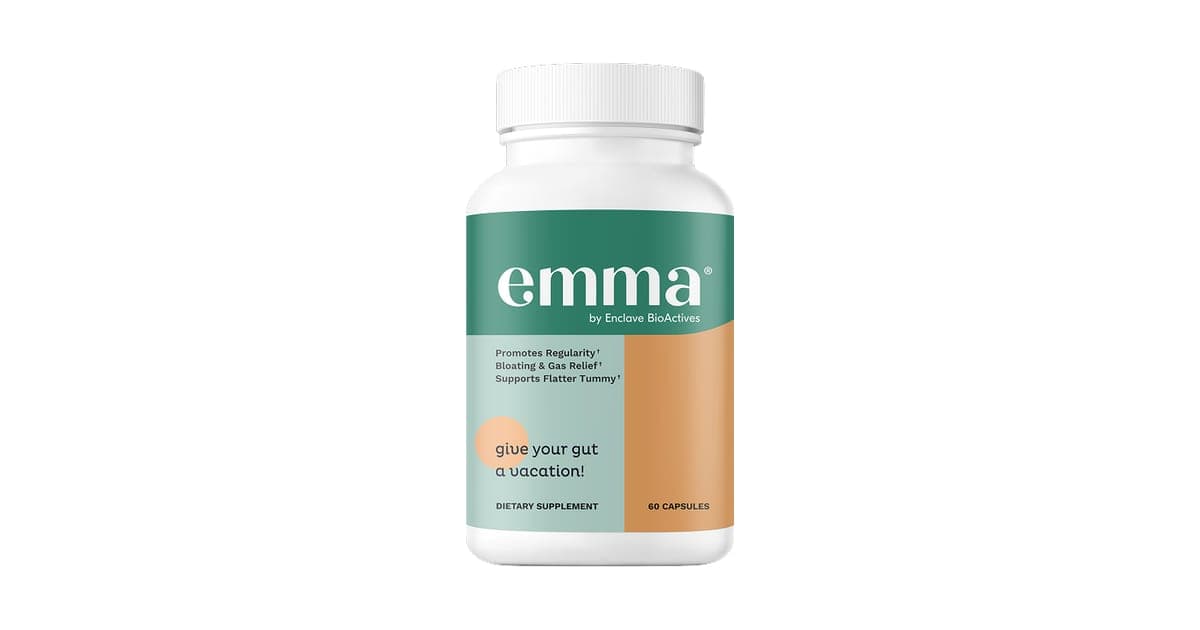
You get a bottle of 60 capsules. The label reads "Promotes regularity, bloating and gas relief, supports flatter tummy", with the standard supplement disclaimer.
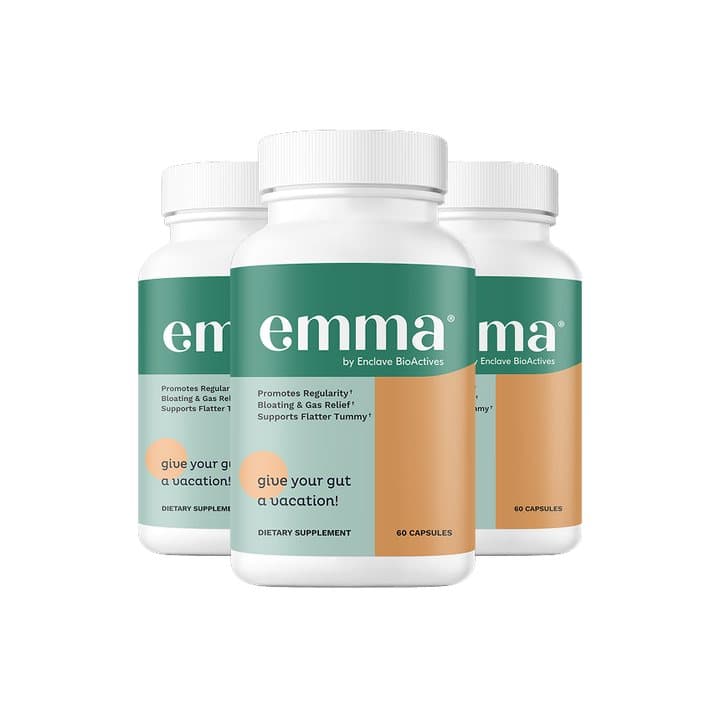
The three-bottle pack
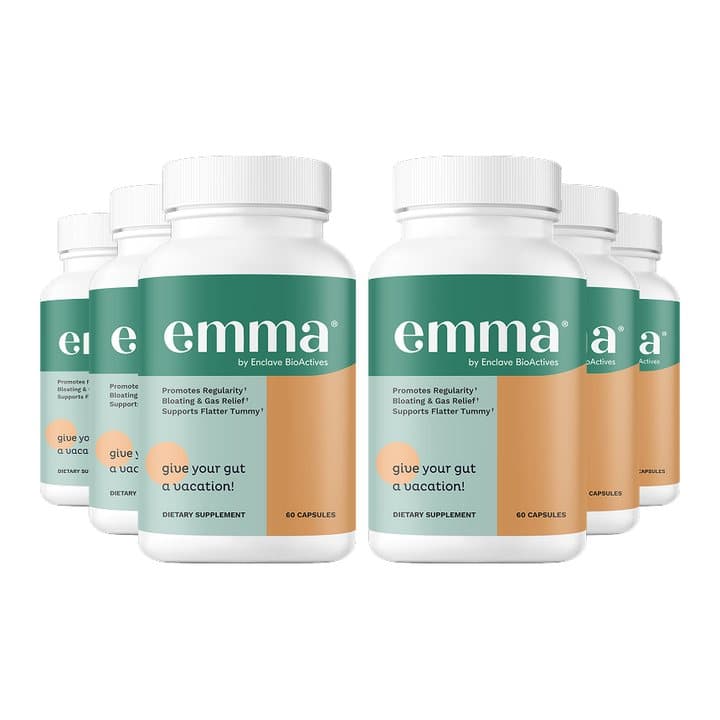
The six-bottle pack

The bonus ebook shown with larger packs
The six ingredients
| Ingredient | Role claimed by the brand | What is known |
|---|---|---|
| Berberine | Gut balance | Plant compound with antimicrobial activity; studied for blood sugar and gut bacteria; interacts with many drugs |
| Chicory root inulin | Prebiotic fibre | Feeds beneficial bacteria; can increase gas at first |
| Licorice root extract (DGL) | Gut-lining support | DGL has most glycyrrhizin removed, lowering the blood-pressure risk of whole licorice |
| Star anise | Bile flow | Culinary spice; limited human research for digestion |
| Quercetin | Antioxidant, gut lining | Common plant flavonoid; limited gut-specific evidence |
| Resveratrol | Antioxidant | Studied widely; gut benefits in humans unclear |
The doses are not shown
Emma's site lists the ingredients but, on the pages we saw, not the amount of each per serving. Without amounts, you cannot check whether the berberine dose is in the range used in studies, or whether the inulin dose is enough to act as a prebiotic.
What this means for you: look for the Supplement Facts panel on the bottle when it arrives, or ask the company for it before ordering. If amounts are shown as a "proprietary blend", only the total is given.
Emma price and bundles
The video page did not show prices in our capture; they usually appear after the video. On 3 October 2026, the Emma store data listed:
| Package | Total | Per bottle | Months at 2 a day |
|---|---|---|---|
| 1 bottle | $59 | $59 | 1 |
| 3 bottles | $147 | $49 | 3 |
| 6 bottles | $234 | $39 | 6 |
| 9 bottles | $297 | $33 | 9 |
Some store listings showed a single bottle at $65. The multi-bottle packs on the offer page also show a "Lean Belly Shakes" recipe ebook as a bonus, described as a $19.95 value.
What the bundles really cost per day
At two capsules a day, one bottle lasts 30 days. That makes the single bottle about $1.97 a day, the three-pack about $1.63 a day, the six-pack about $1.30 a day and the nine-pack about $1.10 a day. Over a year, the difference between buying single bottles and nine-packs is significant, but only if you know you will keep taking it.
What this means for you: a month's supply costs $59 if you buy one bottle. The cheaper per-bottle prices commit you to three to nine months up front, before you know whether it helps.
Is $59 a month good value?
It is expensive for a digestive supplement. Generic berberine, inulin and DGL supplements are widely available separately for less, though combining them yourself means more pills and guesswork. Emma's value depends on whether it helps you; one bottle with the guarantee is the sensible way to find out.
Questions to ask before you pay
- How many milligrams of berberine and inulin are in two capsules?
- Is the licorice DGL, and how much glycyrrhizin remains?
- Is any option on the checkout a subscription or auto-ship?
- How do I start a refund, and do I need to return opened bottles?
- Are there any upsells after payment, and can I decline them?
A reputable seller should answer these clearly by email before you order.
If the answers are vague, or the seller will not share the Supplement Facts panel, that is useful information in itself.
Who makes it
The product is made by Enclave BioActives, according to the bottle and the brand's site, which gives an email contact. The same store sells other supplements, including Akka Superbiotics, which we have reviewed, and several others for metabolism, thyroid and colon cleansing. The video page is a separate site, dailywellnesscare.com, that leads to Emma's checkout.

Emma ReliefScore 4.7/10
Best for: Adults with occasional bloating, gas or irregularity who have already tried fibre, fluids and activity
$59.00 at Emma · Price checked October 3, 2026
Check price at Emma (opens Emma in a new tab)We may earn a commission if you buy through our links.
Does Emma work, and what does the evidence say?
There is no published, controlled trial of Emma as a finished product, so any benefit has to be inferred from its ingredients at doses we could not confirm. Berberine, the main active ingredient, has antimicrobial effects, and a 2014 retrospective study found herbal therapy comparable to the antibiotic rifaximin for SIBO. Inulin is a prebiotic fibre but can increase gas. Many buyers report less bloating.
Nobody on our team has taken Emma. This section looks at the evidence behind its ingredients, the doctor's role and what buyers report.
No trial of Emma itself
We found no published, controlled trial of Emma as a finished product. Paid press-release articles about Emma, which dominate search results, also acknowledge this. Any benefit has to be inferred from research on the individual ingredients, at doses we could not confirm.
Berberine: the main active ingredient
Berberine is the most researched ingredient in Emma. It has antimicrobial effects, and has been studied for blood sugar, cholesterol and gut bacteria. A 2014 retrospective study in Global Advances in Health and Medicine, Herbal therapy is equivalent to rifaximin for SIBO, found that herbal protocols including berberine cleared small intestinal bacterial overgrowth on breath tests about as often as the antibiotic rifaximin, with response rates under 50% in both groups.
That study used different herbal products, at known doses, in patients with diagnosed SIBO. It suggests berberine-containing herbs can affect gut bacteria; it does not show Emma works for everyday bloating.
Inulin: prebiotic fibre
Chicory root inulin is a prebiotic: it feeds beneficial gut bacteria and can increase stool frequency. It also commonly causes extra gas and bloating at first, especially at higher doses. For some people, that may make early weeks feel worse before they feel better.
Putting the ingredients together
Taken together, Emma's formula makes sense on paper: an antimicrobial plant compound to rebalance bacteria, a prebiotic to feed the good ones, a soothing ingredient for the gut lining and two antioxidants. The weakness is that we cannot see the amounts. A formula can look impressive while containing small "label dressing" doses of several ingredients. Until the Supplement Facts panel is available, the evidence for Emma rests mostly on berberine and inulin.
Licorice, star anise, quercetin and resveratrol
DGL licorice is used for heartburn and the stomach lining, with modest evidence. Star anise is a culinary spice with limited human research for digestion. Quercetin and resveratrol are antioxidants with plenty of lab research but little evidence of gut benefits in people at supplement doses.
Methane and constipation
There is genuine research linking methane-producing microbes in the gut with slower transit and constipation in some people, a condition doctors call intestinal methanogen overgrowth. It is diagnosed with a breath test. Emma's marketing draws on this idea, but most people with bloating have not been tested, and many have other causes.
Dr. Gina Sam's role
Dr. Gina Sam is a real, experienced New York gastroenterologist with a focus on gut motility. Her involvement lends credibility, but she appears as the product's promoter. Her clinical expertise does not mean Emma has been tested in patients; it means a qualified doctor designed or endorses the formula.
Why doctor-led marketing persuades
A specialist's face and credentials are powerful. They suggest the product is medical, tested and safe. In supplement marketing, a doctor's involvement usually means they helped design the formula or agreed to promote it. It does not mean the product has gone through the testing a medicine would. Judge the product by its ingredients, doses and evidence, and treat the doctor's presence as one signal among several.
How long before you would notice anything
If Emma helps, buyers typically describe changes in bloating and regularity within one to four weeks. Berberine's effects on gut bacteria and inulin's prebiotic effects both take time. If nothing has changed after a month of consistent use, a longer trial is unlikely to transform the result.
What buyers report
On Trustpilot, many reviewers say Emma reduced bloating and made them more regular, sometimes within days. Others saw no change after weeks. That split is typical of digestive supplements, where results depend heavily on the cause of the symptoms.
Are Emma's claims true?
Emma's marketing goes well beyond the evidence. "Empty your bowels like clockwork" is a promise no supplement can make for everyone, since digestion varies with diet, fluids, activity, stress and medicines. The "7-second ritual" is simply taking two capsules. Talk of parasites and toxins is a fear-based technique, as most bloating is not caused by parasites, and the video comments read as scripted.
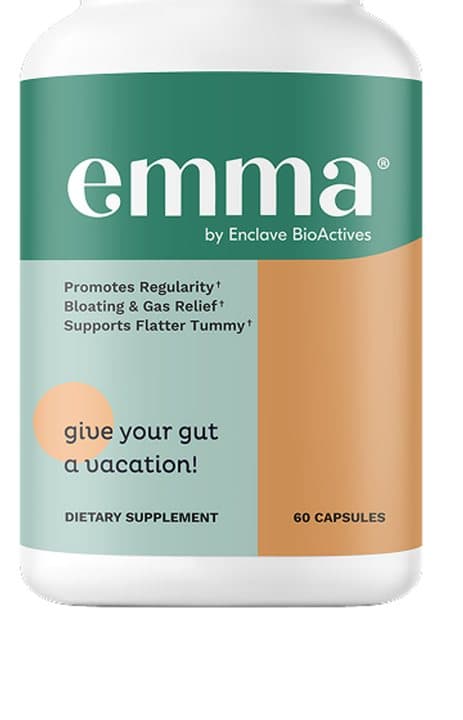
The label's claims and capsule count

The 90-day guarantee badge
"Do this once a day to empty your bowels like clockwork"
Taking two capsules a day is the "once a day" habit. "Like clockwork" is a promise no supplement can make for everyone; digestion varies with diet, fluids, activity, stress and medicines.
"The 7-second ritual"
This describes swallowing capsules, framed as a secret routine. It builds curiosity, but there is nothing to learn beyond taking the supplement.
Parasites and toxins
The page's comments repeatedly mention parasites and toxins in the blood, apparently referring to parts of the video. Most bloating and constipation are not caused by parasites, and talk of "toxins" without specifics is a common fear-based sales technique.
Your liver, kidneys and gut already remove waste products efficiently. Claims that a supplement "flushes toxins" rarely name the toxin or show it being removed.
What this means for you: if you are worried about a parasite or infection, see a doctor for testing. A supplement is not the right response.
"Fibre isn't the solution"
A comment says the video convinced them fibre was not the solution. Ironically, Emma contains inulin, a fibre. Fibre helps many people with constipation, though the type and amount matter and some people bloat on it.
"Supports flatter tummy"
Less bloating can make the belly look and feel flatter. That is not fat loss.
The comments under the video
The page shows 20 glowing comments, each with only a first name, many praising the video's surprising ending and none mentioning a downside. They read like scripted marketing copy rather than real, varied feedback.
"Give your gut a vacation"
The label's slogan suggests rest and reset. Your gut does not need a vacation in a literal sense; what helps most is a consistent routine of regular meals, fibre, fluids and movement. The slogan is branding, not a description of how the product works.
"Top gastroenterologist 2024"
The page calls Dr. Sam a top gastroenterologist of 2024 without naming the source of the title. Her career and specialism are real; the title is marketing.
Claims scorecard
| Claim | Our read |
|---|---|
| Developed with a NYC gastroenterologist | Accurate |
| Six botanical and fibre ingredients | Accurate; doses not shown on the pages we saw |
| Empty your bowels like clockwork | Overstated |
| 7-second ritual | Marketing framing for taking capsules |
| Parasites and toxins | Fear-based; see a doctor if concerned |
| Flatter tummy | Possible from less bloating; not fat loss |
| 90-day money-back guarantee | Stated on the brand's site |
| Video comments | Appear scripted |
Is Emma better than diet changes, psyllium or probiotics?
For most people, simpler steps come first. Regular meals, enough fluids, activity and gradual fibre changes help many with bloating and constipation, and a diet low in fermentable carbohydrates, followed with a dietitian, can reduce bloating in IBS. Psyllium is inexpensive, well studied for constipation and tends to cause less gas than inulin. Peppermint oil, kiwifruit and prunes are other low-cost options.
| Option | Typical cost | Evidence | Best for |
|---|---|---|---|
| Emma | $33 to $59 a month | Ingredient-level only | Trying a combined botanical formula |
| Diet changes (fibre, fluids, fermentable-carbohydrate diet with guidance) | Low | Strong for many | First step for most people |
| Psyllium fibre | Low | Good for constipation | Regularity |
| Osmotic laxative (such as polyethylene glycol) | Low | Strong | Occasional constipation |
| Probiotics | $20 to $60 a month | Mixed, strain-specific | Some IBS symptoms |
| Peppermint oil capsules | Low to moderate | Good for IBS pain and bloating | Cramping and bloating |
| Doctor-led testing and treatment | Varies | Strongest | Persistent or severe symptoms |
Emma vs diet and lifestyle changes
Regular meals, enough fluids, physical activity and gradual changes to fibre intake help many people with bloating and constipation. A diet low in fermentable carbohydrates, followed with a dietitian, can reduce bloating in IBS. These changes cost little and address common causes; try them first or alongside any supplement.
Emma vs psyllium
Psyllium is a soluble fibre that softens stool and tends to cause less gas than inulin. It is inexpensive and well studied for constipation. If regularity is your main problem, psyllium is a reasonable first choice.
Emma vs over-the-counter laxatives
Osmotic laxatives such as polyethylene glycol work reliably for occasional constipation and are inexpensive. They do not address bloating directly and are not meant as a long-term fix without medical advice.
Emma vs peppermint oil
Enteric-coated peppermint oil has good evidence for IBS-related cramping and bloating and costs less than Emma. It can worsen heartburn in some people.
Emma vs magnesium
Magnesium supplements, especially magnesium citrate and oxide, draw water into the bowel and can ease constipation. They are inexpensive and widely available. They can cause loose stools at higher doses and are not suitable for people with kidney problems without medical advice.
Emma vs kiwifruit and prunes
Research supports two green kiwifruit a day, or a serving of prunes, for mild constipation. They are cheap, natural and add fibre and fluid. If regularity is your main concern, they are worth trying before a supplement.
Emma vs probiotics
Probiotics are not all the same, and benefits depend on the strain and the condition. Our Akka Superbiotics review looks at another supplement sold by the same store. Emma takes a different approach, combining berberine with a prebiotic rather than adding bacteria.
Emma vs other supplements we have reviewed
Our supplements section covers more products sold through offer pages, such as Cloud9 Daily Restore and Primal Sleep, with the same focus on ingredients, doses and safety. Our OmniBreathe review applies the same ingredient-by-ingredient checks to a respiratory supplement.
If you have checked the safety points and want to try it, the Emma order page (opens Emma in a new tab) leads to the current offers after the video.
Emma ReliefScore 4.7/10
Why people buy it: Developed with input from Dr. Gina Sam, a real New York gastroenterologist who specialises in gut motility
$59.00 at Emma · Price checked October 3, 2026
Check price at Emma (opens Emma in a new tab)We may earn a commission if you buy through our links.
Is Emma safe, and what should you check before buying?
Berberine, Emma's main ingredient, can change how the body processes many medicines, including diabetes medicines, blood thinners and some immunosuppressants, according to MedlinePlus, and it is considered likely unsafe in pregnancy and breastfeeding. Ask a doctor or pharmacist first if you take regular medication. See a doctor about alarm symptoms such as blood in stool or weight loss, and check bundle and subscription terms at checkout.
Medicines and berberine
Berberine can change how the body processes many medicines. MedlinePlus lists interactions with drugs including diabetes medicines, blood thinners, some immunosuppressants and medicines broken down by the liver.
What to do: if you take any regular medication, ask your doctor or pharmacist before starting Emma. Bring the ingredient list with you.
Pregnancy, breastfeeding and children
Berberine is considered likely unsafe in pregnancy and breastfeeding, and it is unsafe for newborns.
What to do: do not take Emma if you are pregnant, breastfeeding or trying to conceive, and keep it away from children.
Alarm symptoms
Some gut symptoms need medical attention.
What to do: see a doctor promptly, rather than trying a supplement, if you have blood in your stool, black stools, unexplained weight loss, persistent vomiting, severe or worsening pain, difficulty swallowing, a new change in bowel habits after 50, or a family history of bowel cancer.
Side effects
Berberine can cause stomach upset, diarrhoea or constipation. Inulin often causes extra gas at first.
What to do: take Emma with food, give your gut a week or two to adjust, and stop if side effects are troublesome.
Blood sugar and surgery
Berberine can lower blood sugar. That can add to the effect of diabetes medicines and cause low blood sugar.
What to do: if you have diabetes or take glucose-lowering medicines, talk to your doctor first. Stop taking Emma at least two weeks before planned surgery unless your doctor advises otherwise.
Licorice and blood pressure
Whole licorice can raise blood pressure and lower potassium. Emma lists DGL licorice, which has most of the responsible compound removed.
What to do: if you have high blood pressure, heart or kidney disease, check that the licorice on your bottle's label is DGL, and ask your doctor if unsure.
Price and bundles
The lowest per-bottle price requires buying six or nine bottles.
What to do: start with one bottle. If it clearly helps after a month, buy more then; the guarantee is easier to use with one bottle than with nine.
Refunds
Emma's site advertises a 90-day money-back guarantee. Some Trustpilot reviewers report unclear or slow refunds.
What to do: note your order date, keep your confirmation email and packaging, and request a refund in writing before day 90 if it is not working.
Subscriptions and upsells
Supplement checkouts often add subscription or "auto-ship" options and upsells after payment. Emma's store data includes subscription-style product listings.
What to do: read each step of checkout and every screen after you pay. Decline subscriptions unless you want them, and check your statement for repeat charges.
How to buy Emma the smart way
- Check your medicines with a pharmacist, then open the Emma offer page (opens Emma in a new tab) and skip to the offer after the video.
- Choose one bottle to start, even if bigger packs show a lower per-bottle price.
- Decline subscriptions and add-ons you did not plan to buy.
- Check the total, including shipping, before paying.
- Save your order confirmation and note the 90-day refund deadline.
- Read the Supplement Facts panel when the bottle arrives.
- Track your symptoms for four weeks, then decide whether to continue or request a refund.
What do owners say, and how did we score Emma?
Emma scores 4.7 out of 10: claim accuracy 0.6, formulation and transparency 0.9, price competitiveness 0.9, usability 1.3 and owner satisfaction 1.0, each out of 2. Its Trustpilot profile showed 3.6 from 2,691 reviews, with 47% five-star and 23% one-star. Positive reviews describe less bloating and more regularity; negative ones describe no improvement, ordering frustration and slow refunds.
Trustpilot
On 3 October 2026 the Trustpilot profile for emmarelief.com showed a TrustScore of 3.6 out of 5 from 2,691 reviews: 47% five-star, 15% four-star and 23% one-star.
Positive reviews describe less bloating, more regular bowel movements and an easy routine, sometimes within days. Negative reviews describe no improvement after weeks, frustration with the website and ordering, unclear or slow refunds, and feeling misled by the video's "7-second routine". The company replies to all negative reviews, typically within a week, often pointing to individual variation and offering health coaching.
The comments on the video page
The page's 20 comments are uniformly enthusiastic and focus on the video rather than the product. We do not treat them as owner reviews.
Company responses
Emma replies to every negative Trustpilot review, usually within a week. Replies typically explain that results vary and offer support from a health coaching team. Responsive service is a good sign, though it does not change the underlying mixed results.
Who leaves one-star reviews
Most one-star reviews fall into three groups: no change in symptoms, problems with the ordering website, and slow or confusing refunds. Very few describe serious side effects. That suggests the main risk for most buyers is wasted money rather than harm, provided they do not take interacting medicines.
What the reviews agree on
Emma divides buyers. Those whose bloating improves are very happy; those who see no change feel the marketing overpromised. That pattern fits a supplement whose effect depends on the cause of each person's symptoms.
Reading Emma reviews online
Search results for Emma are crowded with paid press releases on news sites, many with buy buttons, and spam pages about Dr. Sam on unrelated websites. These are marketing, not independent reviews. Trustpilot, with all its limits, gives a broader picture because it includes unhappy buyers. Look for reviews that describe how long the person took Emma, what changed, and whether they used the refund.
What we would test with Emma in hand
If we test it ourselves, we will check the Supplement Facts panel and doses, compare the berberine amount with studies, track symptoms over a month in volunteers without interacting medicines, and go through the checkout and refund process. We will update this review with the results.
How we scored Emma
Every score on the site follows the five criteria on our how we test page. For a supplement, "build durability" covers formulation and transparency.
| Criterion | Score | Why |
|---|---|---|
| Claim accuracy | 0.6 / 2 | Real doctor and plausible ingredients; fear-led video, scripted comments, "like clockwork" |
| Formulation and transparency | 0.9 / 2 | Reasonable ingredients; doses not shown on sales pages; berberine interactions |
| Price competitiveness | 0.9 / 2 | $59 a month for one bottle; cheaper only in big packs |
| Usability | 1.3 / 2 | Two capsules a day; buying flow hidden behind a long video |
| Owner satisfaction | 1.0 / 2 | 3.6 from 2,691 Trustpilot reviews; 23% one-star |
| Total | 4.7 / 10 |
The score would rise with a clear Supplement Facts panel on the sales page, prominent interaction warnings, and marketing without fear-based claims.
What we did, and did not, do
We read the video page, Emma's store data and site, the bottle label, the Trustpilot profile, MedlinePlus guidance on berberine and published research, all on 3 October 2026. Nobody on our team has taken Emma, and no figures here come from our own testing.
How to use Emma for the best results
Check for interactions with any medicines first, then take two capsules a day with food and a full glass of water, as the brand directs. Keep your diet and routine otherwise steady, so you can tell whether Emma makes a difference, and expect some extra gas in the first week or two from the inulin. Judge it over a month, inside the 90-day guarantee.
- Check for interactions with any medicines before you start.
- Take two capsules a day with food and a full glass of water, as the brand directs.
- Keep your diet and routine otherwise steady, so you can tell whether Emma is making a difference.
- Expect some extra gas in the first week or two as the inulin takes effect.
- Drink enough fluids and keep active; supplements work best alongside these.
- Keep a simple daily note of bloating and bowel movements for four weeks.
- Stop and see a doctor if symptoms worsen or warning signs appear.
Timing your doses
The brand's direction is two capsules daily. If berberine upsets your stomach, taking the capsules with a meal, or splitting them between two meals, may help. Do not exceed the stated dose.
Storing the bottle
Keep the bottle closed, in a cool, dry place out of direct sunlight, and away from children. Bathroom cabinets get humid; a kitchen cupboard away from the stove is usually better. Check the expiry date when it arrives, especially if you buy a large pack.
If you travel, take capsules in the original bottle so the label and ingredient list are with you, which helps at security and if you need medical advice abroad.
Judging whether it works
After four weeks, compare your notes with how you felt before starting. If bloating and regularity have not improved, it is unlikely more weeks will make a big difference, and the 90-day guarantee gives time to request a refund.
Combining with other supplements
Avoid stacking several gut supplements at once; it makes side effects more likely and makes it impossible to tell which one helps. If you already take a fibre supplement or probiotic, talk to a pharmacist about whether to pause it while trying Emma.
When to stop
Stop Emma if you develop persistent diarrhoea, abdominal pain, a rash or any unusual symptoms, and before planned surgery, as berberine can affect blood sugar and medicines.
Habits that make any gut supplement work better
- Regular meals: eating at similar times each day helps your bowel keep a rhythm.
- Fluids: water helps fibre do its job; aim to drink regularly through the day.
- Movement: walking after meals can ease bloating and help transit.
- Toilet routine: do not ignore the urge to go, and try sitting with your feet raised on a small stool.
- Eat slowly: chewing well and not gulping air reduces gas.
- Notice triggers: carbonated drinks, chewing gum, large fatty meals and some vegetables commonly cause bloating.
These habits cost nothing and often make the biggest difference.
Emma ReliefScore 4.7/10
Before you buy: Check the final price, shipping and return terms at checkout.
$59.00 at Emma · Price checked October 3, 2026
Check price at Emma (opens Emma in a new tab)We may earn a commission if you buy through our links.
What else do people ask about bloating and constipation?
Most questions are about causes and what is normal. Common causes of bloating include swallowed air, gas from fermenting foods, constipation, food intolerances, IBS and hormonal changes. Anything from three bowel movements a day to three a week can be normal; a change from your usual pattern matters more. Fibre helps constipation but fermentable fibres can increase gas, so increase it slowly with water.
What causes bloating?
Common causes include swallowed air, gas from fermenting foods, constipation, food intolerances such as lactose intolerance, IBS, and hormonal changes in the menstrual cycle. Less often, bloating signals conditions such as coeliac disease or, rarely, more serious problems.
What is a normal bowel movement frequency?
Anything from three times a day to three times a week can be normal. What matters more is a change from your usual pattern, and whether stools are hard, painful or difficult to pass.
Does fibre help or worsen bloating?
Both, depending on the person and the fibre. Fibre helps constipation, but fermentable fibres like inulin can increase gas. Increasing fibre slowly and drinking more water helps many people adjust.
What is SIBO?
Small intestinal bacterial overgrowth is an excess of bacteria in the small intestine that can cause bloating, gas and changes in bowel habits. It is diagnosed with a breath test and usually treated with antibiotics, sometimes with herbal therapies under medical supervision.
Is berberine safe to take daily?
Many people take berberine daily in studies lasting weeks to months, with mostly mild gut side effects. Its main risks are drug interactions and use in pregnancy, breastfeeding and infants.
When should I see a doctor about bloating?
See a doctor if bloating is persistent, severe or comes with weight loss, blood in the stool, vomiting, a change in bowel habits, or if you are over 50 with new symptoms.
Do gut health supplements work?
Some ingredients have evidence for specific problems, such as psyllium for constipation and peppermint oil for IBS. Many gut supplements combine ingredients without testing the finished product. Results vary, so judge any supplement by how you feel after a few weeks.
Is Emma suitable for men?
The ingredients are not specific to women, although the marketing targets women. Men can take it under the same precautions about medicines and health conditions.
Can I take Emma with a probiotic?
Many people do, and there is no known direct interaction. Berberine has antimicrobial effects, though, so some practitioners suggest separating them by a few hours. If you are unsure, ask a pharmacist, and introduce one product at a time so you can tell what helps.
Is bloating linked to hormones?
Yes, for many women. Bloating often rises in the days before a period and during perimenopause, linked to hormonal changes in fluid balance and gut movement. Tracking symptoms against your cycle helps you tell whether a supplement is making a difference or the timing is.
Does Emma help with weight loss?
Emma is not a weight-loss product, although the label mentions a flatter tummy and the bonus ebook is about "lean belly" shakes. Less bloating can make your waist look and feel slimmer. Berberine has been studied for metabolic effects, but any effect on weight in those studies was small and not the purpose of this product.
Can I take Emma long term?
The brand sells packs of up to nine months, but there is little long-term safety research on this combination. Berberine studies usually last weeks to months. If you plan to take it for more than a few months, review it with your doctor, especially if you start any new medication, and take breaks to check whether you still need it.
What should I do if Emma makes my bloating worse?
Some extra gas in the first week or two is common with inulin. If bloating is worse after two weeks, or you have pain or diarrhoea, stop taking it. Request a refund within the guarantee period and talk to a doctor if symptoms continue.
Frequently asked questions
What is Emma Relief?
Emma is a digestive supplement from Enclave BioActives, promoted with Dr. Gina Sam, a New York gastroenterologist. It contains berberine, chicory root inulin, licorice root extract (DGL), star anise, quercetin and resveratrol, taken as two capsules a day.
How much does Emma cost?
On 3 October 2026 the Emma store data listed one bottle at $59, three at $147, six at $234 and nine at $297. Each bottle holds 60 capsules, about a month at two a day. The video page did not show prices in our capture.
Does Emma work?
Some ingredients have research behind them, especially berberine and prebiotic fibre, and many buyers report less bloating. But Emma itself has not been tested in a published trial, doses were not shown on the pages we saw, and about a quarter of Trustpilot reviewers gave it one star.
Is Emma safe?
Most people tolerate the ingredients, though berberine can cause stomach upset. Berberine interacts with many medicines and is likely unsafe in pregnancy, breastfeeding and infants. Check with a doctor or pharmacist if you take any regular medication. Stop if you get stomach upset that does not settle.
Is Dr. Gina Sam real?
Yes. Dr. Gina Sam is a New York gastroenterologist with a background in gut motility and Mount Sinai affiliations. Her involvement in the product is promotional; it does not mean the supplement has been tested in her clinic.
What is the 7-second ritual?
The phrase comes from Emma's video marketing and refers to taking the supplement. There is no special technique; you take two capsules a day. Taking it with food and water at the same time each day makes it easier to judge whether it helps.
Can I get a refund on Emma?
Emma's site advertises a 90-day money-back guarantee. Trustpilot reviewers report mixed refund experiences, so keep your order details, contact support within 90 days, and get confirmation in writing. Check whether opened bottles qualify before ordering a large bundle.
How long does a bottle of Emma last?
One 60-capsule bottle lasts about 30 days at the recommended two capsules a day. Lower per-bottle prices need a 3-, 6- or 9-bottle bundle, so try one bottle first and check the expiry date before committing to more.
We may earn a commission if you buy through our links.
This content is for informational purposes and is not medical advice. Talk to a qualified professional before using any product that affects your health.
Prices accurate as of October 3, 2026. Check the seller's checkout for current pricing, promotions and terms.
What we checked: No hands-on use. Video page content, doctor biography, on-page comments and disclaimer from the Emma page our link opens (dailywellnesscare.com) on 2026-10-03. Prices, pack sizes and images from the Emma store data, and ingredients, directions, guarantee and company name from Emma's own site, the same day. Bottle label read from product images. The Trustpilot profile for emmarelief.com, MedlinePlus guidance on berberine and the 2014 study of herbal therapy for SIBO were read the same day.

About the author
Daniel Brooks, Technology & Buying Guide Editor
Daniel Brooks edits the buying guides and comparisons at Top10Gadgets, and covers the sleep, supplement and travel categories where products are hardest to tell apart. Daniel approaches every purchase like a careful shop…
- Buying guides and product comparisons
- Budget and value-for-money products
- Sleep products
- Travel gear
- Subscriptions and return terms
Writing for Top10Gadgets since 2026Full profile