Sleep / Travel pillows
ErgoRelax Review: A $67 Inflatable Lean-Forward Travel Pillow That Looks Like a $20 AirComfy
An inflatable pillow you lean forward onto to sleep upright on planes and trains. The design genuinely helps some people, but the same shape sells for about $20 under other names.

By Daniel Brooks, Technology & Buying Guide Editor at Top10Gadgets
Updated 26 min readHow we test
Quick answer
If you can only sleep on planes by slumping forward onto the tray table, ErgoRelax's lean-forward design makes sense, and it packs small. But $67 is a lot for an inflatable pillow whose shape, colour and holes closely match the AirComfy, listed at $19.99.
Score 3.7/10$67.00 at G Com Pte Ltd
Check price at G Com Pte Ltd (opens G Com Pte Ltd in a new tab)We may earn a commission if you buy through our links.
- Best for
- Travellers who cannot sleep sitting upright but can sleep leaning forward
- Not for
- People who sleep best leaning back or to the side, who suit a neck pillow better
$67.00 at G Com Pte Ltd
Check price at G Com Pte Ltd (opens G Com Pte Ltd in a new tab)We may earn a commission if you buy through our links.
On this page · 12 sections
- 01Our verdict
- 02The short version
- 03Pros & cons
- 04How it works
- 05Who it's for
- 06Does ErgoRelax deliver on its claims?
- 07How much does ErgoRelax cost, and what is sold separately?
- 08Is ErgoRelax better than AirComfy or a neck pillow?
- 09Is ErgoRelax legit, and what should you check before buying?
- 10How did we score ErgoRelax?
- 11How to use ErgoRelax for the best results
- 12Frequently asked questions
Our verdict
If you can only sleep on planes by slumping forward onto the tray table, ErgoRelax's lean-forward design makes sense, and it packs small. But $67 is a lot for an inflatable pillow whose shape, colour and holes closely match the AirComfy, listed at $19.99. The pump valve costs $4 extra, the page gives no size or material, and its "ergonomic patent" comes with no number. It also needs a tray table or your lap, which is tricky in tight seats. ErgoRelax scores 3.7 out of 10, held back mainly by price.
The short version
- What it is: an inflatable pillow you rest on your lap or tray table and lean forward onto, with holes for your arms or face.
- Price: $67 for one on 4 October 2026, with a five-pack for $196 preselected. Delivery was listed as free.
- Best trait: a sleeping position that suits many travellers better than sitting upright.
- Biggest drawback: the same design sells for around $20 under other names.
- Our score: 3.7 out of 10.
Pros & cons
The pros come from what lean-forward travel pillows do well. The cons are about price, missing details and the limits of the design.
What we like
- Lets you lean forward and rest your head, a position many people find easier than sleeping upright
- Inflatable, so it packs small and you can choose how firm it feels
- Holes in the side give somewhere to rest your arms or face
- Can also be used as a lumbar cushion behind the back, according to the page
- Free delivery, and the seller names a registered company with a Singapore address
What we don't
- The same lean-forward design sells for about $20 under names such as AirComfy
- A pump valve is sold as a $4 add-on, so inflating may otherwise mean blowing by mouth
- No dimensions, weight, material or patent number are given, despite an 'ergonomic patent' claim
- Needs the tray table or your lap, so it can be awkward in a cramped economy seat
- A hypoallergenic treatment is sold as a $9 add-on for a pillow made of synthetic fabric
- Refunds need a returns number first, and you pay return postage to an overseas seller
Sold by G Com Pte Ltd
ErgoRelax$67.00
How it works
Most travel pillows wrap around the neck and try to stop your head falling sideways or forwards while you sit upright. ErgoRelax takes the opposite approach. You inflate it, set it on your lap or the tray table, and lean forward to rest your head on its curved top, much like resting your head on a desk. The holes in the sides give your arms somewhere to go, or let you turn your face to one side.
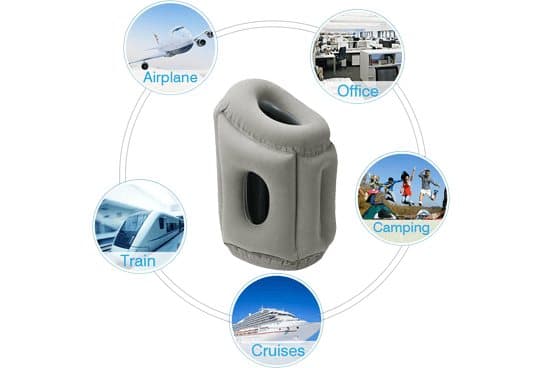
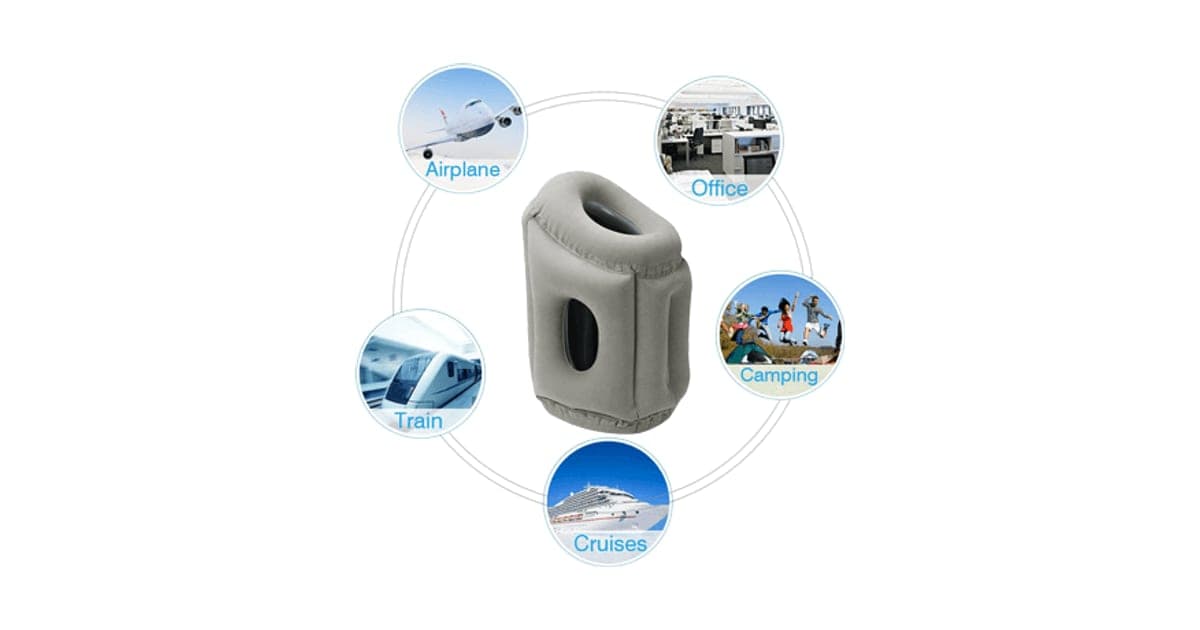
The product photo shows a grey pillow with a rounded, slightly hollowed top and oval holes in the sides, surrounded by icons for airplanes, offices, camping, cruises and trains. The page title adds buses, cars and napping, and says it supports the neck and lumbar, meaning it can also sit behind your lower back.
Inflate it to the height you need
Step 1: Blow into the valve, or use the optional pump valve, until the pillow is firm enough to support your head at a comfortable height above your lap or tray table.
Lean forward onto it
Step 2: Rest the pillow on your knees or tray table and lean forward, resting your forehead or the side of your head on top, with your arms through the side holes if you like.
Deflate and pack it
Step 3: Open the valve, press the air out, fold it small and keep it in its bag or your carry-on until the next trip.
Why leaning forward helps some people sleep
Sitting upright, your head has nothing to rest on, so it drops forward or sideways as your neck muscles relax and wakes you up. Leaning forward onto a support lets the weight of your head rest on something, so your neck muscles can switch off. Many people already do this naturally, folding their arms on the tray table and resting their forehead on them. A pillow makes that position softer and higher.
Why inflatable
An inflatable pillow can be squashed to the size of a folded T-shirt when empty, which matters when carry-on space is tight. You can also adjust the firmness and height by letting air in or out. The trade-off is that inflatable pillows can feel less soft than foam, can squeak as you move, and may slowly lose air over a long flight.
The flocked surface
Inflatable travel pillows of this style are usually made of PVC or TPU with a soft, velvety flocked coating on the outside, which feels warmer and less sticky against skin than bare plastic. The photos show a matt grey surface that matches that type. The page says the material is "environmentally friendly" and "non-toxic", but does not name it.
Why sleeping upright is so hard
When you fall asleep, the muscles that hold your head up relax. Lying down, that does not matter. Sitting up, your head falls until something stops it or the jolt wakes you. Most people cycle through dozing, nodding and waking on overnight flights, which is why they arrive tired even after hours with their eyes closed. Any travel pillow tries to give the head something to rest on so this cycle stops.
The three types of travel pillow
Travel pillows broadly fall into three groups. Neck pillows wrap around the neck and catch the head when it tips sideways. Side-rest pillows and wedges support the head against the window or the seat wing. Lean-forward pillows, like ErgoRelax, give you a surface in front to rest on. Each suits a different natural sleeping posture, which is why one person's favourite travel pillow is another's waste of money.
Seat geometry matters
Economy seats on many airlines have a seat pitch of around 30 to 32 inches, which is the distance from one seat back to the same point on the seat in front. The tray table sits within that space. When the passenger in front reclines, the tray tilts and moves closer, which can push a lean-forward pillow into your chest. Bulkhead rows have trays in the armrests, which may be smaller.
Who it's for
ErgoRelax suits travellers who struggle to sleep sitting upright but drift off leaning forward, especially on long flights, overnight trains and coach journeys with a tray table. It packs small, so it also suits people who travel light. It suits people who sleep leaning back or to the side less well, and anyone in cramped seats where the seat in front reclines into their space.
- Travellers who cannot sleep sitting upright but can sleep leaning forward
- People on long flights, trains or coach trips with a tray table
- Anyone who wants a travel pillow that packs small
Why ErgoRelax appeals
Anyone who has spent a night flight with their head lolling forward knows how hard upright sleep can be. Neck pillows help some people, but many find they push the head forward or do nothing when the head drops. A pillow designed for the forward slump that people naturally fall into feels like a sensible idea, and the photos make it look simple and soft.
Long-haul flyers in economy
Long-haul economy is where lean-forward pillows make the most sense. Overnight flights give hours to sleep, and the tray table gives a stable base. If you can sleep at a desk or on a train table, you may sleep this way too. Cabin crew will ask you to stow it during take-off, landing and turbulence, so expect interruptions.
Window and aisle seats
A window seat gives you a wall to lean against, so you may not need a lean-forward pillow there. Middle and aisle seats are where people struggle most, because there is nothing to rest the head on. That is where a forward-leaning pillow has its clearest advantage.
Train and coach travellers
Trains often have tables between seats, which give a stable surface for a lean-forward pillow. Coaches rarely do, so you would rest it on your lap, which works better for taller people. On overnight sleeper trains with a bunk, a regular pillow is more comfortable.
Office nappers
The page suggests office use. A pillow on a desk is a simple way to nap at lunchtime, and it can then go behind your lower back for the afternoon. If you nap at your desk often, a firm foam desk pillow may be more comfortable than an inflatable.
Campers
A deflated pillow packs small for camping and can double as an ordinary head pillow in a tent. It is not designed as a camping pillow, and dedicated camping pillows are lighter and shaped for lying down.
Car passengers
On long car journeys, a passenger could rest the pillow on their lap and lean forward. That is unsafe if it keeps them out of the correct position for the seatbelt and airbag. In a car, a lumbar cushion behind the back or a neck pillow is the safer use.
Tall travellers
Tall people often struggle most with upright sleep, because their heads sit above the seat's headrest. A lean-forward pillow lets them rest without needing the headrest at all. The catch is legroom: tall travellers in tight rows may find the tray table sits low and close, making leaning forward cramped. Measure the pillow against your knees at home first.
Parents travelling with children
Children often fall asleep anywhere, but older children and teenagers can struggle on long journeys like adults. A lean-forward pillow can work for them if it fits the tray. Make sure children can still be quickly woken and kept in their seatbelts during turbulence.
People who get motion sick
Leaning forward with your eyes closed suits some people prone to motion sickness, because it cuts the visual mismatch that triggers nausea. Others find a bent-over position makes nausea worse. If you get travel sick, try it on a short journey first.
Who should skip it
Skip ErgoRelax if you sleep best leaning back or to the side, since a neck or side-rest pillow suits you better. Skip it in tight economy seats where the seat in front reclines into your tray space. Skip it if you have been told to avoid bending forward for back or neck reasons. And skip it if price matters, since the same shape costs a third as much elsewhere.
- People who sleep best leaning back or to the side, who suit a neck pillow better
- Passengers in tight economy seats where the seat in front reclines
- Anyone with back or neck problems who has been told to avoid bending forward
- Price-conscious buyers, since the same design costs far less elsewhere
Does ErgoRelax deliver on its claims?
Partly. The page lists six claims: a perfect choice for travellers, a "newly ergonomic patent" supporting neck and back, releasing fatigue and stress, easy inflating and deflating, environmentally friendly non-toxic material, and a safe, durable design. The lean-forward design is a real and helpful idea for some travellers. But the patent is unexplained, the material is unnamed, the pump valve is an add-on, and "releases fatigue and stress" is a broad claim with no evidence.
What the page does not say
The page gives no dimensions, inflated or deflated, no weight, no material, no care instructions and no maximum load. Branded travel pillows usually list all of these, and dimensions matter because airline tray tables vary in size. Without them, you cannot be sure it will fit your usual seat.
"Perfect Choice for Frequent Travelers & Commuters"
For travellers who sleep leaning forward, the design suits them well. For commuters, a pillow you need to inflate before resting on is less practical for a 30-minute trip. And no single travel pillow suits everyone, which is why neck, side-rest and lean-forward designs all exist.
"Newly Ergonomic Patent, Support Neck & Back"
The page does not give a patent number, country or holder. Lean-forward inflatable pillows with side holes have been sold online for years under many names. We could not find a patent associated with the ErgoRelax name. Without a number, the claim cannot be checked.
What this means for you: treat the patent claim as marketing. The design itself is what matters, and it is widely available.
"Helps Release Fatigue & Stress"
Sleeping better on a journey can leave you less tired when you arrive, which is the realistic version of this claim. A pillow cannot release stress on its own, and the page offers no study.
"Easy to Inflate & Deflate"
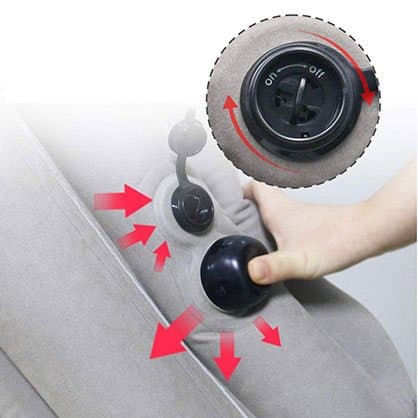
Most inflatable travel pillows inflate by mouth, which can take a minute or two and is not always pleasant on a crowded plane. The page sells a "convenient pumping valve option" for $4 that inflates the pillow "within seconds". The add-on photo shows a hand pressing a round pump button beside a twist valve. If that pump does not come as standard, inflating may be less easy than the page suggests.
"Environmentally Friendly Non-toxic Material"
The page does not say what the pillow is made of. PVC, the most common material for cheap inflatables, is not usually described as environmentally friendly, and some PVC products contain plasticisers. TPU is often marketed as a greener alternative. Without a material name or test certificate, the claim cannot be checked.
What to do: ask support what material the pillow and its coating are made of, and whether it has been tested for phthalates.
"Safe & Durable Design"
Inflatable pillows can puncture or develop slow leaks at seams and valves, especially with frequent folding. The page gives no warranty detail beyond the paid 3-year add-on and does not mention a repair patch. Keep it away from sharp objects in your bag.
The hypoallergenic treatment
The page sells an "ErgoRelax hypoallergenic treatment" for $9, described as combating dust mites and allergens. A plastic inflatable pillow wiped clean after each trip is an unlikely place for dust mites to live. We would skip it.
How much does ErgoRelax cost, and what is sold separately?
With the United States selected on 4 October 2026, one ErgoRelax cost $67, two cost $97, three cost $134, four cost $169 and five cost $196, with the five-pack preselected. Delivery was listed as free. A 3-year warranty cost $9, a travel bag $9, a pump valve $4 and a hypoallergenic treatment $9. The AirComfy, which looks the same, has been listed at $19.99.

ErgoRelax price and bundles
| Bundle | Price | Per pillow |
|---|---|---|
| 1 pillow | $67 | $67 |
| 2 pillows | $97 | $48.50 |
| Buy 2, get 1 free (3) | $134 | About $44.67 |
| 4 pillows | $169 | $42.25 |
| Buy 3, get 2 free (5) | $196 | About $39.20 |
The crossed-out "regular" price is $134, twice the single price, and the $67 is described as a 50% discount. We found no evidence of anyone paying $134.
The add-ons
- ErgoRelax travel bag, $9 (old price $29): a black drawstring bag, described as splash-proof and easy to attach to carry-on luggage.
- Convenient pumping valve option, $4 (old price $9): a pump to inflate the pillow within seconds.
- ErgoRelax hypoallergenic treatment, $9 (old price $19): a material treatment against dust mites and allergens.
What a similar pillow costs
Mattress Clarity's AirComfy review describes an inflatable neck and lumbar travel pillow with the same lean-forward shape and side holes, and lists it on Amazon at $19.99. CNN Underscored reviewed the Kimiandy inflatable travel pillow, a similar design with several holes at different angles, at about $21.
Total cost with extras
One ErgoRelax with the pump valve, travel bag and warranty comes to $89. That is more than four times the AirComfy's listed price, for a pillow that looks almost identical.
The travel bag
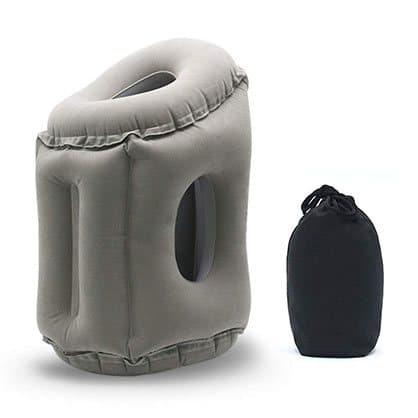
The $9 travel bag is a small black drawstring pouch, described as splash-proof and easy to attach to carry-on luggage. Any small bag or packing cube does the same job, and many travellers simply fold the deflated pillow into a coat pocket. If the pillow does not come with a bag as standard, a cheap pouch helps keep it clean between trips.
Why the price gap matters
For a gadget with clear specifications and a known maker, paying more than the cheapest option can make sense. For an inflatable pillow that looks the same as cheaper ones and gives no specifications, the higher price buys nothing visible. The only things it adds are a different name and an offer page with countdowns.
The multi-pack
Five pillows for $196 suits a family travelling together, at about $39 each. For one traveller, one pillow is enough, and even the five-pack's per-pillow price is about twice what a single AirComfy has cost.
Who sells it
The seller is G Com Pte Ltd, listed at 137 Market Street, #04-01 Grace Global Raffles, Singapore 048943, with a support email and phone number. The page footer reads "G Com Pte Ltd - Hong Kong". Your card statement will show "perfectchoicebase.com".

ErgoRelaxScore 3.7/10
Best for: Travellers who cannot sleep sitting upright but can sleep leaning forward
$67.00 at G Com Pte Ltd · Price checked October 4, 2026
Check price at G Com Pte Ltd (opens G Com Pte Ltd in a new tab)We may earn a commission if you buy through our links.
Is ErgoRelax better than AirComfy or a neck pillow?
Not better than AirComfy, which looks the same and costs about a third as much. Compared with a neck pillow, it depends on how you sleep: lean-forward pillows suit people who slump forwards, while neck pillows suit people who lean back or to the side. A trial of the cheap version tells you whether the lean-forward position works for you before spending more.
| ErgoRelax | AirComfy | Kimiandy | U-shaped neck pillow | |
|---|---|---|---|---|
| Price seen | $67 | $19.99 | About $21 | Varies widely |
| Position | Lean forward | Lean forward | Lean forward, side, hug | Upright or reclined |
| Inflatable | Yes | Yes | Yes | Some |
| Pump | $4 add-on | Check listing | Check listing | Some |
| Needs tray or lap | Yes | Yes | Yes | No |
ErgoRelax vs AirComfy
The AirComfy and ErgoRelax share the grey colour, curved top and oval side holes, and both are sold as neck and lumbar pillows. We cannot confirm they come from the same factory. On the evidence of the photos, the main difference is price. If you want this design, the AirComfy is the cheaper way to try it.
ErgoRelax vs Kimiandy
The Kimiandy, reviewed by CNN Underscored, has several holes so you can lean forward, rest sideways or hug it. That flexibility suits restless sleepers who change position. It also costs about a third of ErgoRelax.
ErgoRelax vs a U-shaped neck pillow
Neck pillows wrap around the neck and stop your head tipping sideways. They suit people who sleep reclined or leaning on a window, and need no tray table. They do little when your head drops forwards, which is where lean-forward pillows win. Many frequent flyers carry both.
ErgoRelax vs a regular pillow
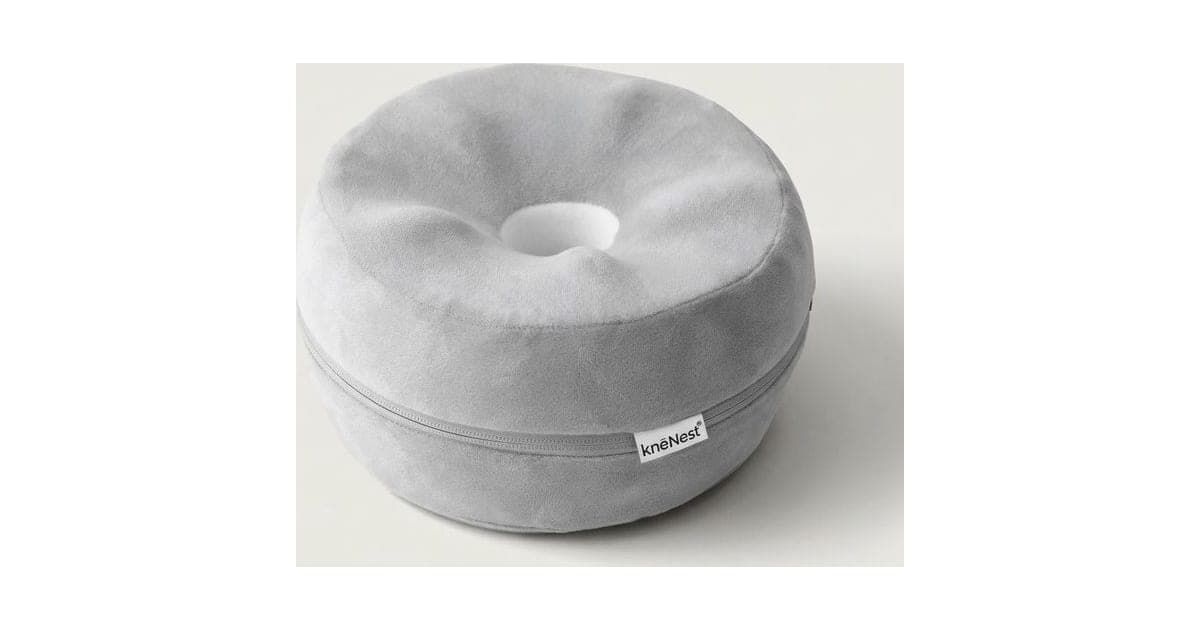
A small, soft pillow on a tray table can work almost as well for some people, and is more comfortable for lying down at your destination. It takes up more space in your bag. Side sleepers who struggle in hotel beds may get more from a knee pillow at night; our Knenest knee pillow review covers one.
ErgoRelax vs a better seat
On long overnight flights, a window seat, an exit row or a premium economy seat with more recline can matter more than any pillow. If sleep on a flight is important, compare the cost of a better seat with the cost of gadgets.
ErgoRelax vs a memory foam travel pillow
Memory foam neck pillows are soft, supportive and quiet, but bulky. Some compress into small bags. They suit people who travel often and value comfort over packing space. They do not help forward sleepers.
ErgoRelax vs a hooded or wrap pillow
Some travel pillows are built into hoods or scarves, wrapping around the head and neck for support and darkness. They suit people who want privacy and warmth as well as support. Again, they work best for people who sleep leaning back or sideways.
What the comparison shows
The lean-forward idea is good for one kind of sleeper. If that is you, the design matters far more than the name on it, and cheaper versions of the same shape are widely available. If you are not sure which type suits you, try sleeping at a table at home, then against a wall, and see which feels more natural.
Pairing it with other sleep aids
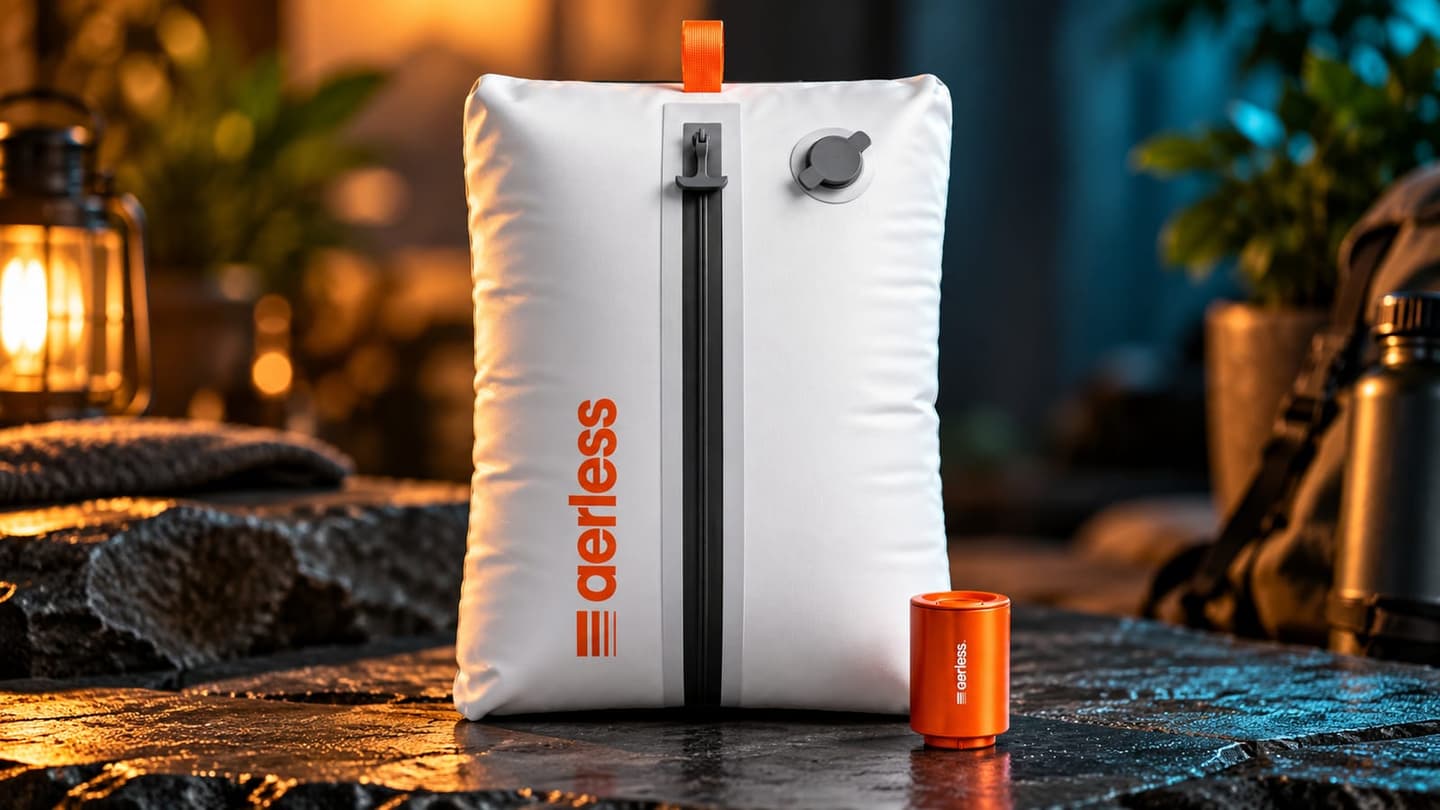
An eye mask and earplugs often help more than a pillow alone. A comfortable home pillow helps you recover after a long trip; our Sleepgram pillow review and SenseSleep review look at two adjustable bed pillows. For packing light, our Aerless vacuum kit review covers compressing clothes to free space in a carry-on.
ErgoRelaxScore 3.7/10
Why people buy it: Lets you lean forward and rest your head, a position many people find easier than sleeping upright
$67.00 at G Com Pte Ltd · Price checked October 4, 2026
Check price at G Com Pte Ltd (opens G Com Pte Ltd in a new tab)We may earn a commission if you buy through our links.
Is ErgoRelax legit, and what should you check before buying?
ErgoRelax is a real travel pillow sold by G Com Pte Ltd, which lists a Singapore address and support contacts. The concerns are the price compared with identical-looking pillows, a pump sold as an add-on, an unnamed material and unexplained patent, the preselected five-pack and refund terms that need a returns number and leave return postage to you. None of these make it unsafe; they make it expensive.
Ask which valve comes as standard
What to do: ask support whether the pillow comes with a pump valve, or only a mouth valve. If it is mouth-only, decide whether the $4 add-on is worth it.
Ask for dimensions
What to do: ask for the inflated height, width and depth. Economy tray tables vary in size, and a pillow that is too tall or wide may not fit or may press against the seat in front.
Check the warranty offer
The $9 three-year warranty is offered at checkout. For a pillow that could puncture, it might seem tempting, but the page does not say whether punctures or leaks from wear are covered. Ask before paying for it.
Ask about materials
What to do: ask what the pillow and its flocked coating are made of. If you are sensitive to plastics or smells, ask whether it has been tested for phthalates.
Check the selected bundle
The five-pack for $196 is preselected. Change it to one pillow unless you are buying for a family.
Refunds and returns
The page code mentions a 30-day guarantee "less S&H". The terms cover defective or damaged items within two years, with a returns number needed first. Return postage is at your cost, and parcels with insufficient postage are refused. A deflated pillow is small to post back, but international postage still eats into a $67 refund.
Membership offers
The page code contains text for a "Gadget Discount Club", free for 30 days, after which "$9 may apply". We did not see it on the order page with the United States selected. Check your order email and card statement.
Timers, pop-ups and the spin wheel
The page shows a 30-minute countdown, "just bought" pop-ups and a discount spin wheel. They do not affect the product.
Moving on long flights
Sleeping for hours in one position on a long flight raises the risk of deep vein thrombosis for some people. The NHS page on deep vein thrombosis advises moving around and stretching your legs on long journeys. A comfortable pillow should not stop you getting up every so often.
Check your airline
What to do: check your airline's guidance on pillows and tray tables. Some airlines limit what can rest on the tray during certain phases of flight, and crew have the final say.
Smells from new inflatables
New inflatable products sometimes smell of plastic when first opened. Airing the pillow inflated in a ventilated room for a day or two usually helps. If a strong smell persists, contact support while you can still return it.
How to buy ErgoRelax the smart way
- Open the ErgoRelax order page (opens G Com Pte Ltd in a new tab) and select your country.
- Change the preselected five-pack to one pillow.
- Ask support about the valve, dimensions and material before paying.
- Add the pump valve only if a mouth valve is standard and you would rather not use it.
- Note the card statement name, perfectchoicebase.com, and save your order email.
- Inflate it at home before your trip, so you can check for leaks while returns are possible.
How did we score ErgoRelax?
ErgoRelax scores 3.7 out of 10: claim accuracy 0.6, build durability 0.9, price competitiveness 0.5, usability 1.2 and owner satisfaction 0.5, each out of 2. The lean-forward design is useful for some travellers, but the page leaves out size and material, makes an unchecked patent claim, sells the pump separately and charges about three times the price of identical-looking pillows.
What owners say
We found no Trustpilot profile for the gadgetxaura.com store and no independent retailer ratings for ErgoRelax. The common trade-offs with lean-forward inflatable pillows are well known: they help people who sleep slumped forward, but they can squeak, may slowly lose air, need space on a tray table and have to be put away whenever crew ask for trays to be raised.
How the score breaks down
We use the five criteria on our how we test page, each out of 2.
| Criterion | Score | Why |
|---|---|---|
| Claim accuracy | 0.6 / 2 | Unchecked patent and material claims; pump valve is an add-on |
| Build durability | 0.9 / 2 | Inflatables can leak; material not named |
| Price competitiveness | 0.5 / 2 | About three times identical-looking pillows |
| Usability | 1.2 / 2 | Lean-forward design suits many travellers and packs small |
| Owner satisfaction | 0.5 / 2 | No independent ratings for this product |
| Total | 3.7 / 10 |
What we did, and did not, do
Nobody on our team has used ErgoRelax. We read the offer page our link opens with the United States selected, its code and the seller's terms on 4 October 2026, along with Mattress Clarity's AirComfy review, CNN Underscored's Kimiandy review, the NHS page on DVT and the top-ranking ErgoRelax pages. Our sleep hub and best sleep products guide list the sleep aids we rate more highly.
How to use ErgoRelax for the best results
Inflate ErgoRelax at home first to find the right firmness, then deflate it and pack it in your carry-on. On board, wait until the seatbelt sign is off, lower the tray table, inflate the pillow until your back is fairly straight when you lean forward, and rest your forehead or cheek on top. Stow it whenever crew ask, and get up to move around every couple of hours on long flights.
- Practise at home. Inflate it on a table and find a height that keeps your back fairly straight.
- Pack it flat. Deflated, it fits in a small bag or jacket pocket.
- Wait for the tray. Use it only once the crew allow tray tables down.
- Adjust the air. Less air for a lower, softer pillow; more for a higher, firmer one.
- Rest your arms. Use the side holes so your shoulders can relax.
- Stow it when asked. Deflate partly for quick stowing at landing.
- Move regularly. Get up and stretch on long flights.
A first test at home
Before your trip, sit at a kitchen table on an ordinary chair, set the pillow in front of you and try resting on it for twenty minutes. If you can relax there, you will probably manage on a plane. If you feel cramped after a few minutes, a neck pillow may suit you better.
Finding the right height
If the pillow is too low, you curl your back to reach it, which can leave you stiff. If it is too high, your neck tilts back. Aim for a height where you lean forward from the hips with a fairly straight back and your forehead resting on top.
Using it on your lap
Without a tray table, rest the pillow on your knees. This works best for taller people, since shorter people may need to inflate it fully to reach. Keep your seatbelt fastened loosely over your lap, as crew usually ask.
Using it as a lumbar cushion
Partly inflate the pillow and place it in the curve of your lower back in a car, office or plane seat. It should fill the gap without pushing you forward. A lumbar cushion helps most in seats with flat backs.
Inflating by mouth on a plane
If your pillow has only a mouth valve, inflate it in short breaths rather than one long blow, and close the valve between breaths so air does not escape. Inflating partly at the gate, then topping up on board, saves effort, though cabin pressure changes slightly alter how firm it feels during the flight.
Cabin pressure and firmness
As the plane climbs, cabin pressure drops and air inside a sealed inflatable expands slightly, so the pillow can feel firmer at cruising altitude. On descent, it softens again. Let a little air out if it feels too hard mid-flight.
Cleaning it
Wipe the flocked surface with a damp cloth and mild soap after each trip, and let it dry fully before deflating and packing. Do not put it in a washing machine. A thin pillowcase over the top keeps it cleaner and feels softer.
Checking for leaks
Before a long trip, inflate it fully and leave it overnight. If it has gone soft by morning, check the valve is closed properly. If it still leaks, contact support while you are within the return window.
Repairing a small puncture
Small holes in inflatables can often be fixed with a vinyl repair patch, sold for airbeds and pool toys. Clean and dry the area, apply the patch as directed and leave it to cure before inflating. Flocked surfaces can make patches harder to stick, so rough the area gently first. Leaks at the valve are harder to fix and may mean replacing the pillow.
Storing it between trips
Store it deflated and loosely folded, away from heat and sharp objects. Folding along the same creases every time can weaken the material, so vary the folds.
Sleeping on overnight trains and coaches
On trains with tables, ErgoRelax works much as on a plane. On coaches without tables, it rests on your lap. Keep valuables secure, since sleeping deeply on public transport leaves bags unattended. A small bag clipped to your seat or worn across your body helps.
Combining it with an eye mask and earplugs
Light and noise wake people as often as discomfort. A soft eye mask and foam earplugs or noise-cancelling headphones make any travel pillow more effective. Leaning forward also naturally blocks some light, which helps.
Getting the timing right
On overnight flights, try to sleep at the time you would at your destination. Eat lightly, avoid alcohol and caffeine close to sleep time, and set up your pillow as soon as the crew allow. The more sleep you fit in before breakfast service, the better you will feel on arrival.
Waking up stiff
Spending hours bent forward can leave your lower back and shoulders stiff. Stand, stretch and walk the aisle when you wake. Gentle shoulder rolls and back stretches before landing help you arrive feeling less hunched.
Other questions about lean-forward travel pillows
Are lean-forward pillows allowed on planes? Yes, as carry-on items. Crew will ask you to stow them for take-off, landing and when trays must be raised.
Do inflatable pillows squeak? Some do, especially when the plastic rubs against itself. A pillowcase over the top helps.
Is a lean-forward pillow good for neck pain? Some people find it easier on the neck than sitting upright, but anyone with neck or back pain should check with a clinician before sleeping bent forward for hours.
How long do inflatable travel pillows last? With care, many trips. Seams and valves are the usual failure points.
ErgoRelaxScore 3.7/10
Before you buy: Check the final price, shipping and return terms at checkout.
$67.00 at G Com Pte Ltd · Price checked October 4, 2026
Check price at G Com Pte Ltd (opens G Com Pte Ltd in a new tab)We may earn a commission if you buy through our links.
Frequently asked questions
Does ErgoRelax work?
For some travellers, the lean-forward position is easier to sleep in than sitting upright, and an inflatable pillow gives somewhere soft to rest your head. It suits people who already fall asleep slumped over a tray table. It does less for people who sleep best leaning back or to the side.
How much does ErgoRelax cost?
With the United States selected on 4 October 2026, the offer page listed one ErgoRelax for $67, two for $97, three for $134, four for $169 and five for $196. The five-pack was preselected. Delivery was listed as free and a 3-year warranty cost $9.
Is ErgoRelax the same as AirComfy?
The shape, colour and side holes closely resemble the AirComfy inflatable travel pillow and other lean-forward pillows sold online. We cannot confirm they are made in the same factory. AirComfy has been listed on Amazon at $19.99, according to Mattress Clarity.
How do you inflate ErgoRelax?
The page says it is easy to inflate and deflate, and sells a $4 convenient pumping valve add-on that inflates it within seconds. Without the add-on, you would usually blow into the valve by mouth. Ask support which valve comes as standard.
Can you use ErgoRelax on a plane?
Yes, as long as you follow crew instructions. Lean-forward pillows rest on the tray table or your lap, so you will need to stow it and raise the tray for take-off, landing and whenever the crew asks.
Can ErgoRelax be used as a back cushion?
The page says it supports the neck and lumbar, so it can be placed behind the lower back. An inflatable cushion gives some lumbar support in car or office seats, though a dedicated lumbar pillow is usually shaped better for it.
Is ErgoRelax legit?
It is a real product sold by G Com Pte Ltd, which lists a Singapore address, email and phone. The concerns are the price compared with identical-looking pillows, the paid pump valve, the unexplained patent claim, the preselected five-pack and refund terms that leave return postage to you.
We may earn a commission if you buy through our links.
Prices accurate as of October 4, 2026. Check the seller's checkout for current pricing, promotions and terms.
What we checked: No hands-on use. Features, photos, prices with the United States selected, the preselected bundle, add-ons and their images, warranty and card statement name from the ErgoRelax offer page our link opens (gadgetxaura.com) on 2026-10-04, plus the bundle and add-on data in the page's own code. Refund terms from the same site's terms page. Mattress Clarity's AirComfy review, CNN Underscored's Kimiandy pillow review, the NHS page on deep vein thrombosis and the top-ranking ErgoRelax pages were read the same day.
See how ErgoRelax compares in The Best Sleep Products of 2026

About the author
Daniel Brooks, Technology & Buying Guide Editor
Daniel Brooks edits the buying guides and comparisons at Top10Gadgets, and covers the sleep, supplement and travel categories where products are hardest to tell apart. Daniel approaches every purchase like a careful shop…
- Buying guides and product comparisons
- Budget and value-for-money products
- Sleep products
- Travel gear
- Subscriptions and return terms
Writing for Top10Gadgets since 2026Full profile