Dental Care / Electric toothbrushes
SonicX PRO Review: An $89 Sonic Toothbrush, the '100X' Claim, and Brush Heads Pictured From Another Brand
A sonic electric toothbrush with four modes and a two-minute timer. Powered brushes clean better than manual ones on average, but '100X more powerful' has no source and the dock costs extra.

By James Wilson, Consumer Tech Writer at Top10Gadgets
Updated 26 min readHow we test
Quick answer
Yes, if you want to move from a manual toothbrush to a sonic one and do not mind paying more for an unbranded brush. SonicX PRO has the features that matter: sonic cleaning, four modes and a two-minute timer with 30-second prompts.
Score 3.8/10$89.00 at G Com Pte Ltd
Check price at G Com Pte Ltd (opens G Com Pte Ltd in a new tab)We may earn a commission if you buy through our links.
- Best for
- People switching from a manual toothbrush who want a timer and sonic cleaning
- Not for
- Anyone who wants a brush with a dentist association seal and a known head supply
$89.00 at G Com Pte Ltd
Check price at G Com Pte Ltd (opens G Com Pte Ltd in a new tab)We may earn a commission if you buy through our links.
On this page · 12 sections
- 01Our verdict
- 02The short version
- 03Pros & cons
- 04How it works
- 05Who it's for
- 06Does SonicX PRO clean better than a manual brush?
- 07How much does SonicX PRO cost, and what is sold separately?
- 08Is SonicX PRO better than Sonicare or Oral-B?
- 09Is SonicX PRO legit, and what should you check before buying?
- 10How did we score SonicX PRO?
- 11How to use SonicX PRO for a better clean
- 12Frequently asked questions
Our verdict
Yes, if you want to move from a manual toothbrush to a sonic one and do not mind paying more for an unbranded brush. SonicX PRO has the features that matter: sonic cleaning, four modes and a two-minute timer with 30-second prompts. A Cochrane review found powered brushes remove more plaque than manual ones. But the page's "100X more powerful" claim has no source, its head photo appears to show Philips Sonicare heads, and the charging dock costs $9 extra. SonicX PRO scores 3.8 out of 10, held back by claims and price.
The short version
- What it is: a rechargeable sonic toothbrush with four modes and a two-minute timer.
- Price: $89 for one on 4 October 2026, with a five-pack for $267 preselected. Delivery was listed as free.
- Best trait: a timer and sonic action, the two features that help most people brush better.
- Biggest drawback: unsupported claims, an unclear head supply and a price above branded sonic brushes.
- Our score: 3.8 out of 10.
Pros & cons
The pros come from what sonic toothbrushes do well. The cons are about claims, parts and price.
What we like
- Powered toothbrushes remove more plaque than manual ones on average, according to a Cochrane review
- Two-minute timer with 30-second prompts helps you brush long enough and evenly
- Four modes, including a soft mode for sensitive gums, according to the page
- Two weeks of regular brushing per charge, according to the page
- Free delivery, and the seller names a registered company with a Singapore address
What we don't
- '100X more powerful than manual brushing' has no source and no clear meaning
- The replacement head photo appears to show Philips Sonicare heads, not SonicX PRO heads
- The USB charging dock is a $9 add-on, so check how the standard brush charges
- No dentist association seal, pressure sensor or head availability is mentioned
- Branded sonic brushes such as the Sonicare 4100 have been listed for about $48
- Refunds need a returns number first, and you pay return postage to an overseas seller
Sold by G Com Pte Ltd
SonicX PRO$89.00
How it works
A sonic toothbrush has a small motor in the handle that vibrates the brush head side to side tens of thousands of times a minute. The bristles sweep across the teeth and push fluid between them and along the gum line. Instead of scrubbing, you guide the head slowly from tooth to tooth and let the motion do the work. A built-in timer tells you when to move on and when two minutes are up.
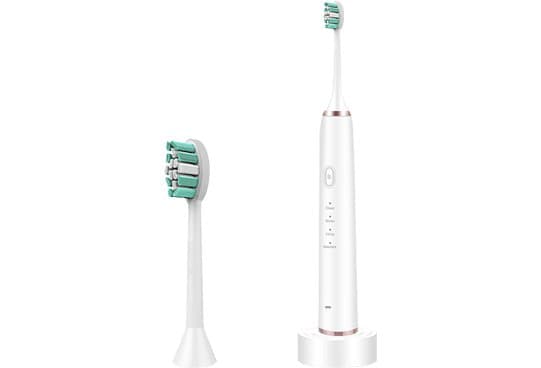
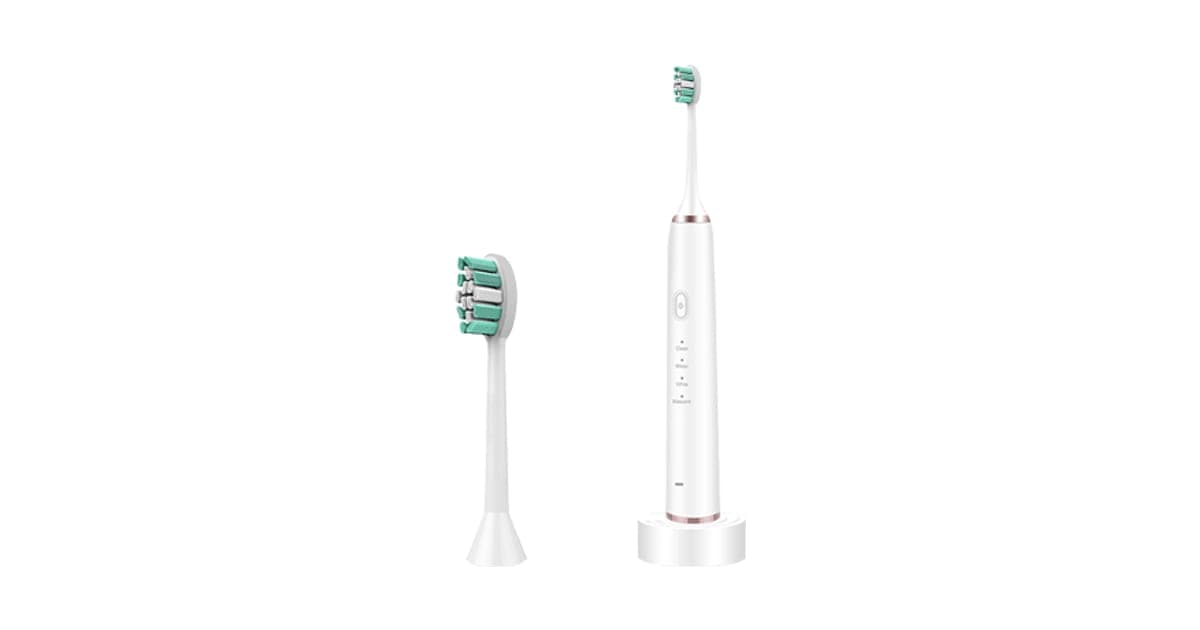
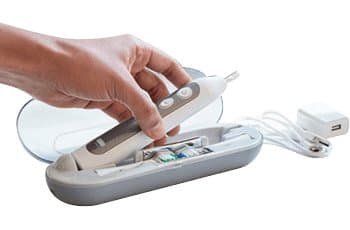
The product photo shows a slim white handle with buttons down the front, standing upright on a small base, with a spare head beside it. According to the page, SonicX PRO makes 45,000 brush strokes per minute, has four modes (clean, soft, whitening and massage), a two-minute smart timer with 30-second intervals, two weeks of battery life and a lightweight, waterproof build.
Charge and choose a mode
Step 1: Charge the handle, fit a brush head and pick one of the four modes: clean, soft, whitening or massage.
Brush for two minutes
Step 2: Place the head at the gum line at a slight angle and guide it slowly from tooth to tooth. The handle vibrates rapidly, so you do not scrub.
Move on at each pause
Step 3: The timer pauses every 30 seconds to tell you to move to the next quarter of your mouth, and stops after two minutes.
Sonic versus oscillating-rotating
Electric toothbrushes come in two main types. Sonic brushes, like SonicX PRO and Philips Sonicare, vibrate a long head side to side at high speed. Oscillating-rotating brushes, like Oral-B, spin a small round head back and forth. Both clean well. Studies suggest oscillating-rotating brushes may have a small edge for plaque, but the most important factors are brushing for two minutes, twice a day, and reaching every surface.
What 45,000 strokes means
Makers measure sonic speed in different ways. Some count movements, where a single back-and-forth counts as two, while others count full cycles. The page gives no method. Philips quotes up to 62,000 movements a minute for some Sonicare models, which is 31,000 back-and-forth strokes. A higher number does not automatically mean a better clean; head design and how you brush matter more.
The four modes
Clean mode is the standard setting. Soft mode lowers the intensity for sensitive teeth and gums or new users. Whitening mode usually varies the pattern to polish the front teeth, which may help with surface stains. Massage mode pulses gently along the gums. The page does not say how the modes differ in practice.
Why the timer matters most
Studies of brushing habits find that many people brush for well under two minutes and miss the same areas every time, often the inner surfaces and back teeth. A timer with 30-second prompts fixes both problems. For many people, that alone accounts for much of the benefit of switching to an electric brush.
Head shape and bristles
The head decides how well a brush reaches the back teeth and gum line. Sonic heads are usually long and narrow, like a manual brush, with bristles of different lengths to reach between teeth. Softer bristles are kinder to gums. The SonicX PRO head in the product photo has green and white bristles, but the page does not describe bristle softness.
Charging
Electric toothbrushes usually charge by induction, sitting on a base with no metal contacts exposed to water, or by a USB cable into a sealed port. Induction is more common on branded brushes. The SonicX PRO add-on describes an inductive dock; the page does not say how the standard brush charges.
Who it's for
SonicX PRO suits people moving from a manual toothbrush who want a timer and sonic cleaning, people with sensitive gums who want a gentle mode, and travellers who value two weeks per charge. It is less suited to people who want a dentist association seal and a reliable supply of replacement heads, people who brush too hard and need a pressure sensor, and anyone with a dental condition who has not asked their dentist.
- People switching from a manual toothbrush who want a timer and sonic cleaning
- Brushers with sensitive gums who want a soft mode
- Travellers who want a brush that lasts two weeks per charge
Why SonicX PRO appeals
Most people know they should brush for two minutes and rarely do. An electric brush with a timer fixes that without effort. A sonic brush also feels cleaner, and the "smooth teeth" feeling after brushing is a strong reason people stay with electric brushes. SonicX PRO bundles the main features into a sleek white handle with a lower price than premium branded models.
People switching from manual brushes
The biggest gain from an electric brush usually comes from switching, not from choosing a premium model. A timer encourages a full two minutes, and the vibrating head does more work than most people manage by hand. If you have never used one, the first week can feel tickly; start on soft mode.
People with sensitive gums
Brushing too hard damages gums and wears enamel. Sonic brushes need only light pressure, and a soft mode reduces intensity further. A pressure sensor, which lights up or slows the brush when you push too hard, helps more. The page does not mention one.
Coffee and tea drinkers
People who drink a lot of coffee, tea or red wine often notice surface stains. Sonic brushes, especially in whitening modes, can help lift those stains over a few weeks. They will not change the natural shade of your teeth.
People with braces or implants
Sonic brushes can help clean around brackets and implants, though special heads often do it better. Ask your orthodontist or dentist which heads they recommend, and check whether compatible heads exist for SonicX PRO.
Travellers
Two weeks per charge means you can leave the charger at home for a short trip. A $19 travel case is offered as an add-on. Many branded brushes include a case with mid-range models.
People who forget to brush at night
Evening brushing matters most, because saliva flow drops during sleep and bacteria have hours to work. An electric brush that feels quick and thorough can make night-time brushing less of a chore.
Families
Households with several people often buy the same handle and use colour-coded heads. With a five-pack, everyone gets their own handle. Children under about three are usually advised to use manual brushes or child-specific electric brushes; check with your dentist.
People with limited hand movement
Electric brushes help people with arthritis or limited grip, because the brush does most of the work. A thicker handle can be easier to hold. SonicX PRO's handle looks slim in the photo; check whether it suits your grip.
People with gum disease
Electric brushes can help control gingivitis, the early stage of gum disease. If you have periodontitis, the more advanced form, your dentist or hygienist may recommend specific brushes, heads and cleaning between teeth. Follow their advice before choosing a brush.
Teenagers
Teenagers often brush quickly and miss areas, and braces make cleaning harder. An electric brush with a timer can help. Make sure heads are easy to replace, since teenagers are less likely to remember.
Who should skip it
Skip SonicX PRO if you want a brush with a dentist association seal and heads you can buy anywhere. Skip it if you brush too hard, because no pressure sensor is mentioned. Skip it if you have gum disease, implants or other conditions until your dentist recommends a brush. And skip it if price matters, since branded sonic brushes have been listed for less.
- Anyone who wants a brush with a dentist association seal and a known head supply
- People who brush too hard and need a pressure sensor
- Anyone with a dental condition who has not asked their dentist which brush to use
- Price-conscious buyers, since branded sonic brushes cost less
Does SonicX PRO clean better than a manual brush?
Probably, in the way any decent powered toothbrush does. The Cochrane review of powered versus manual toothbrushes found powered brushes cut plaque by about 21% and gum inflammation by about 11% after three months. SonicX PRO's own claims go further: "100X more powerful than manual brushing" and "keep your teeth healthier and whiter". The page gives no source for either, and no study of SonicX PRO itself.
Why technique still matters
Every study of electric toothbrushes depends on people using them properly. A powered brush held in one spot, skipped at night or used for 30 seconds does little more than a manual brush. The gains come from the brush making good habits easier, not from the motor alone.
What the Cochrane review found
Cochrane reviews pool the results of many trials. Its review of powered versus manual toothbrushes included 56 trials and found that powered brushes reduced plaque and gingivitis more than manual brushes, in the short and long term. The benefit was clear but moderate, and depended on people using the brush properly.
"100X More Powerful then Manual Brushing"
The page does not say what is measured: strokes, plaque removal or something else. If it means strokes, a sonic brush does make far more movements than a hand, but movements are not cleaning. If it means plaque removal, the evidence shows about a fifth more, not a hundred times more.
What this means for you: expect a meaningful improvement over manual brushing, not a transformation.
"Keep your Teeth Healthier and Whiter"
Better plaque removal helps prevent tooth decay and gum disease, so "healthier" is reasonable when the brush is used well. "Whiter" is more limited. Brushing removes surface stains from coffee, tea and wine, but cannot change the natural colour of teeth. Whitening needs bleaching products, ideally under a dentist's guidance.
"45,000 Brush Strokes Per Minute"
As explained above, makers count differently, and the page does not say how it counts. Treat the number as a sign it is a high-speed sonic brush, not a direct comparison with other brushes.
"Brushing Timer"
The two-minute timer with 30-second intervals matches what dentists recommend: two minutes, covering each quarter of the mouth equally. The NHS advice on keeping your teeth clean recommends brushing for about two minutes, twice a day, with a fluoride toothpaste, and spitting rather than rinsing afterwards.
"Extra-Long Battery Life: Two weeks"
Two weeks of twice-daily brushing is typical for sonic brushes in this price range. Some branded brushes last three weeks or more.
"Lightweight, Waterproof and Durable"
A toothbrush must cope with water, and most are sealed to a standard that survives rinsing and splashes. The page gives no IP rating. Do not leave it standing in water or submerge it for long.
Waterproof versus water resistant
All electric toothbrushes need to cope with wet hands, rinsing and splashes. Many are sealed to an IPX7 standard, meaning they survive brief immersion. "Waterproof" without a rating tells you little. Keep the charging port, if any, dry when charging.
The dental seal question
In the US, the American Dental Association's Seal of Acceptance is awarded to products that submit evidence of safety and effectiveness. Several Sonicare and Oral-B brushes carry it. The SonicX PRO page does not mention it or any other dental body.
How much does SonicX PRO cost, and what is sold separately?
With the United States selected on 4 October 2026, one SonicX PRO cost $89, two cost $139, three cost $177, four cost $219 and five cost $267, with the five-pack preselected. Delivery was listed as free. A 3-year warranty cost $14, four replacement heads $14, a USB charging dock $9 and a travel case $19. Branded sonic brushes such as the Sonicare 4100 have been listed for about $48.
SonicX PRO price and bundles
| Bundle | Price | Per brush |
|---|---|---|
| 1 brush | $89 | $89 |
| 2 brushes | $139 | $69.50 |
| Buy 2, get 1 free (3) | $177 | $59 |
| 4 brushes | $219 | $54.75 |
| Buy 3, get 2 free (5) | $267 | About $53.40 |
The crossed-out "regular" price is $178, twice the single price, and the $89 is described as a 50% discount. We found no evidence of anyone paying $178.
The add-ons
- 4 replacement brush heads, $14 (old price $39): with a reminder to replace heads every three months.
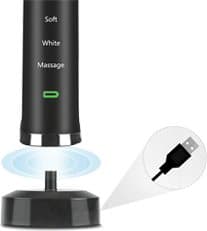
- USB charging dock, $9 (old price $19): a wireless inductive USB charging station; the photo shows a black handle on a black base.
- Best travel partner protection case, $19 (old price $49): a semi-hard carrying case; the photo shows a case with a charging cable and plug.
The brush head photo
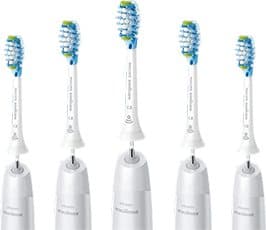
The replacement head photo shows five white heads with blue and green bristles on white handles. They look like Philips Sonicare C3-style heads, and the handles appear to carry small Philips Sonicare printing, though the image is too small to read with certainty. The SonicX PRO product photo shows a different head, with green and white bristles. The add-on is also described as four heads while the photo shows five.
What to do: ask support whether SonicX PRO uses Sonicare-compatible heads. If it does, you can buy heads anywhere. If it does not, ask where to buy them in future.
The charging dock
The main product photo shows the brush standing on a small base, which may be its charger. The dock add-on photo shows a black handle with "Soft", "White" and "Massage" labels, a different colour from the white product, on an inductive charger with a USB cable. If the standard brush already comes with a charging base, the dock is a spare. If it does not, the dock is needed.
Why head supply matters
An electric toothbrush is only as useful as its heads. If heads become hard to find, the handle becomes useless after a few months. Branded brushes have heads sold in supermarkets, pharmacies and online for years after a model launches. With an unbranded brush, you depend on one seller.
Running costs
Dentists recommend changing heads every three months. At $14 for four, heads cost about $14 a year per person, which is reasonable, provided you can keep buying them. Branded heads cost more, but are sold in supermarkets and pharmacies.
What a branded sonic brush costs
The Philips Sonicare 4100 has been listed at about $48. It has a two-minute timer with 30-second prompts, a pressure sensor and a head replacement reminder, and carries the ADA Seal. Oral-B's entry rechargeable brushes sell at similar prices. Both brands' heads are easy to find.
Total cost with extras
One SonicX PRO with heads, the dock, the case and the warranty comes to $145. A Sonicare 4100 and a pack of branded heads together have cost less than that.
The "50% discount"
The crossed-out prices on the brush and add-ons are roughly twice the selling prices, a pattern across this seller's products. Treat them as reference prices set by the seller, not real savings.
The multi-pack
Five brushes for $267 is about $53 each, close to the price of a branded Sonicare 4100 each. For a household of five, that could be reasonable if heads are easy to get. For one person, it is four brushes too many.
Who sells it
The seller is G Com Pte Ltd, listed at 137 Market Street, #04-01 Grace Global Raffles, Singapore 048943, with a support email and phone number. The page footer reads "G Com Pte Ltd - Hong Kong". Your card statement will show "panameedia".

SonicX PROScore 3.8/10
Best for: People switching from a manual toothbrush who want a timer and sonic cleaning
$89.00 at G Com Pte Ltd · Price checked October 4, 2026
Check price at G Com Pte Ltd (opens G Com Pte Ltd in a new tab)We may earn a commission if you buy through our links.
Is SonicX PRO better than Sonicare or Oral-B?
No, on the evidence available. Branded sonic and oscillating brushes from Philips and Oral-B have published research, dental association seals, pressure sensors on many models and heads sold everywhere. The Sonicare 4100 has been listed at about $48, against $89 for SonicX PRO. SonicX PRO matches them on the basic features of sonic action and a timer, which are the features that matter most, but not on evidence or support.
| SonicX PRO | Sonicare 4100 | Oral-B entry rechargeable | Manual brush | |
|---|---|---|---|---|
| Price seen | $89 | About $48 | Similar to Sonicare | A few dollars |
| Type | Sonic | Sonic | Oscillating-rotating | Manual |
| Timer | 2 min with 30 s prompts | 2 min with 30 s prompts | 2 min with 30 s prompts | No |
| Pressure sensor | Not mentioned | Yes | Some models | No |
| ADA Seal | Not mentioned | Yes | Yes | Many |
| Heads | Unclear supply | Widely sold | Widely sold | n/a |
SonicX PRO vs Sonicare 4100
The Sonicare 4100 is one of Philips' entry sonic brushes. It has a timer, a pressure sensor that warns when you press too hard, and a reminder to change the head. It costs about half the price of SonicX PRO, and its heads are sold everywhere. For most people, it is the better first sonic brush.
SonicX PRO vs Oral-B
Oral-B's round, oscillating-rotating heads clean tooth by tooth. Some studies suggest a small advantage for this design, though both types clean well. If you prefer a small round head, Oral-B is worth a look.
SonicX PRO vs a good manual brush
A soft manual brush used carefully for two minutes, twice a day, with fluoride toothpaste, keeps most people's teeth healthy. Electric brushes make good brushing easier and more consistent. If you already brush well, the gain from switching is smaller.
Other dental products we have reviewed
If you are weighing other dental gadgets, our Great Gums review covers a bioelectric toothbrush and the studies behind it, our PurelyWHITE Deluxe review looks at a whitening powder, and our Laughland review covers an LED whitening kit.
SonicX PRO vs premium brushes
Premium brushes from Philips and Oral-B add app tracking, smart pressure sensors, multiple intensities and travel cases with charging. They cost much more. For most people, an entry-level branded brush with a timer and pressure sensor gives nearly all the benefit.
SonicX PRO vs a water flosser
Water flossers spray a thin jet between teeth and along the gum line. They help people who find string floss hard, especially with braces or implants. They are a companion to a toothbrush, not a replacement.
What the comparison shows
The things that make a powered brush helpful, sonic action and a timer, are present in SonicX PRO. What it lacks is evidence, a clear supply of heads and a price that reflects those gaps. The cheapest branded option gives you the same benefits with fewer unknowns.
When SonicX PRO could still make sense
If the heads turn out to be Sonicare-compatible and you prefer its design, SonicX PRO could serve you well. It still costs more than branded brushes with published evidence.
SonicX PROScore 3.8/10
Why people buy it: Powered toothbrushes remove more plaque than manual ones on average, according to a Cochrane review
$89.00 at G Com Pte Ltd · Price checked October 4, 2026
Check price at G Com Pte Ltd (opens G Com Pte Ltd in a new tab)We may earn a commission if you buy through our links.
Is SonicX PRO legit, and what should you check before buying?
SonicX PRO is a real toothbrush sold by G Com Pte Ltd, which lists a Singapore address and support contacts. The concerns are the unsupported 100X claim, a head photo that appears to show another brand, an unclear charger and head supply, no dental seal, the preselected five-pack and refund terms that need a returns number and leave return postage to you.
Ask about the brush head photo
What to do: ask support to confirm which heads come with SonicX PRO, and whether the photo of the head add-on shows the heads you will receive.
Check the colour
The product photo shows a white brush, while the dock add-on shows a black one. Ask which colour you will receive if it matters to you.
Ask about heads
What to do: ask whether SonicX PRO heads fit Sonicare handles or vice versa, and where to buy more.
Ask about charging
What to do: ask whether a charger or charging base comes with the standard brush, and what plug type ships to your country.
Ask about a pressure sensor
What to do: if you know you brush hard, ask whether SonicX PRO has a pressure sensor. If not, consider a branded brush that does.
Check the warranty offer
The $14 three-year warranty is offered at checkout. Battery failure is the most common problem with electric toothbrushes. Ask whether the warranty covers the battery before paying.
Check the selected bundle
The five-pack for $267 is preselected. Change it to the number of brushes you need.
Refunds and returns
The page code mentions a 30-day guarantee "less S&H". The terms cover defective or damaged items within two years, with a returns number needed first. Return postage is at your cost, and parcels with insufficient postage are refused. A used toothbrush may not be accepted back for hygiene reasons.
Membership offers
The page code contains text for a "Gadget Discount Club", free for 30 days, after which "$9 may apply". We did not see it on the order page with the United States selected. Check your order email and card statement.
Timers, pop-ups and the spin wheel
The page shows a 30-minute countdown, "just bought" pop-ups and a discount spin wheel. They do not affect the product.
Ask about voltage and plug
What to do: if the charger plugs into the wall, ask which plug ships to your country and whether it supports 110 to 240 volts.
Keep the packaging
Keep the box and order email until you have checked the charger and heads. A return needs a returns number first, and posting it back is at your cost.
How to buy SonicX PRO the smart way
- Open the SonicX PRO order page (opens G Com Pte Ltd in a new tab) and select your country.
- Change the preselected five-pack to the number of brushes you need.
- Ask support about heads, charging and pressure sensing before paying.
- Add the head pack if heads are not easy to buy elsewhere.
- Note the card statement name, panameedia, and save your order email.
- Check the charger and heads on arrival, before you use the brush.
How did we score SonicX PRO?
SonicX PRO scores 3.8 out of 10: claim accuracy 0.6, build durability 0.9, price competitiveness 0.6, usability 1.2 and owner satisfaction 0.5, each out of 2. It has the features that make powered brushes useful, a timer and sonic action, but its page makes an unsupported 100X claim, appears to show another brand's heads, leaves charging and head supply unclear and costs more than branded brushes with evidence.
What owners say
We found no Trustpilot profile for the gadgetxaura.com store and no independent retailer ratings for SonicX PRO. The pages that rank for it are mostly promotional. Owners of unbranded sonic brushes often praise the clean feel and battery life, and complain about heads that are hard to replace, chargers that fail and brushes that stop holding charge after months.
How the score breaks down
We use the five criteria on our how we test page, each out of 2.
| Criterion | Score | Why |
|---|---|---|
| Claim accuracy | 0.6 / 2 | 100X claim unsupported; head photo appears to show another brand |
| Build durability | 0.9 / 2 | Typical sonic design, but no water rating or parts detail |
| Price competitiveness | 0.6 / 2 | About twice an entry Sonicare |
| Usability | 1.2 / 2 | Timer, modes and long battery make good brushing easy |
| Owner satisfaction | 0.5 / 2 | No independent ratings for this product |
| Total | 3.8 / 10 |
What we did, and did not, do
Nobody on our team has used SonicX PRO. We read the offer page our link opens with the United States selected, its code and the seller's terms on 4 October 2026, along with the Cochrane review of powered toothbrushes, the NHS guide to keeping teeth clean and the top-ranking SonicX PRO pages. Our dental care hub lists the other dental products we have reviewed.
How to use SonicX PRO for a better clean
Charge SonicX PRO, fit a head, add a pea-sized amount of fluoride toothpaste and place the bristles at the gum line at a slight angle before switching on. Guide the head slowly from tooth to tooth without scrubbing, spend 30 seconds on each quarter of your mouth, and spit rather than rinse when the timer stops. Start on soft mode for the first week if the vibration feels strong.
- Charge fully. Before first use.
- Start soft. Use soft mode for the first week.
- Toothpaste first. Apply a pea-sized amount, then put the brush in your mouth before switching on.
- Angle to the gums. About 45 degrees, bristles touching teeth and gum line.
- Guide, do not scrub. Move slowly, one or two teeth at a time.
- Follow the pauses. Move to the next quarter at each 30-second pause.
- Spit, do not rinse. Leave fluoride on your teeth.
Your first week
The first few times, the vibration can feel strong and tickly, and you may get a little toothpaste splatter. Put the brush in your mouth before switching it on, and switch it off before taking it out. Use soft mode until the feeling becomes normal, then try clean mode.
Reaching the back teeth
The back teeth, especially the inner surfaces and the very last molars, are the most often missed. Open your mouth a little less when brushing the outer surfaces of the back teeth so your cheek relaxes and the head can reach.
Brushing technique
Hold the brush lightly, like a pen. Let the bristles rest on the teeth with gentle pressure; pressing harder slows the head and can hurt gums. Cover the outer, inner and chewing surfaces of every tooth.
Brushing your tongue
Bacteria on the tongue contribute to bad breath. Some people brush the tongue gently with the brush switched off, or use a tongue scraper. Do not use high-speed modes on the tongue, which can feel unpleasant.
Using mouthwash
Mouthwash is optional. If you use one, use it at a different time from brushing, such as after lunch, so you do not wash away the fluoride from your toothpaste.
Cleaning between teeth
No toothbrush cleans fully between teeth. Floss or interdental brushes once a day reach the gaps. Ask your dentist which suits your teeth.
Cleaning the brush
After brushing, rinse the head under the tap with the brush switched off, then pull the head off now and then to rinse the metal shaft. Toothpaste build-up around the shaft can stop the head fitting well. Let it dry upright.
Replacing heads
Change the head every three months, or sooner if the bristles splay. A worn head cleans less well. Change it after an illness too.
Storing it
Store the brush upright and let the head air dry between uses. Covering a wet head with a cap encourages bacteria. Use the travel case only for travel, and let the head dry before packing it.
Travelling with it
Lock the buttons if the brush has a travel lock, or keep it in a case so it does not switch on in your bag. Two weeks of battery means you can usually leave the charger at home for short trips.
Changing modes
Most sonic brushes change mode with a short press of a mode button before or during brushing. The brush usually remembers your last mode. Check the leaflet for the order of modes.
Sharing a handle
Each person should have their own head. Mark heads with coloured rings or keep them in separate holders.
When the timer pauses
The 30-second pauses are your cue to move to the next quarter of your mouth: upper right, upper left, lower left, lower right, or whatever order you prefer. Keeping the same order each time helps you avoid missing areas. Brushing the inner surfaces first, where people often skimp, is a good habit.
Battery care
Charge it when the battery runs low rather than leaving it on the charger all the time, unless the instructions say otherwise. If battery life falls sharply, contact support while you are within the warranty.
Switching from a manual brush
The biggest change is technique. With a manual brush, you scrub. With a sonic brush, you hold it still against each tooth for a moment and move slowly. Many people press too hard at first. Let the vibration do the work and go gently.
Using whitening mode
Whitening modes usually spend more time polishing the front surfaces. They can help remove surface stains, but cannot change the natural shade of your teeth. For a brighter smile, talk to a dentist about whitening options.
Other questions about electric toothbrushes
Are electric toothbrushes safe for enamel? Used gently with a soft head, yes. Pressing hard with any brush can wear enamel and gums.
Can children use SonicX PRO? Children usually need smaller heads and gentler settings. Ask your dentist and look for a child-specific brush.
Should I use a different toothpaste? Any fluoride toothpaste works. Very abrasive whitening pastes can wear enamel over time.
How often should I see a dentist? As often as your dentist recommends, often every six to twelve months.
More questions about sonic toothbrushes
Why does a sonic brush tickle? The fast vibration stimulates the lips and gums. Most people stop noticing it within a week. Starting on soft mode helps.
Do sonic brushes make teeth sensitive? Not usually. Sensitivity more often comes from brushing too hard, gum recession or whitening products. If sensitivity starts or worsens, see a dentist.
Can I use a sonic brush with fillings and crowns? Yes. Sonic brushes are safe for normal dental work. Ask your dentist about very new work.
Is it better to brush before or after breakfast? Many dentists suggest brushing before breakfast, or waiting about an hour after acidic food and drinks, so softened enamel is not brushed away.
SonicX PROScore 3.8/10
Before you buy: Check the final price, shipping and return terms at checkout.
$89.00 at G Com Pte Ltd · Price checked October 4, 2026
Check price at G Com Pte Ltd (opens G Com Pte Ltd in a new tab)We may earn a commission if you buy through our links.
Frequently asked questions
Is SonicX PRO a good toothbrush?
Sonic toothbrushes with timers help most people clean better than with a manual brush. SonicX PRO has the usual features, four modes and a two-minute timer. But the page gives no seal or study, makes an unsupported 100X claim and costs more than branded sonic brushes.
Is SonicX PRO really 100 times more powerful than manual brushing?
The page gives no source or definition. A Cochrane review found that powered toothbrushes reduced plaque by about 21% and gum inflammation by about 11% after three months compared with manual brushes. That is a real benefit, but far from 100 times.
How much does SonicX PRO cost?
With the United States selected on 4 October 2026, the offer page listed one SonicX PRO for $89, two for $139, three for $177, four for $219 and five for $267. The five-pack was preselected. Delivery was listed as free and a 3-year warranty cost $14.
Where can I buy SonicX PRO replacement heads?
The order page sells four replacement heads for $14. Its photo appears to show Philips Sonicare heads. Ask support whether SonicX PRO heads are compatible with Sonicare heads, and where to buy more later.
How does SonicX PRO charge?
The page does not say how the standard brush charges. It sells a wireless inductive USB charging dock as a $9 add-on, and the main photo shows the brush on a small base. Ask support what comes in the box.
Is SonicX PRO better than Sonicare?
On published evidence and support, Sonicare is the safer choice. Several Sonicare models carry the American Dental Association Seal, heads are sold everywhere, and the Sonicare 4100 has a pressure sensor and has been listed at about $48.
Is SonicX PRO legit?
It is a real product sold by G Com Pte Ltd, which lists a Singapore address, email and phone. The concerns are the 100X claim, the brush head photo, the charging dock sold separately, the preselected five-pack and refund terms that leave return postage to you.
We may earn a commission if you buy through our links.
This content is for informational purposes and is not medical advice. Talk to a qualified professional before using any product that affects your health.
Prices accurate as of October 4, 2026. Check the seller's checkout for current pricing, promotions and terms.
What we checked: No hands-on use. Features, photos, prices with the United States selected, the preselected bundle, add-ons and their images, warranty and card statement name from the SonicX PRO offer page our link opens (gadgetxaura.com) on 2026-10-04, plus the bundle and add-on data in the page's own code. Refund terms from the same site's terms page. The Cochrane review of powered versus manual toothbrushes, the NHS guide to keeping teeth clean and the top-ranking SonicX PRO pages were read the same day; the Sonicare 4100 price is from our earlier research for this batch.

About the author
James Wilson, Consumer Tech Writer
James Wilson covers health and wellness technology for Top10Gadgets: breathing devices, massagers, hearing aids, dental and weight-loss products, and the other gadgets sold with a promise to make life easier. James write…
- Health and wellness gadgets
- Over-the-counter hearing aids
- Breathing and massage devices
- FDA clearance and registration
- Tech for beginners
Writing for Top10Gadgets since 2026Full profile