Kitchen Tech / Wine accessories
The Wand Review: PureWine's Sulfite and Histamine Wine Purifier, What It Removes and Why It May Not Stop Your Wine Headache
A single-use stirring stick with a resin filter that, PureWine says, removes up to 95% of sulfites and histamines from wine. Easy to use, but the health promises are largely unsupported.

By Alex Carter, Senior Tech Reviewer at Top10Gadgets
Updated 27 min readHow we test
Quick answer
Worth trying only if you suspect sulfites or histamines bother you and can afford a few dollars a glass. The Wand is a single-use stirring stick with a resin filter that PureWine says removes up to 95% of sulfites and histamines from wine, and it is genuinely easy to use.
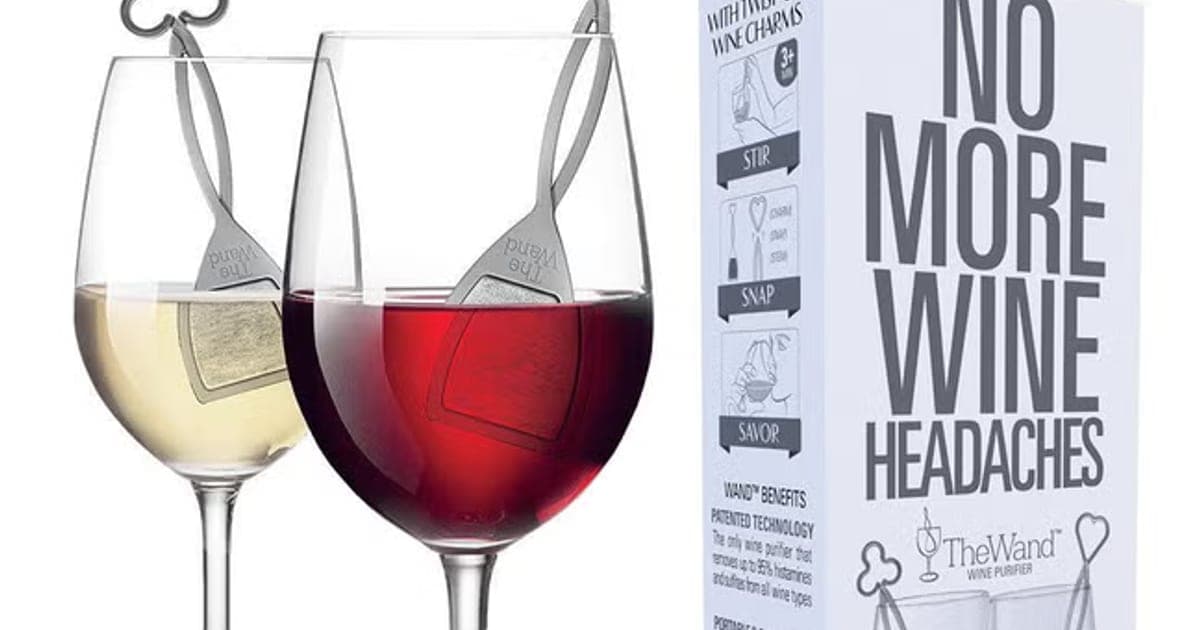
Score 4.7/10$24.99 at PureWine
Check price at PureWine (opens PureWine in a new tab)We may earn a commission if you buy through our links.
- Best for
- Wine drinkers who suspect sulfite or histamine sensitivity and want a low-risk test
- Not for
- Anyone with a sulfite allergy or asthma relying on it for safety
$24.99 at PureWine
Check price at PureWine (opens PureWine in a new tab)We may earn a commission if you buy through our links.
On this page · 13 sections
- 01Our verdict
- 02The short version
- 03Pros & cons
- 04How it works
- 05Who it's for
- 06Does The Wand stop wine headaches?
- 07Are The Wand's other claims accurate?
- 08How much does The Wand cost per glass?
- 09Is The Wand better than other ways to avoid wine headaches?
- 10Is The Wand legit, and what should you check before buying?
- 11How did we score The Wand?
- 12How to use The Wand for the best results
- 13Frequently asked questions
Our verdict
Worth trying only if you suspect sulfites or histamines bother you and can afford a few dollars a glass. The Wand is a single-use stirring stick with a resin filter that PureWine says removes up to 95% of sulfites and histamines from wine, and it is genuinely easy to use. But research now points to quercetin and alcohol itself as major causes of red wine headaches, so it will not help everyone, and its health promises lack clinical trials. The Wand scores 4.7 out of 10, held back by overpromising.
The short version
- What it is: a disposable stirring wand with a resin filter that removes sulfites and histamines from one glass of wine.
- Price: $24.99 for 8 on 4 October 2026, down to $119.96 for 64, or $1.87 to $3.12 per glass.
- Best trait: simple and portable, with lab-tested removal of sulfites and histamines.
- Biggest drawback: many wine headaches have other causes, so results vary.
- Our score: 4.7 out of 10.
Pros & cons
The pros come from the simple design and lab-backed filtering. The cons are about the health claims, the cost of single use and the return terms.
What we like
- Removes sulfites and histamines from wine, according to PureWine's independent lab testing
- Very easy: unwrap, stir, leave in the glass, enjoy
- Individually wrapped and portable for restaurants and travel
- Made in Texas by a company that also sells through major retailers
- Some people with histamine or sulfite sensitivity may notice fewer symptoms
What we don't
- Research suggests quercetin and alcohol itself, not sulfites, drive many red wine headaches
- Claims to prevent headaches, flushing and hangovers are not backed by clinical trials
- Single-use: about $1.87 to $3.12 per glass, which adds up
- 'Reverses oxidation' and 'makes wine taste better' are hard to verify
- Returns only for unused products within 30 days
Sold by PureWine
The Wand Wine Purifier$24.99
How it works
The Wand is a stirring stick with a small mesh pouch at one end filled with resin beads. When you put it in a glass of wine, the resin binds sulfites and histamines, removing them from the wine. PureWine says it starts working immediately and keeps working as long as it sits in the glass, and stirring speeds it up.

PureWine describes the technology as patented and selective, removing sulfites and histamines while leaving antioxidants, phenolics and tannins. It says ETS Labs in St. Helena, California, a well-known wine testing laboratory, independently tested its effectiveness.
Open the wrapper
Step 1: Tear open the individual package and take out the wand, a stirring stick with a small mesh filter at one end.
Stir it into your glass
Step 2: Put the filter end in your wine and stir. PureWine says the resin beads start absorbing sulfites and histamines on contact.
Leave it and drink
Step 3: Leave the wand in the glass while you drink, or for a few minutes before. The longer it sits, the more it removes, according to the brand. Then throw it away.
What the resin is
PureWine does not publish the exact resin chemistry, describing it only as patented, food-safe and selective. Food-grade resins are widely used in drinks processing, for example to remove unwanted compounds from water and juice. That makes the basic idea plausible, even though the specific performance figures come only from the brand's own testing.
How long it takes
The brand's guidance is that the wand starts working on contact and keeps working while it stays in the glass. PureWine has said that a few minutes of stirring removes about two-thirds of sulfites, with more removed the longer it sits. That means the first sips of a glass contain more of both compounds than the last.
What it looks like
The photos show a silver stick about the length of a cocktail stirrer, with a small mesh head and, on some versions, a heart-shaped top. The wand is designed to rest in the glass while you drink, so it is light and short enough not to tip a standard wine glass.
The idea behind it
The story on the page is that the founders, a doctor and his son, wanted a way to enjoy wine without the reactions some family members had. That origin is common for small drinks brands. It explains the focus on headaches and flushing rather than taste.
Sulfites in wine
Sulfites are preservatives, added to almost all wines and also produced naturally in small amounts during fermentation. They protect wine from spoiling and oxidising. In the US, wines with more than 10 parts per million must say "contains sulfites". Many foods, such as dried fruit, contain more sulfites than wine.
Histamines in wine
Histamines form during fermentation, especially in red wines. Some people have trouble breaking down dietary histamine, which can cause flushing, a stuffy nose or headaches. For them, lowering histamine may help.
Why both matter to the marketing
Sulfites are the compound most people have heard of, because "contains sulfites" is printed on wine labels. Histamines are less familiar but better linked to symptoms like flushing and a blocked nose. Removing both lets the brand speak to two groups of drinkers at once.
One glass at a time
Each wand is sized for a single glass. If you top up the same glass, the brand's guidance is to use a fresh wand, since the resin has a limited capacity. That is part of why the cost per evening rises quickly for anyone drinking more than one glass.
What the wand does not remove
The Wand does not remove alcohol, sugar, tannins or quercetin, according to PureWine's description of its selective filter. Those are left in the glass, and they matter for headaches and hangovers.
Who it's for
The Wand suits wine drinkers who suspect sulfites or histamines bother them and want an easy, low-commitment way to test that, people who like something to carry to restaurants and parties, and gift buyers. It suits people with a diagnosed sulfite allergy less well, as well as those whose headaches come from alcohol or red wine compounds it does not remove, and heavy drinkers hoping to avoid hangovers.
- Wine drinkers who suspect sulfite or histamine sensitivity and want a low-risk test
- People who want something easy to carry to restaurants and parties
- Gift buyers looking for a novel wine accessory
The first sibling worth reading alongside this one is our BeerBubbler review, another small drinks gadget sold on a single, simple promise.
Why The Wand appeals
Wine headaches and flushing put many people off a drink they otherwise enjoy. A simple stick that promises to remove the culprits, from founders who suffered the same problem, is an appealing story. Customers quoted on the page describe no headaches, no flushing and better taste.
People who flush with wine
Facial flushing after wine has several causes, including histamine and, in some people, difficulty processing alcohol itself. If histamine is the cause, removing it could help. If the cause is alcohol metabolism, a wand will not.
People who only react to certain wines
Many people find that some wines bother them and others do not. That pattern may point to histamine levels, which vary a lot between wines, or to quercetin, which varies with grape and growing conditions. A wand can help sort out which, if you test carefully.
People with rosacea
A customer on the page with rosacea reports less flushing. Alcohol is a common rosacea trigger regardless of histamine. Results will vary.
Occasional drinkers
People who drink wine only at weddings, holidays and dinners out are the best fit on cost. A handful of wands a month adds little, and the convenience of carrying one to an event is the main appeal.
Diners and partygoers
Individually wrapped wands slip into a bag or pocket for restaurants, weddings and parties, where you do not choose the wine.
Hosts
A box of individually wrapped wands on a table at a dinner party lets guests decide for themselves. Some guests will find it a talking point. Others will ignore it, which costs the host nothing because unused wands keep.
Wine club members
People who taste many different wines through a club or at tastings may find a wand handy for working out which styles bother them. It lets them taste a wine with and without filtering in one sitting.
Gift buyers
A box of wands is a novel gift for wine lovers who complain about headaches. Pair it with the advice to drink water and pace themselves.
Older drinkers
Some people find they tolerate wine less well as they get older. Changes in how the body handles alcohol and histamine may play a part. A wand is a gentle experiment, but drinking less and with food usually makes more difference.
People avoiding added chemicals
Some drinkers prefer low-intervention or organic wines to avoid added sulfites. A wand offers a way to lower sulfites in any wine, including the one served at a party. It does not change other additives.
Who should skip it
Skip The Wand as a safety measure if you have a diagnosed sulfite allergy or sulfite-sensitive asthma; follow medical advice. Skip it if your headaches come from how much you drink. Skip it if you drink red wine most and your headaches start within an hour or two, which may point to compounds it does not remove. And skip it if a few dollars a glass is too much.
- Anyone with a sulfite allergy or asthma relying on it for safety
- People whose headaches come from alcohol amount, dehydration or red wine's quercetin
- Heavy wine drinkers looking to avoid hangovers
- Budget-conscious drinkers who would pay several dollars a glass
Does The Wand stop wine headaches?
It removes sulfites and histamines, but those are probably not the main cause of most wine headaches. PureWine's lab testing supports removal of up to 95% of both. Yet a 2023 UC Davis study in Scientific Reports linked red wine headaches to quercetin, a natural flavonol that interferes with alcohol metabolism, and researchers say sulfites rarely explain headaches. Alcohol, dehydration and how much you drink matter most.
The quercetin research
Reporting on the UC Davis study describes how quercetin, found in grape skins, can slow the breakdown of acetaldehyde, a toxic by-product of alcohol, which can cause headaches, flushing and nausea. The Wand does not remove quercetin.

What the study did
The UC Davis team, reporting in Scientific Reports in November 2023, tested compounds from red wine in the lab. They found that quercetin glucuronide, a form of quercetin made in the body, blocked an enzyme called ALDH2 that clears acetaldehyde. The researchers called for human trials to confirm the link, so the theory is promising rather than proven.
Why this matters for wand buyers
If quercetin is a major cause of red wine headaches for you, removing sulfites and histamines will not touch it. That could explain why some buyers report great results and others notice nothing. It also suggests that cheaper red wines from cooler regions may suit you better than a filter, according to the researchers' reasoning about sun exposure and quercetin.
Alcohol and acetaldehyde
When the body breaks down alcohol, it first makes acetaldehyde, which causes flushing, nausea and headaches when it builds up. Some people, especially of East Asian descent, carry a gene variant that slows its clearance, which is why they flush after small amounts. The Wand cannot change that process.
The sulfite question
White and sweet wines often contain more sulfites than reds, yet red wine is the one most blamed for headaches. That pattern, along with research, suggests sulfites are not the usual culprit. A small number of people are genuinely sensitive to sulfites, often with asthma, and their reactions are usually breathing problems rather than headaches.
Sulfite labels in practice
In the US, any wine with more than 10 parts per million of sulfites must say "contains sulfites". Almost all wines do. Organic wines made without added sulfites can still contain small natural amounts. So a label alone tells you little about how much sulfite is in the glass.
The histamine question
Some people tolerate histamine poorly, and red wines can be higher in histamine. For them, a histamine filter could help. Histamine intolerance is hard to diagnose and often overlaps with other triggers.
Other medical causes
Migraine sufferers often find wine a trigger, for reasons not fully understood. Tannins, tyramine and alcohol itself have all been suggested. Anyone with regular or severe headaches after small amounts of wine should talk to a doctor rather than self-treating.
"Removes up to 95% of sulfites and histamines"
This figure comes from PureWine's testing at ETS Labs. "Up to" means best case, often after the wand has sat in the glass longer. Shorter contact removes less, according to the brand.
"The only product that removes both"
Other wine filters and drops claim to remove sulfites, histamines or both. "Only" is hard to verify and likely outdated.
Where the testing happened
ETS Labs is a well-known commercial lab for wine analysis in California, used by many wineries. That gives the removal figures more weight than unsourced numbers. The tests show what happens in the glass, though, not what happens in your body.
What "up to" means in practice
Removal depends on contact time. A wand stirred in for a minute before the first sip will have removed less than one that has been in the glass for twenty minutes. Drinkers who sip slowly may get more benefit by the end of the glass than at the start.
Dehydration
Alcohol makes you pass more urine, which can leave you dehydrated by the end of an evening. Dehydration is a common cause of morning-after headaches. Drinking a glass of water with each glass of wine is the simplest step to reduce it.
Customer reports
Customers on the page report no headaches, no flushing and better sleep. The placebo effect is strong for symptoms like headaches, and people may also drink less or more slowly when using a product. Without controlled trials, individual reports cannot show cause and effect.
What this means for you: try it in a fair test, same wine and amount, with and without the wand, before buying in bulk.
Are The Wand's other claims accurate?
Some are reasonable, others are marketing. "Made in the USA" and "individually packaged" check out from the page. "FDA compliant" refers to materials, not health claims. "Makes wine taste better", "reverses oxidation" and the antioxidant health benefits of wine are much harder to support, and the taste study cited has no details on the page.
How we judged them
We separated claims about what the wand removes, which lab tests support, from claims about what that does for your body or your wine's taste, which need different evidence. The first group holds up reasonably well. The second group relies on customer quotes and an unpublished study.
"Makes wine taste better"
The page cites a Florida International University taste preference study, but gives no details, sample size or publication. Reviewers who tried the wands generally found little difference in taste. Taste is personal.
Why taste tests are tricky
People taste differently when they know a wine has been treated. A fair taste test needs two glasses poured from the same bottle, one treated and one not, tasted without knowing which is which. Without that kind of blind test, "tastes better" is largely a matter of expectation.
"Reverses oxidation"
The page says the wand can reverse the oxidation that makes opened wine lose flavour. Oxidation changes many compounds in wine, and removing sulfites does not reverse that chemistry. We found no evidence for this claim.
"Health benefits of wine"
The page says wine's antioxidants help cholesterol, blood sugar and heart health. Current health guidance says alcohol carries health risks and does not recommend drinking for health. Wine should not be seen as a health product.
"No more wine headaches"
The box in the photos reads "No more wine headaches". That is the boldest claim on the product, and the one least supported by research. A more accurate version would be that it may help people whose symptoms come from sulfites or histamines.
"Preserves antioxidants and flavour"
The brand says the resin is selective and leaves antioxidants and flavour compounds in the wine. That is plausible for a selective resin, but the page does not show test results for antioxidants. We treat it as a reasonable but unverified claim.
"BPA-free"
This is a reasonable claim about the plastic, and it matters to buyers who want to avoid BPA in contact with food and drink. We could not see the full material list on the page.
"FDA Compliant"
This most likely means the materials meet FDA rules for contact with food and drink. It does not mean the FDA has reviewed any health claims.
"4,300+ five-star reviews"
The page shows this figure, but it comes from the brand's own site. We could not find an independent review platform with a rating for this store. Retail listings of PureWine products elsewhere have their own ratings, which are worth reading before buying.
"Over 8 million products sold"
We could not verify this figure. PureWine products are sold through large retailers, which makes wide sales plausible.
How much does The Wand cost per glass?
On 4 October 2026, an 8-pack cost $24.99, 24 wands cost $59.98, 40 cost $89.97 and 64 cost $119.96, with free shipping on the larger packs. That works out at $3.12, $2.50, $2.25 and $1.87 per glass. The return policy accepts unused products in original packaging within 30 days, and offers 1-year replacement for manufacturing defects.
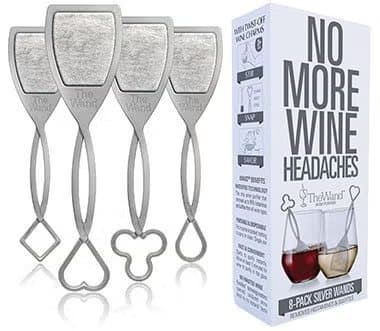
Wands and the 8-pack box
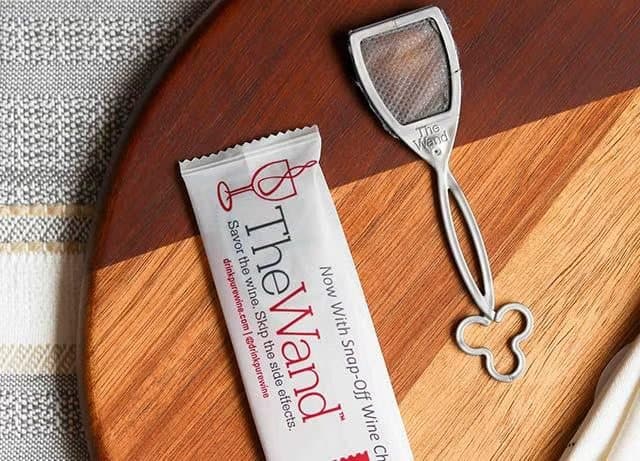
Each wand comes individually wrapped
The Wand prices
| Pack | Price | Per wand |
|---|---|---|
| 8 wands | $24.99 | About $3.12 |
| 24 wands | $59.98 | About $2.50 |
| 40 wands (most popular) | $89.97 | About $2.25 |
| 64 wands (best deal) | $119.96 | About $1.87 |
What the bundle labels do
The 40-pack is labelled "most popular" and the 64-pack "best deal". Those labels push buyers towards larger packs before they know whether the wand helps them. The 8-pack is the sensible first purchase, even though it costs more per glass.
Yearly cost
A person who drinks two glasses of wine, three nights a week, would use about 300 wands a year. Even at the 64-pack price, that is around $560 a year. For occasional use at events, the cost is modest.
Compared with the cost of the wine
For a $12 bottle poured into five glasses, each glass costs about $2.40, so a wand nearly doubles the price of a glass. For an expensive bottle, the extra cost is a smaller share. At a restaurant, where a glass might cost $12 or more, a $2 wand is a small addition.
Shipping
The page lists free shipping on the multi-packs. Check the shipping cost on the single 8-pack at checkout, since it can change the price per glass noticeably.
Where else it is sold
PureWine wands are sold through retailers including Costco, according to Chowhound, and specialist shops. Compare prices, since retail multipacks may be cheaper.
Retail versus direct
Buying from a large retailer usually means that retailer's return policy applies, which may be more generous than PureWine's direct terms. If returns matter to you, compare both before buying.
The return policy
PureWine's policy says it will refund products returned within 30 days of purchase, unused and in original packaging, after you email service@drinkpurewine.com. After 30 days, only manufacturing defects are accepted, with a 1-year replacement period. Opened wands cannot be returned.
What to do: buy the 8-pack first to test, rather than a large pack.
What counts as "unused"
Because each wand is wrapped, unopened wands in an opened box may still count as unused. The policy says products must be unused and in their original packaging, so ask support before opening the box if you are unsure. Opened wands cannot be returned.
What to do: email support within 30 days and keep your order number and the unopened wands.
Who sells it
PureWine says The Wand was developed by Dr. David Meadows and his son Derek, and is designed and made in Texas.

The Wand Wine PurifierScore 4.7/10
Best for: Wine drinkers who suspect sulfite or histamine sensitivity and want a low-risk test
$24.99 at PureWine · Price checked October 4, 2026
Check price at PureWine (opens PureWine in a new tab)We may earn a commission if you buy through our links.
Is The Wand better than other ways to avoid wine headaches?
For most people, simple habits help more. Drinking less, drinking water between glasses, eating with wine and choosing wines that suit you address the main causes. For people truly sensitive to histamine or sulfites, a filter like The Wand or a pour-through filter can help. Antihistamines may help histamine reactions but need a pharmacist's advice.
| The Wand | Pour-through wine filter | Drinking less and water | Low-histamine wines | |
|---|---|---|---|---|
| Cost | $1.87 to $3.12 per glass | Varies | Free | Varies |
| Removes sulfites | Yes, per brand | Some claim to | No | Sometimes lower |
| Removes histamines | Yes, per brand | Some claim to | No | Yes, by choice |
| Helps alcohol-related headaches | No | No | Yes | No |
| Reusable | No | Some | n/a | n/a |
Where The Wand wins
The Wand's main advantage is convenience: one wrapped stick, no equipment, works in any glass. Bottle filters need you to control the pour, which rarely happens at a restaurant or party. For drinking away from home, The Wand fits best.
Where it loses
For drinkers at home with a bottle, a reusable filter or a change of wine may cost less over a year. For headaches from alcohol, drinking less is the only reliable answer.
The Wand vs pour-through filters
Some wine filters attach to the bottle or sit over the glass, filtering as you pour. Some are reusable for a bottle. They may be cheaper per glass for people who drink at home.
The Wand vs wine drops
Drops that claim to neutralise sulfites are also sold. They usually work by adding a small amount of hydrogen peroxide, which reacts with sulfites. They treat a whole glass or bottle in seconds and are often cheaper per glass, but they do not target histamines, and some drinkers dislike adding a chemical.
The Wand vs choosing different wines
White wines and some lighter reds contain less quercetin and histamine. Wines from grapes grown in less sun may have less quercetin, according to the UC Davis researchers. Experimenting with styles may help more than filtering.
The Wand vs drinking less
Headaches and hangovers rise sharply with the amount drunk. One or two glasses with food and water cause far fewer problems than several on an empty stomach.
Drinks gadgets we have covered
Our BeerBubbler review covers an ultrasonic beer foamer, and our SealPro review looks at a handheld vacuum sealer for food. For cooking, our Gourmax Pro review covers a countertop multi-cooker.
The Wand vs antihistamines
Some people take an antihistamine before drinking wine to reduce flushing. This should only be done after talking to a pharmacist or doctor, because some antihistamines cause drowsiness and interact badly with alcohol. A wand avoids medicine altogether, which some drinkers will prefer.
Choose The Wand if
You drink occasionally, mostly away from home, suspect histamine or sulfites, and value convenience over cost. Choose a different approach if you drink at home most nights, mostly red, or several glasses at a time.
When The Wand makes sense
If you notice symptoms after a single glass of a wine you otherwise enjoy, and suspect histamine, The Wand is an easy experiment.
The Wand Wine PurifierScore 4.7/10
Why people buy it: Removes sulfites and histamines from wine, according to PureWine's independent lab testing
$24.99 at PureWine · Price checked October 4, 2026
Check price at PureWine (opens PureWine in a new tab)We may earn a commission if you buy through our links.
Is The Wand legit, and what should you check before buying?
Yes. PureWine is a real Texas company, and its wands are sold through major retailers. The checks are about expectations: it removes sulfites and histamines but not the other causes of wine headaches, its health promises go beyond the evidence, each glass costs money, and only unused products can be returned within 30 days.
Claims on the box versus evidence
The box's "No more wine headaches" promise is stronger than the evidence. Treat it as marketing, and judge the wand on whether your own symptoms change.
What this means for you: buy expecting an experiment, not a cure.
Talk to a doctor about allergies
What to do: if you have asthma, a diagnosed sulfite allergy or severe reactions to wine, talk to your doctor rather than relying on a filter.
Know your trigger
Keep a simple note of what you drank, how much, with what food and how you felt afterwards. Patterns often appear within a few weeks. If symptoms follow red but not white wine, or one grape but not another, that tells you more than any single test.
Kids and pets
Keep wands, wrappers and filter beads away from small children and pets. They are small objects that could be a choking risk.
Test it fairly
Drink the same wine, the same amount, on similar nights, once with and once without the wand. Note how you feel. Change one thing at a time.
Medication and wine
Some medicines interact with alcohol, and some people react to wine because of medicines they take. Check the leaflets with any regular medication, and ask a pharmacist if you are unsure. A filter does not change those interactions.
Drink responsibly
A wand does not reduce alcohol. Pace yourself, eat, drink water and never drink and drive.
Allergy labelling and restaurants
A wand does not make a wine "sulfite-free". If you have a sulfite allergy, asking a restaurant for a low-sulfite wine and following your doctor's plan is safer than relying on a filter.
How to buy The Wand the smart way
- Decide whether sulfites or histamines are likely your trigger.
- Open The Wand order page (opens PureWine in a new tab) and start with the 8-pack.
- Compare retail prices if you later buy more.
- Test fairly over a few occasions.
- Keep unopened packs if you might return them within 30 days.
How did we score The Wand?
The Wand scores 4.7 out of 10: claim accuracy 0.6, build durability 1.1, price competitiveness 0.9, usability 1.4 and owner satisfaction 0.7, each out of 2. It does what it says chemically, according to lab tests, and is very easy to use. Points come off for headache and hangover promises that research does not support, "reverses oxidation" and health-benefit claims, the cost of a single-use product and unused-only returns.
The Wand is the first product on our site aimed at wine, but other kitchen gadgets in our Gourmax Pro review and SealPro review are scored on the same five criteria.
What owners and reviewers say
Customer quotes on the page report fewer headaches and less flushing. Reviews in other publications have generally found the wands easy to use with little change to taste, and noted that evidence linking sulfites to headaches is weak. We found no independent rating for this store.
Common complaints
The most common criticism in reviews we read is cost: a wand per glass makes a bottle noticeably more expensive. Another is that results vary, with some drinkers seeing no difference. A few reviewers mention that the wand gets in the way when drinking.
How the score breaks down
We use the five criteria on our how we test page, each out of 2.
| Criterion | Score | Why |
|---|---|---|
| Claim accuracy | 0.6 / 2 | Filtering is tested; headache, oxidation and health claims overreach |
| Build durability | 1.1 / 2 | Single-use by design; made in the USA |
| Price competitiveness | 0.9 / 2 | $1.87 to $3.12 per glass adds up |
| Usability | 1.4 / 2 | Unwrap, stir, done |
| Owner satisfaction | 0.7 / 2 | Positive retail reception; no independent ratings here |
| Total | 4.7 / 10 |
What would raise the score
A published, controlled trial showing fewer headaches or less flushing with the wand than without it would raise claim accuracy. So would publishing the full ETS Labs results and the taste study, and returning opened wands within the 30 days.
What we did, and did not, do
Nobody on our team has used The Wand. We read the offer page and return policy on 4 October 2026 and research reporting and reviews on 5 October 2026. Our kitchen tech hub lists the other kitchen products we have reviewed, including the Pacuzzi skillet steamer.
How to use The Wand for the best results
Unwrap a wand, stir it into your glass of wine and leave it in for at least a few minutes before drinking, keeping it in the glass as you drink. Use one wand per glass, drink water alongside, eat with wine, and keep track of whether symptoms change across several fair tests. Throw the wand away after one use.
- Pour a normal glass. The wand is for one glass.
- Stir it in. Stirring speeds filtering, according to the brand.
- Wait a few minutes. Longer contact removes more.
- Leave it in. It keeps working as you drink.
- Drink water. Alternate wine and water.
- Eat with wine. Food slows alcohol absorption.
- Bin it. Single use only.
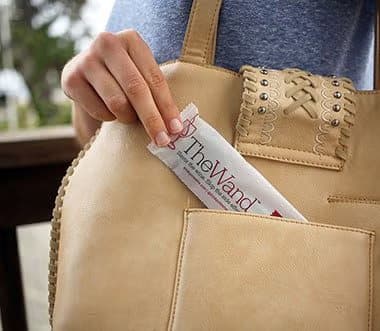
White and rosé wines
White and rosé wines often have more sulfites than reds, so if sulfites are your trigger, the wand may make a bigger difference to them. They usually have less histamine and quercetin.
Red wines
Red wines have more histamine, which the wand targets, and more quercetin, which it does not. If reds bother you more than whites, test both the wand and switching grape varieties.
Timing your first sip
If you can, put the wand in as soon as the wine is poured and wait a few minutes before drinking, perhaps while you order food. That gives the resin more time to work on the first sips, which otherwise get the least filtering.
At restaurants
Carry a couple of wrapped wands. Most restaurants will not mind a stirring stick in your glass.
Hosting a tasting
If you want to test the claims with friends, pour two glasses from the same bottle, add a wand to one, and have someone else label them. Taste without knowing which is which. It is a simple way to judge the taste claims for yourself.
Sparkling wine
The page says it works with sparkling wine. Stirring releases bubbles, so stir gently.
When it does not seem to work
If you see no change after a few fair tests, the wand probably is not addressing your trigger. Try lighter or white wines, drink less, eat and drink water, and keep notes. If symptoms are severe, talk to a doctor.
Using it in a carafe
The wand is designed for a glass. In a carafe or decanter, one wand would treat a much larger volume and remove a much smaller share of sulfites and histamines.
Recycling
PureWine says the wands are BPA-free and recyclable. Check local recycling rules for small plastic items with filters.
Storing unused wands
Keep wrapped wands in a cool, dry place. The page does not list an expiry date, so check the box. Unopened, they should last well, which suits occasional drinkers buying a larger pack.
Using it with food pairings
Food slows alcohol absorption and may reduce symptoms whether or not you use a wand. Some foods, like aged cheese and cured meat, are high in histamine themselves. If histamine is your trigger, consider what you eat with the wine too.
Other questions about wine purifiers
Can I use it in a bottle? It is designed for one glass; bottle filters exist for larger amounts.
Does it change the colour? PureWine says it does not.
Will it help with a hangover? Hangovers are mainly from alcohol amount; the wand does not reduce alcohol.
Is it vegan? The page does not say.
The Wand Wine PurifierScore 4.7/10
Before you buy: Check the final price, shipping and return terms at checkout.
$24.99 at PureWine · Price checked October 4, 2026
Check price at PureWine (opens PureWine in a new tab)We may earn a commission if you buy through our links.
Frequently asked questions
Does The Wand stop wine headaches?
It removes sulfites and histamines, according to PureWine's lab testing. Whether that stops headaches depends on the cause. A 2023 UC Davis study linked red wine headaches to quercetin, a natural compound, and alcohol itself and dehydration also cause headaches, so it will not help everyone.
How much does The Wand cost?
On 4 October 2026, an 8-pack cost $24.99, 24 wands cost $59.98, 40 cost $89.97 and 64 cost $119.96, with free shipping on the larger packs. That is $1.87 to $3.12 per glass.
Does The Wand remove sulfites?
PureWine says it removes up to 95% of sulfites and histamines, tested by ETS Labs, a wine testing lab in California. The longer it stays in the glass, the more it removes, according to the brand.
Does The Wand change the taste of wine?
PureWine says it keeps antioxidants and flavour and cites a taste preference study at Florida International University. Wine reviewers have generally found little change in taste. Some may notice a difference in aroma.
Is The Wand safe?
PureWine describes it as non-toxic, BPA-free and made with FDA-compliant materials. It is used once and thrown away. People with a diagnosed sulfite allergy should still follow medical advice and not rely on it.
Can I reuse The Wand?
No. Each wand is single-use for one glass of wine, according to the brand.
Is The Wand legit?
Yes. PureWine is a real Texas company whose wands are sold through major retailers. The concerns are health promises beyond the evidence, the cost per glass and returns only for unused products.
We may earn a commission if you buy through our links.
This content is for informational purposes and is not medical advice. Talk to a qualified professional before using any product that affects your health.
Prices accurate as of October 4, 2026. Check the seller's checkout for current pricing, promotions and terms.
What we checked: No hands-on use. Claims, photos, bundle prices and the return policy from The Wand offer page our link opens on 2026-10-04. Reporting on the 2023 UC Davis quercetin study, reviews of PureWine wands in other publications and the top-ranking Wand pages were read on 2026-10-05. No independent rating data was found.

About the author
Alex Carter, Senior Tech Reviewer
Alex Carter is the senior tech reviewer at Top10Gadgets, covering the everyday gadgets, home and kitchen devices, smart home products and accessories most people actually buy. Alex judges a product the way a normal buyer…
- Everyday gadgets and accessories
- Smart home devices
- Home and kitchen gadgets
- Value for money
- Long-term reliability
Writing for Top10Gadgets since 2026Full profile