Health Gadgets / Breathing devices
AirPhysio for Children Review: A Parent's Guide to the Kids' Mucus Clearance Device
A low-resistance AirPhysio oscillating PEP device for children aged four and up. It can help some children clear mucus, but the sales page reaches past the evidence; use it with your child's doctor.

By James Wilson, Consumer Tech Writer at Top10Gadgets
Updated 29 min readHow we test
Quick answer
Yes, if your school-age child has a condition that produces a lot of mucus and their doctor or physiotherapist agrees airway clearance would help. AirPhysio for Children is a low-resistance version of the AirPhysio oscillating PEP device, built on an FDA-cleared design and small enough for a school bag.
Score 6.1/10AUD 95.99 at AirPhysio
Check price at AirPhysio (opens AirPhysio in a new tab)We may earn a commission if you buy through our links.
- Best for
- School-age children with a condition that produces a lot of mucus, whose doctor or physiotherapist recommends airway clearance
- Not for
- Toddlers and young children who cannot yet follow breathing instructions
AUD 95.99 at AirPhysio
Check price at AirPhysio (opens AirPhysio in a new tab)We may earn a commission if you buy through our links.
On this page · 14 sections
- 01Our verdict
- 02The short version
- 03Pros & cons
- 04How it works
- 05Who it's for
- 06What do you get with AirPhysio for Children, and what does it cost?
- 07How does AirPhysio for Children work, and do its claims hold up?
- 08Which children benefit most from AirPhysio for Children?
- 09Is AirPhysio for Children better than the devices clinics use?
- 10Is AirPhysio for Children safe and legit, and what should you check before buying?
- 11What do parents say, and how did we score AirPhysio for Children?
- 12How to use AirPhysio for Children for the best results
- 13What else do parents ask about kids' breathing devices?
- 14Frequently asked questions
Our verdict
Yes, if your school-age child has a condition that produces a lot of mucus and their doctor or physiotherapist agrees airway clearance would help. AirPhysio for Children is a low-resistance version of the AirPhysio oscillating PEP device, built on an FDA-cleared design and small enough for a school bag. From AUD 95.99 with a 30-day guarantee, it is fairly priced. It scores 6.1 out of 10, held back by a sales page that links it to asthma, colds, flu and fewer antibiotics, by the supervision young children need, and by the lack of an independent rating for the children's model.
The short version
- A children's oscillating positive expiratory pressure (OPEP) device: your child breathes out through it, a steel ball vibrates, and the vibration helps loosen mucus.
- Recommended by the brand for ages four and up, with a lower-resistance design than the adult device.
- AUD 95.99 for one, AUD 191.99 for three and AUD 287.99 for five on the offer page from our location, with a 30-day money-back guarantee.
- Best trait: a simple, drug-free airway clearance tool a child can carry in a school bag.
- Biggest drawback: marketing that suggests it helps asthma, colds and antibiotic use, which it is not shown to do.
- Our score: 6.1 out of 10, with the lowest mark for claim accuracy.
Pros & cons
For a child who genuinely needs help clearing mucus, AirPhysio for Children is a reasonable, well-made tool from a company with a real FDA clearance for its adult device. The trouble is that its sales page is written for every worried parent of a coughing child, and most coughing children do not need it. A parent who buys it for the right reason, with a clinician's support, is likely to be pleased; a parent who buys it hoping to avoid inhalers or antibiotics is likely to be disappointed.
What we like
- Low-resistance version of an FDA-cleared oscillating PEP design, made for smaller lungs
- No batteries, drugs or refills; small enough for a school bag
- Simple to use once a child has learned the technique
- Sold through pharmacies in Australia, the UK and Ireland as well as online
- 30-day money-back guarantee on the offer page
What we don't
- The sales page links it to asthma, colds and flu and to avoiding antibiotics, which the evidence does not support
- Children need to be able to follow the technique, so it suits school-age children better than toddlers
- Its own sales page says its claims have not been evaluated by the FDA
- Should not be used in place of inhalers or an asthma action plan
- Prices shown in local currency on the offer page and no independent owner rating for the children's model
Sold by AirPhysio
AirPhysio for ChildrenAUD 95.99
How it works
AirPhysio for Children uses the same principle as the adult device, a technique respiratory physiotherapists have used for decades, with a lighter resistance for smaller lungs.
Your child breathes out against a light ball
Step 1: A stainless steel ball sits in a cone inside the device; when your child breathes out through the mouthpiece, the breath lifts the ball, and the children's version is designed to need less effort than the adult device.
The ball bounces and the airways vibrate
Step 2: The ball rises and falls many times during each breath out, so the pressure in the airways rises and falls rapidly; the vibration helps loosen mucus stuck to the airway walls.
A huff and a cough bring it up
Step 3: The gentle back-pressure helps keep small airways open while breathing out, so loosened mucus moves up toward the throat, where a huff or a cough clears it; this is a technique children learn with practice.
Who it's for
AirPhysio for Children suits school-age children with a condition that makes them produce more mucus than they can clear easily, such as bronchiectasis, a lingering chest infection with lots of mucus, or another condition their respiratory team manages with airway clearance. It also suits families who already use an oscillating PEP device on a clinician's advice and want a spare.
For a child with an ordinary cold, a dry cough or well-controlled asthma, it is unlikely to add anything. The deciding question is simple: does your child bring up mucus they struggle to clear, often enough that their doctor thinks a daily routine would help? If yes, it is worth discussing. If no, the money is better kept.
- School-age children with a condition that produces a lot of mucus, whose doctor or physiotherapist recommends airway clearance
- Children who already use an oscillating PEP device and need a spare for school or another home
- Families who want a drug-free airway clearance tool to use alongside the child's prescribed treatment
Who should skip it
- Toddlers and young children who cannot yet follow breathing instructions
- Children with a collapsed lung, recent chest injury, coughing blood, or recent face, mouth, skull, sinus or ear surgery
- Parents hoping to replace inhalers, antibiotics or an asthma action plan
- Children with a simple cold or cough that is getting better on its own
What do you get with AirPhysio for Children, and what does it cost?
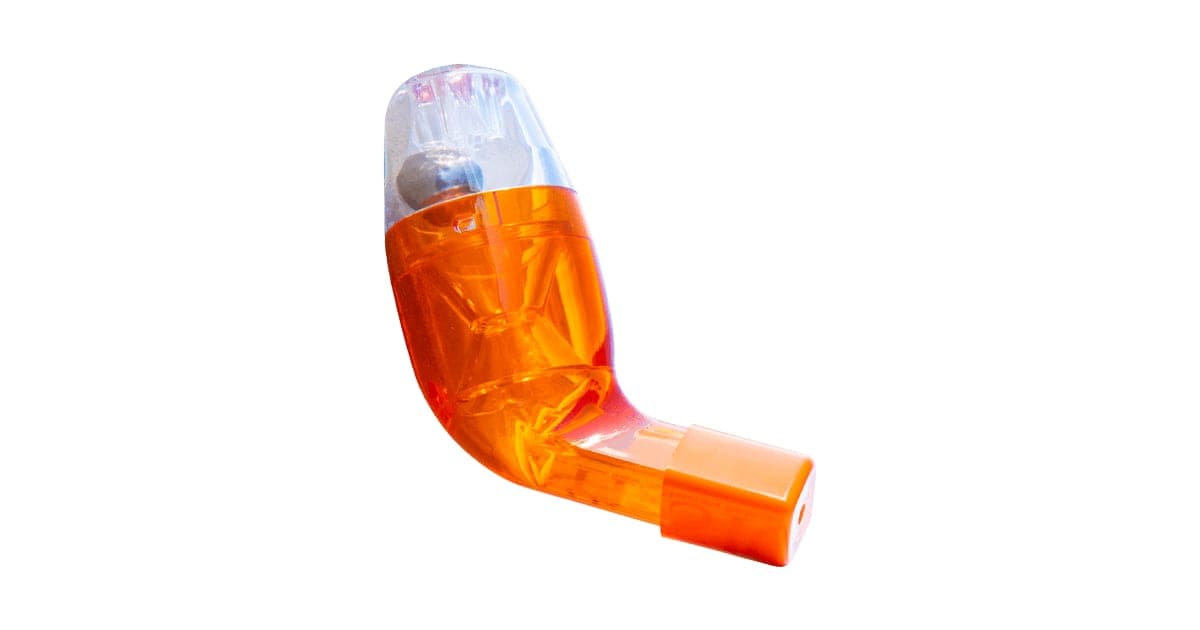
The children's device is an orange version of the AirPhysio, about the size of an inhaler, with a mouthpiece at one end and a clear cap showing the steel ball at the other. It comes in a child-friendly box. There are no batteries, settings or refills. The images below are from the offer page our link opens.
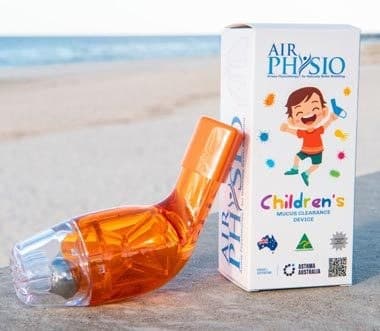
The children's device and box

In use, from the sales page
| Spec | AirPhysio for Children, as sold on 3 October 2026 |
|---|---|
| Type | Oscillating positive expiratory pressure (OPEP) device |
| Age guidance | Recommended for children aged 4 and up, per the offer page |
| Resistance | Lower than the adult device, per pharmacy listings for the children's model |
| How it works | Stainless steel ball in a cone; breathing out lifts and vibrates it |
| Power | None; mechanical |
| Regulatory note | The adult AirPhysio holds FDA 510(k) K203209; the children's sales page says its claims are not FDA-evaluated |
| Maker | AirPhysio Pty Ltd, Tweed Heads South, Australia |
| Guarantee | 30-day money-back on the children's offer page |
The offer page our link opens listed three bundles. From our location it showed prices in Australian dollars:
| Bundle | Each | Total | "Retail" shown |
|---|---|---|---|
| 1 AirPhysio for Children | AUD 95.99 | AUD 95.99 | Not shown |
| 3 (buy 2, get 1 free) | AUD 64.00 | AUD 191.99 | AUD 287.97 |
| 5 (buy 3, get 2 free) | AUD 57.60 | AUD 287.99 | AUD 479.95 |
Buyers elsewhere see local prices at checkout. The page suggests keeping one at school, one at home and one in the car, which is the pitch behind the multi-packs. One device is enough for most children; a second makes sense only if your child spends regular time at another home or needs one at school as part of a care plan. Siblings should not share.
Adult or children's device: which one?
The children's device has a lighter resistance and child-friendly packaging; the adult device needs a stronger breath out. Younger and smaller children, and any child with weak breathing, are better matched to the children's version.
Older children and teenagers who can comfortably lift the adult ball often move to the adult device, usually around their early teens, but there is no fixed age. If your child strains, goes red or cannot keep the ball bouncing, the resistance is too high for them. Ask their physiotherapist which suits them; it is an easy question for someone who can watch your child breathe.
Is 30 days enough to know?
Learning the technique takes most children a week or two of short, daily sessions, and judging whether it helps takes another week or two, ideally over a period when your child has mucus to clear. That fits inside 30 days, but only just. Start using it as soon as it arrives, ask the clinician to check the technique early, and decide by about day 25, so a return lands inside the window.
How to buy AirPhysio for Children the smart way
- Talk to your child's doctor, respiratory nurse or physiotherapist first, and ask whether airway clearance suits their condition. Then open the AirPhysio for Children order page (opens AirPhysio in a new tab).
- Buy one device to start. Add more only if your child's care plan needs one at school or another home.
- Check the currency and the total at checkout, and whether shipping is free for the bundle you chose.
- Save the order confirmation and note the date; the guarantee is 30 days.
- When it arrives, check for cracks, that the ball moves freely and that the caps fit snugly.
- Ask your child's clinician to check their technique in the first week or two, before deciding whether to keep it.

AirPhysio for ChildrenScore 6.1/10
Best for: School-age children with a condition that produces a lot of mucus, whose doctor or physiotherapist recommends airway clearance
AUD 95.99 at AirPhysio · Price checked October 3, 2026
Check price at AirPhysio (opens AirPhysio in a new tab)We may earn a commission if you buy through our links.
How does AirPhysio for Children work, and do its claims hold up?
AirPhysio for Children is an oscillating positive expiratory pressure device with a lighter ball setup than the adult version, so children who cannot breathe out as hard can still make it vibrate and loosen mucus. The adult AirPhysio design holds FDA 510(k) clearance K203209 as a prescription device for helping clear mucus. The children's page links it to asthma, colds and fewer antibiotics, which goes beyond that clearance.

A lower resistance for smaller lungs
The main difference from the adult device is the resistance. Pharmacy listings describe the children's model as having a lighter ball setup for children, who cannot breathe out as hard or as long as adults. That matters: if the resistance is too high, a child cannot lift the ball steadily, gets no vibration and gives up.
What the brand does not publish is the pressure range in centimetres of water, the measure clinicians use to set PEP therapy. A clinician who prescribes PEP for a child often chooses a device and setting for that child; with a fixed-resistance consumer device, you rely on the child being able to use it comfortably. If your child turns red, strains or cannot keep the ball moving, it is too hard for them.
The FDA clearance and the sales page disclaimer
The adult AirPhysio holds a genuine FDA 510(k) clearance, K203209, as a positive expiratory pressure device for helping clear mucus. Its summary lists it as a prescription device, like the Flutter it was compared with. The children's offer page, at the bottom, says that representations about AirPhysio's efficacy and safety have not been evaluated by the FDA and that the products are not intended to diagnose, treat, cure or prevent any disease.
Both statements can be true at once: the design is cleared for mucus clearance, and the marketing on the children's page is not. Our AirPhysio review covers the adult device and its clearance in more depth. For a parent, the practical point is to treat the device as a mucus clearance tool, nothing more.
How it compares with the devices clinics give children
Children's respiratory teams use a range of PEP and oscillating PEP devices, chosen for the child's age, condition and ability. Valve devices that work in any position are common in hospital because a child can use them lying down or with a nebuliser.
Simple PEP masks and bubble PEP are common for younger children. A steel-ball device like AirPhysio for Children sits in the same family as the Flutter-style devices some older children use. The main difference with buying direct is that nobody sets it up for your child: you get the device without the assessment, the pressure setting or the follow-up.
"Feel it working instantly" and "stronger, healthier lungs"
The children's page says most children feel a huge difference the first time, that their lungs may be clearer overnight, and that the more they use it, "the stronger and healthier their lungs become". The first may be true for a child with a lot of loose mucus. The second has no support. Airway clearance moves mucus; it does not build lung capacity in a healthy child.
Made in Australia, sold in pharmacies
AirPhysio Pty Ltd is based in Tweed Heads South, New South Wales, and the children's box carries an Australian-made logo. Besides the direct offer page, the children's device is listed by pharmacies in Australia, the UK and Ireland. That gives you a second way to buy it: you can see the box in a shop, ask a pharmacist, and compare the price with the offer page before choosing where to order.
The page also says the device improves performance and endurance in sport. There is no evidence that an OPEP device makes healthy children fitter. Active play does that on its own.
The asthma and antibiotics testimonials
The most prominent testimonial is from a parent whose eight-year-old has viral-induced asthma; they say the child still uses inhalers but now clears mucus in a week instead of weeks, and no longer needs antibiotics. Another is from a parent whose son developed breathing issues during rugby season.
Parents read testimonials like these and reasonably wonder whether their own child could benefit. Three cautions apply. Many childhood coughs, including viral-induced wheeze, settle on their own, which makes before-and-after stories hard to judge. Antibiotics treat bacterial infections, which a breathing device does not. And asthma needs an asthma action plan and the right inhalers, which a device does not replace. The parent in that testimonial kept the inhalers, which is the right call.
Drug-free, portable, no refills
This part of the pitch is accurate. The device needs no batteries, medicine or refills, so it is easy to keep in a school bag or a car. That is useful if your child's care plan includes airway clearance during the day. "Drug-free" should not be read as "instead of drugs": a child on inhalers or other treatment should keep taking them.
Which children benefit most from AirPhysio for Children?
It suits school-age children with conditions that produce a lot of mucus, such as bronchiectasis or cystic fibrosis, when their respiratory team recommends an oscillating PEP device. Most children with asthma do not need an airway clearance device; their care centres on inhalers, a spacer and an asthma action plan. For a child with an ordinary cold or dry cough, it is unlikely to add anything.
If your child has bronchiectasis or another chronic mucus condition
Children with chronic suppurative lung disease or bronchiectasis are usually taught airway clearance by a respiratory physiotherapist, and oscillating PEP devices are among the tools used. If your child's team recommends an OPEP device, AirPhysio for Children is one option to discuss. The team can confirm the technique, how often to use it, and whether a steel-ball design suits your child.
If your child has cystic fibrosis
Airway clearance is a daily part of cystic fibrosis care, and CF teams choose techniques and devices for each child, often combining several over the years. Some children with CF use steel-ball OPEP devices; others use valve devices, PEP masks or vests. Changes to a CF routine should come from the CF team. Do not add or swap a device without them.
If your child has asthma
Most children with asthma do not need an airway clearance device. Their care centres on preventer and reliever inhalers, a spacer, an asthma action plan and avoiding triggers. Some children produce a lot of mucus during flare-ups or after colds, and a clinician may suggest airway clearance as an extra. Never use the device in place of a reliever during an attack: breathing out against resistance is harder when airways are tight.
If your child keeps getting chest infections
Repeated chest infections in a child deserve a proper assessment, not a gadget. A doctor can look for causes such as asthma, reflux, an inhaled object, immune problems or a chronic lung condition, and decide whether airway clearance is part of the answer.
If your child had pneumonia or bronchiolitis
After pneumonia, some older children have mucus that lingers for a while, and a clinician may suggest airway clearance while they recover. That decision belongs to the doctor treating them, who can make sure there are no complications first. Bronchiolitis in babies is different: UK national guidance from NICE advises against chest physiotherapy for babies with bronchiolitis who have no other condition, and a baby is far too young for a device like this anyway. If a baby is struggling to breathe, feeding poorly or unusually sleepy, seek medical help urgently.
If your child plays sport and gets breathless
Breathlessness during sport has many causes, from exercise-induced asthma to simple fitness. A doctor can test for exercise-induced bronchoconstriction, which is treated with inhalers and warm-ups. An OPEP device is not designed to improve sports performance; Better Breathing Sport, an Australian device sold through the same kind of offer page, is pitched at athletes, and the evidence there is thin too.
Getting a child to use it: technique by age
Ages 4 to 6. Most children this age find it hard to take a deep breath and breathe out steadily on request. Turn it into a game: blow out "birthday candles" slowly, keep a feather moving on a table, or count the bounces they can hear. Sessions should be short, a few breaths at a time, with an adult holding the device steady if needed. If your child cannot lift the ball, they may not be ready, and a physiotherapist can suggest other methods such as bubble PEP or play-based techniques.
Ages 7 to 11. School-age children can usually learn the full technique: sit up straight, big breath in through the nose, hold for a moment, seal the lips and breathe out steadily through the device, then a couple of huffs and a cough. A routine at the same time each day, before school or after dinner, works better than "when you remember". A simple chart and a small reward for a week of sessions helps many children stick with it.
Ages 12 and up. Older children and teenagers can do their own sessions but often stop when they feel well. Explain why it matters on good days as well as bad ones if their condition needs daily clearance, and let them own the routine. At this age a child may move on to the adult device or a different type of device, decided with their care team.
Is AirPhysio for Children better than the devices clinics use?
Clinics use a range of PEP and oscillating PEP devices. Valve devices such as Aerobika and Acapella work in any position, including lying down, and let a clinician set the resistance, so they are common for younger children. AirPhysio for Children depends on gravity, so your child must sit upright. Buying direct also means nobody assesses your child, sets the device up or follows up.
| Option | How it works | Suitable ages | How you get it |
|---|---|---|---|
| AirPhysio for Children | Steel-ball OPEP, lower resistance | 4+ per brand; school age in practice | Direct online or pharmacy |
| Valve OPEP (Aerobika, Acapella) | Valve or magnet, works in any position, adjustable | Varies; often school age | Usually through a clinic or on prescription |
| PEP mask or mouthpiece | Steady resistance, no vibration | From young children with help | Through a physiotherapist |
| Bubble PEP | Blowing bubbles through water, playful | Young children | Taught by a physiotherapist, very cheap |
| Breathing techniques and huffing | No device | Older children | Taught by a physiotherapist, free |
The biggest practical difference is posture and adjustability. Steel-ball devices such as AirPhysio depend on gravity, so your child needs to sit upright and hold the device at the right angle. Valve devices work lying down and let the clinician set the resistance, which is why they are often used with very young or unwell children. For many young children, a physiotherapist will start with something simpler and more playful, such as bubble PEP.
What it costs over a year
At AUD 95.99, a single device bought direct costs the same as a few takeaway meals, and with care it lasts well over a year. Valve OPEP devices bought privately cost a similar amount. The real comparison for many families is with devices supplied through a hospital clinic or covered by insurance when prescribed, which can cost you little or nothing. If your child is already under a respiratory team, ask what they can supply before buying one yourself; if they are not, the appointment is worth more than the device.
If a steel-ball device suits your child and your clinician agrees, the AirPhysio for Children offer page (opens AirPhysio in a new tab) sells it with a 30-day guarantee. Our health gadgets section covers other health devices, from the Air-C leg massager to the Sleep Connection wristband, where the claims run further ahead of the evidence. For older children and adults, our AirPhysio vs Better Breathing Sport comparison sets the adult device against its sports-branded twin.
AirPhysio for ChildrenScore 6.1/10
Why people buy it: Low-resistance version of an FDA-cleared oscillating PEP design, made for smaller lungs
AUD 95.99 at AirPhysio · Price checked October 3, 2026
Check price at AirPhysio (opens AirPhysio in a new tab)We may earn a commission if you buy through our links.
Is AirPhysio for Children safe and legit, and what should you check before buying?
AirPhysio is a real Australian company with an FDA-cleared adult design and a 30-day guarantee, but some children should not use PEP devices, including those with a collapsed lung, coughing up blood or recent face, mouth or sinus surgery. It is not an asthma treatment: keep to your child's asthma action plan and never use it during an attack. Ask your child's doctor first.
None of these rule the device out for the right child. Each one changes how you should buy and use it.
Some children should not use PEP devices. Published guidance for positive expiratory pressure therapy lists situations where it should be avoided or used only under medical supervision: a collapsed lung, coughing up blood, recent surgery or injury to the face, mouth, skull, sinuses or oesophagus, ear problems such as a perforated eardrum, and some heart conditions. If any of these apply, or you are unsure, ask your child's doctor.
It is not an asthma treatment. Keep to your child's asthma action plan and inhalers. Do not use the device during an asthma attack, when breathing out against resistance is harder and delays the reliever.
The sales page claims are not FDA-evaluated. The page says so itself. Claims about colds, flu, stronger lungs, sports performance and fewer antibiotics are marketing.
Supervise and keep it personal. Young children should use it with an adult. Each child needs their own device, cleaned after every use, especially when they are unwell.
Know when to see a doctor. Breathing difficulty, fast or noisy breathing, a child who is unusually drowsy, coughing blood, a high fever, or a cough lasting more than three to four weeks all need a medical assessment, whatever device you own.
Check the return terms. The offer page promises 30 days, hassle-free. A device that has been in a child's mouth cannot be resold, so check the written terms at checkout and keep the box.
Store it safely. The device has caps and a steel ball that can come out when it is taken apart for cleaning. Like any item with small parts, keep it out of reach of babies and toddlers in the household, reassemble it fully after cleaning, and supervise younger children while they use it.
Questions to ask your child's doctor
Taking a few questions to the appointment gets you a clearer answer than "should I buy this?":
- Does my child's condition produce enough mucus for airway clearance to help?
- Is a steel-ball oscillating PEP device right for their age and breathing strength, or would another device or technique suit them better?
- How many breaths, how many cycles and how often should they do it, and should it be before or after their inhaler?
- Are there any reasons, such as their heart, ears or recent surgery, that they should not use PEP?
- What should make us stop and call you?
Write the answers down and keep them with the device. If the clinician says airway clearance is not needed, that is useful too: it saves you the cost and saves your child a daily routine that would not help them.
What do parents say, and how did we score AirPhysio for Children?
AirPhysio for Children scores 6.1 out of 10: claim accuracy 0.9, build durability 1.3, price competitiveness 1.3, usability 1.4 and owner satisfaction 1.2, each out of 2. There is no separate rating for the children's model; AirPhysio's main Trustpilot profile showed 3.5 from 7,181 reviews across all products. Parents' testimonials describe children clearing mucus faster after viral illnesses.
What owners say
There is no separate independent rating for the children's model. AirPhysio's main Trustpilot profile showed a TrustScore of 3.5 out of 5 from 7,181 reviews on 3 October 2026, across all its products, with 47 percent five-star and 21 percent one-star. The company had replied to all negative reviews.
Parents' testimonials on the offer page describe children clearing mucus faster after viral illnesses, a rugby-playing child breathing more easily, and families buying devices for several relatives. Brand-wide complaints on Trustpilot focus on cracked plastic joints, thin instructions, slow delivery and price increases, and a minority who saw no benefit. For children, technique and supervision matter even more than for adults, which may explain some of those mixed results.
Reading the parent testimonials
The parent stories on the offer page are relatable: a child with viral-induced asthma who clears mucus faster, a rugby player whose breathing improved, a gift for an asthmatic son, a grandparent buying devices for several family members. They show who buys the product. They do not show how many children used it without benefit, and they come with no dates or clinical details. The most useful detail in them is a practical one: the parent who reports the best result says their child kept using their inhalers alongside the device.
How we researched this review
Nobody on our team has used AirPhysio for Children, and this review does not claim otherwise. Every score on the site follows the five criteria on our how we test page. For this review we read the children's offer page our link opens on 3 October 2026, AirPhysio's FDA 510(k) summary, its Trustpilot profile, pharmacy listings for the children's device, and published guidance on airway clearance in children and on PEP contraindications. The pages ranking for "AirPhysio for children review" were almost all paid advertorials; none tested the device with children.
How the score breaks down
| Criterion | Score | Why |
|---|---|---|
| Claim accuracy | 0.9 / 2 | Cleared design, but asthma, antibiotics, sport and "stronger lungs" claims go well beyond it |
| Build durability | 1.3 / 2 | Simple mechanical device; brand owners report some cracked joints |
| Price competitiveness | 1.3 / 2 | In line with other OPEP devices; also sold in pharmacies |
| Usability | 1.4 / 2 | Easy for older children; young children need supervision and may not manage it |
| Owner satisfaction | 1.2 / 2 | No independent rating for the children's model; brand-wide 3.5 on Trustpilot |
| Total | 6.1 / 10 |
How to use AirPhysio for Children for the best results
Get your child's doctor or physiotherapist to agree first and, if possible, show your child the technique. Sit your child upright with feet flat and shoulders relaxed, ask them to breathe in slowly through the nose, then breathe out steadily through the device so the ball bounces. Follow a few breaths with two huffs and a cough, and clean the device daily.

- Get your child's doctor or physiotherapist to agree first, and if possible to show your child the technique.
- Sit your child upright on a chair with feet flat and shoulders relaxed; steel-ball devices work best upright.
- Ask them to breathe in slowly through the nose, a bit bigger than normal, and hold for two seconds.
- Have them seal their lips around the mouthpiece and breathe out steadily, as if blowing out a long row of candles.
- Tilt the device a little until they can feel or hear the ball bouncing; that is their angle.
- Do about 5 to 10 breaths, then two "huffs" with an open mouth, as if fogging a mirror, and a cough to clear the mucus.
- Keep sessions short and regular, as the clinician advises, and stop if your child feels dizzy, tired or upset.
Cleaning and care
Clean the device after every session when your child is unwell, and at least daily otherwise. Take it apart as the leaflet shows, wash the parts in warm water with mild detergent, rinse well and let them dry completely before reassembling. Store it in a clean, dry case in a school bag, never loose. Check the joints for cracks weekly, and replace a cracked device.
Making it a routine at home and school
Children stick with airway clearance when it is part of the day, not an extra. Pair it with something that already happens, such as after brushing teeth in the morning or before a favourite TV programme in the evening. Keep the device somewhere visible, in its case, so it is not forgotten. If daytime use at school is part of the care plan, give the school a copy of the plan, a labelled device in a clean case and simple instructions, and agree where your child can do it privately.
A sample first week for a school-age child
This is an example of how families often build the habit, not a prescription; follow your child's clinician if they give you a routine. On days one and two, practise the breathing without the device, then add it for three or four breaths, just to feel the bounce.
From day three, do one short session a day: two cycles of five to eight breaths, each followed by two huffs and a cough. By the end of the week, most school-age children can do a full session with reminders. Note how much mucus comes up and how your child feels, and take those notes to the follow-up. A short written record beats memory when the clinician asks how it is going.
Fixing common problems
Your child cannot make the ball bounce. Check their lips are sealed and their cheeks are not puffing out. Try a slightly different angle. If they still cannot, the device may be too hard for them right now.
Your child gets dizzy. They are probably breathing too fast or too deeply. Slow down, add normal breaths between cycles and shorten the session.
Your child will not use it. Make it part of a fixed routine, use a chart and rewards, and let them hold it themselves. If it becomes a daily battle and their clinician thinks airway clearance matters, ask for a different technique that suits them better.
It stops vibrating as well. Check for cracks or debris in the cone, clean it thoroughly, and contact support if a part is damaged.
AirPhysio for ChildrenScore 6.1/10
Before you buy: Check the final price, shipping and return terms at checkout.
AUD 95.99 at AirPhysio · Price checked October 3, 2026
Check price at AirPhysio (opens AirPhysio in a new tab)We may earn a commission if you buy through our links.
What else do parents ask about kids' breathing devices?
Most questions are about everyday use. AirPhysio for Children works the same way as the adult device, with lower resistance for children. During a cold, children already on airway clearance may be told to do extra sessions, but an otherwise healthy child with an ordinary cold usually needs only rest and fluids. It does not attach to a spacer or nebuliser and is used separately.
Is AirPhysio for Children the same as the adult device?
It works the same way and comes from the same company, with a lower resistance for children and different packaging. Only the adult device's 510(k) clearance is published, and the children's page carries an FDA disclaimer for its claims. As children grow, many move to an adult device on their clinician's advice.
Can my child use it during a cold?
If your child's clinician has recommended airway clearance and they have a lot of mucus during colds, they may be told to do extra sessions. For an otherwise healthy child with an ordinary cold, rest, fluids and time usually do the job. If your child is breathing fast, struggling to breathe or very unwell, see a doctor.
Can it be used with a spacer or inhaler?
AirPhysio does not attach to a spacer or nebuliser and is used separately. Some routines use a reliever inhaler before airway clearance to open the airways first. The order and timing depend on your child's condition, so ask their clinician.
Is it safe to take to school?
The device has no batteries or medicine, so it is easy to carry. Talk to the school nurse or teacher, include it in your child's care plan if their clinician recommends daytime use, and make sure your child has a clean case and knows not to share it.
What is the difference between a spacer and AirPhysio?
A spacer is a tube that attaches to an inhaler and helps medicine reach the lungs; it is part of asthma treatment. AirPhysio is a mucus clearance device that does not deliver any medicine. They do completely different jobs, and a child with asthma who uses an inhaler should keep using it with their spacer.
Does my child need it if they do not cough up mucus?
Probably not. Airway clearance devices are for moving mucus. A child with a dry cough, an asthma cough or a tickly cough after a cold is unlikely to benefit, and should see a doctor if the cough lasts more than three to four weeks or keeps them awake.
Can my child use it before sport?
The device is not designed to improve sports performance, and there is no evidence it does. If your child gets breathless or wheezy during sport, a doctor can check for exercise-induced asthma, which is treated with a reliever before exercise and a proper warm-up.
How long does a child's AirPhysio last?
It has no electronics or consumables, so with gentle cleaning it can last a long time. The parts that wear are the plastic joints, which some owners of AirPhysio devices report cracking. Check it weekly, replace it if it cracks or the ball no longer moves freely, and expect to move to an adult device as your child grows.
Should grandparents buy one as a gift?
It is better to talk to the child's parents first. A breathing device is only useful if the child's doctor thinks airway clearance will help, and the parents need to supervise its use and fit it into the child's care plan. If the family does want one, a single device, chosen with the child's clinician, is a more useful gift than a multi-pack.
Can a child use it while they have a sore throat or mouth ulcer?
Usually yes, if it is comfortable, since the mouthpiece rests on the lips rather than inside the throat. If your child has a painful mouth, a high temperature or is very unwell, skip the session and check with their doctor rather than pushing through.
Frequently asked questions
Is AirPhysio for Children safe?
For the right child, used as directed, an oscillating PEP device is low risk. It is not suitable for every child: a collapsed lung, coughing blood, recent face, skull, sinus or ear surgery, and some heart conditions rule it out. Children should be supervised, and any child with a lung condition should use it only with their doctor's agreement.
What age is AirPhysio for Children suitable for?
The offer page recommends it for children aged four and up. In practice a child needs to be able to seal their lips around a mouthpiece, take a big breath in and breathe out steadily on request, which many children manage from around school age. Younger children usually need other airway clearance methods taught by a physiotherapist.
Can AirPhysio help my child's asthma?
Asthma is mainly narrowed, inflamed airways, treated with relievers and preventers. Some children with asthma produce mucus, especially during flare-ups, and a clinician may suggest airway clearance alongside their inhalers. AirPhysio is not an asthma treatment, should never replace an inhaler, and is not something to use during an attack.
Will AirPhysio stop my child needing antibiotics?
No device can promise that. One testimonial on the sales page says a child no longer needed antibiotics, but antibiotics treat bacterial infections, which airway clearance does not. Many childhood coughs are viral and do not need antibiotics anyway. Decisions about antibiotics should be made with your child's doctor.
How much does AirPhysio for Children cost?
From our location the offer page showed AUD 95.99 for one, AUD 191.99 for three and AUD 287.99 for five, with a 30-day money-back guarantee. Prices in other currencies are shown at checkout and differ. Pharmacies also sell the children's device, so you can compare prices locally.
Is AirPhysio for Children FDA cleared?
AirPhysio's adult device has an FDA 510(k) clearance, K203209, for mucus clearance. The children's sales page itself says its claims have not been evaluated by the FDA and that it is not intended to diagnose, treat, cure or prevent any disease. Ask your child's doctor whether it suits your child's condition.
How do I get my child to use it properly?
Sit them upright, show them how to seal their lips and breathe out slowly like blowing out a long line of candles, and let them feel the vibration. Short sessions, a sticker chart and doing it at the same time each day help. A respiratory physiotherapist can check their technique in one visit.
Can siblings share one device?
No. The device comes into contact with saliva and mucus, so each child should have their own, cleaned after use. That is the main reason families buy a multi-pack, along with keeping one at school or at another parent's home.
We may earn a commission if you buy through our links.
This content is for informational purposes and is not medical advice. Talk to a qualified professional before using any product that affects your health.
Prices accurate as of October 3, 2026. Check the seller's checkout for current pricing, promotions and terms.
What we checked: No hands-on use. Claims, age guidance, bundles, guarantee, FDA disclaimer and product images from the AirPhysio for Children offer page our link opens (getairphysiokids.io), which showed prices in Australian dollars from our location, on 2026-10-03. AirPhysio's FDA 510(k) summary K203209, the brand's Trustpilot profile, pharmacy listings for the children's device, and published guidance on airway clearance and PEP contraindications were read the same day.

About the author
James Wilson, Consumer Tech Writer
James Wilson covers health and wellness technology for Top10Gadgets: breathing devices, massagers, hearing aids, dental and weight-loss products, and the other gadgets sold with a promise to make life easier. James write…
- Health and wellness gadgets
- Over-the-counter hearing aids
- Breathing and massage devices
- FDA clearance and registration
- Tech for beginners
Writing for Top10Gadgets since 2026Full profile