Health Gadgets / Foot care
My Happy Feet Socks Review: Do Toe Alignment Socks Really Ease Bunion and Foot Pain?
Cotton socks with soft spacers between your toes, for wearing while you rest. Gentle toe spreading can soothe tired feet, but the knee, hip and back claims go far beyond the evidence.

By James Wilson, Consumer Tech Writer at Top10Gadgets
Updated 29 min readHow we test
Quick answer
Yes, if you want a cheap, gentle way to stretch cramped or achy toes while you sit or sleep, and you understand they ease discomfort rather than fix anything. My Happy Feet Socks are simple, soft, patented and backed by a 90-day guarantee, and toe spacers have some evidence for easing bunion pain.
Score 6.5/10$29.99 at My Happy Feet
Check price at My Happy Feet (opens My Happy Feet in a new tab)We may earn a commission if you buy through our links.
- Best for
- People with tired, cramped or achy feet who want a gentle, low-cost stretch while resting
- Not for
- People with diabetes, neuropathy or poor circulation in the feet, without a podiatrist's advice
$29.99 at My Happy Feet
Check price at My Happy Feet (opens My Happy Feet in a new tab)We may earn a commission if you buy through our links.
On this page · 14 sections
- 01Our verdict
- 02The short version
- 03Pros & cons
- 04How it works
- 05Who it's for
- 06How much do My Happy Feet Socks cost, and what sizes are there?
- 07Do toe alignment socks work, and what does the evidence say?
- 08Are My Happy Feet Socks' claims true?
- 09Are My Happy Feet Socks better than silicone toe spacers or wider shoes?
- 10Are My Happy Feet Socks legit, and what should you check before buying?
- 11What do owners say, and how did we score My Happy Feet Socks?
- 12How to use My Happy Feet Socks for the best results
- 13What else do people ask about foot pain and toe spacers?
- 14Frequently asked questions
Our verdict
Yes, if you want a cheap, gentle way to stretch cramped or achy toes while you sit or sleep, and you understand they ease discomfort rather than fix anything. My Happy Feet Socks are simple, soft, patented and backed by a 90-day guarantee, and toe spacers have some evidence for easing bunion pain. But the page's claims about knees, hips, back and neck are unsupported, you cannot walk in them, and they will not reverse a bunion. They score 6.5 out of 10, held back by claim accuracy.
The short version
- Open-toe crew socks with four soft spacers between the toes.
- Worn while sitting, lying down or sleeping; not for walking or shoes.
- 90% cotton, 7% polyester, 3% elastane; machine washable.
- Sizes Small, Medium and Large, chosen by shoe size.
- $29.99 a pair on 4 October 2026; three for $59.98, five for $89.97, free shipping on packs.
- Patented design (US7784115), from a small company in Ohio.
- Toe spacers may ease bunion pain; they do not reverse bunions.
- Claims about back, hip and neck pain are unsupported.
- 90-day money-back guarantee, according to the page.
- Best trait: a low-cost, low-risk way to stretch your toes while you rest.
- Biggest drawback: overstated health claims.
- Our score: 6.5 out of 10.
Pros & cons
My Happy Feet Socks are a cheap, low-risk product with a sensible core idea. The cons are mostly about how far the marketing stretches that idea.
What we like
- Simple, low-cost way to spread and stretch the toes while you sit, rest or sleep
- Soft cotton-blend crew socks with built-in spacers, so nothing to lose or slip out of place
- Patented design (US7784115) from a small Ohio company founded by its inventor
- Gradual wear-in plan in the FAQ helps avoid discomfort
- 90-day money-back guarantee and free shipping on multi-packs, according to the page
- Machine washable and available in three sizes
What we don't
- Claims of benefits for knees, hips, back and neck are not supported by evidence
- Not designed for walking or for wearing with shoes, so they only work while you rest
- Toe spacers can ease symptoms but do not reverse bunion bone changes
- Some people find the spacers uncomfortable at first, especially with stiff or crossed toes
- No independent owner rating we could verify; the page's figures are unverifiable
Sold by My Happy Feet
My Happy Feet Socks$29.99
How it works
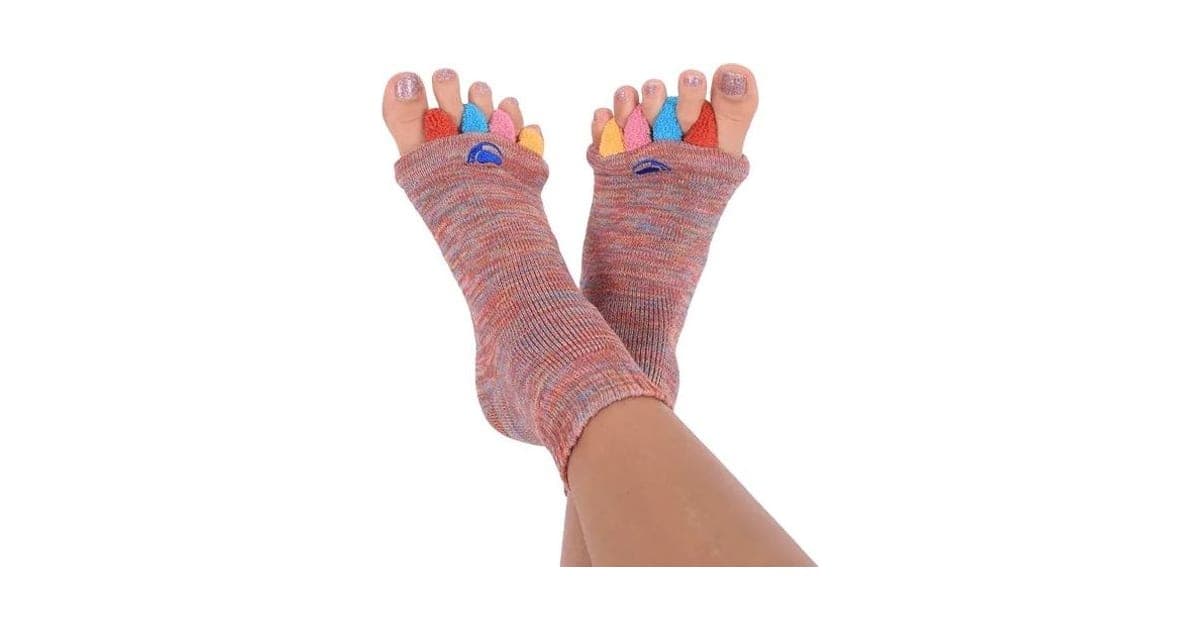
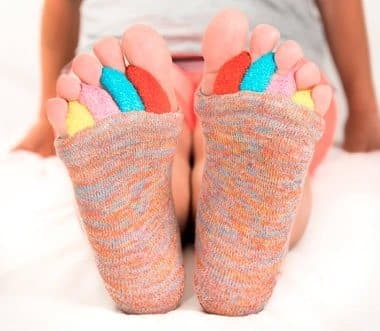
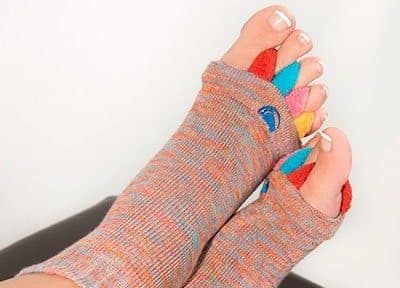
My Happy Feet Socks look like ordinary crew socks with the toes cut away. At the front, four soft fabric spacers sit between your toes, one between each pair. When you put them on, the spacers gently push your toes apart and hold them there.
Slip the spacers between your toes
Step 1: Pull the sock on and ease the four soft spacers between your toes. In the first week, the FAQ says to keep them just at the tips of your toes.
Rest while they spread your toes
Step 2: Sit, lie down or sleep while the spacers gently spread and stretch your toes. The socks are not designed for walking or for wearing with shoes.
Build up gradually
Step 3: Start with 15 to 20 minutes a day and slowly increase the time and depth over a few weeks. Some people work up to wearing them overnight.
What toe spreading does
Most shoes, especially narrow or pointed ones, squeeze the toes together for hours a day. Over years, toes can drift towards each other and the muscles that spread them get little use. Spreading the toes while you rest stretches the soft tissues between them and can feel like a good stretch after a long day. That is the same idea behind silicone toe spacers and the toe stretches used in yoga and physiotherapy.
Why they are socks, not separate spacers
Loose silicone or gel spacers can slip out, especially at night. Building the spacers into a sock keeps them in place and spreads the pressure across a soft fabric. The fabric spacers are also gentler than firm silicone for people new to toe spreading.
Why the spacers are different sizes
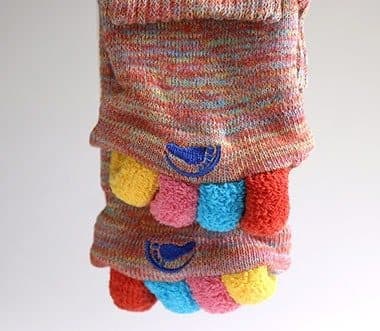
Look closely at the product photos and the spacers are not all identical: they sit in the gaps between each toe, from the big toe to the little toe. The patent describes four cylindrical separators. In practice, the gap between the big toe and second toe gets the most attention, which is where bunion pressure builds.
The role of resting
The FAQ is clear that the socks work best when your feet carry no weight. That makes sense: when you stand, your body weight pushes your toes into the shape your shoes and habits have given them. When you rest, the spacers can do their gentle work without fighting your weight.
What the socks do not do
They do not move bones, straighten a bunion permanently or change the way you walk. Because you only wear them while resting, any effect on your feet happens during that time and may fade once you put shoes back on. A testimonial on the page makes the same point: the owner's toes went back together during the day in regular shoes.
Who it's for
My Happy Feet Socks suit people whose feet feel tired, cramped or achy at the end of the day, people with mild bunions or toes squashed by shoes, and people who already like toe stretches and want an easy way to do them for longer. They also suit anyone who wants a cheap, low-risk thing to try before spending more on foot care.
They are not a medical treatment, and they are not a substitute for seeing a podiatrist about a painful, worsening or rigid bunion.
Common reasons people buy them
Based on the testimonials and FAQ, buyers usually have one of a few problems: a bunion that aches after a day in shoes, toes that feel cramped or overlap slightly, sore feet after long shifts or sport, or general stiffness in the feet with age. Yoga and barefoot-movement fans also buy them to keep their toes flexible.
Why My Happy Feet Socks appeal
They are cheap: $29.99 a pair, or about $20 each in a three-pack. They are passive: you put them on and relax. And they are low-risk: soft fabric spacers, a gradual wear-in plan and a 90-day guarantee. Compared with custom orthotics, physiotherapy or surgery, they are an easy first step.
The story behind them is also appealing. The page says Eva Nemcik, a retired product developer from Kirtland, Ohio, designed them in 2007 after yoga and tennis left her with foot pain, and the company is still based in nearby Mentor, Ohio. The patent records match: US7784115, filed in 2007 and granted in 2010, names Eva Nemcik as inventor.
A typical evening
After dinner, you sit on the sofa, put your feet up and slip the socks on, easing the spacers just to the tips of your toes. For the first few minutes, the stretch feels noticeable. After 15 or 20 minutes, you take them off and your toes feel looser. Over a few weeks, you push the spacers deeper and wear them longer, perhaps through a film or into bed.
That is the routine the FAQ describes, and it is what owners in the testimonials report.
A typical night
Once your toes are used to the stretch, you might put the socks on as you get into bed. The testimonials include several people who sleep in them, including one who says they are comfortable precisely because the toes stay free. In the morning, you take them off before getting up so you do not slip on the way to the bathroom.
Who gets the most value
People who stick with them for weeks, wearing them most days, get the most from them. People with flexible toes that can still be gently moved into place are more likely to notice a difference than people with stiff, rigid toes.
As a gift
The page suggests them as a gift, and at $30 they suit someone who is on their feet all day: nurses, retail workers, teachers, hikers or older relatives with achy feet. Get the shoe size right, and include the gift receipt.
Runners, walkers and dancers
People who spend hours in tight athletic shoes, such as runners, hikers and dancers, sometimes use toe spacers to recover in the evening. The socks will not prevent injury, but a gentle stretch after a long run can feel good. Anyone with a current injury should see a sports physiotherapist first.
Older adults
Feet tend to stiffen and widen with age, and bunions become more common. For older adults with flexible toes, the socks are a gentle option. Balance matters, though: take them off before standing, and do not walk in them on hard or smooth floors.
- People with tired, cramped or achy feet who want a gentle, low-cost stretch while resting
- People with mild bunions or toes pushed together by shoes who want to ease discomfort
- Anyone who already uses toe spacers and wants a version that stays in place overnight
Who should skip it
- People with diabetes, neuropathy or poor circulation in the feet, without a podiatrist's advice
- Anyone with rigid, painful or severely crossed toes, or a bunion that needs medical review
- People with open wounds, infections or broken skin on the feet
- Anyone expecting the socks to fix back, hip or knee pain, or to reverse a bunion
How much do My Happy Feet Socks cost, and what sizes are there?
My Happy Feet Socks cost $29.99 a pair on the offer page on 4 October 2026, with three pairs for $59.98 and five for $89.97, including free shipping on the multi-packs. They are open-toe socks in a cotton, polyester and elastane blend with four soft spacers, sized by shoe size in Small, Medium and Large. The page shows a 90-day money-back guarantee.
Materials and design
According to the FAQ, the socks are 90% cotton, 7% polyester and 3% elastane, and the spacers are made from the same materials. They come in a multicoloured knit with brightly coloured spacers. They are open at the toes, so the spacers sit at the base of each toe while the tips stay free.
Sizing
Sizing is based on shoe size, not sock size, according to the FAQ:
| Size | Women's shoe | Men's shoe |
|---|---|---|
| Small | 4 to 6 | 2 to 4 |
| Medium | 7 to 9 | 5 to 8 |
| Large | 10 and up | 9 and up |
The socks stretch, so the sizes overlap. The FAQ suggests a Medium for a very wide or thick women's 6 or a thin women's 10. If your toes are long or wide, or you are between sizes, the larger size is usually more comfortable.
My Happy Feet Socks price and bundles
On 4 October 2026 the My Happy Feet Socks offer page (opens My Happy Feet in a new tab) listed:
| Package | Price | Per pair | Shipping |
|---|---|---|---|
| 1 pair | $29.99 | $29.99 | Not stated as free |
| 3 pairs (buy 2, get 1 free) | $59.98 | $19.99 | Free |
| 5 pairs (buy 3, get 2 free) | $89.97 | $17.99 | Free |
The page shows "retail" prices of $89.97 and $149.95 for the multi-packs, which are simply the single-pair price multiplied. Free shipping in the USA applies to qualifying offers only, according to the page; the single pair may add shipping at checkout.
Is it good value?
Generic toe spacer socks cost less from big online marketplaces, and loose silicone spacers can cost under $10. You pay more here for the original patented design, a US company, a 90-day guarantee and a clear wear-in plan. For one person, the three-pack makes sense if you want a pair to wear while another is in the wash. Five pairs is for families or gifts.
What the bundle prices mean in practice
If you want to wear a pair every evening, you will want at least two so one can be washed. The three-pack gives you that and a spare for about $20 a pair, which is in line with the price of a single pair of good-quality ordinary socks. That is the option we would pick for one person.
How long a pair lasts
The seller does not give a lifespan. Cotton-blend socks worn indoors and washed gently typically last many months; the spacers are the part most likely to lose shape. Owners in the testimonials mention reordering, which suggests they wear out or that people want spares. Check the spacers every few weeks: if they have gone flat or loose, they will spread your toes less and it may be time for a fresh pair.
Shipping
The FAQ says orders ship within 24 to 48 hours and arrive in 3 to 5 business days in the USA on average. The page says it ships to more than 30 countries; international times vary.
Who makes them
My Happy Feet is owned by Happy Feet Company LLC, the patent's current assignee, and is based in Mentor, Ohio, according to the page. The founder's trademark "My-Happy Feet" was filed in 2010.

My Happy Feet SocksScore 6.5/10
Best for: People with tired, cramped or achy feet who want a gentle, low-cost stretch while resting
$29.99 at My Happy Feet · Price checked October 4, 2026
Check price at My Happy Feet (opens My Happy Feet in a new tab)We may earn a commission if you buy through our links.
Do toe alignment socks work, and what does the evidence say?
Toe spacers have some evidence for easing bunion discomfort. A 2017 trial of 79 people with moderate bunions found that custom silicone separators worn six hours a night for a year reduced big-toe pain and improved the bunion angle by about 3 degrees. That was firmer silicone, not these soft fabric socks, which may have a smaller effect, and orthopaedic guidance says spacers ease symptoms rather than reversing a bunion.
The evidence for toe spacers
Toe spacers have been studied mostly for bunions (hallux valgus). The best-known trial, published in 2017 in Prosthetics and Orthotics International, randomised 79 people with moderate bunions at a Bangkok hospital. Those who wore custom-moulded silicone toe separators for six hours a night for a year had less big-toe pain and a small improvement in the bunion angle (about 3 degrees), while the control group's angle worsened slightly (summary in Lower Extremity Review).
That is encouraging, but it is a small trial of custom silicone separators worn for hours every night, not of these socks. Soft fabric spacers are gentler and may have a smaller effect.
What orthopaedic guidance says
Orthopaedic guidance, such as the American Academy of Orthopaedic Surgeons' page on bunions, lists non-surgical options including wider shoes, padding, spacers and painkillers to ease symptoms. It is clear that these do not reverse a bunion; surgery is the only way to correct the bone position, and it is usually reserved for persistent pain.
Plantar fasciitis and other foot pain
Testimonials on the page mention plantar fasciitis, bunions and cramped toes. There is little direct research on toe spacers for plantar fasciitis. Stretching the foot and calf is a standard part of plantar fasciitis care, and some people find toe spreading a pleasant addition, but it is not a treatment on its own.
Hammer toes
The FAQ says the spacers gradually push a crooked toe back into place. Flexible hammer toes may feel more comfortable with gentle stretching, but rigid hammer toes do not straighten with socks. A podiatrist can tell you which you have.
Why they may feel good even without big changes
A gentle stretch, putting your feet up and taking a moment to rest all feel good. Warm socks add to that. These effects are real even if the bones do not move, and they are a fair reason to buy a $30 pair of socks.
Realistic expectations
Expect relief while you wear them and perhaps a little afterwards, looser-feeling toes and, with regular use over weeks, possibly less discomfort. Do not expect a straightened bunion, a cured plantar fasciitis or relief from back pain.
Who the evidence suggests benefits most
The 2017 trial included people with moderate bunions, and its participants wore separators for six hours every night. That suggests two things: regular, long wear matters, and people with mild to moderate, still-flexible bunions are the most likely to benefit. People with severe deformities were not the focus.
What about arthritis?
Some online coverage of these socks lists arthritis among the conditions they help. Gentle movement can feel good for stiff joints, but stretching a joint that is inflamed or arthritic can hurt. If you have rheumatoid arthritis, gout or painful osteoarthritis in your toes, ask your doctor or podiatrist before trying spacers.
Are My Happy Feet Socks' claims true?
The core claim is partly supported: toe spacers can ease some foot discomfort, particularly bunion pain. The bigger claims are not. We found no evidence that wearing toe spacers while resting helps knees, hips, back or neck, and "the most effective non-surgical way" to soothe feet has no head-to-head trials behind it. "All types of foot pain" is far too broad, though the patented design is real.
Toes spread by the spacers
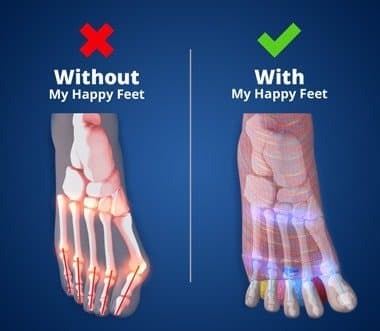
The seller's illustration, not an X-ray
"Reduce foot pain" and "quick relief from all types of foot pain"
Partly supported. Toe spacers can ease some foot discomfort, particularly bunion pain. "All types of foot pain" is far too broad: pain from fractures, nerve problems, arthritis flares or infection needs medical care.
"Positive effect on your knees, hips, and back… all the way to your neck"
Unsupported. We found no evidence that wearing toe spacers while resting changes posture or relieves pain higher up the body. The FAQ's argument that "good posture starts with the feet" is a plausible-sounding idea, not a proven effect of these socks.
"The most effective non-surgical way to soothe your aching feet"
Unsupported. There are no head-to-head trials comparing these socks with orthotics, physiotherapy, footwear changes or other options.
"Recommended by doctors and podiatrists"
Unverified. The page quotes biomechanist and author Katy Bowman praising the socks in her book on foot pain, and shows a stock-style photo of a woman in a white coat with a "trusted and recommended" badge but no name. A single quote from an author is not a medical endorsement, and the photo does not identify a real doctor.
Katy Bowman is a real biomechanist and author, and her book on foot pain was published in 2011. We could not see the quoted passage ourselves, so we report it as the page presents it.
"Based on a 5,000-year-old yoga tradition"
Loosely true. Toe stretching is part of some yoga practice, but the age of the tradition says nothing about the socks' effect.
"Improve circulation" and "relieve swelling"
Unverified. We found no evidence that toe spacer socks improve circulation or reduce swelling. Elevating your feet while wearing them may help mild swelling, but that is the elevation, not the socks.
"Patented design"
True. US patent 7784115 covers foot alignment socks with four spacers. It was granted in 2010 and, according to Google Patents, is due to expire in 2028.
"$12 million+ in sales", "2500+ positive reviews", "250,000+ people" and "as seen on" logos
Unverifiable. The page shows these figures and TV network logos without links or dates.
"100% drug-free, zero side effects"
Drug-free, yes. "Zero side effects" is too strong: the FAQ itself mentions slight discomfort, and stretching stiff toes too hard can hurt.
"Gradually aligning your toes"
Plausible for flexible toes with long, regular use, based on the trial of custom separators. How much a soft fabric spacer can achieve compared with firm silicone is unknown, and any change is likely to be small.
The before-and-after illustration
The page shows a drawing of foot bones "without" and "with" the socks, with the bones looking straighter in the second. It is an illustration, not an X-ray of a real customer, and it should not be read as evidence of what the socks do to bones.
Claims scorecard
| Claim | Our view |
|---|---|
| Reduces foot pain | Partly supported for bunion discomfort |
| Helps knees, hips, back and neck | Unsupported |
| Most effective non-surgical option | Unsupported |
| Doctor and podiatrist recommended | Unverified; one author quote |
| Improves circulation and swelling | Unverified |
| Patented | True (US7784115) |
| Sales and review figures | Unverifiable |
| Zero side effects | Overstated |
Are My Happy Feet Socks better than silicone toe spacers or wider shoes?
The socks are softer than silicone toe spacers and stay in place overnight, but they cannot be worn walking. Silicone spacers cost under $15, are firmer and some fit in wide shoes, though they can slip out at night. If narrow shoes are part of the problem, shoes with a wide toe box may help more over a day. Many people combine wide shoes by day with spacer socks in the evening.
| Option | Typical cost | Wear while walking | Best for |
|---|---|---|---|
| My Happy Feet Socks | $29.99 a pair | No | Gentle toe stretch while resting |
| Silicone toe spacers | Under $15 | Some styles | Firmer spreading; can slip at night |
| Wide toe-box shoes | Varies | Yes | Reducing pressure all day |
| Supportive insoles | $20 to $60 | Yes | Arch support, heel pain |
| Bunion pads and splints | $10 to $30 | Pads yes; splints no | Bunion rubbing and night splinting |
| Podiatry or physiotherapy | Varies | — | Diagnosis, exercises, custom orthotics |
Socks vs silicone toe spacers
Silicone spacers are cheaper and firmer, and some can be worn in wide shoes. They can slip out at night and feel harder on sensitive toes. The socks are softer and stay in place but cannot be worn walking.
Socks vs wider shoes
If narrow shoes are part of the problem, switching to shoes with a wide toe box may help more over a day than any amount of resting in spacers. The two work well together: wide shoes during the day, spacer socks in the evening.
Socks vs a bunion splint
Night splints hold the big toe straighter with a rigid strap. They are firmer than spacer socks and some people find them hard to sleep in. Spacer socks are gentler and spread all the toes, not just the big toe. If a podiatrist recommends a splint, follow their advice.
Socks vs generic toe spacer socks
Many similar socks are sold online, often cheaper. They are based on the same idea, and some may copy the design. The advantages of the original are a known company, a 90-day guarantee and a clear size chart; the advantage of generics is price. Whichever you choose, the sizing and wear-in advice is the same.
Socks vs doing nothing
For many people, achy feet at the end of the day improve with rest, elevation, a change of shoes and a few stretches, all free. If those already help, you may not need spacer socks. Try a week of evening foot stretches, an earlier change into wide slippers and ten minutes with your feet raised before you spend anything, and note whether the ache at bedtime changes. If you like the feeling of a toe stretch and want it to last longer than you can hold it, the socks make that easy.
Socks vs insoles
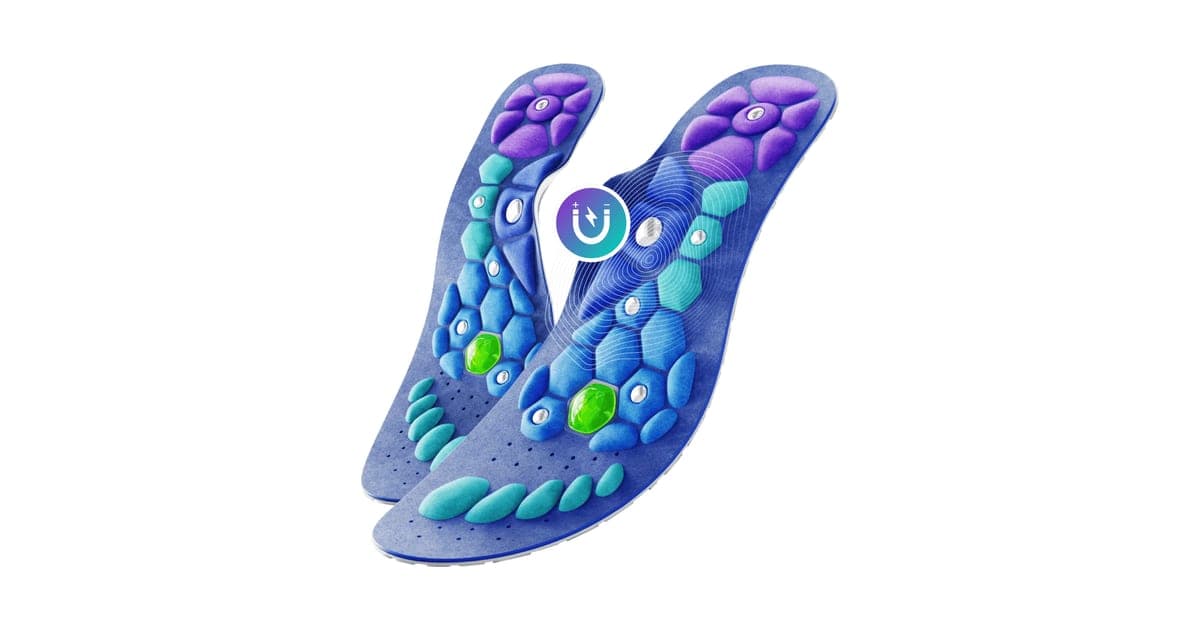
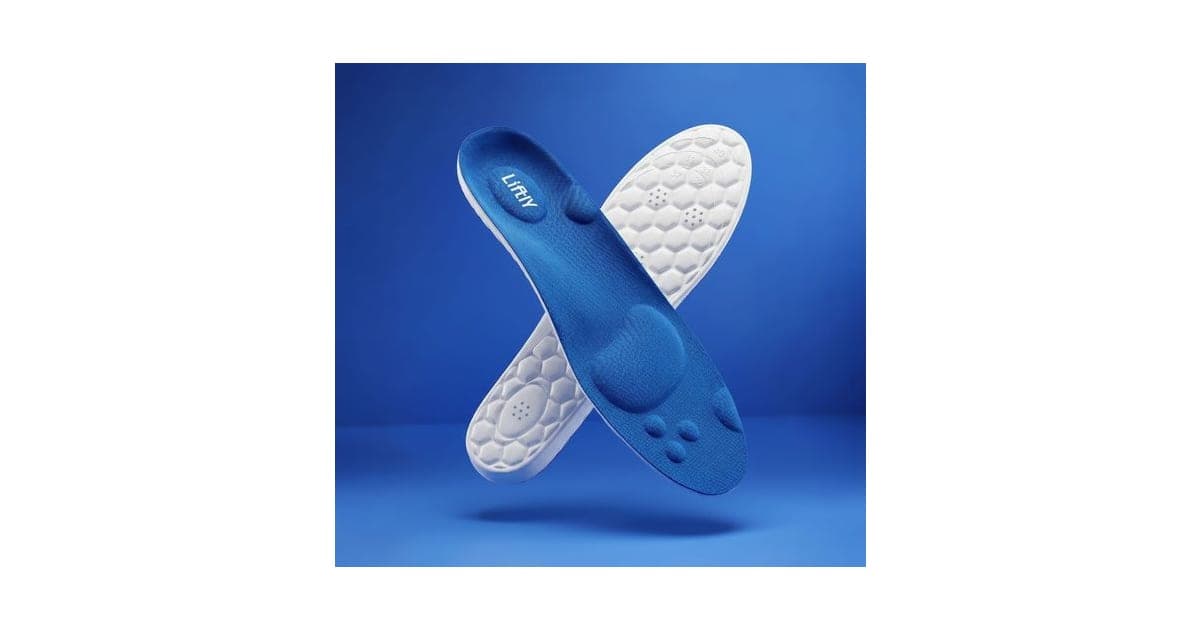
Insoles support the arch and heel while you walk; spacer socks stretch the toes while you rest. They target different things. We have reviewed Akusoli insoles and Liftly insoles if arch or heel support is what you need.
Socks vs massage and cold therapy
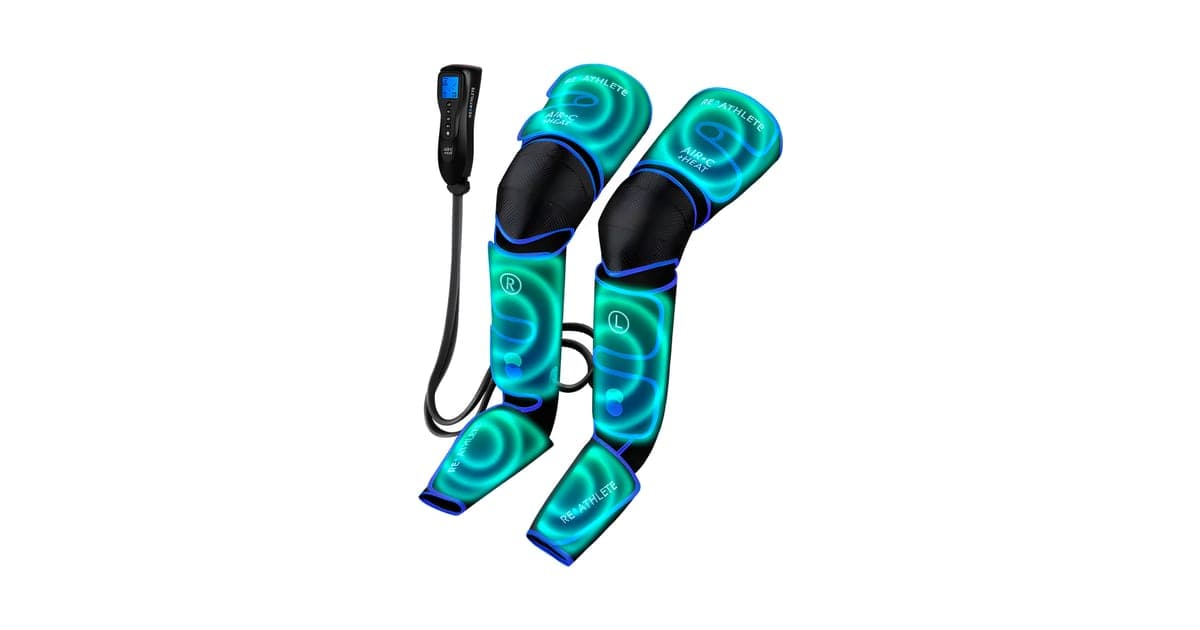
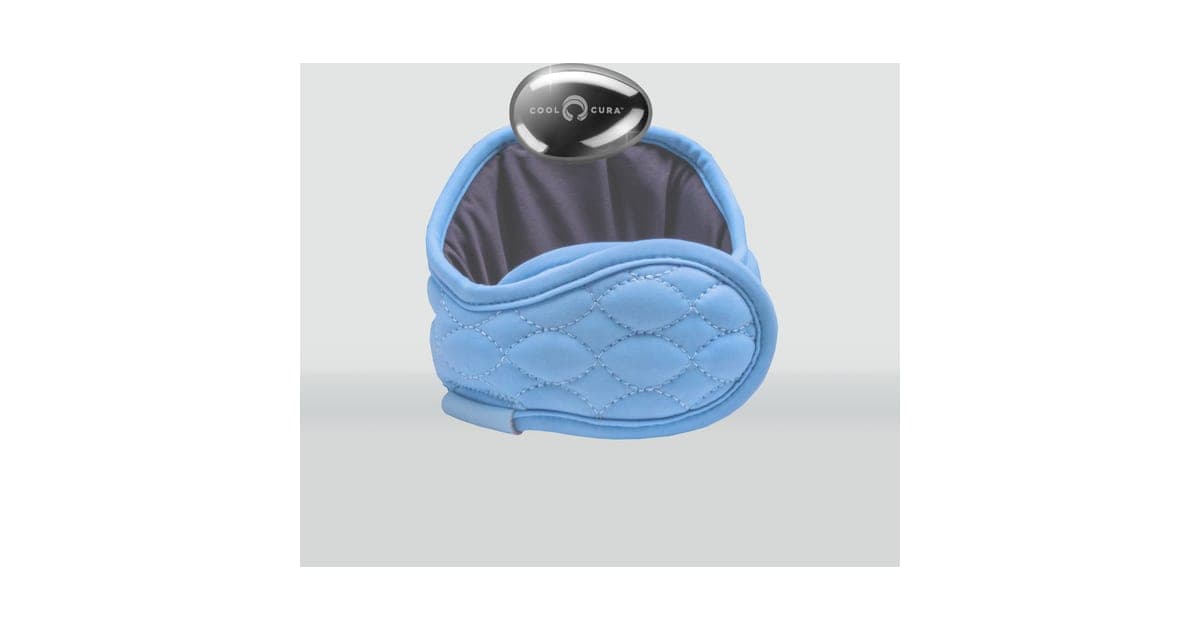
For achy feet after a long day, a foot massager or cold therapy may feel better in the moment. Our reviews of the Air-C compression massager and CoolCura cover those. Toe spacers are cheaper and quieter, and you can use them alongside either. More options are in our health gadgets category.
Socks vs a podiatrist
A podiatrist can tell you what is actually causing your pain, whether your bunion or hammer toe is flexible, and which options suit you. If your pain is persistent, getting worse or stopping you from walking, start there.
To compare prices before you choose, check today's My Happy Feet bundles (opens My Happy Feet in a new tab).
My Happy Feet SocksScore 6.5/10
Why people buy it: Simple, low-cost way to spread and stretch the toes while you sit, rest or sleep
$29.99 at My Happy Feet · Price checked October 4, 2026
Check price at My Happy Feet (opens My Happy Feet in a new tab)We may earn a commission if you buy through our links.
Are My Happy Feet Socks legit, and what should you check before buying?
My Happy Feet Socks are a real, patented product with a 90-day money-back guarantee, though we found no Trustpilot profile or independent owner rating. Before buying, order by shoe size rather than sock size, expect some discomfort at first, and remember they are for resting, not walking. If you have diabetes, nerve damage or poor circulation, check with your doctor or podiatrist first.
They ease discomfort; they do not fix structure
Toe spacers may relieve discomfort and help toes feel looser. They do not reverse bunions or straighten rigid hammer toes.
What to do: see a podiatrist or doctor if your bunion is painful, getting worse, red or swollen, or if you are considering surgery.
Diabetes, neuropathy and circulation
People with diabetes, nerve damage or poor circulation may not feel pressure or rubbing, and small sores can become serious.
What to do: ask your podiatrist or diabetes team before using any toe spacer, and check your feet daily for redness or broken skin.
Discomfort at first
Spreading toes that have been squeezed together for years can feel tight. The FAQ says slight discomfort is fine but pain is not.
What to do: follow the gradual wear-in plan, start with the spacers at the tips of your toes and remove them if they hurt.
Not for walking or shoes
The socks are designed for resting. Walking in them can be slippery and the spacers bunch up.
What to do: take them off before getting up, or walk only a few careful steps on carpet. Do not wear them on stairs or smooth floors.
Sizing
Wrong sizing makes the spacers sit in the wrong place.
What to do: order by shoe size, go up a size if your feet are wide or long, and check the fit before washing them.
Returns
The page shows a 90-day money-back guarantee and links to a returns page.
What to do: read the returns terms before you buy, keep your order confirmation and packaging, and ask about return shipping costs.
Hygiene
The spacers sit in the warm, moist gaps between your toes, which is where athlete's foot thrives.
What to do: put them on clean, dry feet, wash them regularly, and do not share them. If you have athlete's foot, treat it before using them.
How to buy My Happy Feet Socks the smart way
- Measure your shoe size and check the size chart, then go to the My Happy Feet Socks order page (opens My Happy Feet in a new tab).
- Pick one pair to try, or a three-pack if you want a spare while one is in the wash.
- Check whether shipping is added to the single pair at checkout.
- Keep your order confirmation and packaging for the 90-day guarantee.
- Follow the wear-in plan for at least three to four weeks before judging them.
What do owners say, and how did we score My Happy Feet Socks?
My Happy Feet Socks score 6.5 out of 10: claim accuracy 0.8, build and durability 1.4, price competitiveness 1.6, usability 1.3 and owner satisfaction 1.4, each out of 2. We found no Trustpilot profile, and the page's 2,500 positive reviews are not linked. Its four testimonials describe less bunion pain, comfortable overnight wear and help with plantar fasciitis.
Owner ratings
We could not find a Trustpilot profile for the brand. The offer page claims more than 2,500 positive reviews but does not link to them. Third-party marketplace ratings exist for toe alignment socks, but we could not reliably match them to this brand and seller, so we have not used them.
The testimonials on the page
The page shows four testimonials, one of them repeated. Owners describe less bunion pain, comfortable overnight wear and help with plantar fasciitis. One owner notes that their toes become cramped again in regular shoes during the day, which is an honest and realistic detail. The testimonials are selected by the seller.
What we would expect owners to report
Based on how toe spacers work, we would expect owners with flexible toes and mild discomfort to be happiest, and owners with rigid toes, severe bunions or neuropathy to be least satisfied or to find them uncomfortable.
How we scored My Happy Feet Socks
Scores follow the five criteria on our how we test page, each worth up to 2 points.
| Criterion | Score | Why |
|---|---|---|
| Claim accuracy | 0.8 | Sensible core idea, but back, hip, neck and circulation claims are unsupported |
| Build and durability | 1.4 | Soft cotton blend; no durability data |
| Price competitiveness | 1.6 | Low price, cheaper in packs, 90-day guarantee |
| Usability | 1.3 | Easy to put on, but rest-only and needs a gradual wear-in |
| Owner satisfaction | 1.4 | Positive testimonials; no independent rating to check |
| Total | 6.5 |
What we did, and did not, do
Nobody on our team has worn these socks. We checked the offer page our link opens, the patent record, a published trial of toe separators and orthopaedic guidance on bunions. We did not measure toe position, fit or durability.
How to use My Happy Feet Socks for the best results
Order by shoe size, then start shallow: for the first week, keep the spacers at the tips of your toes for 15 to 20 minutes a day. From week two, move them about halfway down your toes and wear them for one to two hours, working up to overnight only if comfortable. Pair them with simple toe exercises, and remove them if they hurt.
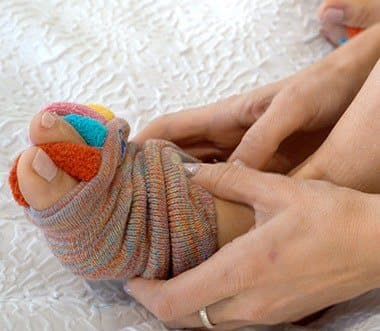
- Pick the right size. Order by shoe size, not sock size.
- Start shallow. For the first week, keep the spacers at the tips of your toes for 15 to 20 minutes a day.
- Go deeper slowly. From week two, move the spacers about halfway down your toes and wear them for one to two hours.
- Work up to full depth. After a few weeks, slide the spacers all the way between your toes. Try overnight only when that is comfortable.
- Rest, do not walk. Wear them sitting, lying down or sleeping, with your feet up if you can.
- Stop if it hurts. A stretch is fine; pain, numbness or tingling is not.
- Be consistent. Most people who benefit wear them most days for weeks.
Pair them with toe exercises
Simple exercises can strengthen the small muscles that spread your toes: spread your toes wide and hold, lift your big toe while keeping the others down, or pick up a towel with your toes. Physiotherapists often suggest these alongside spacers.
Combine with foot massage
Rolling the sole of your foot over a ball or bottle for a minute before putting the socks on can loosen tight tissues and make the stretch more comfortable. Many people find it a pleasant evening routine.
Keep a spare pair handy
If you wear them every evening, a second pair means you never skip a night because one is in the wash. Keep one pair by the sofa and one by the bed so they become part of your routine rather than something you have to remember.
Pair them with better shoes
Spacers undo some of a day in tight shoes; wider shoes stop the problem building in the first place. Look for a toe box wide enough to wiggle your toes.
Washing
The page says they are machine washable. Wash them inside out with similar colours and air-dry them to keep their stretch.
If your toes are crossed or very stiff
Do not force the spacers in. Use them at the tips only, or try a smaller size of spacer first. If you cannot get them in comfortably at all, see a podiatrist.
Tracking whether they help
Before you start, note how your feet feel at the end of a typical day on a scale of 0 to 10, and take a photo of your feet from above. Check again after four weeks and eight weeks. That gives you a fair basis for deciding whether to keep them within the 90-day guarantee.
Wearing them in bed
Once you can manage them for an hour or two, try them at night. Some people find them warm; others find the spacers press when they turn over. If they wake you, wear them for a shorter time before bed instead.
My Happy Feet SocksScore 6.5/10
Before you buy: Check the final price, shipping and return terms at checkout.
$29.99 at My Happy Feet · Price checked October 4, 2026
Check price at My Happy Feet (opens My Happy Feet in a new tab)We may earn a commission if you buy through our links.
What else do people ask about foot pain and toe spacers?
Most questions are about bunions and what spacers can do. Bunions are thought to result from inherited foot shape and pressure from footwear, and narrow, pointed or high-heeled shoes can make them worse, so wider shoes are one of the most useful changes. Toe spacers can ease discomfort but do not reverse the bone changes, and a tailor's bunion on the little toe will not change either.
What causes bunions?
Bunions are thought to result from a mix of inherited foot shape and pressure from footwear. They are more common in women and get more common with age.
What is a bunionette?
A bunionette, or tailor's bunion, is a bony bump on the outside of the foot at the base of the little toe. One testimonial mentions one. Spacers may ease rubbing between the little toe and its neighbour, but they do not change the bump.
Are bunions caused by shoes?
Shoes are not the only cause, but narrow, pointed or high-heeled shoes can worsen bunions and make them more painful. Choosing wider shoes is one of the most useful things you can do.
Can bunions be reversed without surgery?
No. Non-surgical options such as wider shoes, padding and spacers can ease pain and may slow progression, but only surgery changes the bone position.
Are toe spacers good for you?
For most people, gentle toe spacing is safe and can feel good. People with diabetes, neuropathy or poor circulation should check with a podiatrist first.
How long does it take toe spacers to work?
Many people feel a stretch straight away. Any change in comfort or toe position usually takes weeks of regular use, and in the 2017 trial the measured change took a year of nightly wear.
Can I sleep in toe spacer socks?
Yes, once you can wear them comfortably for an hour or two. The FAQ suggests building up to overnight wear over a few weeks.
Can children wear toe alignment socks?
The page does not mention children, and children's feet are still developing. If a child has toe or foot pain, see a doctor or podiatrist rather than buying adult toe spacers.
Can I wear them with compression socks?
Not at the same time. If you wear compression stockings for a medical reason, ask your doctor before using any toe spacer.
Do toe spacers help plantar fasciitis?
There is little direct evidence. Calf and foot stretching, supportive shoes and rest are the usual first steps; toe spacers may be a comfortable extra.
Are My Happy Feet Socks legit?
Yes. They are a real, patented product from a US company. The marketing overstates what they do, but they are a genuine, low-cost product.
Are they worth it?
If you want a gentle, comfortable toe stretch while resting and understand what they can and cannot do, $20 to $30 a pair is reasonable. If you are hoping to fix back pain or reverse a bunion, they are not.
Frequently asked questions
What are My Happy Feet Socks?
They are open-toe cotton-blend crew socks with four soft spacers that sit between your toes. They are designed to be worn while resting or sleeping to gently spread and stretch the toes. They are not designed for walking or for wearing with shoes.
How much do My Happy Feet Socks cost?
On 4 October 2026 the offer page our link opens listed one pair at $29.99, three pairs for $59.98 and five pairs for $89.97, with free shipping on the multi-packs. Owning two pairs lets you wear one while the other is washed.
Do toe alignment socks work for bunions?
Toe spacers can ease bunion discomfort and may slightly improve toe position with regular use. A 2017 trial of custom silicone spacers worn nightly for a year found less pain and a small improvement in angle. They do not reverse the bone changes of a bunion.
Can I walk in My Happy Feet Socks?
Only a few steps. The FAQ says they are designed for sitting, lying down or sleeping, not for walking or wearing with shoes. Use them while reading, watching TV or in bed, and wear wide shoes during the day if narrow shoes hurt.
What size should I get?
Sizing is by shoe size. Small fits women's 4 to 6 or men's 2 to 4, Medium women's 7 to 9 or men's 5 to 8, and Large women's 10 and up or men's 9 and up.
How long should I wear them?
The FAQ suggests 15 to 20 minutes a day at first with the spacers at the tips of your toes, working up to an hour or two and eventually overnight if comfortable. Remove them if they hurt.
Will they help my back pain?
There is no good evidence that toe spacer socks relieve back, hip, knee or neck pain. See a doctor or physiotherapist about back pain. The evidence for toe spacers is mainly for easing bunion discomfort, not pain higher up the body.
What is the guarantee?
The page shows a 90-day money-back guarantee. Keep your order confirmation and check the returns page for how to send them back. Give them a few weeks of gradual wear before deciding, because toes often need time to adjust to the stretch.
We may earn a commission if you buy through our links.
This content is for informational purposes and is not medical advice. Talk to a qualified professional before using any product that affects your health.
Prices accurate as of October 4, 2026. Check the seller's checkout for current pricing, promotions and terms.
What we checked: No hands-on use. Claims, prices, bundles, sizing, materials, FAQ answers, guarantee, shipping, testimonials, company story and images from the My Happy Feet offer page our link opens (getmyhappyfeetsocks.io) on 2026-10-04. Patent details from Google Patents (US7784115). Evidence from a 2017 randomised trial of toe separators for hallux valgus and orthopaedic guidance on bunions. We found no Trustpilot profile for the brand.
See how My Happy Feet Socks compares in The Best Health Gadgets of 2026

About the author
James Wilson, Consumer Tech Writer
James Wilson covers health and wellness technology for Top10Gadgets: breathing devices, massagers, hearing aids, dental and weight-loss products, and the other gadgets sold with a promise to make life easier. James write…
- Health and wellness gadgets
- Over-the-counter hearing aids
- Breathing and massage devices
- FDA clearance and registration
- Tech for beginners
Writing for Top10Gadgets since 2026Full profile