Health Gadgets / Breathing tools
Moksha Beam Review: How the Breathing Necklace Works, What the Research Says and Who It Helps
A stainless steel pendant you breathe out through to slow your exhale. Slow breathing has good evidence for easing stress; the necklace is a convenient pacing reminder, not the source of the benefit.

By James Wilson, Consumer Tech Writer at Top10Gadgets
Updated 29 min readHow we test
Quick answer
Yes, if you know slow breathing calms you but forget to do it, and a simple pendant would remind you and help you pace your exhale. The Moksha Beam is a stainless steel tube on a chain that slows your out-breath, and slow, exhale-focused breathing has good evidence for easing stress in the moment.
Score 6.3/10$39.99 at Moksha
Check price at Moksha (opens Moksha in a new tab)We may earn a commission if you buy through our links.
- Best for
- People who know slow breathing helps them but forget to do it when stressed, and want a physical reminder
- Not for
- Anyone hoping it will replace treatment for an anxiety disorder, panic disorder or depression
$39.99 at Moksha
Check price at Moksha (opens Moksha in a new tab)We may earn a commission if you buy through our links.
On this page · 14 sections
- 01Our verdict
- 02The short version
- 03Pros & cons
- 04How it works
- 05Who it's for
- 06How much does the Moksha Beam cost, and what do you get?
- 07Does the Moksha Beam work, and what does research say about slow breathing?
- 08Are the Moksha Beam's claims true?
- 09Is the Moksha Beam better than the Komuso Shift or breathing for free?
- 10Is the Moksha Beam legit, and what should you check before buying?
- 11What do owners say, and how did we score the Moksha Beam?
- 12How to use the Moksha Beam for the best results
- 13What else do people ask about breathing necklaces?
- 14Frequently asked questions
Our verdict
Yes, if you know slow breathing calms you but forget to do it, and a simple pendant would remind you and help you pace your exhale. The Moksha Beam is a stainless steel tube on a chain that slows your out-breath, and slow, exhale-focused breathing has good evidence for easing stress in the moment. You can do the same breathing for free, and the sales page overreaches on health claims and medication. It scores 6.3 out of 10, held back by those claims and a small owner record, but $39.99 is fair for a well-made reminder.
The short version
- A stainless steel pendant you breathe out through, which slows and lengthens your exhale.
- 25-inch chain, three finishes (polished silver, space grey, rose gold), with access to an iOS-only breathing app.
- $39.99 for one on 3 October 2026, $79.98 for three and $119.97 for five, with a 30-day guarantee.
- Best trait: a discreet, always-there prompt to breathe slowly, at less than half the price of the best-known rival.
- Biggest drawback: the benefit comes from the breathing, not the device, and the page's claims go far beyond the research.
- Our score: 6.3 out of 10, with the lowest mark for claim accuracy.
Pros & cons
The Moksha Beam is a well-made, inexpensive tool for a practice that genuinely helps. What you are paying for is convenience, design and a reminder. What you should not expect is a treatment for anxiety, blood pressure or anything else.
What we like
- Encourages slow, exhale-focused breathing, which has good evidence for easing stress in the moment
- 316 stainless steel, lead and nickel free according to the brand, with a 25-inch chain
- Discreet and silent; looks like a simple pendant
- $39.99, less than half the price of the best-known rival breathing necklace
- Comes with access to a breathing coach app (iOS only, per the brand's store)
What we don't
- You can do the same breathing for free with pursed lips; the necklace is a reminder, not a treatment
- Claims about blood pressure, immune response, energy and sleep come from breathing research, not tests of this product
- Sales page frames anxiety medication as something to avoid, which is not safe advice
- Small, mixed owner record: 3.6 from 11 Trustpilot reviews for the brand
- The app is iOS only, which the offer page does not mention
Sold by Moksha
Moksha Beam$39.99
How it works
The Beam uses a simple principle: when you breathe out through a narrow opening, your exhale gets slower and longer. A long exhale is one of the most reliable ways to calm the body's stress response.
Breathe in through your nose
Step 1: You take a slow, full breath in through your nose, letting your belly expand rather than lifting your shoulders.
Breathe out through the Beam
Step 2: You breathe out through the narrow tube of the pendant; its small opening adds gentle resistance, so the exhale is naturally slower and longer than the inhale.
Your body shifts toward calm
Step 3: Long, slow exhales engage the parasympathetic nervous system, the body's rest-and-digest response, which tends to lower heart rate and the feeling of stress within a few breaths.
The same thing happens if you breathe out through pursed lips, as if blowing through a straw, a technique used for decades in breathing therapy for lung disease. The Beam makes the resistance consistent and gives you something to hold and focus on.
Who it's for
The Moksha Beam suits people who already know slow breathing helps them, from a therapist, a yoga class or experience, but who tend to forget in the moment. Wearing it puts the reminder around your neck. It also suits people who find it easier to slow down with something physical to breathe through, and anyone looking for a calming gift that doubles as jewellery.
It is not a treatment for an anxiety disorder, panic disorder, depression or high blood pressure. If anxiety is affecting your daily life, the Beam can be one tool alongside proper support, not a substitute for it.
Why the Beam appeals
Most people have been told to "just breathe" when stressed, and most people forget the moment stress arrives. The Beam turns that advice into an object: something you can see, touch and use without thinking. It looks like jewellery, so nobody needs to know what it is, and it gives anxious hands something to do.
That combination of reminder, ritual and discretion is the real product. For people who already believe in slow breathing but struggle to practise it, $39.99 for a nudge that hangs around their neck can be money well spent.
Who gets the most from it
Breathing tools tend to help most for everyday stress: pressure at work, nerves before a presentation, trouble switching off in the evening, the racing feeling before a difficult conversation. They help less on their own for long-standing anxiety disorders, trauma or depression, where structured treatment matters more.
- People who know slow breathing helps them but forget to do it when stressed, and want a physical reminder
- Anyone who finds it easier to slow down with something to breathe through
- Gift-givers looking for a calming, jewellery-style present
Who should skip it
- Anyone hoping it will replace treatment for an anxiety disorder, panic disorder or depression
- People taking anxiety medication who might be tempted to stop it; talk to your doctor first
- Android users who want the companion app, which is iOS only
- Anyone happy to practise slow breathing without a device; it works the same for free
How much does the Moksha Beam cost, and what do you get?
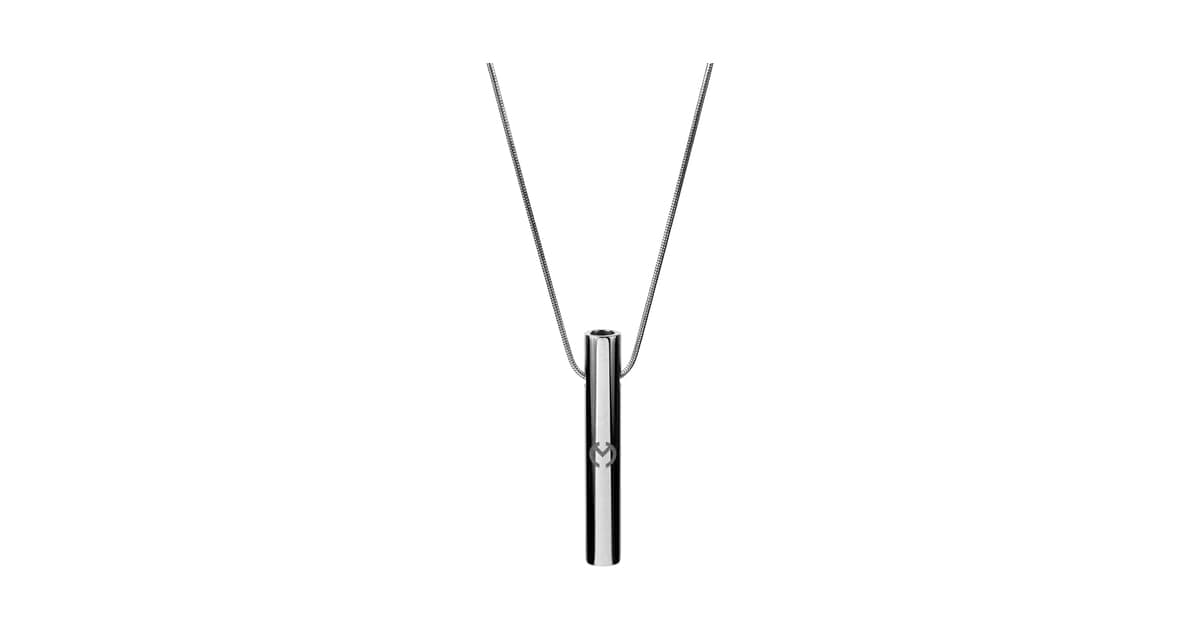
The Beam is a small tube of polished stainless steel with a narrow airway, a small logo on one side and a ring for the chain. Moksha's store lists what is included: the stainless steel breathing pendant, a 25-inch stainless steel necklace, a presentation box and free access to the iOS-only Beam Breathing app.
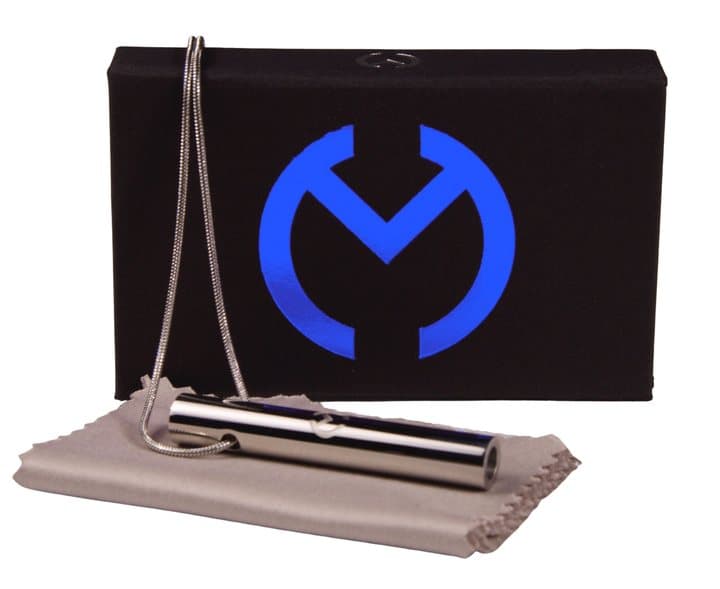
The Beam with its chain, cloth and box
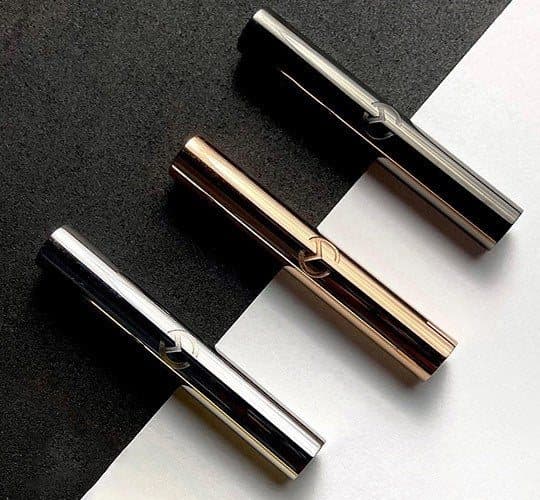
The three finishes
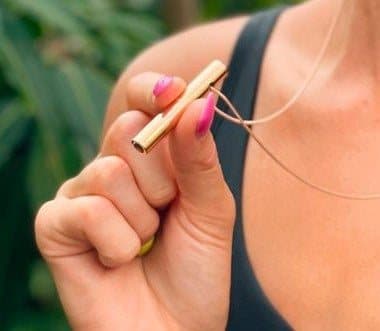
Size in the hand
Specifications
| Spec | Moksha Beam |
|---|---|
| Material | 316 stainless steel (stated) |
| Safety | Lead and nickel free (stated) |
| Chain | 25 in stainless steel |
| Finishes | Polished silver, space grey, rose gold |
| Airflow | "Split-path" design (brand's description) |
| App | Beam Breathing app, iOS only, per Moksha's store |
| Guarantee | 30-day money back |
| Dimensions, weight | Not stated |
Moksha Beam price and bundles
On 3 October 2026 the offer page our link opens showed:
| Package | Total | Per Beam | Shown as |
|---|---|---|---|
| 1 Beam | $39.99 | $39.99 | Retail $49.99 |
| Buy 2, get 1 free (3 Beams) | $79.98 | $26.66 | Retail $149.97, free shipping |
| Buy 3, get 2 free (5 Beams) | $119.97 | $23.99 | Retail $249.95, free shipping |
Moksha's own store listed the Beam at $39.99 with a $49.99 compare-at price the same day.
The app
The offer page promises unlimited access to hundreds of on-demand breathing exercises through a mobile app that tracks baseline, daily and weekly assessments. Moksha's store says the app is iOS only. If you use Android, plan on using a free breathing app or a simple timer instead.
Who makes it
The sales page tells the story of two childhood friends, Yash and Jaymin, who met flute-playing monks while backpacking in 2019 and noticed that the long exhales of flute playing were calming. Moksha says the Beam was designed and developed in the US. The brand also sells a gamified breathing device called Moksha O₁ and other stress-relief products.
The monk-and-flute story is a marketing origin tale we cannot verify, but the idea it illustrates is sound: wind instruments and chanting both involve long, controlled exhales, and many people find them calming for the same reason slow breathing is.
Is $39.99 good value?
For a well-finished stainless steel pendant and chain, yes. The best-known rival, the Komuso Shift, sells for about $85 to $115 depending on finish. You could also spend nothing and breathe through pursed lips. The value of the Beam depends on whether a physical object helps you actually do the breathing.
Build and finish
The brand says the Beam is made from 316 stainless steel, the grade often used for watches and jewellery because it resists corrosion and tarnish, and that it is lead and nickel free. The pendant is a simple tube, so there is little to break. The finishes are applied coatings on the space grey and rose gold versions, which can show wear over years of daily handling; polished silver is the most forgiving.
Bundles for families and teams
The three- and five-packs bring the price per Beam down to about $27 and $24. They make sense for a household where several people want one, or for a small team or support group practising breathing together. Each person should have their own, since you breathe through it, and choosing different finishes makes them easy to tell apart.

Moksha BeamScore 6.3/10
Best for: People who know slow breathing helps them but forget to do it when stressed, and want a physical reminder
$39.99 at Moksha · Price checked October 3, 2026
Check price at Moksha (opens Moksha in a new tab)We may earn a commission if you buy through our links.
Does the Moksha Beam work, and what does research say about slow breathing?
The research supports the breathing, not the necklace itself. A 2023 Stanford randomised trial in Cell Reports Medicine found that five minutes a day of cyclic sighing, which emphasises a long exhale, improved positive mood more than mindfulness meditation over a month. The Beam encourages exactly this kind of long exhale. Claims about blood pressure, immune response, energy and sleep come from breathing research, not tests of the Beam.
The Beam's sales page leans heavily on science. The science is real, but it is about breathing, not this necklace. Here is what it does and does not show.
Exhale-focused breathing improves mood
In a 2023 randomised controlled trial published in Cell Reports Medicine, researchers at Stanford compared three five-minute daily breathing exercises with mindfulness meditation over a month. Cyclic sighing, which emphasises a long exhale, produced the biggest improvement in positive mood and the biggest drop in breathing rate. All the practices reduced anxiety. The full study is freely available.
The Beam encourages exactly this kind of long exhale. That is the best evidence for the idea behind it.
Slow breathing and heart rate variability
Heart rate variability (HRV) is the natural variation in time between heartbeats; higher HRV is linked to a more flexible, less stressed nervous system. Breathing slowly, around six breaths a minute, increases HRV in the short term. A 2017 meta-analysis of 24 studies found that HRV biofeedback training, which teaches slow breathing, was associated with large reductions in self-reported stress and anxiety, though the authors called for more well-controlled studies.
What the research does not show
None of this research tested the Moksha Beam or any breathing necklace. The studies taught breathing techniques, often with coaching or biofeedback, practised daily over weeks. Owning a pendant does not do anything unless you use it, and the benefit comes from the breathing pattern rather than the steel tube.
Blood pressure, immune response, energy and sleep
The page says slow breathing improves focus, energy, sleep quality, blood pressure and immune response, with numbered references. Some studies of slow breathing and breathing training have found small improvements in blood pressure and sleep in certain groups. The evidence is mixed and the effects modest, and nothing suggests a breathing necklace treats high blood pressure or boosts immunity. Do not use it in place of treatment for any of these.
Pursed-lip breathing
Breathing out through pursed lips is a standard technique taught to people with chronic lung disease to slow breathing and ease breathlessness. It creates gentle back-pressure, much like the Beam. It shows that the resistance itself is useful, and that you do not need a device to get it.
Why a long exhale calms you
Your heart rate naturally rises slightly as you breathe in and falls as you breathe out, a pattern called respiratory sinus arrhythmia. The vagus nerve, which carries much of the body's rest-and-digest signalling, is more active during the exhale. Lengthening the exhale gives that calming signal more time, and slowing breathing overall reduces the quick, shallow pattern that goes with stress.
This is why so many techniques, from yoga to breathing therapy, focus on the out-breath. The Beam's narrow airway makes the exhale longer without you having to count, which is the simple idea behind it.
How long before you notice anything
In-the-moment calm can come within a minute or two of slow breathing for many people. Longer-term changes in mood and stress, as in the 2023 trial, came from daily practice over weeks. If you only use the Beam during a crisis, you will get the first kind of benefit at best; the second needs a habit.
Are the Moksha Beam's claims true?
The Beam's core idea is sound, but several claims overreach. "Feel calm in just 5 breaths" is an encouraging start, not a guarantee. "Doctor recommended" names no doctor who recommends the Beam itself, and we could not find the source of the "98% positive user rating". The page also frames anxiety medication as something to avoid, which is not safe advice for people who need treatment.
Here is how the main sales claims hold up.
"Feel calm and relaxed in just 5 breaths"
Some people do feel calmer after a handful of slow breaths, and the trial above found effects within a daily five-minute practice. "Five breaths" is an encouraging starting point, not a guarantee. Very anxious people may need several minutes and repeated practice.
"Doctor recommended" and "98% positive user rating"
Many doctors and therapists do recommend slow breathing. The page does not name any doctor who recommends the Beam itself, and we could not find where the 98% figure comes from. Independent reviews of the brand on Trustpilot are fewer and more mixed (see "What owners say").
"Science-backed: it really works"
The science backs slow, exhale-focused breathing. It does not back the Beam specifically, because it has not been tested. That distinction matters if you are deciding between the Beam and a free technique.
"All natural and drug-free" vs "addictive anxiety drugs"
The page contrasts the Beam with addictive anxiety drugs that come with nasty side effects, and shows an image of pills crossed out. Some anxiety medicines, such as benzodiazepines, can be habit-forming and are usually prescribed short term. Many others, including the most common first-line treatments, are not addictive. Stopping any of them suddenly can be harmful. Breathing exercises are a useful addition to treatment, not a replacement for it.
The pills image and the "addictive drugs" framing may discourage people who would benefit from treatment from seeking it. Anxiety is common and treatable, and people who take medication for it are not failing at managing stress. A breathing necklace can sit happily alongside whatever treatment works for you.
"Increase energy, focus and mental clarity"
Calmer breathing can help you feel more focused when stress was getting in the way. The idea that a breathing pendant raises energy beyond that is not supported.
Claims scorecard
| Claim | What the evidence shows | Our view |
|---|---|---|
| Slower exhale calms stress | Supported by trials of exhale-focused and slow breathing | Supported (for the breathing) |
| Calm in five breaths | Plausible for some; varies by person | Partly supported |
| Doctor recommended, 98% positive | No named doctor; source of 98% unclear | Unverified |
| Improves blood pressure, immunity, sleep, energy | Mixed, modest evidence for breathing practice; none for the device | Overstated |
| Better than anxiety medication | Not a replacement for prescribed treatment | Misleading |
| Lead and nickel free, 316 stainless steel | Stated by the brand | Plausible |
Is the Moksha Beam better than the Komuso Shift or breathing for free?
The Beam does the same job as the better-known Komuso Shift, which costs about $85 to $115, for $39.99 and adds app access. You can do the same breathing for free with pursed lips, and breathing apps guide your pace without a pendant. The Beam's advantages are a wearable reminder and consistent resistance on the exhale, which suit people who know slow breathing helps but forget to do it.
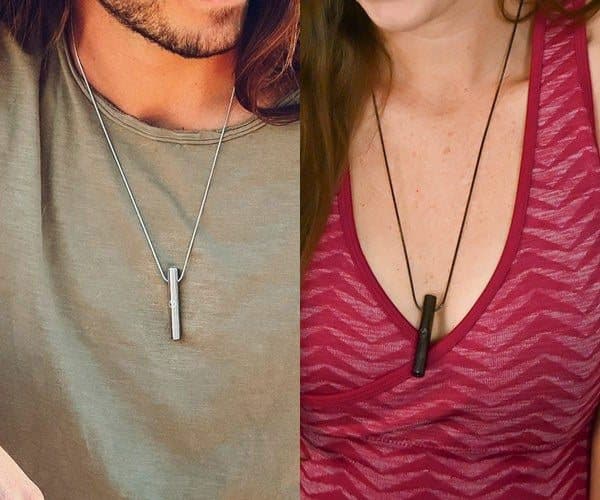
The Beam is one of several ways to practise slow breathing. Here is how they compare.
| Option | Cost | What it adds | Best for |
|---|---|---|---|
| Moksha Beam | $39.99 | Wearable reminder, consistent resistance, iOS app | People who forget to breathe slowly |
| Komuso Shift | About $85 to $115 | Same idea, better-known brand, more finishes | Buyers who want the original design |
| Pursed-lip breathing | Free | Same resistance, no device | Anyone, anywhere |
| Free breathing apps and timers | Free | Guided pacing and reminders | Daily practice |
| HRV biofeedback devices | $100 to $300 | Real-time feedback on your breathing and heart | People who like data |
| Therapy (CBT) and medical care | Varies | Treatment for anxiety disorders | Ongoing or severe anxiety |
Moksha Beam vs Komuso Shift
The Komuso Shift popularised the breathing necklace and is sold through its own site and retailers like Brookstone at about $85 to $115. The Beam does the same job for $39.99 and adds app access. One owner on the Beam's page says they chose it over Komuso because it was cheaper with a nicer chain and the same quality, which is a seller-chosen testimonial. If you want the brand that started the trend, the Shift is it; if you want the same idea for less, the Beam is the obvious alternative.
Moksha Beam vs pursed lips
Breathing out through pursed lips gives you nearly the same exhale resistance for free, anywhere. The Beam's advantages are consistency, a ritual to hold onto, and a visible reminder around your neck. For some people that makes the difference between knowing about slow breathing and actually doing it.
Moksha Beam vs a plain metal straw
A reusable metal drinking straw gives a similar exhale resistance for a few dollars, and some people use one exactly this way. It is longer, less discreet and not designed to be worn. The Beam's advantages are its size, finish and chain, which make it something you will actually carry. If you are unsure whether breathing through a tube helps you, try a straw at home for a week first.
Moksha Beam vs breathing apps
Free apps and simple timers can guide slow breathing and remind you to practise. They are better for structured daily sessions. The Beam is better for quick, discreet use in the moment, without getting your phone out.
Moksha Beam vs therapy
For anxiety that affects work, sleep or relationships, cognitive behavioural therapy and other treatments have strong evidence. Breathing exercises are often part of therapy. The Beam can support that work; it cannot replace it.
If you have decided a breathing necklace suits you, the Moksha Beam order page (opens Moksha in a new tab) shows the single and multi-pack offers. Our health gadgets section covers other breathing devices, including Better Breathing Sport and the AirPhysio, which use breathing resistance for different goals, and our wider health and wellness reviews include the Akka supplement. For guided breathing without a necklace, our Pulsetto vs Moonbird comparison covers a handheld breathing guide.
Moksha BeamScore 6.3/10
Why people buy it: Encourages slow, exhale-focused breathing, which has good evidence for easing stress in the moment
$39.99 at Moksha · Price checked October 3, 2026
Check price at Moksha (opens Moksha in a new tab)We may earn a commission if you buy through our links.
Is the Moksha Beam legit, and what should you check before buying?
The Moksha Beam is a low-risk, real product with a 30-day money-back guarantee on the offer page, though the page does not say whether used pendants can be returned. Before buying, know that it supports, not replaces, care for anxiety, so never stop medication because of it. The app is iOS only, people with asthma or COPD should keep their usual treatment, and anyone who feels dizzy should stop.
The Beam is low-risk as products go. The main things to think about are what you expect from it, how you will use it, and the return window.
It supports, not replaces, care for anxiety
If you have panic attacks, persistent worry, low mood or anxiety that affects your daily life, a breathing tool can help in the moment but does not treat the cause.
What to do: talk to a doctor or mental health professional, and use the Beam alongside any treatment they recommend. Never stop medication because you have started breathing exercises.
Stress or an anxiety disorder?
Everyday stress comes and goes with life's demands. An anxiety disorder is different: worry or fear that is persistent, out of proportion, hard to control and gets in the way of work, relationships or sleep, often with physical symptoms such as a racing heart, chest tightness, stomach upset or trouble breathing. Panic disorder involves repeated, unexpected panic attacks and fear of the next one.
If that sounds familiar, a breathing tool alone is unlikely to be enough. Effective treatments exist, including cognitive behavioural therapy and medication, and a doctor is a good first step.
Asthma, COPD and other lung conditions
People with lung conditions can often benefit from breathing techniques, and pursed-lip breathing is a standard part of care for COPD. But breathing through a resistance device during an asthma attack or worsening breathlessness is not a substitute for your inhaler or medical help.
What to do: ask your doctor or respiratory nurse before using the Beam if you have a lung condition, and always follow your action plan in an attack.
Dizziness and over-breathing
Breathing too hard or too fast, or holding your breath, can make you light-headed or tingly.
What to do: keep breaths gentle and unforced, and stop and breathe normally if you feel dizzy. If you have a heart or lung condition, ask your doctor about breathing exercises first.
Children and chains
The page calls the Beam safe for the whole family. Any necklace on a chain is a strangulation and choking risk for babies and young children, and the pendant is small.
What to do: keep it away from young children; for older children, supervise use and consider removing it from the chain.
Hygiene
You breathe out through it with your lips on the opening.
What to do: clean it regularly with warm soapy water, and do not share it.
Android users
The app is iOS only according to Moksha's store.
What to do: if you use Android, plan to use a free breathing app or timer with the Beam.
Returns
The offer page promises a 30-day money-back guarantee and hassle-free returns, started through an order lookup on the offer site. The page does not say whether used pendants can be returned or who pays return postage.
What to do: check the terms at checkout, keep the box and cloth, and decide within the first two weeks.
How to buy the Moksha Beam the smart way
- Decide whether a physical reminder will help you breathe slowly more often; if yes, open the Moksha Beam offer page (opens Moksha in a new tab).
- Choose one Beam unless you are buying gifts; the multi-packs only make sense for several people.
- Pick a finish. Polished silver and space grey suit most styles; rose gold is the warmest.
- Check the order summary for add-ons and the shipping charge on a single Beam.
- Save your order confirmation; the 30-day guarantee starts from your order.
- Practise with it daily for two weeks, not only when stressed, then decide whether it is helping.
What do owners say, and how did we score the Moksha Beam?
The Moksha Beam scores 6.3 out of 10: claim accuracy 0.8, build durability 1.5, price competitiveness 1.3, usability 1.6 and owner satisfaction 1.1, each out of 2. Moksha's Trustpilot profile showed 3.6 out of 5 from only 11 reviews covering all its products. Positive reviews say it is easy to stick with and helps anxiety; negative ones mention slow support, shipping delays and the price.
The Beam's owner record outside its own sales page is small.
Trustpilot
On 3 October 2026 the Trustpilot profile for moksha.site showed a TrustScore of 3.6 out of 5 from 11 reviews: 55% five-star, 18% four-star, 9% three-star, 9% two-star and 9% one-star. These cover Moksha's products generally, including its O₁ device, not only the Beam.
Positive reviews describe the products as easy to stick with and helpful for anxiety. Negative reviews mention slow replies from support, shipping delays, the price for what one reviewer called a hollow tube that feels like blowing through a straw, and a missing feature on another product. One reviewer says Moksha sent a free replacement after a delay.
The testimonials on the page
The offer page testimonials describe great quality, no whistling, a nicer chain than Komuso, help during an anxiety attack and using it three or four times a day. They are positive, seller-chosen accounts that fit what a slow-breathing tool can do.
What the negative reviews tell you
The most pointed criticism, that the Beam is just a hollow tube like a straw, is technically accurate. Whether that matters depends on what you expected. If you expected a device that does something to you, it will disappoint. If you wanted a well-made reminder and pacing aid for slow breathing, the simplicity is the point. Reviews about slow support replies are worth noting if you need help with an order.
Third-party coverage
Pages ranking for Moksha Beam reviews are mainly affiliate and listing pages. Coverage of breathing necklaces in general, mostly about the Komuso Shift, tends to agree that they work as reminders for slow breathing rather than through anything special in the device.
What breathing coaches say
Breathing coaches and therapists who teach slow breathing generally see tools like the Beam as training wheels. They can help beginners feel what a long, even exhale is like, and remind people to practise. Over time, many people find they can do the same breathing without the device, which is a sign the habit has stuck, not that the product failed.
How we scored the Moksha Beam
Every score on the site follows the five criteria on our how we test page.
| Criterion | Score | Why |
|---|---|---|
| Claim accuracy | 0.8 / 2 | Breathing benefits real; device untested; health and medication claims overreach |
| Build durability | 1.5 / 2 | 316 stainless steel, simple design, nothing to wear out |
| Price competitiveness | 1.3 / 2 | Far cheaper than the main rival; the technique itself is free |
| Usability | 1.6 / 2 | Simple and discreet; app is iOS only |
| Owner satisfaction | 1.1 / 2 | Positive testimonials; small, mixed independent record |
| Total | 6.3 / 10 |
The score would rise with a study of the device itself and claims that stick to what slow breathing is known to do.
What we did, and did not, do
Nobody on our team has used the Moksha Beam, and this review does not claim otherwise. We read the offer page our link opens, Moksha's store data, the 2023 breathwork trial, the 2017 HRV biofeedback meta-analysis, Komuso Shift retail listings and Moksha's Trustpilot profile, all on 3 October 2026. Nothing here is medical advice.
How to use the Moksha Beam for the best results
Sit or stand comfortably with relaxed shoulders. Breathe in slowly through your nose for about four seconds, then close your lips around the Beam and breathe out gently through it for about six to eight seconds. Repeat for five to ten breaths, or two to five minutes. Practise daily, linked to a habit such as brushing your teeth, so slow breathing is easy to reach for under stress.

- Sit or stand comfortably with your shoulders relaxed.
- Breathe in slowly through your nose for about four seconds, letting your belly expand.
- Close your lips around the Beam and breathe out gently through it for about six to eight seconds.
- Repeat for five to ten breaths, or for two to five minutes when you have time.
- Keep it gentle; you should never feel strained, dizzy or short of air.
- Practise once or twice a day when you are calm, so it comes naturally when you are stressed.
- Use it in the moment when you notice stress rising: before a meeting, in traffic (when stopped), before sleep.
Building a daily habit
The research benefits came from daily practice, not occasional use. Link the Beam to something you already do every day, such as after brushing your teeth or before your morning coffee, and do five minutes. Over a few weeks, slow breathing becomes easier to reach for when you need it.
Using it during a panic attack
If you have panic attacks, practise with the Beam when you are calm first. During an attack, focus on slowing the exhale, not on taking big breaths in, which can make symptoms worse. If panic attacks are frequent or new, see a doctor; chest pain or breathlessness should always be checked.
Using it before sleep
A few minutes of slow, exhale-focused breathing in bed can help some people wind down. Take the necklace off before you go to sleep, so the chain cannot tangle.
Using it at work
The Beam is quiet and discreet, so you can use it at your desk, in a break or before a presentation. Breathing out through it for a minute before a stressful call is a realistic, low-key habit.
Caring for it
Rinse it under warm water and wash with mild soap regularly, then dry it. A pipe cleaner or small bottle brush can reach inside the airway if needed. Polish the finish with the cloth if it marks. Check the chain clasp occasionally, and take the necklace off for contact sports.
Breathing patterns to try with the Beam
- Long exhale (4-6 or 4-8). Breathe in through the nose for four seconds, out through the Beam for six to eight. A good everyday pattern.
- Resonance breathing (about six breaths a minute). In for about five seconds, out through the Beam for about five to six. Used in HRV biofeedback; try it for five minutes.
- Sigh and release. Two short inhales through the nose, the second topping up the first, then a long, slow exhale through the Beam. An adaptation of the cyclic sighing used in the 2023 trial.
- Counted breaths before sleep. Ten slow breaths, counting each exhale, then breathing normally.
Avoid techniques that involve rapid breathing or long breath-holds if you are prone to dizziness or have a heart or lung condition.
Tracking whether it helps
For two weeks, rate your stress from 1 to 10 before and after each session, and note how often you reached for the Beam when stressed. Many people find the numbers drop by a point or two after a few minutes of slow breathing. If you see no change at all after two weeks of daily use, a breathing necklace may not be the right tool for you, and that is worth knowing within the return window.
Wearing it every day
The 25-inch chain sits around the middle of the chest on most people, long enough to lift the Beam to your lips without taking it off. Stainless steel suits most skin, and the brand says it is nickel free, which helps if you react to cheap jewellery. Take it off for sleep, swimming in the sea or chlorinated pools if you want to keep the finish bright, and contact sports.
When to replace it
There is little to wear out. Replace the chain if the clasp loosens or links stretch, and consider replacing the pendant if a coated finish chips around the mouthpiece, since you put your lips on it. Otherwise, a stainless steel Beam should last for years.
Moksha BeamScore 6.3/10
Before you buy: Check the final price, shipping and return terms at checkout.
$39.99 at Moksha · Price checked October 3, 2026
Check price at Moksha (opens Moksha in a new tab)We may earn a commission if you buy through our links.
What else do people ask about breathing necklaces?
Most questions are about whether anxiety necklaces work. The breathing they encourage does: slow, exhale-focused breathing reliably calms the stress response for many people, and the necklace mainly acts as a reminder and pacer. Techniques with a longer exhale than inhale, such as in for four and out for six to eight, have good support. Short daily practice of about five minutes works better than occasional use.
Do anxiety necklaces work?
The breathing they encourage does: slow, exhale-focused breathing reliably calms the body's stress response for many people. The necklace itself works mainly as a reminder and a way to pace the exhale. You can get the same effect without one.
What is the best breathing technique for anxiety?
Techniques with a longer exhale than inhale, such as breathing in for four seconds and out for six to eight, or cyclic sighing (two inhales through the nose, then a long exhale), have good support. The best one is the one you will actually practise regularly.
How often should I use a breathing necklace?
Short daily practice, around five minutes, plus use in the moment when you feel stress rising. Occasional use only during a crisis is less effective than regular practice.
Can breathing exercises lower blood pressure?
Some studies show small reductions in blood pressure with regular slow-breathing practice. They are not a substitute for treatment if you have high blood pressure. Keep taking any prescribed medication and talk to your doctor.
Are breathing necklaces just vape-style devices?
No. They have no electronics, liquid or heating element; you breathe out through them, not in. Some people mistake them for vapes at a glance, which is worth knowing at school or work.
Can teenagers use a breathing necklace?
Teenagers can benefit from slow breathing for exam stress and anxiety, and some find a discreet tool helpful. Because breathing necklaces can be mistaken for vapes, schools may question or confiscate them. Talk to the school first, and pair the tool with support from a parent, school counsellor or doctor if anxiety is affecting daily life.
Can I use it while exercising?
It is not designed for exercise. During hard effort you need to breathe freely. It can be useful for a few slow breaths during a cool-down or stretching to help your heart rate settle.
What is the difference between the Moksha Beam and the Moksha O₁?
The Beam is a simple stainless steel breathing pendant. The O₁ is a separate Moksha device, sold on its own store for $129.99, described as a gamified anxiety-relief product. Some Trustpilot reviews for the brand are about the O₁.
Is a breathing necklace a good gift?
It can be, especially for someone who has talked about wanting to manage stress better. Present it as a calming ritual rather than a fix for anxiety, and include a note on how to use it. Avoid giving it to someone in a way that suggests they need to "calm down", which can land badly. For someone with significant anxiety, support and understanding matter more than any gadget.
What if a breathing necklace does not help me?
Try a different breathing pattern, practise when calm rather than only when stressed, and give it two weeks. If it still does nothing, that is useful information: other approaches, such as exercise, therapy, mindfulness or medical treatment, may suit you better. Use the return window if you bought it mainly to find out.
Frequently asked questions
Does the Moksha Beam really work?
The breathing it encourages does. Slow, exhale-focused breathing has good evidence for reducing stress and improving mood in the short term, including a 2023 randomised trial in which five minutes a day of exhale-focused breathing improved mood more than mindfulness meditation. The Beam itself has not been tested; it helps you slow the exhale and acts as a reminder.
Is the Moksha Beam the same as the Komuso Shift?
They work the same way: a small stainless steel tube on a chain that you breathe out through. The Komuso Shift is the better-known brand and costs about $85 to $115 depending on finish. The Beam costs $39.99. We have not compared the airflow of the two directly.
How much does the Moksha Beam cost?
On 3 October 2026 the offer page showed $39.99 for one, $79.98 for three and $119.97 for five, with free shipping on the multi-packs and a 30-day guarantee. Moksha's own store also listed it at $39.99. Bundles suit families.
Can the Moksha Beam stop a panic attack?
Slow breathing can help some people get through a panic attack, and some owners say the Beam helps them do that. It does not prevent panic attacks or treat panic disorder. If you have panic attacks, talk to a doctor; cognitive behavioural therapy and other treatments are effective.
Can I use the Moksha Beam instead of anxiety medication?
Do not stop or change any medication without your doctor. Breathing exercises can be a helpful addition to treatment, and many doctors recommend them, but they are not a replacement for medication or therapy that has been prescribed for you.
Is the Moksha Beam safe?
For adults, yes. It is stainless steel, and the brand says it is lead and nickel free. Stop if you feel dizzy or light-headed, which can happen if you breathe too hard or too fast. Necklaces on cords and chains are not suitable for babies and young children.
How do you clean the Moksha Beam?
Rinse it under warm water, wash with mild soap, and let it dry. Do not share it with others, since you breathe through it with your lips. Keep it dry between uses, and check the airway is clear before breathing through it.
Does the Moksha Beam make a whistling sound?
It is designed to be silent when used as intended. One owner on the offer page specifically mentions no whistling. The brand's store does call it an anxiety whistle, so blowing hard through it may make some sound.
We may earn a commission if you buy through our links.
This content is for informational purposes and is not medical advice. Talk to a qualified professional before using any product that affects your health.
Prices accurate as of October 3, 2026. Check the seller's checkout for current pricing, promotions and terms.
What we checked: No hands-on use. Claims, the founder story, bundles, guarantee, testimonials and product images from the Moksha Beam offer page our link opens (getmokshabeam.io) on 2026-10-03. Price, chain length, what is included and the iOS-only app from Moksha's own store data the same day. The 2023 Cell Reports Medicine breathwork trial, the 2017 meta-analysis of heart rate variability biofeedback, Komuso Shift retail listings and the Trustpilot profile for moksha.site were read the same day.
See how Moksha Beam compares in The Best Health Gadgets of 2026

About the author
James Wilson, Consumer Tech Writer
James Wilson covers health and wellness technology for Top10Gadgets: breathing devices, massagers, hearing aids, dental and weight-loss products, and the other gadgets sold with a promise to make life easier. James write…
- Health and wellness gadgets
- Over-the-counter hearing aids
- Breathing and massage devices
- FDA clearance and registration
- Tech for beginners
Writing for Top10Gadgets since 2026Full profile