Health Gadgets / EMS foot massagers
TheraFoot Pro Review: The EMS Foot Mat Sold for Neuropathy and Swollen Legs, What the Evidence Supports and What the Guarantee Really Covers
A foldable foot pad that sends electrical pulses through your soles. It may feel relaxing and ease some foot pain, but promises to fix neuropathy 'for good' go well beyond the evidence.

By James Wilson, Consumer Tech Writer at Top10Gadgets
Updated 27 min readHow we test
Quick answer
No for most people who want the cures promised on the page, but possibly worth trying for tired, achy feet or, with a doctor's agreement, for painful diabetic neuropathy. TheraFoot Pro is an EMS foot mat that sends gentle electrical pulses into the soles of your feet.
Score 4.0/10$49.99 at TheraFoot Pro
Check price at TheraFoot Pro (opens TheraFoot Pro in a new tab)We may earn a commission if you buy through our links.
- Best for
- People with tired, achy feet after long days standing who want a relaxing, drug-free option
- Not for
- Anyone with a pacemaker, implanted defibrillator or other implanted electronic device
$49.99 at TheraFoot Pro
Check price at TheraFoot Pro (opens TheraFoot Pro in a new tab)We may earn a commission if you buy through our links.
On this page · 13 sections
- 01Our verdict
- 02The short version
- 03Pros & cons
- 04How it works
- 05Who it's for
- 06Does TheraFoot Pro work? What the evidence says
- 07Is TheraFoot Pro FDA cleared, and what about its claims?
- 08How much does TheraFoot Pro cost, and what is the catch?
- 09Is TheraFoot Pro better than Revitive, a TENS unit or a generic mat?
- 10Is TheraFoot Pro legit, and what should you check before buying?
- 11How did we score TheraFoot Pro?
- 12How to use TheraFoot Pro for the best results
- 13Frequently asked questions
Our verdict
No for most people who want the cures promised on the page, but possibly worth trying for tired, achy feet or, with a doctor's agreement, for painful diabetic neuropathy. TheraFoot Pro is an EMS foot mat that sends gentle electrical pulses into the soles of your feet. Electrical stimulation has some evidence for neuropathy pain, but none for fixing neuropathy, edema or lymphedema "for good". We found no FDA clearance under its name, and returns must be unused. TheraFoot Pro scores 4.0 out of 10, held back by overstated medical claims and the return terms.
The short version
- What it is: a foldable EMS foot pad with a rechargeable controller.
- Price: $49.99 for one plus shipping, or $35.99 to $39.99 each in bundles, on 4 October 2026.
- Best trait: easy, drug-free stimulation that some people find soothing.
- Biggest drawback: medical claims far beyond the evidence, and the "90-day guarantee" is really 30 days for unused items.
- Our score: 4.0 out of 10.
Pros & cons
The pros come from the simple design and the modest evidence for electrical stimulation. The cons are about medical claims, regulatory status, return terms, safety limits and a generic design sold for less elsewhere.
What we like
- Simple to use: sit, place your feet on the pad and choose a mode
- Electrical stimulation has some evidence for painful diabetic neuropathy
- Rechargeable, foldable and light enough to store in a drawer
- Drug-free option some people find relaxing after long days standing
What we don't
- Promises to fix neuropathy, edema and lymphedema 'for good' are not supported
- No FDA 510(k) clearance found under the TheraFoot name
- 90-day guarantee badge, but the written policy accepts only unused returns within 30 days, return postage paid by you
- Looks like generic EMS mats sold at Walmart for about $11 to $20
- Not safe for everyone, including people with pacemakers or during pregnancy
Sold by TheraFoot Pro
TheraFoot Pro$49.99
How it works
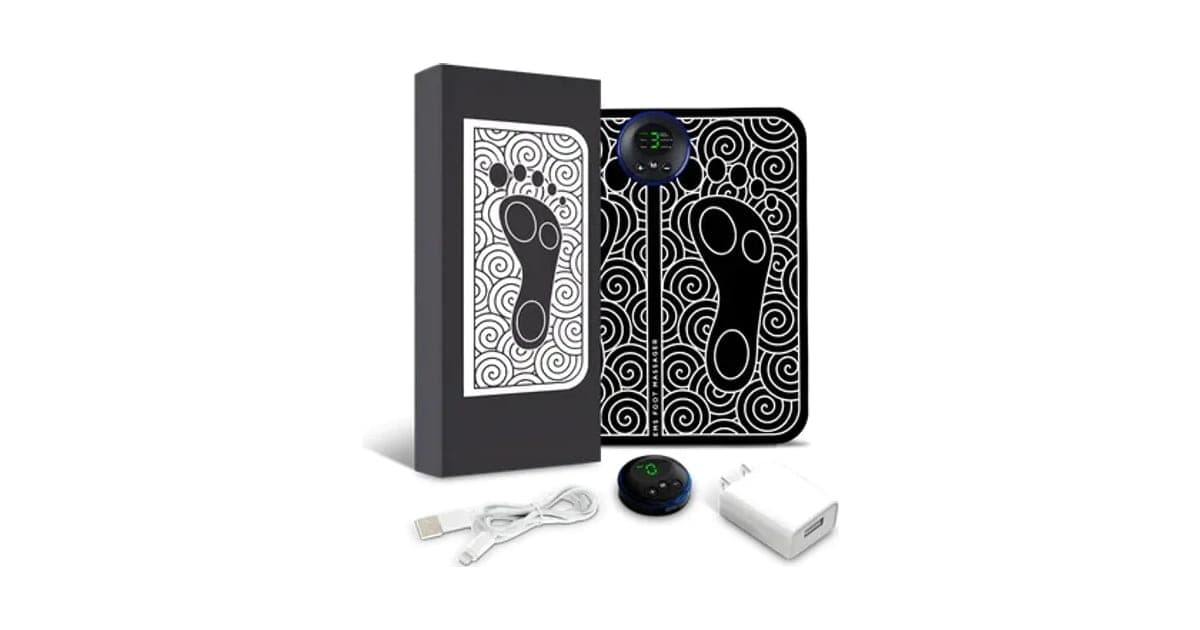
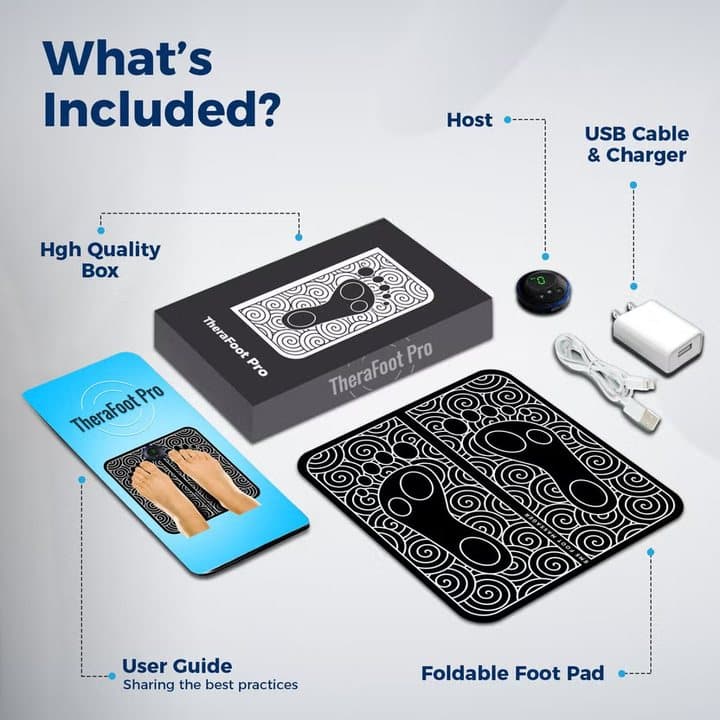
TheraFoot Pro is a thin, foldable pad printed with two foot outlines, with conductive areas under each sole. A small round controller clips onto the pad. When you sit with bare feet on the pad and switch on, the controller sends electrical pulses through the soles, causing a tingling feeling and small muscle contractions in the feet and lower legs.
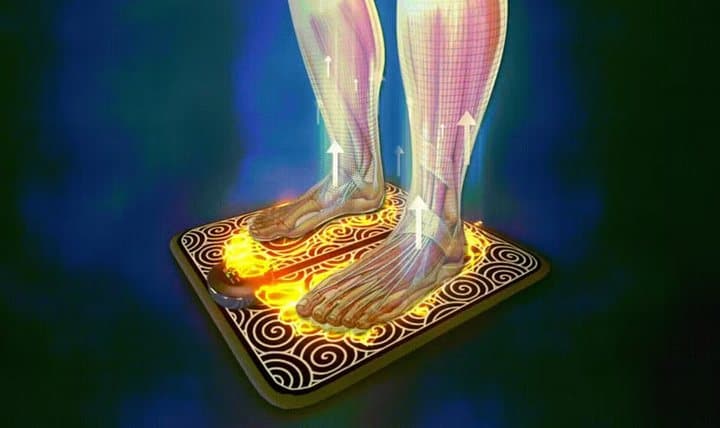
The page calls this electrical muscle stimulation (EMS). It says the pulses block pain signals, improve circulation and reduce swelling, and recommends 15 to 20 minutes a day for 30 days.
Clip on the controller and sit down
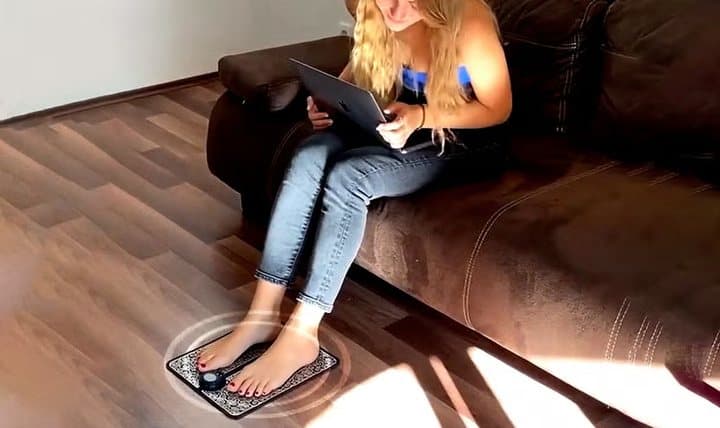
Step 1: Attach the small round controller to the foldable pad, sit in a chair and rest your bare feet on the foot outlines.
Choose a mode and intensity
Step 2: Press the buttons to pick a pulse pattern and raise the intensity until you feel a tingle or gentle muscle twitch, never pain.
Use for 15 to 20 minutes
Step 3: The maker recommends 15 to 20 minutes a day for 30 days. Recharge the controller with the USB cable when needed.
The controller
The controller is a small round unit with a digital display and buttons, clipped to the edge of the pad in the photos. It sets the mode and intensity and holds the rechargeable battery.
Why EMS foot mats are everywhere
EMS foot mats became popular through social media ads, sold under dozens of brand names with similar photos and claims. The low manufacturing cost leaves plenty of room for marketing. That is why the same-looking mat can cost $15 on one site and $50 on another.
EMS and TENS
EMS aims to make muscles contract. TENS (transcutaneous electrical nerve stimulation) uses similar pulses to stimulate nerves and dampen pain signals. Many cheap foot mats do a bit of both, and the TheraFoot page describes both effects.
What it feels like
Owners of EMS foot mats generally describe a tingling or tapping feeling, sometimes with the toes or calves twitching in rhythm. At higher settings it can feel like strong pins and needles. It should never be painful.
Why the feet
The soles have many nerve endings and small muscles, and they are easy to reach while sitting. That makes a foot pad a convenient way to apply stimulation, even though the effect is limited to the feet and the lower legs.
Modes and intensity
The page does not list the modes. Advertorials about TheraFoot describe 152 mode and intensity combinations, which matches the eight modes and 19 intensity levels found on many generic EMS foot mats. You raise the intensity until you feel a comfortable tingle.
What is in the box
According to the FAQ, each kit contains a foldable foot pad, the EMS controller, a charger, a user guide and a travel box.
Battery and charging
The controller is rechargeable through the supplied USB cable and charger, according to the FAQ. The page does not give battery life. Generic mats with similar controllers typically run several sessions per charge.
Build and storage
The pad is thin and folds in half, and the photos show it packed into a box about the size of a large book. It is light enough to take on trips.
Who makes it
The page does not name a manufacturer, only a brand. The pad and controller look the same as EMS foot mats sold under many names. Generic devices like this are usually made by a handful of factories and sold under different labels.
What it cannot do
It does not repair damaged nerves, remove fluid in lymphedema, or replace compression, medication or exercise prescribed for circulation problems. It works only on the area in contact with the pad.
Who it's for
TheraFoot Pro suits people with tired, achy feet after long days standing who want a drug-free way to relax, and people with painful diabetic neuropathy whose doctor agrees stimulation is worth trying. It does not suit anyone with a pacemaker or other implant, during pregnancy, with epilepsy, a suspected clot or broken skin on the feet, or anyone hoping for a cure.
- People with tired, achy feet after long days standing who want a relaxing, drug-free option
- People with painful diabetic neuropathy whose doctor agrees electrical stimulation is worth trying
- Anyone curious about EMS who wants a low-cost way to try it
Why TheraFoot Pro appeals
Foot pain is common, and the alternatives sound slow or expensive: podiatrist visits, physical therapy, medication. A mat you rest your feet on while watching television promises relief without any of that. The page's customer quotes describe sleeping through the night and easier neuropathy.
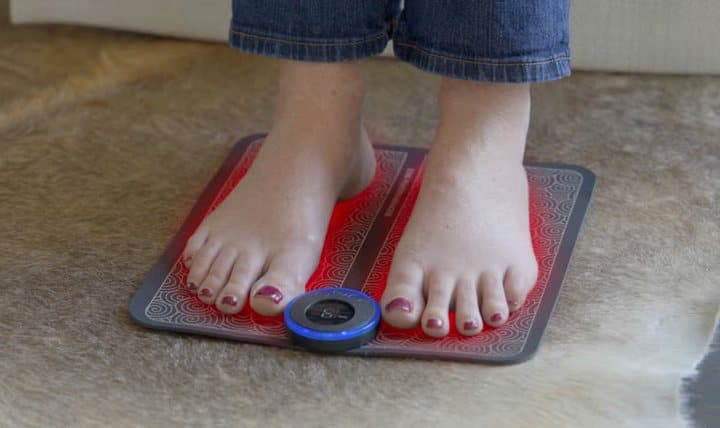
What a session looks like
The page recommends 15 to 20 minutes a day. Most people would use it in the evening while watching television or reading, with feet resting on the pad and the controller set to a comfortable level.
People who want to avoid pills
Some people prefer not to take painkillers every day for aching feet, because of stomach, kidney or interaction concerns. A drug-free device appeals to them. Talk to a pharmacist or doctor about the safest overall plan.
People who stand all day
Nurses, retail and hospitality workers often finish shifts with aching feet. A short session of gentle stimulation may feel soothing, much like a foot massage. That is a modest, believable benefit.
People with diabetic neuropathy
Painful diabetic neuropathy causes burning, tingling and pain in the feet. Electrical nerve stimulation is one of the options doctors may consider. Because diabetes also affects skin healing and circulation, check with your doctor before using any electrical device on your feet.
People with restless or cramping legs
Some people with night-time leg cramps or restless legs try foot stimulation before bed. Evidence for that use is limited, and restless legs can be linked to iron levels or medications, which a doctor can check. If it helps you relax, that may be enough.
Older adults
Older people with sore feet and limited mobility may find it easy to use while seated. Ask a doctor first if there are heart, circulation or skin problems.
People who sit all day
Office workers and drivers who sit for long hours can get stiff, heavy legs. Getting up and walking every hour helps most, but a short session on the mat in the evening may feel refreshing.
Gift buyers
A foot mat is a popular gift for older relatives with sore feet. Check first that they have no implanted heart device, epilepsy or circulation problems, and that their doctor is happy with it. Remember that returns must be unused.
People recovering from injury
After a foot or ankle injury, a physiotherapist may use electrical stimulation as part of treatment. A home mat is not a substitute. Ask your physiotherapist whether it would help or interfere.
People who travel
The folding pad and rechargeable controller fit in a suitcase. For people whose feet ache after long flights or days of walking on holiday, a session in the hotel room may feel welcome.
Who should skip it
Skip TheraFoot Pro if you have a pacemaker, defibrillator or other implanted electronic device, are pregnant, have epilepsy, or might have a blood clot in the leg. Skip it if your feet have ulcers, cuts or infections. And skip it if you expect it to fix neuropathy, edema, lymphedema or plantar fasciitis.
- Anyone with a pacemaker, implanted defibrillator or other implanted electronic device
- People who are pregnant, have epilepsy, or have a suspected blood clot
- People with open wounds, ulcers or infections on their feet
- Anyone expecting a cure for neuropathy, edema, lymphedema or plantar fasciitis
Does TheraFoot Pro work? What the evidence says
Electrical stimulation has modest evidence for some foot pain, but nothing supports the page's promise to fix conditions "for good". An American Academy of Neurology review found TENS probably effective for painful diabetic neuropathy, based on two moderate-quality studies. There is no published research on TheraFoot itself, and no good evidence that an EMS mat cures neuropathy, edema, lymphedema or plantar fasciitis.
The neurology review
The American Academy of Neurology's evidence review of TENS, published in Neurology in 2010, concluded that TENS "should be considered" for painful diabetic neuropathy. It also found TENS ineffective for chronic low back pain. That supports trying stimulation for neuropathic foot pain, not the wider claims.
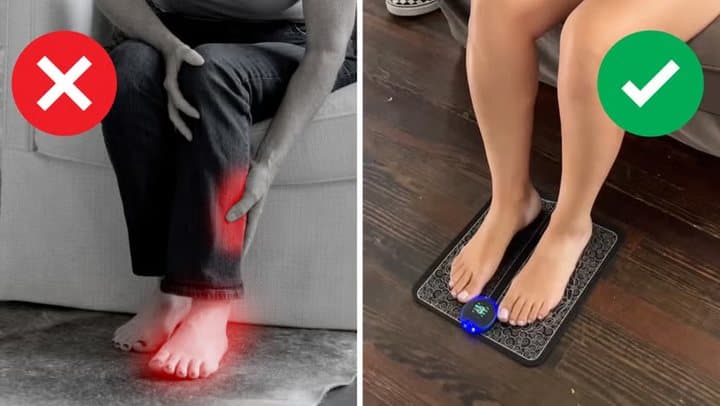
Why stimulation may ease pain
The gate control theory of pain suggests that stimulating nerves in the skin can reduce the pain signals reaching the brain. That is the basis for TENS. The relief tends to be strongest while the device is running and for a while afterwards, rather than permanent.
EMS for muscle strength
EMS is used in physiotherapy to help weak muscles contract, for example after surgery. Clinical devices are applied to specific muscles at set strengths. A foot mat reaches only the small muscles of the feet and some calf muscles, so its strengthening effect is likely small.
Quality of the evidence
The neurology review rated the evidence for neuropathy as Level B, meaning it rests on studies of moderate quality. Those studies used clinical TENS units with pads, not foot mats. Results from a home mat may differ.
Circulation and swelling
Muscle contractions in the calves help push blood back towards the heart, which is why walking helps swollen ankles. A foot mat can cause small contractions, but how much that helps compared with walking, raising your legs or compression stockings is not shown for TheraFoot.
Diabetic feet need extra care
Diabetes can reduce feeling and blood flow in the feet, and slow healing. Any device that touches the feet for long periods should be used carefully, with skin checks before and after. Diabetes charities advise daily foot checks for everyone with diabetes.
Swelling after long days
Mild ankle swelling after a long day standing or sitting is common and usually eased by walking, raising the legs and moving the ankles. Muscle stimulation may add a little to that. Swelling that is new, in one leg, or does not go down overnight needs a doctor.
Lymphedema and edema
Lymphedema is a long-term condition managed by specialists with compression, massage techniques and exercise. Edema has many causes, including heart, kidney and vein problems, which need medical assessment. A foot mat should not delay that.
Neuropathy that is not from diabetes
Neuropathy can also come from vitamin deficiencies, alcohol, chemotherapy or other conditions. The evidence review focused on diabetic neuropathy. For other causes, treating the cause matters most, and stimulation may or may not help the pain.
Plantar fasciitis
Plantar fasciitis usually improves with stretching, supportive footwear and time. There is little evidence that EMS foot mats speed recovery.
Placebo and expectation
Pain relief is strongly affected by expectation. A device that feels like it is doing something, with tingling and twitching, can reduce pain partly through belief. That is still relief, but it is not evidence that the device changes the underlying condition.
What would good evidence look like
A good trial would randomly give people either the real mat or a sham mat that looks and feels similar but delivers no effective stimulation, then measure pain and swelling over weeks. We found no such trial for TheraFoot or similar generic mats.
Neuropathy treatments that have stronger evidence
For painful diabetic neuropathy, doctors may suggest blood sugar control, certain medications, foot care and, for some people, TENS or other stimulation. A doctor or diabetes team can help weigh these. A foot mat may fit in as an extra comfort measure.
Customer quotes
The page's quotes describe better sleep, less ankle soreness and easier neuropathy. They are short, selected by the seller and cannot be checked. Some people do find stimulation soothing, and that may be what they describe.
What this means for you: treat TheraFoot as a comfort device that may ease some pain, not as treatment for a medical condition.
Is TheraFoot Pro FDA cleared, and what about its claims?
We found no FDA 510(k) clearance under the TheraFoot name. Foot stimulators sold for pain relief or muscle conditioning are usually class II devices that need clearance. Revitive, a well-known foot circulation stimulator, holds several. The page's medical promises, "doctor recommended" label and "created by top experts in podiatry" line are unsupported by any named doctor, study or clearance.
The FDA search
On 5 October 2026, the FDA 510(k) database returned no matches for TheraFoot. Revitive's maker, Actegy, has clearances including K210825 from December 2021, listed as a powered muscle stimulator for muscle conditioning. A generic mat may carry a manufacturer's clearance under another name, which you can ask the seller for.
Why clearance matters
FDA clearance means a regulator has reviewed a device's design, safety and intended use against similar legal devices. It is not proof that every marketing claim is true, but it sets a minimum standard for safety testing and labelling. A device sold with medical claims and no clearance has skipped that step.
"Fixes painful, swollen legs for good in as little as 30 days"
No study shows that. Swelling has causes that need diagnosis, and neuropathy is usually long-term.
"Improves blood circulation, reduces swelling and relieves inflammation"
Muscle contractions can briefly increase blood flow in the area stimulated. Whether that reduces swelling or inflammation over time, and by how much, has not been shown for this device. Inflammation in particular needs a cause found and treated.
"Relieves foot pain without painkillers, podiatrist visits or massage therapists"
For mild aches, a mat may reduce the need for other help. For persistent or worsening foot pain, a podiatrist or doctor can find causes a mat cannot, such as fractures, arthritis or nerve compression.
"Doctor recommended"
No doctor is named. The page's image of a smiling woman in a white coat appears to be a stock-style photo. Treat the label as marketing.

The doctor image
The doctor image shows no name, credentials or quote. Images like this are common on sales pages and do not show that any doctor has endorsed the product.
"Created by the top experts, researchers, and designers in podiatry"
No names, credentials or institutions are given. The product looks the same as generic EMS foot mats sold under many brands.
"Natural" and "drug-free"
Electrical stimulation is drug-free, which some people value. But "natural" is a marketing word: the device uses electrical current from a battery. Drug-free does not mean risk-free.
"Does nearly everything physical therapy can do"
Physical therapy includes assessment, exercise, stretching, manual therapy and education. A foot mat does none of that.
"Instant relief" and "block pain signals"
Stimulation may reduce pain while it is running and for a while afterwards, which is the basis of TENS. "Instant" and "lasting" relief vary a lot between people.
"You'll know within a day or two"
The FAQ says you will know within a day or two whether it is the solution. That may be true for comfort, but it conflicts with the advice to use it for 30 days for best results. Either way, using it means you cannot return it under the written policy.
Sponsored "reviews"
Searching for TheraFoot Pro reviews mostly brings up sponsored articles on news sites and posts in discussion groups that repeat the sales page. They often say "legit or scam?" in the headline and end with a link to buy. They are advertising, not independent reviews.
The rating badge
The page shows a star rating with 1,897 ratings next to it. We could not find the source, and found no Trustpilot page for the store.
How much does TheraFoot Pro cost, and what is the catch?
On 4 October 2026, one TheraFoot Pro cost $49.99 plus shipping, "buy 2, get 1 free" cost $119.98 and "buy 3, get 2 free" cost $179.97, with free shipping on bundles. The catch is the returns: the page shows a 90-day money-back badge, but the written policy accepts only unused items within 30 days of purchase, minus shipping, with return postage paid by you.
Bundle pricing
The bundles cut the per-mat price to about $35.99, but only if you want several mats. Buying five before knowing whether one helps is a large risk when used mats cannot be returned.
TheraFoot Pro prices
| Bundle | Price | Mats | Per mat | Shipping |
|---|---|---|---|---|
| Buy 1 | $49.99 | 1 | $49.99 | Extra |
| Buy 2, get 1 free | $119.98 | 3 | About $39.99 | Free |
| Buy 3, get 2 free | $179.97 | 5 | About $35.99 | Free |
Price compared with other options
At $49.99 plus shipping, TheraFoot costs more than generic mats but less than a cleared circulation stimulator or a course of physical therapy. The question is whether its claims justify the premium over generic mats, and we found nothing that does.
Shipping on a single mat
The single mat adds shipping at checkout, which the written policy deducts from any refund. Bundles include free shipping. Factor the shipping cost into the price of one mat.
Generic EMS mats
When we searched Walmart on 5 October 2026, EMS foot mats with eight modes, USB charging and foldable pads were listed from about $11 to $20. They look very similar to TheraFoot Pro. We cannot confirm the electronics are identical, but the price gap is large.
Why the price gap matters
If a $15 generic mat does not help, you have lost little. If a $50 TheraFoot Pro does not help, the unused-only return policy means you have lost $50 plus shipping. For an experiment, the cheaper option is more sensible.
The return policy
The written policy allows a refund within 30 days of purchase, less shipping and handling, if the item is unused and in its original packaging. You email support@therafootpro.com or call 1-888-352-4912 on weekdays, then post it at your own cost to a returns address in Roseville, California.
Contacting support
The policy lists support@therafootpro.com and a phone number answered Monday to Friday, 9 am to 6 pm Central time. Keep a record of when you contact them, in case you need to show you were within 30 days.
Three different guarantees
The page shows a "90-Day Money Back Guarantee" badge. The FAQ says 30 days, "no questions asked". The written policy says 30 days and unused only. Since you cannot know if a foot mat helps without using it, the unused condition means most buyers who are disappointed will not get a refund.
What to do: treat the purchase as non-refundable once you have used it, and decide accordingly.
Warranty
The page and policy we read do not mention a warranty for faults after the 30-day return window. Ask support before buying how a faulty controller or pad would be handled.
Keep everything
Keep the box, the user guide, the charger and the cable together. If you do return an unused mat, it must be in its original packaging and condition, and missing parts could reduce or block a refund.
Shipping times
The FAQ gives two answers: delivery within seven business days by USPS, and shipping within 24 to 48 hours with three to five business days for delivery.

TheraFoot ProScore 4.0/10
Best for: People with tired, achy feet after long days standing who want a relaxing, drug-free option
$49.99 at TheraFoot Pro · Price checked October 4, 2026
Check price at TheraFoot Pro (opens TheraFoot Pro in a new tab)We may earn a commission if you buy through our links.
Is TheraFoot Pro better than Revitive, a TENS unit or a generic mat?
For most people, a cheaper generic mat or a cleared device is a better choice. A generic EMS mat costs a fraction of the price for a similar experience. Revitive costs much more but holds FDA clearances. A handheld TENS unit with pads offers adjustable, cleared pain relief for any area. TheraFoot sits in between, at a generic-style design with a premium price.
| TheraFoot Pro | Generic EMS foot mat | Revitive | Handheld TENS unit | |
|---|---|---|---|---|
| Price | $49.99 | About $11 to $20 | Much higher | Varies |
| FDA 510(k) clearance | None found | Usually not stated | Yes | Many are cleared |
| Use | Feet | Feet | Feet and legs | Any area with pads |
| Returns | Unused only, 30 days | Retailer policy | Retailer policy | Retailer policy |
TheraFoot Pro vs a generic EMS mat
The design and accessories look alike, and generic mats cost a fraction of the price with the retailer's return policy. If you want to try EMS on your feet, a generic mat is the lower-risk experiment.
Where TheraFoot Pro wins
Against a TENS unit, the mat is easier: no sticky pads to place, no wires to manage, just feet on a pad. For people who find pads fiddly, that matters. Against Revitive, it is far cheaper.
Where it loses
Against generic mats, it costs more with harsher returns. Against cleared devices, it lacks regulatory review. Against walking, stretching and good shoes, it has less evidence for most foot complaints.
TheraFoot Pro vs Revitive
Revitive devices are designed specifically to stimulate leg muscles for circulation, and hold FDA clearances. They cost much more. If your doctor recommends trying a circulation stimulator, a cleared device is the safer path.
Choose TheraFoot Pro if
You want a pad-free, seated foot stimulator, accept that you cannot return it once used, and prefer this brand's support. Choose a generic mat if price matters. Choose a cleared device if your doctor recommends stimulation for a medical condition.
TheraFoot Pro vs a TENS unit
A TENS unit uses sticky pads that you can place on the feet, legs or back. Many over-the-counter units are FDA cleared for pain relief. Our Paingone Plus review covers a pen-style TENS device for pain relief.
TheraFoot Pro vs foot massagers
Shiatsu and air-compression foot massagers knead and squeeze the feet mechanically. They are bulkier and usually cost more, but many people find them more relaxing than electrical tingling. They have no electrical safety concerns.
TheraFoot Pro vs compression
For swollen legs, compression stockings or a compression device are standard approaches. Our Air-C Compression Massager review covers an air compression leg massager.
TheraFoot Pro vs seeing a podiatrist
A podiatrist can diagnose the cause of foot pain, recommend insoles or exercises, and spot problems early. For pain lasting more than a few weeks, that visit is worth more than any gadget.
TheraFoot Pro vs simple foot care
Supportive shoes, cushioned insoles, stretching and walking help many foot complaints. Our Akusoli Insoles review and My Happy Feet Socks review cover two lower-tech options.
TheraFoot ProScore 4.0/10
Why people buy it: Simple to use: sit, place your feet on the pad and choose a mode
$49.99 at TheraFoot Pro · Price checked October 4, 2026
Check price at TheraFoot Pro (opens TheraFoot Pro in a new tab)We may earn a commission if you buy through our links.
Is TheraFoot Pro legit, and what should you check before buying?
It is a real product you can buy and receive, but its claims and guarantee are misleading. Before buying, check with your doctor if you have diabetes, circulation problems, a heart device or are pregnant; understand that returns must be unused; and compare it with generic mats and cleared devices. Never use it instead of medical care for neuropathy or swelling.
Talk to your doctor first
What to do: if you have diabetes, poor circulation, swelling in one leg, heart problems or any implant, ask your doctor before using electrical stimulation.
Know the safety rules for EMS
Common warnings for electrical stimulation devices include not using them with pacemakers or other implanted electronics, during pregnancy, with epilepsy, over broken skin, over areas of reduced feeling without care, or while driving. The page itself says little about safety, so read the user guide when it arrives.
Check your feet
People with diabetic neuropathy may not feel injuries. Check your feet daily for cuts, blisters or redness, and do not use the mat on damaged skin.
Skin reactions
Some people get redness or irritation where the skin touches electrodes. Stop if your skin is sore or marked for more than a short time after a session.
Watch for warning signs
Sudden swelling in one leg, especially with pain, warmth or redness, can mean a blood clot and needs urgent medical care, not a foot mat.
Do not stop other treatment
If you take medication for neuropathy pain or wear compression for swelling, do not stop because you are using a foot mat. Talk to your doctor about any changes.
Older users and falls
Do not stand up while the mat is running, and switch it off before standing. Tingling or numb feet straight after a session could affect balance in older users.
Who sells it
The page describes an American-owned business. The return address is a suite in Roseville, California, and support is reachable by email and phone on weekdays.
Paying safely
Pay by credit card or PayPal if possible. If the product arrives faulty and the seller does not respond, you have a route to dispute the charge.
How to buy TheraFoot Pro the smart way
- Check with your doctor, then open the TheraFoot Pro order page (opens TheraFoot Pro in a new tab).
- Buy one mat, not a bundle, until you know it helps.
- Note the shipping cost on the single mat.
- Keep the packaging, but expect no refund once used.
- Compare with generic mats and cleared devices before deciding.
How did we score TheraFoot Pro?
TheraFoot Pro scores 4.0 out of 10: claim accuracy 0.4, build durability 0.9, price competitiveness 0.8, usability 1.4 and owner satisfaction 0.5, each out of 2. Usability earns the most, since it is easy to use seated. Points come off for claims of fixing medical conditions for good, no FDA clearance under its name, a guarantee that changes between badge and policy, a premium over generic mats, and no independent owner ratings.
Why the score is low
The device itself may be pleasant and harmless for many healthy adults. The score reflects the gap between what it is (a generic-style EMS mat) and what the page says it does (fix chronic medical conditions), along with the return terms that leave most disappointed buyers without a refund.
How the score breaks down
We use the five criteria on our how we test page, each out of 2.
| Criterion | Score | Why |
|---|---|---|
| Claim accuracy | 0.4 / 2 | Cure-style claims; unnamed doctors and experts |
| Build durability | 0.9 / 2 | Generic-style pad and controller; no warranty stated |
| Price competitiveness | 0.8 / 2 | Well above similar generic mats |
| Usability | 1.4 / 2 | Simple, seated use |
| Owner satisfaction | 0.5 / 2 | No independent ratings; unused-only returns |
| Total | 4.0 / 10 |
What owners and reviewers say
We found no Trustpilot page for TheraFoot Pro, and most online "reviews" we found were sponsored articles or press releases repeating the sales page. The only owner comments available were the quotes on the page itself. Owners of generic EMS mats commonly praise the tingling feeling and complain about pads wearing out or controllers failing.
What would raise the score
An FDA clearance number, removal of cure-style claims, a guarantee that allows returns after use, and a price closer to generic mats would all raise the score.
What we did, and did not, do
Nobody on our team has used TheraFoot Pro. We read the offer page, FAQ and return policy on 4 October 2026, and checked the FDA database, PubMed, Trustpilot and Walmart listings on 5 October 2026. Our health gadgets hub lists other devices we have reviewed, including the Smart Fitness review of an EMS muscle stimulator.
How to use TheraFoot Pro for the best results
Sit down, place clean, dry bare feet on the pad, start at the lowest intensity and raise it slowly until you feel a comfortable tingle, then use it for 15 to 20 minutes. Stop if it hurts, burns or leaves skin red. Never use it while standing, sleeping or driving, and keep it away from water.
- Sit down. Never stand on the pad while it is running.
- Use bare, clean, dry feet. Check skin for cuts first.
- Start low. Raise intensity one step at a time.
- Aim for a tingle. Not pain or strong cramping.
- Limit sessions. 15 to 20 minutes, as the maker suggests.
- Check your feet afterwards. Look for redness or marks.
- Charge it. Use the supplied cable and charger.
Sensitivity with neuropathy
People with numb feet may not feel how strong the stimulation is. Keep the intensity low and check your skin after each session.
If you have numb feet
Ask someone to help you set the intensity the first time, or start at the very lowest setting and stay there. Look at your feet after each session for redness, marks or blisters.
Pick a regular time
Using it at the same time each day, such as after dinner, makes the routine easy to keep. Keep a short note of how your feet feel, so you can judge honestly after a few weeks whether it helps.
Shared use
If more than one person in the household uses the mat, wipe it between users. People with fungal nail or skin infections should not share it.
Hygiene
Wipe the pad with a damp cloth after use and let it dry. Do not use with wet feet or immerse the pad.
Keep it away from water
Use it in a dry room, away from baths and foot spas. Never combine it with soaking your feet.
Charging
Charge the controller fully before first use with the supplied cable and charger. Do not use it while it is charging, and unplug it when full.
When to stop
Stop and see a doctor if you notice skin irritation, increased pain, dizziness, palpitations or swelling that gets worse.
Combine it with good habits
Use the mat alongside, not instead of, walking, calf stretches, supportive shoes and raising your legs in the evening. Those habits have stronger evidence for tired feet and mild swelling.
Other questions about EMS foot mats
Can I use it twice a day? The maker suggests daily use; ask your doctor about more.
Can children use it? The page does not say; we would not.
Does it heat up? The page does not mention heat.
TheraFoot ProScore 4.0/10
Before you buy: Check the final price, shipping and return terms at checkout.
$49.99 at TheraFoot Pro · Price checked October 4, 2026
Check price at TheraFoot Pro (opens TheraFoot Pro in a new tab)We may earn a commission if you buy through our links.
Frequently asked questions
Does TheraFoot Pro work?
It may ease some foot pain and feel relaxing. An American Academy of Neurology review found TENS probably effective for painful diabetic neuropathy. There is no published research on TheraFoot itself, and no evidence it fixes neuropathy, edema or lymphedema for good, as the page promises.
How much does TheraFoot Pro cost?
On 4 October 2026, one TheraFoot Pro cost $49.99 plus shipping, three cost $119.98 and five cost $179.97, with free shipping on the bundles. That is $35.99 to $49.99 per mat.
Is TheraFoot Pro FDA approved?
We found no FDA 510(k) clearance under the TheraFoot name on 5 October 2026. By contrast, Revitive, another foot stimulator, holds several clearances as a powered muscle stimulator. Ask the seller for its clearance number before relying on medical claims.
Is TheraFoot Pro safe?
EMS is generally low-risk for healthy adults, but it is not suitable for people with pacemakers or other implanted devices, during pregnancy, with epilepsy, with a suspected blood clot, or with broken skin on the feet. Ask your doctor first if you have diabetes or circulation problems.
What is TheraFoot Pro's return policy?
The page shows a 90-day badge and its FAQ says 30 days, but the written policy allows refunds within 30 days of purchase only for unused items in original packaging, less shipping, with you paying return postage to Roseville, California.
Can TheraFoot Pro help neuropathy?
Electrical nerve stimulation may reduce pain from diabetic neuropathy for some people, according to an American Academy of Neurology review. It does not repair nerves. Anyone with neuropathy, especially from diabetes, should talk to their doctor and keep up foot checks.
Is TheraFoot Pro the same as cheap EMS foot mats?
It looks very similar to generic EMS foot mats sold under many brands at Walmart for about $11 to $20 when we searched on 5 October 2026. We could not compare the electronics, so they may differ, but the design, controller and accessories appear alike.
We may earn a commission if you buy through our links.
This content is for informational purposes and is not medical advice. Talk to a qualified professional before using any product that affects your health.
Prices accurate as of October 4, 2026. Check the seller's checkout for current pricing, promotions and terms.
What we checked: No hands-on use. Claims, photos, prices, FAQ answers and the return policy from the TheraFoot Pro offer page our link opens on 2026-10-04. FDA 510(k) database, the American Academy of Neurology TENS review on PubMed, Trustpilot and generic EMS mat listings at Walmart were checked on 2026-10-05.

About the author
James Wilson, Consumer Tech Writer
James Wilson covers health and wellness technology for Top10Gadgets: breathing devices, massagers, hearing aids, dental and weight-loss products, and the other gadgets sold with a promise to make life easier. James write…
- Health and wellness gadgets
- Over-the-counter hearing aids
- Breathing and massage devices
- FDA clearance and registration
- Tech for beginners
Writing for Top10Gadgets since 2026Full profile