Comparison
Pulsetto vs Moonbird: Vagus Nerve Stimulator or Breathing Guide for Stress and Sleep? (2026)
Pulsetto vs Moonbird: a neck stimulator against a handheld breathing guide. Compared on evidence, safety, owner ratings and app costs for stress and sleep.

By James Wilson, Consumer Tech Writer at Top10Gadgets
Updated 6 min readHow we test
01Which one is for you
Choose the Pulsetto if
- You want something hands-free you can wear while you sit or lie down
- You are curious about vagus nerve stimulation and accept thin evidence
- Slow breathing on its own has not done much for you
Choose the Moonbird if
- You want the approach with the strongest evidence behind it
- You find breathing apps and counting hard to follow
- You have a heart condition, implant or pregnancy that rules out stimulators
02Round by round
Rounds are not weighted. Our scores (Pulsetto 6.3, Moonbird 6.6) come from the five criteria on our how we test page.
03Specs side by side
| Spec | Pulsetto | Moonbird |
|---|---|---|
| What it is | Neckband that stimulates the vagus nerve area through the skin | Handheld device that expands and contracts to pace breathing |
| How it calms you | Gentle electrical pulses on the sides of the neck | Slow breathing, around six breaths a minute |
| Session length | About 4 minutes | 2 to 5 or 10 to 20 minutes |
| App | Free app with 5 programs; paid premium tier | Free, optional; heart rate and HRV via thumb sensor |
| Needs | Conductive gel, phone app | Nothing; works without a phone |
| Regulatory status | Not FDA cleared; sold as general wellness | Not a medical device; sold for relaxation |
| Price | $259; $336 for two | $199.99; $299.99 for two |
| Trustpilot | 4.1 / 5 from 3,459 reviews | 4.7 / 5 from 916 reviews |
| Our score | 6.3 / 10 | 6.6 / 10 |
| Our score | 6.3 / 10 | 6.6 / 10 |
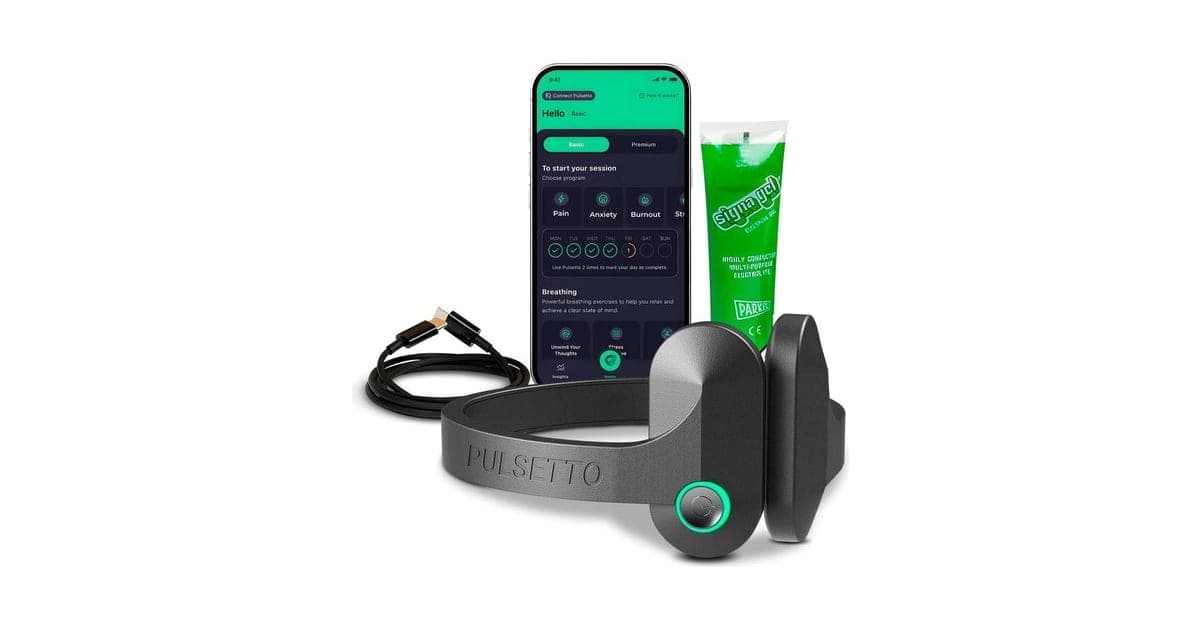
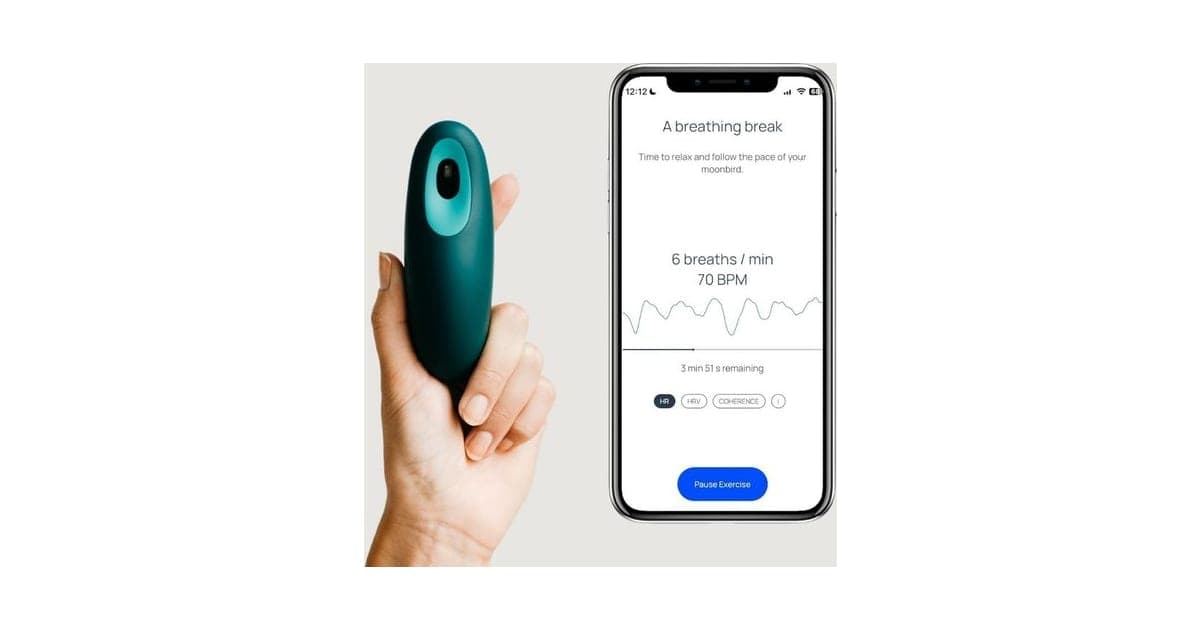
Both gadgets promise to calm you down in a few minutes, both target stress and sleep, and both cost around $200 or more. They take opposite routes to the same nervous system. Pulsetto is a neckband that sends gentle electrical pulses through the skin over the vagus nerve, controlled by a phone app. Moonbird is a pebble-shaped device that slowly swells and shrinks in your hand so you can breathe along with it, no screen needed.
One asks you to do nothing while it works on you. The other asks you to breathe, and teaches you a skill you can eventually use without it. The scorecard above sums up the rounds. Below is how each one was decided, based on our full reviews, the brands' pages, published research and owner reports. Nobody on our team has used either device.
Which one has better evidence?
Moonbird, clearly. It does not claim a new mechanism; it guides slow, paced breathing at around six breaths a minute with a longer exhale. Many studies show that breathing at five to seven breaths a minute lowers heart rate, raises heart rate variability and reduces arousal in the short term, and reviews suggest it reduces self-reported stress. Moonbird also has a 2025 peer-reviewed study of its own device in 36 highly stressed adults, linked to the company, which found short-term changes in brain activity and breathing. That is small, and it does not show long-term benefit, but it sits on a strong base.
Pulsetto's base is shakier. Vagus nerve stimulation is a real medical treatment in implanted form for some epilepsy and depression, and one non-invasive neck device, gammaCore, is FDA cleared for certain headaches. Research on non-invasive stimulation for stress and sleep is promising but mixed. For Pulsetto's own settings, the only studies are small, company-funded and rely largely on self-reported measures. Pulsetto is not FDA cleared and is sold as a general wellness device.
Which one is safer to try?
Moonbird. Slow breathing is safe for almost everyone; if you feel light-headed, you simply breathe normally.
Pulsetto has a list of people who should not use it: anyone with implanted devices such as pacemakers, metal neck implants or heart conditions, and anyone who is pregnant. Its page claims "zero side effects", but hands-on reviewers report that headache, dizziness, nausea and skin irritation are possible. Most users feel only a light tingle on the sides of the neck, and you can adjust the intensity in the app. Start low, place the pads only on the sides of the neck, and stop if you feel unwell.
How does each one feel to use?
Pulsetto asks less of you, which is its main advantage. You apply a little conductive gel, put the band around the back of your neck, choose one of five programs (stress, worry, sleep, burnout, or pain and recovery) and sit for about four minutes while it works.
Moonbird takes attention. You hold it and breathe in as it expands and out as it contracts, for two to five minutes for quick relief or ten to twenty for deeper relaxation. The company argues that touch is easier to follow than a voice or animation when your mind is racing, and owners tend to agree. A thumb sensor feeds heart rate and HRV to the optional app, so you can see your body settle. Moonbird's own FAQ calls it training wheels: many users learn the rhythm and eventually breathe slowly without it. Some owners dislike its proprietary charging cable.
What does each one really cost?
Moonbird costs less up front and over time.
| What you buy | Price | Note |
|---|---|---|
| One Pulsetto, offer page | $259 | Pulsetto's store listed the Fit at $269 |
| Two Pulsetto, offer page | $336 | Free shipping |
| Pulsetto premium app | about $129 a year | Optional, per a hands-on review |
| One Moonbird, offer page | $199.99 | Moonbird's European store listed €179 |
| Two Moonbird, offer page | $299.99 | Free shipping |
| Moonbird app | Free | Optional |
Pulsetto's basic app is free, but it pushes a premium subscription, and owners on Trustpilot complain about the upsells. If you subscribe, set a reminder before the renewal date. Pulsetto's bundle maths also does not add up: its three-pack is labelled "only $179 each", but $448 divided by three is about $149.
Both give a 30-day money-back guarantee. Pulsetto adds a two-year warranty, according to its page. Use either one daily during the trial so you can judge it fairly, and start any return early; some reviewers of both brands mention support delays.
Whose claims hold up better?
Moonbird. Its core claim, calm within five minutes, is plausible for many people because slow breathing works quickly. "Scientifically proven" overstates one small study, and "guaranteed to work" refers to the money-back guarantee, not a guaranteed effect. Its owner ratings are strong: 4.7 out of 5 from 916 Trustpilot reviews.
Pulsetto's "clinically proven" applies to vagus nerve stimulation in other, medical forms, not to its own settings. "Zero side effects" and "the app is 100% free" do not hold up. Its owner rating is still good, 4.1 from 3,459 Trustpilot reviews, with many people reporting calmer evenings and easier sleep. Some complaints concern support and device failures, so test it early.
Which one should you buy?
Buy Moonbird if you want the approach with the stronger evidence and fewer restrictions, especially if you find breathing apps hard to stick with. It is the safer bet for most people, and the skill it teaches stays with you. If you want a cheaper breathing guide for bedtime only, see our Dodow review, which projects a breathing light onto the ceiling.
Buy Pulsetto if you are a healthy adult who wants a hands-free routine, is curious about vagus nerve stimulation and will treat the 30 days as a real trial. Skip the premium app until you know the free programs help. For other breathing tools, see our Moksha Beam review, and for at-home pain relief, our Paingone Plus review.
Our verdict
Moonbird is the better buy for most people, scoring 6.6 against 6.3. It guides slow breathing, one of the best-supported ways to calm the body, costs less with no subscription pressure, suits almost everyone and has the stronger owner ratings. Pulsetto wins on convenience and warranty, and it is a reasonable experiment for healthy adults who want something hands-free, but its own evidence is thin and its "zero side effects" claim is not accurate. Neither treats anxiety disorders or insomnia. Read the full Pulsetto review or Moonbird review for every drawback before you choose.
The alternative
Pulsetto
For you if you want something hands-free you can wear while you sit or lie down
$259.00 one band, offer page at Pulsetto
Our pick
Moonbird
For you if you want the approach with the strongest evidence behind it
$199.99 one device, offer page at Moonbird
Frequently asked questions
Is Pulsetto or Moonbird better for anxiety?
Neither is a treatment for an anxiety disorder, and both say so in effect. For everyday stress, Moonbird has the stronger evidence, because slow breathing reliably calms the body for most people. Pulsetto's own settings have only small, company-funded studies. If anxiety affects your daily life, talk to a doctor.
Is Pulsetto or Moonbird better for sleep?
Both are used to wind down at night, and owners of each report easier sleep. Moonbird's 10 to 20-minute sessions suit bedtime, and Pulsetto has a sleep program in its app. For chronic insomnia, cognitive behavioural therapy for insomnia is the recommended treatment, not a gadget.
Does Moonbird stimulate the vagus nerve too?
Indirectly. Slow breathing with long exhales activates the parasympathetic rest-and-digest system, which runs partly through the vagus nerve. Pulsetto tries to stimulate the nerve directly with electrical pulses through the skin of the neck. The breathing route has much more research behind it.
Who should not use Pulsetto?
Do not use it with implanted devices such as pacemakers, metal neck implants, heart conditions or during pregnancy, and stop if you feel dizzy, faint or unwell. Place it only on the sides of the neck. Moonbird has no such restrictions because it only guides your breathing.
Are there free alternatives to Pulsetto and Moonbird?
Yes. Slow breathing at about six breaths a minute, with a longer out-breath, costs nothing and is the technique Moonbird guides. Free apps and simple counting can pace it. Moonbird's own FAQ calls the device training wheels that many users eventually stop needing.
More on Pulsetto vs Moonbird

About the author
James Wilson, Consumer Tech Writer
James Wilson covers health and wellness technology for Top10Gadgets: breathing devices, massagers, hearing aids, dental and weight-loss products, and the other gadgets sold with a promise to make life easier. James write…
- Health and wellness gadgets
- Over-the-counter hearing aids
- Breathing and massage devices
- FDA clearance and registration
- Tech for beginners
Writing for Top10Gadgets since 2026Full profile