Audio / Hearing protection
Hears Earplugs Review: How the High-Fidelity Filter Works, How Much Protection You Get and Where They Cost Less
Reusable high-fidelity earplugs from an Amsterdam brand that turn sound down without muffling it. A well-designed product for concerts and noisy days, but the US rating is NRR 13, not '20dB'.

By Ethan Walker, Hardware & Gadget Tester at Top10Gadgets
Updated 29 min readHow we test
Quick answer
Yes, if you want comfortable, reusable earplugs for concerts, clubs, festivals and noisy everyday places that turn sound down without muffling it. Hears are a genuine high-fidelity earplug from an established Amsterdam brand, with four tip sizes, a case and a 100-day guarantee, and the offer page's $39.99 undercut Hears' own store.
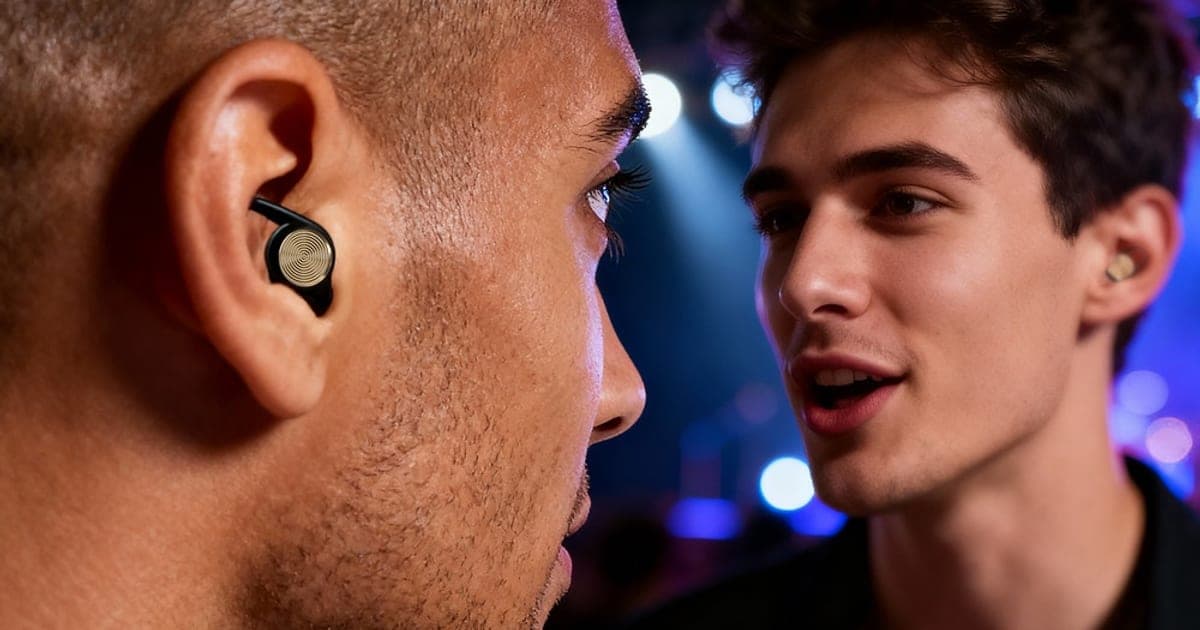
Score 6.4/10$39.99 at Hears
Check price at Hears (opens Hears in a new tab)We may earn a commission if you buy through our links.
- Best for
- Concert, club and festival goers who want protection without muffled music
- Not for
- Anyone needing high protection for loud work, power tools, shooting or motorsport; choose a higher-rated protector
$39.99 at Hears
Check price at Hears (opens Hears in a new tab)We may earn a commission if you buy through our links.
On this page · 14 sections
- 01Our verdict
- 02The short version
- 03Pros & cons
- 04How it works
- 05Who it's for
- 06How much do Hears cost, and what's in the box?
- 07How well do Hears protect your hearing?
- 08Are Hears' claims true?
- 09Are Hears better than foam earplugs or custom musician plugs?
- 10Are Hears legit, and what should you check before buying?
- 11What do owners say about Hears, and how did we score them?
- 12How to use Hears for the best results
- 13What else do people ask about concert earplugs?
- 14Frequently asked questions
Our verdict
Yes, if you want comfortable, reusable earplugs for concerts, clubs, festivals and noisy everyday places that turn sound down without muffling it. Hears are a genuine high-fidelity earplug from an established Amsterdam brand, with four tip sizes, a case and a 100-day guarantee, and the offer page's $39.99 undercut Hears' own store. But the advertised "20dB" is the European rating, with a US NRR of 13, and some claims go beyond a passive filter. Hears score 6.4 out of 10, held back by overstated claims and mixed delivery reviews.
The short version
- Reusable high-fidelity earplugs with a membrane acoustic filter.
- Advertised as 20 dB (European SNR); retail listings report US NRR 13 and Australian SLC80 19.
- Four tip sizes (XS, S, M, L) and a carry case.
- $39.99 for one pair on 4 October 2026; three for $99.98 and five for $149.97.
- Hears' own store data listed a pair at $43.
- Made by Hears B.V., Amsterdam; Hearing Health Foundation partner.
- Trustpilot: 3.5 from about 1,300 reviews, with complaints mostly about delivery and returns.
- Best trait: clearer sound than foam at a safer level.
- Biggest drawback: moderate protection, sold with stronger-sounding claims.
- Our score: 6.4 out of 10.
Pros & cons
Hears is one of the better products in this style of offer-page marketing: a real brand making a real, useful product. The cons are about how the protection level is described and how some orders are handled.
What we like
- Acoustic filter turns sound down more evenly than foam plugs, so music and voices stay clear
- Real, established brand: Hears B.V. in Amsterdam, a Red Dot design award and a Hearing Health Foundation partnership
- Four ear tip sizes (XS to L) and a carry case included
- Reusable for years with simple soap-and-water cleaning
- The offer page's $39.99 for one pair was cheaper than the $43 in Hears' own store data, and bundles go lower
- 100-day money-back guarantee
What we don't
- "Reduces noise by 20dB" is the European SNR figure; the US rating reported for Hears is NRR 13
- Not enough protection for very loud work, power tools used all day, shooting or motorsport without other protection
- "Voice-enhancing technology" and "developed by the world's leading audiologists" overstate a passive filter earplug
- Trustpilot score of 3.5 from about 1,300 reviews, with a quarter one-star, mostly about delivery and returns
- Filtered plugs let sound through by design, so they are not the best choice for blocking snoring
Sold by Hears
Hears$39.99
How it works
Ordinary foam earplugs block sound by filling the ear canal. They are excellent at reducing noise, but they cut high frequencies much more than low ones, so music sounds muffled and voices lose their clarity. High-fidelity earplugs add an acoustic filter that lets some sound through in a controlled way, so the overall level drops while the balance of high and low sounds is better preserved.
Pick your ear tip size
Step 1: Each pair comes with four tip sizes. Try them until one seals comfortably in your ear canal without pressure. A good seal matters more than anything else for protection.
Insert the earplug
Step 2: Push the tip gently into the ear canal and rotate it so the small fin or loop sits in the bowl of your ear. The low-profile body sits nearly flush.
The filter turns sound down
Step 3: Sound passes through a small acoustic chamber with a flexible membrane. Hears says this reduces the level reaching your eardrum fairly evenly across pitches, so music and speech sound quieter rather than muffled.
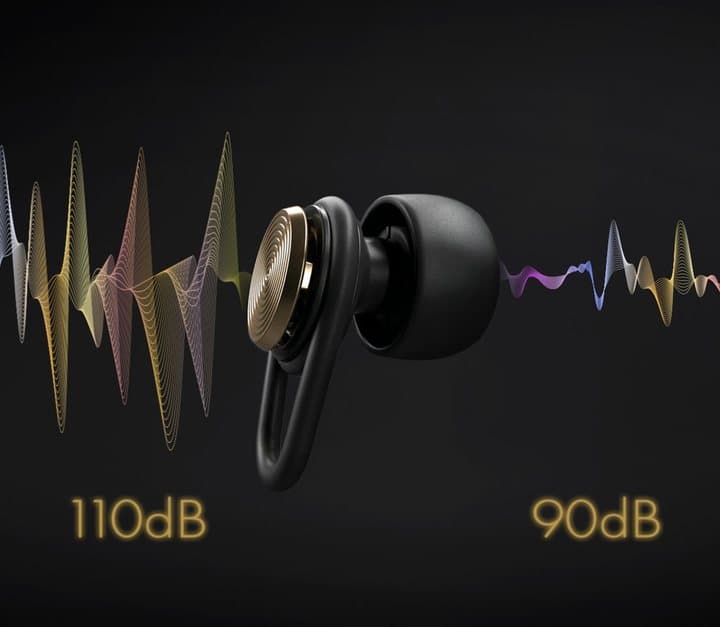
The brand's graphic of a 20 dB reduction
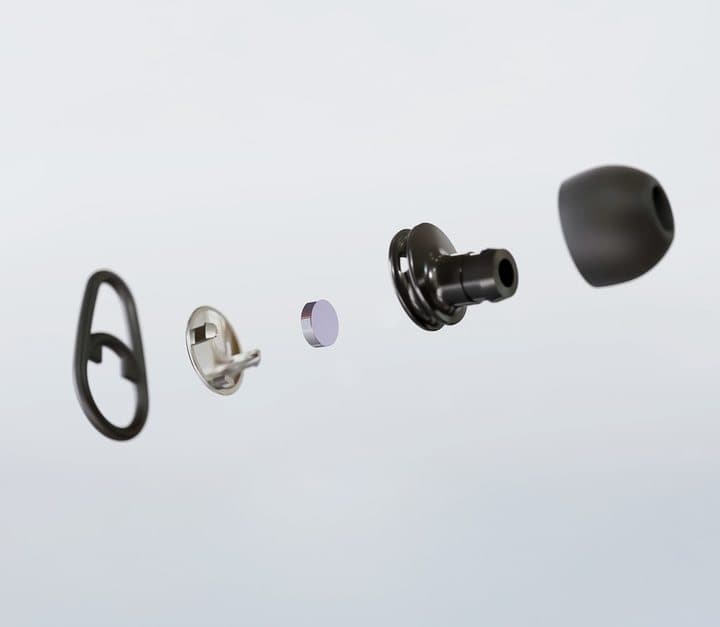
The parts of a Hears earplug, including the filter membrane
Hears uses a small filter with a flexible membrane. Retail descriptions explain that the membrane flexes with incoming sound pressure and reduces the level reaching your eardrum while keeping a more even frequency response. The brand calls it working "like a volume knob, not a mute button", which is a fair description of high-fidelity earplugs in general.
Why evenness matters
Foam plugs can reduce high frequencies by 30 dB or more while letting bass through. Music becomes boomy and dull, and speech becomes hard to understand. A flatter reduction keeps cymbals, vocals and consonants audible. That is why musicians and regular gig-goers often prefer filtered plugs even though they protect less on paper.
What the "second eardrum" line means
The page says the filter acts as a second set of eardrums. That is a metaphor for a membrane that responds to sound pressure. It is not a medical claim and does not mean the plug protects your actual eardrum in any special way beyond lowering the sound level.
How loud is too loud?
Hearing damage depends on both level and time. The WHO's hearing loss fact sheet notes that more than a billion young people are at risk from unsafe listening, including at loud venues. Workplace guidance in the US commonly uses 85 dB averaged over eight hours as a safe limit, with the allowed time halving for every 3 dB increase. On that basis, 100 dB is safe for only about 15 minutes, and levels near 110 dB for little more than a minute. Concerts and clubs often run at 100 dB or more for hours.
A 13 to 20 dB reduction moves a 105 dB concert down to roughly 85 to 92 dB at the ear, which turns minutes of safe exposure into hours. That is the real benefit of plugs like Hears.
How decibels add up
Decibels are logarithmic, so small numbers make a big difference. Every 3 dB is roughly a doubling of sound energy, and every 10 dB sounds about twice as loud to most people. A 13 dB cut therefore removes well over 90% of the sound energy reaching your ear, even though it does not sound like silence. That is why moderate-rated plugs still protect well at concerts, and why it is worth wearing them for the whole event rather than only during the loudest songs.
Where sound levels come from
Typical figures quoted in hearing conservation material put normal conversation at around 60 dB, busy city traffic at 80 to 85 dB, a motorcycle at 95 dB, and concerts, clubs and sporting events at 100 to 110 dB or more. Sound level apps on modern phones give a rough reading, which can help you decide when to put plugs in.
Who it's for
Hears suit people who go to concerts, clubs and festivals regularly and want to protect their hearing without making the music sound worse. They also suit musicians and DJs who need to hear a balanced mix, and people who find everyday noise tiring: busy restaurants, commuting, open-plan offices or children's parties.
They are not the right tool for every kind of noise. Work with power tools all day, shooting, motor racing and industrial noise need higher-rated protection.
Why Hears appeal
Hears look good, with a low-profile shell and a heart-shaped case when the pair is together, according to design coverage. They are reusable, so the cost per use falls quickly for regular gig-goers. The brand is a real company with a design award and a charity partnership, which is reassuring in a category full of anonymous copies. And the core promise, clearer sound at a safer level, is exactly what people want from concert earplugs.
A typical night out with Hears
You arrive at the venue and put the plugs in before the support act starts. The sound is noticeably quieter but still clear: you can hear the vocals and guitars, and the bass still thumps. Between songs you can talk to friends without shouting, because the plugs lower the crowd noise as well as the music. When you leave, your ears do not ring the way they used to. That is the experience owners describe on the page and in many reviews, and it matches how filtered earplugs generally perform.
Who gets the most value
Regular concert and club goers, musicians and anyone who already notices ringing ears after loud events get the most value. If you go out often, a $40 pair that lasts years costs pennies per night.
Who gets the least
People who need maximum protection, people looking to block snoring, and people who rarely go anywhere loud get the least. For an occasional loud event, cheap foam plugs work well if you insert them properly.
Music fans with tinnitus
People who already have tinnitus are often keen to protect what hearing they have. Earplugs will not quiet existing tinnitus, but avoiding further loud exposure is one of the main pieces of advice given to people with it. A plug that sounds good enough to keep in all night is useful here.
Parents and children's events
Children's parties, school sports halls and soft-play centres can be surprisingly loud. A moderate reduction lets parents hear their children and talk to other adults while taking the edge off the noise. The page's line about keeping "screaming and crying in check" is a playful way of describing this.
Everyday uses
The page lists sleep, focus, noise sensitivity, travel, parenting and busy workplaces. For focus and noise sensitivity, a moderate, even reduction can take the edge off without isolating you, which some people prefer to foam. For planes and road trips, they reduce cabin noise. For sleep and snoring, see below.
What it will not do
It will not make loud work safe, block all sound, cure tinnitus or reverse hearing loss. It does not enhance voices: a passive filter can only turn sound down, not lift speech above other sounds.
As a gift
Hears make a good gift for music fans and musicians. The four tip sizes mean they fit most ears, and the case keeps them on a keychain. Pair them with a note about inserting them properly, because fit decides how well they protect.
- Concert, club and festival goers who want protection without muffled music
- Musicians, DJs and sound engineers who need to hear a balanced mix at lower volume
- People who find everyday noise tiring, such as busy restaurants, commuting or noisy offices
Who should skip it
- Anyone needing high protection for loud work, power tools, shooting or motorsport; choose a higher-rated protector
- Light sleepers trying to block a partner's snoring; high-attenuation foam or sleep-specific plugs block more
- Buyers outside the US who may face costly return postage, according to some Trustpilot reviewers
- Anyone with ear pain, infection, discharge or a perforated eardrum, until a doctor says earplugs are safe
How much do Hears cost, and what's in the box?
Hears cost $39.99 for one pair on the offer page on 4 October 2026, $99.98 for three and $149.97 for five, while Hears' own store data listed a pair at $43. Each pair comes with four ear tip sizes (XS, S, M and L) and a carry case, and retail listings describe the tips as hypoallergenic TPE. The offer page shows a 100-day money-back guarantee.
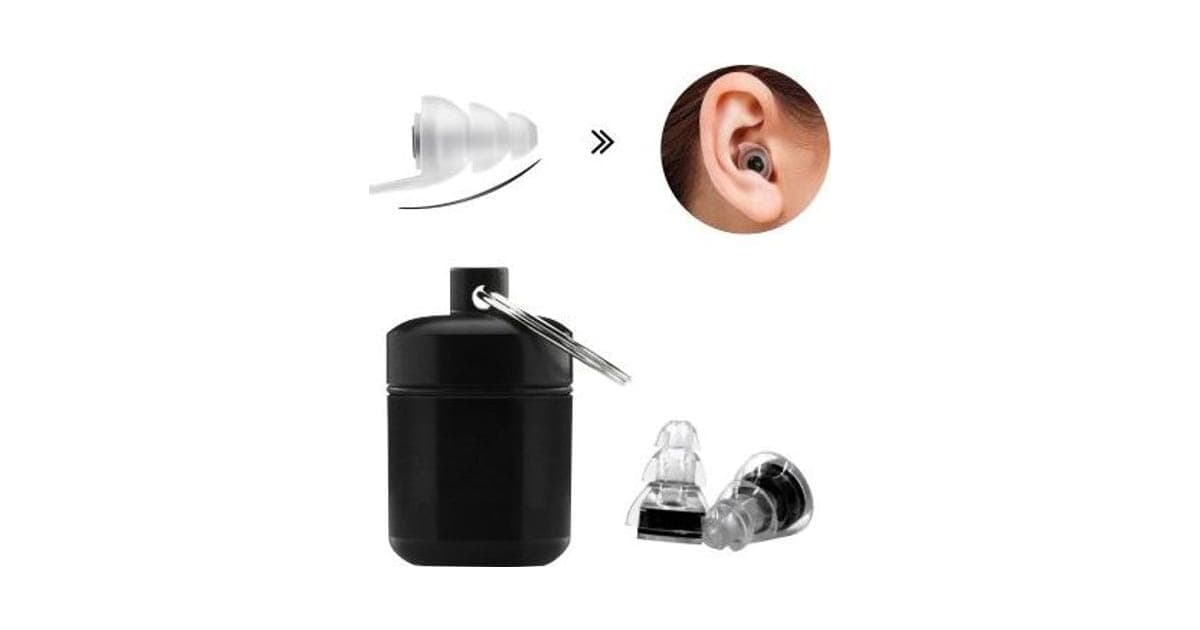
Each pair comes with four ear tip sizes (XS, S, M and L) and a carry case, according to the FAQ and the page. Retail listings describe the material as TPE, a hypoallergenic thermoplastic elastomer.
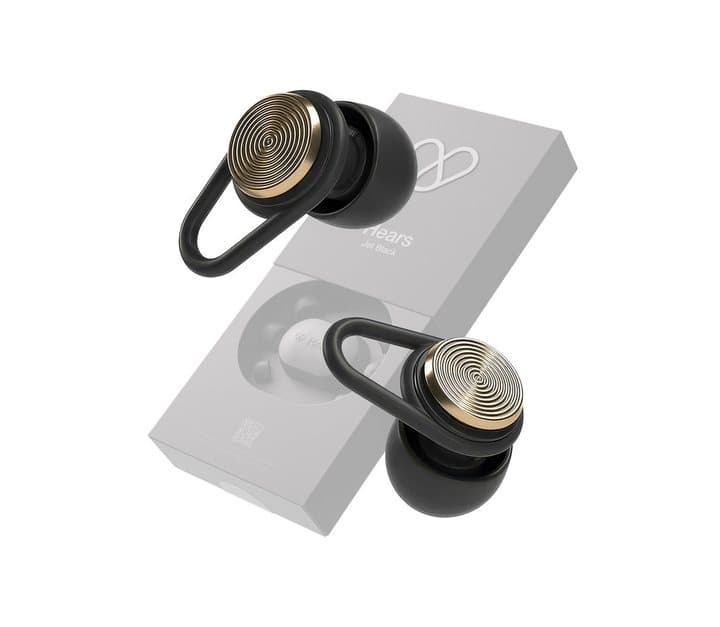
A pair of Hears with the box
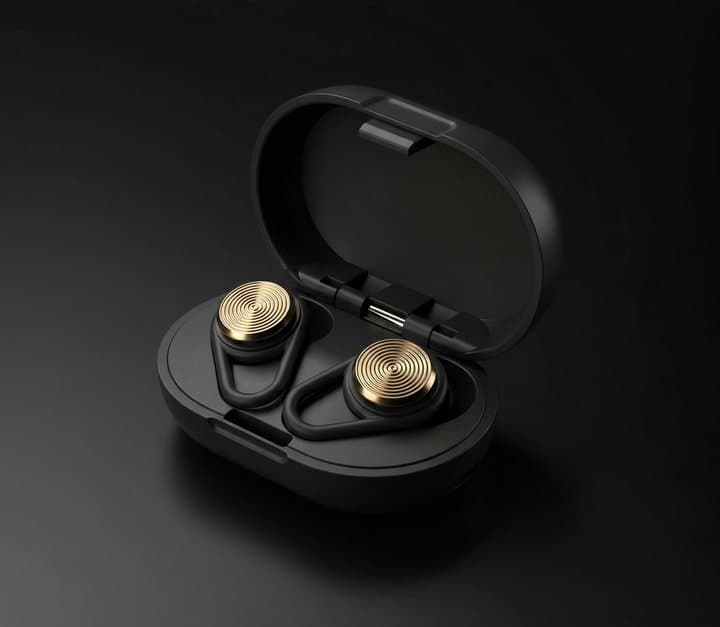
The carry case
Specifications
| Item | Detail |
|---|---|
| Type | Reusable high-fidelity filtered earplugs |
| Attenuation | SNR 20 dB (EU); NRR 13 dB (US) and SLC80 19 (Australia/NZ), according to retail listings |
| Ear tips | Four sizes: XS, S, M, L |
| Material | TPE, hypoallergenic, according to retail listings |
| Case | Carry case included |
| Cleaning | Mild soap and water |
| Maker | Hears B.V., Amsterdam |
| Guarantee | 100-day money-back on the offer page |
Hears price and bundles
On 4 October 2026 the Hears offer page (opens Hears in a new tab) listed:
| Bundle | Price | Per pair | Retail shown |
|---|---|---|---|
| 1 pair | $39.99 | $39.99 | $49.99 |
| 3 pairs (buy 2, get 1 free) | $99.98 | $33.33 | $149.97 |
| 5 pairs (buy 3, get 2 free) | $149.97 | $29.99 | $249.95 |
The page says free, fast shipping in the USA on qualifying offers. Check the total at checkout.
Hears' own store
Hears' own Shopify store data, checked the same day, listed the standard Hears at $43 in several colours, with a $50 free-shipping threshold. It also listed Hears Moto (25 dB SNR) at $43, Hears Sleep at $39, extra cases, protective bumpers and a cleaning kit.
What this means for you: the offer page was the cheaper place to buy a single pair of standard Hears on the day we checked, and the multi-packs bring the price per pair down further. If you want the Moto or Sleep versions, or accessories, the brand store is where they are listed.
Is it good value?
Yes, for regular use. High-fidelity earplugs from well-known brands sell in a similar range, and foam plugs are far cheaper per pair but disposable and muffled. At $30 to $40 a pair, Hears are fairly priced if you use them often.
Cost per use
If you go to two concerts or club nights a month and a pair lasts two years, that is roughly 48 uses. At $39.99 a pair, each use costs well under a dollar, less than many venues charge for a pair of foam plugs at the bar.
Who makes it
Hears B.V. is based in Amsterdam. Design coverage by designboom describes the founders as Bob Verlaat and Nick Nijhof, and the product received a Red Dot design award. The Hearing Health Foundation's blog on Hears describes a partnership in which part of each sale funds hearing research. The page's claim of development "alongside world-class audiologists" goes further than the brand's own background story, which emphasises musicians, music-goers and hearing protection specialists.

HearsScore 6.4/10
Best for: Concert, club and festival goers who want protection without muffled music
$39.99 at Hears · Price checked October 4, 2026
Check price at Hears (opens Hears in a new tab)We may earn a commission if you buy through our links.
How well do Hears protect your hearing?
Hears cut noise by a moderate amount: SNR 20 dB under the European rating and NRR 13 dB under the US rating reported by retail listings. That suits concerts, clubs, festivals and noisy everyday places, where they turn sound down evenly instead of muffling it. They are not enough for all-day power tools, shooting or very loud work, and they only protect fully when the tip seals well.
Nobody on our team has used Hears, so this section is based on the published ratings, how filtered earplugs work and what owners report.
Understanding the ratings
Hearing protectors are rated in different ways in different regions:
- SNR (Single Number Rating) is used in Europe. Hears is rated SNR 20.
- NRR (Noise Reduction Rating) is used in the US and required on packaging under EPA rules. Retail listings report NRR 13 for Hears.
- SLC80 is used in Australia and New Zealand. Retail listings report 19.
NRR is tested and calculated differently from SNR and is usually lower for the same product. The page's "20dB" headline is the most flattering of the three. It is not false, but US buyers should know their local rating is 13.
What the numbers mean in real life
Lab ratings assume a perfect fit. In everyday use, plugs that are not inserted deeply enough or do not seal properly protect less. Hearing conservation guidance commonly advises treating labelled ratings as a best case. With a good seal, Hears should comfortably bring a loud concert into a much safer range; with a poor seal, the benefit shrinks.
Where Hears work well
- Concerts and clubs. The design target. Clear sound at a lower level.
- Rehearsals and gigs. Musicians can hear their own playing and others more naturally than with foam.
- Busy restaurants, bars and commuting. A moderate reduction makes noisy places less tiring.
- Travel. Takes the edge off engine and cabin noise.
- Noise sensitivity. A gentle, even reduction may be more comfortable than full isolation for some people.
Where they fall short
- Very loud work. Chainsaws, grinders and heavy machinery need higher-rated protection, often earmuffs.
- Shooting. Impulse noise from firearms needs specialist protection.
- Snoring and sleep. Filtered plugs pass sound through by design. Foam plugs or dedicated sleep plugs usually block more.
- Motorcycling at speed. Hears sells a separate 25 dB Moto version for this.
Wearing them with headphones
Some people wear earplugs under over-ear headphones or helmets with built-in speakers, as one motorcycling owner on the page describes. Low-profile plugs like Hears fit under most helmets and over-ear headphones. Turn the headphone volume down rather than up to make up for the plugs.
Comfort and fit
The low-profile body sits close to the ear, and four tip sizes cover most ear canals. Owners on the page say they forgot they were wearing them. Some people find any in-ear plug uncomfortable after a few hours, and getting a good seal takes a little practice.
What owners say about using them
The page's testimonials describe a short adjustment period, a fairly flat sound, clear conversations at festivals and comfort over long periods. One owner compares Hears favourably with Loop earplugs. A motorcyclist praises a pair of "Brass Blue" Hears for wind noise. On Trustpilot, praise focuses on comfort and support, while complaints focus on delivery delays and the cost of international returns.
Are Hears' claims true?
Hears' core claim holds up: they are genuine high-fidelity earplugs that turn sound down evenly, like a volume knob. The "20dB" headline is true only as the European SNR; the US NRR reported in retail listings is 13. "Voice-enhancing technology" and protection from "all types of loud sounds" are overstated for a passive filter, and the "93% of natural sound preserved" figure has no published source.
"Reduces harmful noise by up to 20dB"
True as the European SNR. The US NRR reported in retail listings is 13. Both are lab figures that assume a good fit.
"Works like a volume knob, not a mute button"
A fair description of high-fidelity earplugs.
"93% of natural sound preserved"
Unsourced. No method or measurement is given.
"Voice-enhancing technology"
Overstated. A passive filter can turn sound down evenly, which keeps speech clearer than foam does, but it cannot enhance voices.
"Keeps you safe from all types of loud sounds"
Overstated. Moderate protection is right for concerts and everyday noise, not for the loudest sounds.
"Developed by the world's leading audiologists"
Unverified. The brand's own story centres on musicians and hearing protection specialists, and the page names no audiologists.
"Patented filter technology"
Retail descriptions also call the filter patented. We did not find the patent number.
"4.9/5 stars with 3,400+ reviews" and "200,000+ users"
The on-page rating cannot be checked. Elsewhere the brand claims over 500,000 customers. Trustpilot shows 3.5 from about 1,300 reviews.
"Lasts for years" and "durable materials resist sweat and dirt"
Plausible for a sealed filter body and silicone-like tips, with care. Tips are the part most likely to wear, and Hears' store sells accessories such as bumpers and cleaning kits.
"Perfect for everything from daily life to loud rock concerts"
Fair for concerts and everyday noise, with the limits above for very loud work and sleep.
"Supports hearing research"
Supported by the Hearing Health Foundation's own blog about its partnership with Hears.
Claims scorecard
| Claim | Our view |
|---|---|
| 20 dB reduction | True as SNR; NRR is 13 |
| Volume knob, not mute | Fair |
| 93% natural sound | Unsourced |
| Voice enhancing | Overstated |
| Safe from all loud sounds | Overstated |
| Leading audiologists | Unverified |
| Hearing Health Foundation support | True |
| 4.9 stars | Not matched by Trustpilot |
Are Hears better than foam earplugs or custom musician plugs?
Hears protect less than foam earplugs, which often carry an NRR of 29 to 33, but they sound far clearer, so people tend to keep them in for a whole gig. Custom musician plugs fit and sound even better but cost several times more. Choose Hears for concerts and everyday noise, foam for sleep or maximum blocking, and earmuffs or higher-rated protectors for loud work.
| Option | Typical protection | Sound quality | Reusable | Best for |
|---|---|---|---|---|
| Hears | SNR 20 / NRR 13 | Clear, even | Yes | Concerts, everyday noise |
| Foam earplugs | Often NRR 29 to 33 | Muffled | No | Sleep, maximum blocking |
| Other high-fidelity plugs | Similar range | Clear | Yes | Concerts |
| Custom musician plugs | Choice of filters | Very even | Yes | Professional musicians |
| Earmuffs | High | Muffled | Yes | Power tools, shooting |
| Noise-cancelling headphones | Low-frequency hum | Good for audio | Yes | Planes, commuting |
Hears vs foam earplugs
Foam plugs protect more on paper and cost very little. Inserted properly, they are excellent for sleep and very loud noise. For music, they muffle the sound, which is why many people take them out halfway through a gig. Hears protect less but sound better, so people tend to keep them in, which is protection that actually gets used.
Hears vs other high-fidelity earplugs
Several brands sell reusable filtered earplugs at similar prices, some with interchangeable filters for different levels. Compare the NRR or SNR, the number of tip sizes, whether filters can be swapped, and returns terms. Hears' strengths are its design, sizes and brand track record.
Hears vs custom musician earplugs
Audiologists can take ear impressions for custom-moulded plugs with swappable filters. They fit perfectly and sound very even, but cost several times more. Professional musicians often find them worth it.
Hears vs noise-cancelling headphones
Noise-cancelling headphones reduce steady low-frequency noise well, which suits planes and trains. They are not hearing protection for loud music. Our HearDirect review covers a TV headset for a different problem: hearing the TV at a personal volume. For other audio products, see our Air Tube headphones review and our Anything speaker review, or browse our audio category.
Hears vs doing nothing
The cheapest option is to stand further from the speakers, take breaks outside, and leave before the encore. Those habits help, and are worth doing with earplugs too. Distance matters a lot: sound drops noticeably as you move back from the stacks. But in a packed club or at the front of a crowd, there is often nowhere quieter to go, which is where plugs earn their place.
Hears vs a hearing check
If your ears already ring after loud events, or speech sounds muffled, see a hearing professional. Earplugs prevent further damage; they do not treat existing loss. Our Audien Atom One review looks at a low-cost over-the-counter hearing aid for people with mild loss.
HearsScore 6.4/10
Why people buy it: Acoustic filter turns sound down more evenly than foam plugs, so music and voices stay clear
$39.99 at Hears · Price checked October 4, 2026
Check price at Hears (opens Hears in a new tab)We may earn a commission if you buy through our links.
Are Hears legit, and what should you check before buying?
Hears are made by Hears B.V., an established Amsterdam brand, and Trustpilot shows 3.5 from about 1,310 reviews, with most complaints about slow delivery and returns rather than the plugs. Before buying, use the US NRR of 13 when comparing protection, try all four tip sizes for a seal, order well before an event, and check return postage if you live outside the US.
Know your rating
The page headline is 20 dB, the European SNR.
What to do: if you are in the US and need a specific level, use the NRR of 13 from retail listings when comparing with other protectors, and choose a higher-rated product for very loud work.
Fit decides protection
A plug that does not seal protects far less.
What to do: try all four tip sizes. The right one should seal, feel secure and make your own voice sound slightly louder when you speak.
Ear health
Earplugs are not suitable for everyone.
What to do: do not use earplugs with an ear infection, discharge, pain or a perforated eardrum unless a doctor says it is safe. Stop if they cause pain or irritation.
Delivery and returns
Trustpilot reviewers report delivery delays and international return postage that can cost more than the plugs.
What to do: keep your order confirmation, track your parcel, and if you are outside the US, read the returns terms for your country before buying.
Sleep expectations
The page lists better sleep and snoring among the uses.
What to do: if blocking snoring is your main goal, consider foam plugs or a sleep-specific earplug, which block more sound.
Hygiene
Earplugs collect earwax and bacteria.
What to do: clean them with mild soap and water after use, dry them fully and keep them in the case. Do not share them.
Colours and versions
The brand store lists several colours and versions with different ratings, including a 25 dB Moto model and a sleep earplug.
What to do: check which version and colour the offer page sends. The page's photos show black plugs with gold filter faces and white plugs; ask support if you want a specific colour.
Counterfeits and lookalikes
Popular earplug designs are often copied.
What to do: buy from the offer page or the brand's own store rather than unknown marketplace sellers, and check the packaging matches the brand.
How to buy Hears the smart way
- Decide whether standard Hears suit your needs, then order from the Hears order page (opens Hears in a new tab).
- Buy one pair unless you know others in your household want a pair; the per-pair price drops in bundles.
- Check which bundle is selected; the three-pair bundle is marked most popular.
- Confirm shipping costs and delivery estimates for your country.
- Keep your confirmation and note the 100-day guarantee window.
- Try all four tip sizes at home before your first event.
What do owners say about Hears, and how did we score them?
Hears score 6.4 out of 10: claim accuracy 1.0, build durability 1.4, price competitiveness 1.5, usability 1.5 and owner satisfaction 1.0, each out of 2. Owners on Trustpilot mostly praise comfort, natural sound and helpful support, but the profile shows 3.5 from 1,310 reviews, with 26% one-star, mainly about slow delivery and costly international returns. Few reviewers say the filter failed to reduce sound.
Reviews on the page
The offer page shows a 4.9-star rating from more than 3,400 reviews and four testimonials. Owners describe a flat frequency response, clear conversations at festivals, comfort, and good support. One compares Hears favourably with Loop earplugs.
Trustpilot
On 4 October 2026 the Trustpilot profile for hears.com showed a TrustScore of 3.5 from 1,310 reviews: 59% five-star and 26% one-star. Praise centres on comfort, sound and helpful support. Complaints centre on slow delivery, orders without updates, and international buyers finding return postage costs more than the plugs.
What the reviews agree on
The product itself is generally well liked. Problems are mostly about logistics: delivery times and returns. That is worth knowing, but it is a different kind of risk from a product that does not work.
Reading the one-star reviews
A quarter of Trustpilot reviews being one-star sounds alarming, but reading them shows a pattern. Most describe orders that took weeks to arrive or had no tracking updates, difficulty reaching support during busy periods, or returns that were impractical from abroad. A smaller number say the plugs did not fit or fell out. Very few say the filter failed to reduce sound. If you buy, allow time before an event you need them for, and test the fit as soon as they arrive.
Reading the five-star reviews
The positive reviews are often detailed and specific: music sounding natural, being able to talk at festivals, comfort over long nights, and staff resolving problems quickly. Several mention replacing foam plugs or other brands. That level of detail is a good sign that many buyers are genuinely happy with the product.
What we would test with Hears in hand
If we test Hears ourselves, we will measure attenuation across frequencies with a test fixture, compare sound quality with foam and other filtered plugs at a live venue, check comfort over several hours, and track how the tips and filter hold up over months. We will update this review with the results.
How we scored Hears
Every score on the site follows the five criteria on our how we test page.
| Criterion | Score | Why |
|---|---|---|
| Claim accuracy | 1.0 / 2 | Core claims fair; 20 dB headline, voice enhancing and audiologist claims overreach |
| Build durability | 1.4 / 2 | Reusable, washable, real brand with design award |
| Price competitiveness | 1.5 / 2 | Offer page cheaper than the brand store; fair for reusable plugs |
| Usability | 1.5 / 2 | Four tip sizes, case, simple to use |
| Owner satisfaction | 1.0 / 2 | Product liked; Trustpilot 3.5 with many delivery complaints |
| Total | 6.4 / 10 |
The score would rise with the NRR shown alongside the SNR on the page, claims limited to what a passive filter does, and fewer delivery complaints.
What we did, and did not, do
We read the offer page and FAQ, Hears' store data, retail listings, designboom's founder interview, the Hearing Health Foundation's blog, the WHO fact sheet and the Trustpilot profile, all on 4 October 2026. Nobody on our team has used Hears, and no figures here come from our own testing.
How to use Hears for the best results
Wash your hands, start with the medium tip and try others until one seals comfortably. Pull the top of your ear up and back with the opposite hand, push the plug in and twist it to settle. A good seal makes your own voice sound slightly louder. Put them in before the music starts, and twist gently to remove them by the body, never the tip.
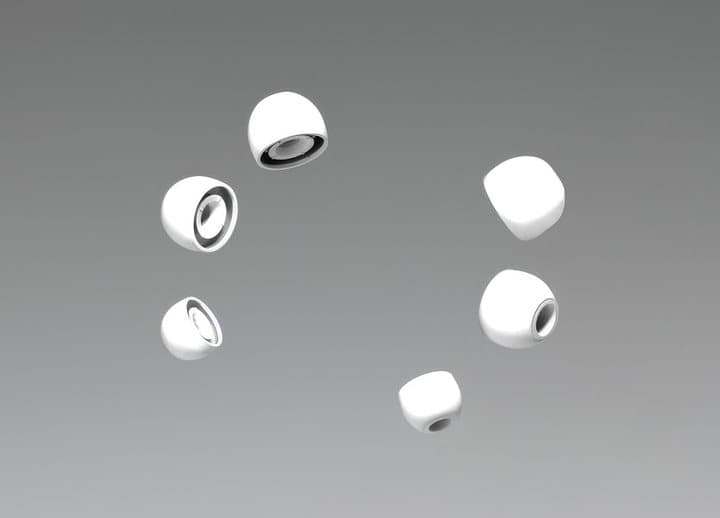
The ear tip sizes included
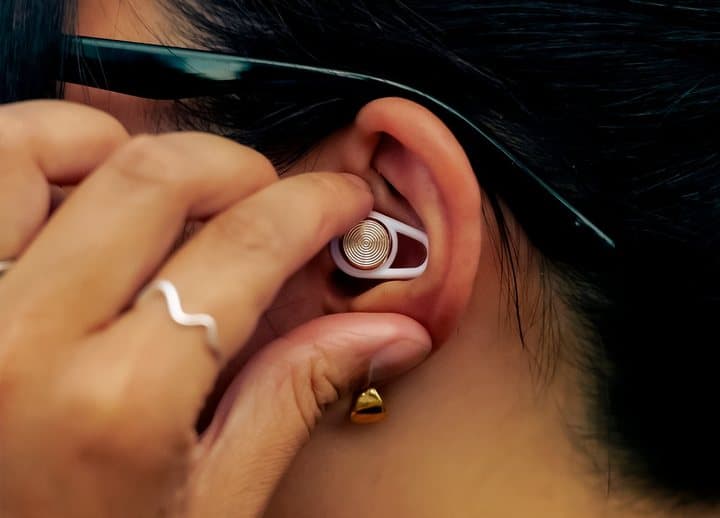
Putting a Hears earplug in
- Wash your hands and make sure the plugs are clean and dry.
- Start with the medium tip and try others until one seals comfortably.
- Reach over your head with the opposite hand and gently pull the top of your ear up and back.
- Push the plug into the ear canal and twist it slightly so it settles.
- Check the seal: your own voice should sound slightly louder and outside noise quieter.
- Put them in before the music starts, not after your ears are already ringing.
- After use, clean them with mild soap and water, dry them and store them in the case.
Keeping track of them
Small earplugs are easy to lose. Clip the case to your keys, and get into the habit of putting the plugs straight back in the case whenever you take them out, rather than in a pocket.
Removing them safely
Twist gently as you pull the plug out by the body or loop, rather than yanking it. A sudden pull on a well-sealed plug can feel uncomfortable because of the change in pressure. Never pull on the tip alone, which can come off and stay in the ear.
Getting a good seal
If one ear feels less protected, try a different tip size on that side; ears are not always the same. A plug that keeps working loose is usually a size too small.
Talking while wearing them
Speak at a normal level. People wearing earplugs tend to talk more quietly because their own voice sounds louder to them. If friends ask you to repeat yourself, speak up a little.
Using them for focus or noise sensitivity
For an office or café, a moderate reduction can make background chatter less tiring while keeping you aware of your surroundings. Take them out periodically to let your ears rest.
Before a festival
Pack the case on your keys or in a zipped pocket, and take a spare set of tips if you have them. Festivals are long, dusty and sweaty, so clean the plugs each evening and let them dry overnight. If you lose one plug, use foam plugs from the first-aid tent until you can replace the pair rather than going unprotected.
Getting used to them
The first time you wear high-fidelity plugs, the world sounds a little distant and your own voice sounds boomy. Most people adjust within an hour or two, and owners on the page describe a short adjustment period. Wear them around the house for a while before your first big event.
Looking after them
Replace ear tips if they become stiff, torn or lose their seal. Keep the case clean. Avoid leaving the plugs in hot cars, which can deform soft materials.
Troubleshooting
| Problem | Likely cause | What to try |
|---|---|---|
| Sound still very loud | Poor seal | Try a larger tip and insert deeper |
| Plugs fall out | Tip too small | Try the next size up |
| Ear feels sore | Tip too large or long wear | Try a smaller tip; take breaks |
| Muffled sound | Filter blocked by wax | Clean gently, following the care instructions |
| Own voice booms | Occlusion effect | Normal with a good seal; insert slightly deeper |
| One ear louder | Uneven fit | Try a different size on that side |
HearsScore 6.4/10
Before you buy: Check the final price, shipping and return terms at checkout.
$39.99 at Hears · Price checked October 4, 2026
Check price at Hears (opens Hears in a new tab)We may earn a commission if you buy through our links.
What else do people ask about concert earplugs?
Most questions are about timing, comfort and safety. Put earplugs in before the music starts, because ringing ears mean some temporary damage has already happened. High-fidelity plugs like Hears keep music clear rather than dull, and speech stays understandable. Ringing after a gig is a warning sign: repeated exposure can lead to permanent hearing damage and tinnitus, so protection is worth using every time.
Do musicians wear earplugs?
Many do, especially drummers, guitarists and sound engineers, because they are exposed to loud sound for hours. High-fidelity and custom plugs are popular because they keep the mix balanced.
Will earplugs ruin the concert?
Foam plugs can make music sound dull. High-fidelity plugs like Hears are designed to avoid that, and many people find music clearer because distortion from overloaded ears is reduced.
Should I put earplugs in before or after the music starts?
Before. Your ears are exposed from the first song, and once they are ringing, some temporary damage has already happened. Putting them in early also gives you time to settle the fit.
Can I wear Hears at work?
For noisy offices, restaurants and bars, a moderate reduction can make shifts less tiring. For workplaces with legal hearing protection requirements, use protectors that meet your employer's specified rating.
Is ringing after a concert normal?
It is common, but it is a warning sign that the sound was loud enough to stress your hearing. Repeated exposure can lead to permanent damage and tinnitus.
Can earplugs cause ear infections?
Dirty or shared earplugs can contribute to irritation or infection. Keep them clean and dry, and stop using them if your ears become sore.
Are Hears suitable for children?
The page does not give guidance for children. Small ears may need the XS tips, and children usually need help inserting plugs. For young children, earmuffs designed for kids are often easier.
How long can I wear them at a time?
There is no fixed limit for healthy ears, but take them out for a break every few hours if they feel uncomfortable, and let your ears air out after long sessions. If your ears itch or ache, give them a rest.
Can I use Hears for swimming?
They are not sold as swimming plugs. Use earplugs designed to keep water out.
How do I clean the filter?
Follow the brand's care instructions. In general, wipe the outside gently, wash the tips with mild soap and water, and avoid poking anything into the filter opening, which could damage the membrane.
Do Hears work for tinnitus?
They can help prevent further damage from loud sound. They do not treat existing tinnitus. Speak to a doctor or audiologist about tinnitus.
Are Hears worth it?
For regular concert, club and festival goers, yes: they are a well-designed, reusable product from a real brand, and the offer page price was lower than the brand store's. Just know the US rating is 13 and choose stronger protection for very loud work.
Frequently asked questions
What are Hears earplugs?
Hears are reusable high-fidelity earplugs from Hears B.V., an Amsterdam company. Each plug has an acoustic filter with a membrane that reduces sound more evenly across pitches than foam plugs, so music and speech stay clearer while getting quieter.
How much do Hears cost?
On 4 October 2026 the offer page listed one pair at $39.99, three pairs for $99.98 and five pairs for $149.97. Hears' own store data listed a pair at $43, with a $50 free-shipping threshold. The page offers free US shipping on qualifying orders, so check the total at checkout.
How much noise do Hears block?
Hears advertises 20 dB, which is its European SNR rating. Retail listings report a US NRR of 13 dB. Real-world protection depends on a good seal, so fit matters. For very loud work, power tools used all day or shooting, choose a protector with a higher rating.
Are Hears good for concerts?
Yes. That is what they are designed for. Most concerts and clubs are loud enough that 13 to 20 dB of reduction, with clearer sound than foam, makes a real difference to safe listening time. Put them in before the music starts rather than once your ears are already ringing.
Can I sleep in Hears?
You can, but filtered earplugs let sound through by design. For snoring, foam plugs with a higher rating or Hears' separate sleep earplugs are likely to block more. Owners mainly praise Hears for comfort and clear sound in loud places, not for blocking noise in bed.
Can I talk to people while wearing Hears?
Usually, yes. With sound turned down evenly, speech stays understandable, and many owners say conversations are easier in loud places than without plugs. In quiet rooms, voices will sound quieter. Speak at a normal level, because earplugs make your own voice sound louder and people tend to talk too quietly.
How long do Hears last?
The brand says a pair lasts years with care. Clean them with mild soap and water, let them dry and keep them in the case. Ear tips wear faster and may need replacing. Put the plugs back in the case whenever you take them out, because small earplugs are easy to lose.
What is the Hears guarantee?
The offer page shows a 100-day money-back guarantee. Some international Trustpilot reviewers say return postage cost more than the earplugs, so check the returns terms for your country. Keep the case, tips and order confirmation, and contact support before sending anything back.
We may earn a commission if you buy through our links.
Prices accurate as of October 4, 2026. Check the seller's checkout for current pricing, promotions and terms.
What we checked: No hands-on use. Claims, prices, bundles, FAQ answers, guarantee, testimonials and images from the Hears offer page our link opens (buyhears.com) on 2026-10-04. Store prices and product range from Hears' own store data the same day. NRR, SNR and SLC80 ratings, materials and company details from retail listings and press coverage including designboom's interview with the founders; the Hearing Health Foundation partnership from the foundation's blog; owner sentiment from the Trustpilot profile for hears.com (3.5 from 1,310 reviews on 2026-10-04); noise exposure guidance from the WHO.

About the author
Ethan Walker, Hardware & Gadget Tester
Ethan Walker covers hardware for Top10Gadgets: audio, computing, phone accessories, chargers, tools, car gadgets and sports equipment. Ethan believes a product should be judged on what happens when people actually use it…
- Headphones and speakers
- Chargers and phone accessories
- Tools and emergency gear
- Car accessories
- Durability and real-world performance
Writing for Top10Gadgets since 2026Full profile