Tech & Gadgets / Rechargeable hand warmers
CozyCharge Review: How the Rechargeable Hand Warmer and Power Bank Performs, Who It Suits and Safe Use
A rechargeable hand warmer with three heat settings and a built-in power bank. It is a practical winter gadget; the 'never burns' and circulation claims go too far, and battery figures vary.

By Ryan Mitchell, Consumer Technology Writer at Top10Gadgets
Updated 29 min readHow we test
Quick answer
Yes, if you regularly use disposable hand warmers and want a reusable, adjustable alternative that can also top up your phone. CozyCharge is a pocket-sized rechargeable hand warmer with three settings up to 140°F and up to 8 hours of heat per charge, according to the offer page.
Score 5.9/10$34.95 at CozyCharge
Check price at CozyCharge (opens CozyCharge in a new tab)We may earn a commission if you buy through our links.
- Best for
- People who regularly use disposable hand warmers at sports, hunting, fishing or outdoor work
- Not for
- People with reduced feeling in their hands, such as from diabetes or neuropathy, unless very careful with low settings and limited contact
$34.95 at CozyCharge
Check price at CozyCharge (opens CozyCharge in a new tab)We may earn a commission if you buy through our links.
On this page · 14 sections
- 01Our verdict
- 02The short version
- 03Pros & cons
- 04How it works
- 05Who it's for
- 06How much does CozyCharge cost, and what do you get?
- 07How well does CozyCharge keep you warm?
- 08Are CozyCharge's claims true?
- 09Is CozyCharge better than disposable hand warmers or heated gloves?
- 10Is CozyCharge safe, and what should you check before buying?
- 11What do owners say, and how did we score CozyCharge?
- 12How to use CozyCharge for the best results
- 13What else do people ask about rechargeable hand warmers?
- 14Frequently asked questions
Our verdict
Yes, if you regularly use disposable hand warmers and want a reusable, adjustable alternative that can also top up your phone. CozyCharge is a pocket-sized rechargeable hand warmer with three settings up to 140°F and up to 8 hours of heat per charge, according to the offer page. It is practical and fairly priced at $34.95. It scores 5.9 out of 10, held back by a "will never burn" claim no 140°F device can make, its pitch to people with poor circulation, conflicting battery figures and no independent owner record.
The short version
- A rechargeable, pocket-sized hand warmer with a built-in power bank and one button.
- Three heat settings up to 140°F, reaching heat in about 15 seconds, and up to 8 hours per charge, per the offer page.
- $34.95 for one on 3 October 2026, $89.90 for three and $134.85 for five, with a 30-day guarantee.
- Best trait: replaces boxes of single-use warmers with something adjustable and reusable.
- Biggest drawback: safety claims that understate the risk of low-temperature burns.
- Our score: 5.9 out of 10, with the lowest marks for claim accuracy and owner record.
Pros & cons
Rechargeable hand warmers are a well-established product category, and CozyCharge is a typical example: a smooth, egg-shaped device with a heater, a battery and a USB port. It does a simple job well. The sales page's safety and health language is the main issue.
What we like
- Reusable, so it replaces boxes of single-use chemical warmers
- Three heat settings up to 140°F, controlled with one button
- Up to 8 hours of heat per charge, according to the offer page
- Doubles as a power bank to top up a phone
- Inexpensive at $34.95, with a 30-day money-back guarantee
What we don't
- 'Will never burn' is not something any 140°F device can promise; prolonged skin contact can cause low-temperature burns
- Pitched for Raynaud's and poor circulation, the groups most at risk of burns from heated devices
- Battery figures differ: 8 hours on the offer page, up to 20 hours and 6,000 mAh in a sponsored article
- Contains a lithium battery, so it must go in carry-on bags when flying
- No independent owner rating we could find
Sold by CozyCharge
CozyCharge$34.95
How it works
A rechargeable hand warmer is a battery, a heating element and a temperature controller in a smooth shell. CozyCharge adds a USB output so the battery can charge a phone.
Press the button to heat
Step 1: A single button switches the warmer on; a lithium battery powers a heating element inside the smooth metal-look shell, which the page says reaches 140°F in about 15 seconds.
Choose a heat level
Step 2: Pressing again cycles through three temperature settings, shown by indicator lights, so you can pick gentle warmth or maximum heat.
Recharge or charge your phone
Step 3: You recharge it over USB; the same battery can also be used as a small power bank to give a phone extra charge, which uses up heating time.
The trade-off with any battery warmer is between heat and time: the hotter the setting, the faster the battery runs down. That is why manufacturers quote a maximum time, which is usually on the lowest setting.
Who it's for
CozyCharge suits people who spend time outside in the cold and already rely on disposable hand warmers: sports spectators, hunters and anglers, dog walkers, outdoor workers and people who wait at cold bus stops. It suits people with cold hands in chilly offices. And it is a practical, affordable gift.
It is not a medical device for Raynaud's or arthritis, despite being mentioned for both. People with reduced sensation in their hands need to be especially careful with any heated device. For long days in extreme cold, heated gloves or a combination of warmers may suit better.
Why CozyCharge appeals
Cold hands are one of the most common winter complaints, and disposable warmers are a familiar answer. They work, but buying them by the box adds up, they cannot be switched off once opened, and they create a lot of waste. A rechargeable warmer you can switch on in seconds, turn up or down, and charge like a phone feels like an obvious upgrade.
The built-in power bank adds a second reason to carry it. For a dog walk, a match or a day's fishing, one small device covers cold hands and a phone running low.
Who gets the most value
The value is highest for people who use warmers several times a week: outdoor workers, regular spectators, hunters, anglers and daily commuters in cold climates. Occasional users, who reach for a warmer a few times a winter, may prefer the convenience and low upfront cost of disposables.
As a gift
Rechargeable hand warmers are popular winter gifts: practical, inexpensive and useful to almost anyone in a cold climate. The three-pack at about $30 each suits buying for a family or a group of friends who go to outdoor events together.
- People who regularly use disposable hand warmers at sports, hunting, fishing or outdoor work
- Anyone with cold hands on winter walks, commutes or in a chilly office
- Gift buyers looking for a practical, inexpensive winter gadget
Who should skip it
- People with reduced feeling in their hands, such as from diabetes or neuropathy, unless very careful with low settings and limited contact
- Anyone wanting a medical treatment for Raynaud's or arthritis
- Young children and people who might fall asleep holding it
- Anyone who needs heat for many hours in extreme cold; heated gloves or layered disposables may suit better
How much does CozyCharge cost, and what do you get?
CozyCharge cost $34.95 for one on the offer page on 3 October 2026, with three for $89.90 and five for $134.85 including free shipping, and a 30-day money-back guarantee. It is a pocket-sized, egg-shaped rechargeable hand warmer with three heat settings up to 140°F, a single button, indicator lights and a built-in power bank that can charge most smartphones about once.
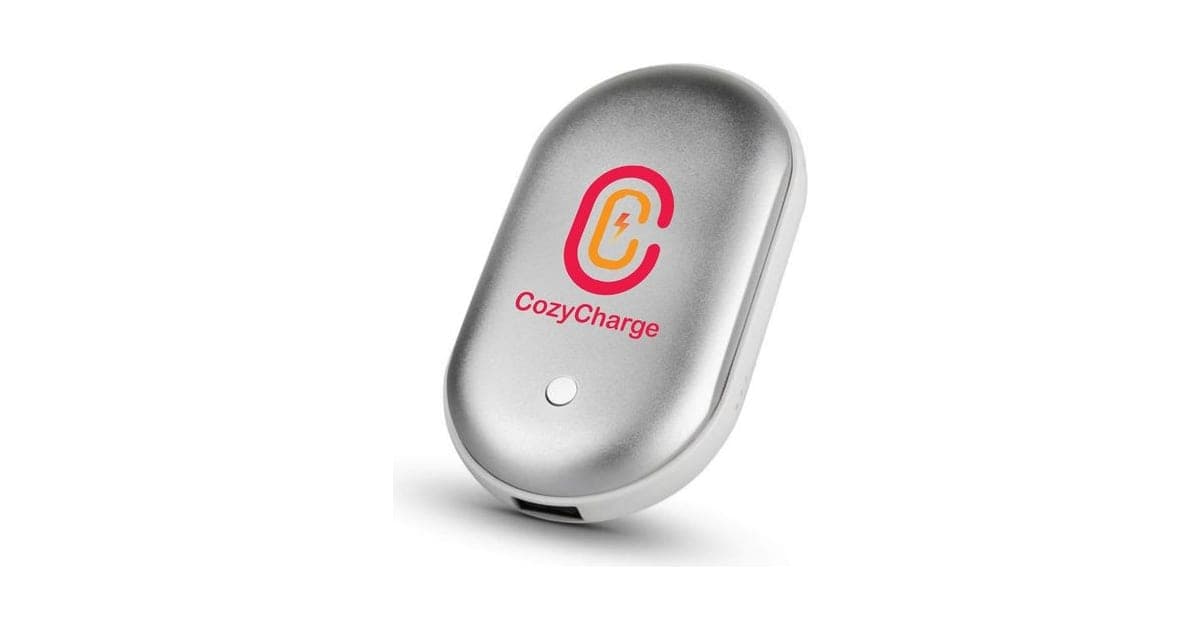
The CozyCharge is a smooth, silver, egg-shaped device with a red "C" logo, a single round button, indicator lights and USB ports for charging and power bank output. The offer page does not list box contents; expect the warmer and a charging cable.
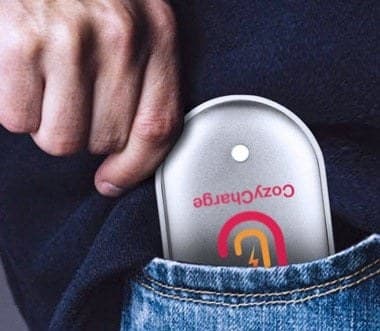
Pocket-sized
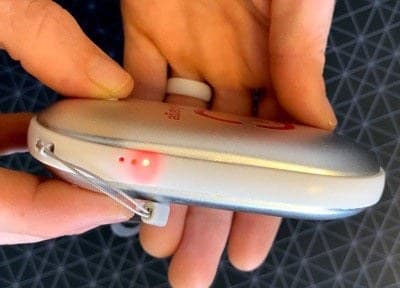
Indicator lights for the heat setting
Specifications
| Spec | CozyCharge (offer page) |
|---|---|
| Heat settings | 3 |
| Maximum temperature | 140°F (60°C) |
| Heat-up time | About 15 seconds |
| Heat per charge | Up to 8 hours |
| Power bank | Yes; charges most smartphones about once |
| Controls | One button with indicator lights |
| Safety | Over-temperature protection |
| Battery capacity, charging time, weight, charging port type | Not stated on the offer page |
A 2023 sponsored article describes CozyCharge as having a 6,000 mAh battery and up to 20 hours of warmth. We could not confirm either figure from the offer page, which says 8 hours. The difference may reflect different settings, a different product version or optimistic marketing.
CozyCharge price and bundles
On 3 October 2026 the offer page our link opens showed:
| Package | Total | Per warmer | Shipping |
|---|---|---|---|
| 1 CozyCharge | $34.95 | $34.95 | Not stated as free |
| Buy 2, get 1 free (3) | $89.90 | $29.97 | Free |
| Buy 3, get 2 free (5) | $134.85 | $26.97 | Free |
The page says the company is based in Haxtun, Colorado, and designed in America.
Is $35 good value?
Rechargeable hand warmers from many brands sell for roughly $20 to $40, so CozyCharge is in the normal range. Against disposables, which often cost around $1 or more per pair of heat packs, a rechargeable warmer pays for itself after a few dozen uses. If you use warmers every week in winter, that happens within a season.
Cost over a winter
Suppose you use hand warmers three times a week for four months: around 50 uses. With disposables at around $1 or more per pair of packs, that is $50 or more a season, every season. A $35 rechargeable warmer covers that and more, with electricity costs of pennies per charge. Over two or three winters, the saving is substantial, alongside dozens of empty pouches kept out of the bin.
Who makes it
The offer page names Haxtun, Colorado, as the company's base. We could not find a standalone brand store, and search results show similar-looking rechargeable warmers sold under many names on marketplaces. That is common in this category: many brands sell variations of the same basic design.
What to look for in any rechargeable hand warmer
- Battery capacity in mAh: a stated figure, usually 5,000 to 10,000 mAh, helps you compare run time and power bank use.
- Charging port: USB-C is easier than older micro-USB, since most phones now use it.
- Settings and maximum temperature: at least two or three settings, with a low setting suitable for direct contact.
- Split designs: some warmers split into two magnetic halves, one for each hand or pocket.
- Safety certifications and auto shut-off: look for stated safety marks and overheating protection.
- Size and weight: heavier warmers usually have bigger batteries but are bulkier in a pocket.
The CozyCharge offer page covers settings, maximum temperature and over-temperature protection, but not battery capacity, port type or weight.
Signs of frostbite and hypothermia
A hand warmer helps comfort, but cold injuries need proper attention.
- Frostnip and frostbite: numbness, white or grey-yellow skin, and skin that feels hard or waxy. Warm gently with body heat or lukewarm water, not a hot device, and seek medical help for anything beyond mild frostnip.
- Hypothermia: shivering, confusion, slurred speech and drowsiness. Get the person somewhere warm and call for emergency help.
Do not use a hot hand warmer to rewarm frostbitten skin, which cannot feel heat properly and burns easily.

CozyChargeScore 5.9/10
Best for: People who regularly use disposable hand warmers at sports, hunting, fishing or outdoor work
$34.95 at CozyCharge · Price checked October 3, 2026
Check price at CozyCharge (opens CozyCharge in a new tab)We may earn a commission if you buy through our links.
How well does CozyCharge keep you warm?
CozyCharge heats in about 15 seconds and, at its 140°F maximum, is hot to hold, roughly like a cup of tea you would let cool before drinking. Most people will find the low or middle setting comfortable in the hand, with high best inside a pocket or glove. The quoted 8 hours is almost certainly on the lowest setting, and cold weather and phone charging shorten it.
Heat output and settings
At its highest setting of 140°F, CozyCharge is hot to hold, roughly the temperature of a hot cup of tea you would wait to cool before drinking. Most people will find the middle or low setting comfortable for direct holding, and the high setting useful inside a pocket or glove, or briefly to thaw very cold hands.
When your hands are very cold, heat feels less intense at first, and it is easy to choose the highest setting and hold on tight. As your hands warm, the same setting can become too hot. Turning down once your hands have warmed up is the habit that prevents most problems.
Battery life in practice
The quoted 8 hours is a maximum, almost certainly on the lowest setting. On the highest setting, expect considerably less. Cold weather also reduces lithium battery performance, so a warmer kept in an outside pocket in freezing temperatures may run down faster than indoors. Using it to charge a phone takes from the same battery.
As a rough guide for any battery warmer, expect the quoted maximum time on the lowest setting, roughly half on the middle setting and less again on the highest. Recharging typically takes a few hours, so plan to charge it the night before a cold day.
Warming your hands vs warming you
A hand warmer warms your hands and, kept in an inside pocket, a little of your torso. It does not keep your whole body warm. Good layers, a hat, insulated gloves and warm, dry socks matter far more in real cold.
That is also why warmers work best in pockets near the body: they warm your hands when you put them in, and add a little warmth to your core, which helps the body keep blood flowing to the fingers.
The power bank
The page says the power bank can fully charge most smartphones about once. That is handy in an emergency, but it means no heat afterwards. If you rely on both, carry a separate power bank or charge the warmer fully before you go.
Phone batteries also drain faster in the cold, which is exactly when a warmer's power bank is handy. Keeping your phone in an inside pocket, close to the warmer, helps both.
Cold weather and lithium batteries
Lithium batteries deliver less power in the cold and may charge poorly below freezing. Keeping a warmer in an inside pocket, close to your body, helps it last. Do not charge it while it is very cold; let it warm to room temperature first.
How it compares with a disposable in the hand
Disposable air-activated warmers produce a softer, steadier heat and are flexible, so they mould to your hand or slip into a glove. A rigid battery warmer heats faster and can be turned up or down, but feels more like holding a small stone. Which you prefer is partly personal.
Are CozyCharge's claims true?
Some of CozyCharge's claims are fair: it heats quickly, is reusable and chemical-free, and warmth can ease stiffness. Others go too far. "Will never burn" is not something any 140°F device can promise, because prolonged skin contact can cause low-temperature burns. Pitching it for Raynaud's and poor circulation is risky, since those people may not feel heat properly. Battery figures also differ between sources.
"Safe for all: will never burn or damage clothing or skin"
This is the claim we disagree with most. Over-temperature protection stops the device getting hotter than designed if something goes wrong. It does not prevent low-temperature burns, which happen when skin stays in contact with something warmer than the body, such as 113°F to 140°F, for a long time. Safety guidance for heated products generally advises not using them directly against skin for long periods or while sleeping. At 140°F, burns can develop with prolonged contact, especially if the skin is pressed against the device.
"Ideal for poor circulation and Raynaud's disease"
Warming cold hands is comforting during a Raynaud's attack, and many people with the condition use hand warmers. But people with poor circulation, neuropathy or diabetes may not feel heat properly, and damaged or poorly perfused skin burns more easily. These are the people who need the most caution, not a blanket "safe for all".
"Soothes aching joints" and "improves circulation"
Warmth can ease stiffness and aches temporarily, which is why heat packs are popular for joint pain. Holding a hand warmer will increase blood flow to the warmed skin. Neither is a treatment for arthritis or circulation disorders.
"15 seconds to 140°F"
Small battery warmers do heat up quickly. Reaching the maximum temperature across the whole surface in 15 seconds is optimistic, but you will feel warmth almost immediately.
"Disposable hand warmers are dangerous"
The page calls disposables "dangerous" and says they "barely work". Disposable iron-oxidation warmers are widely used and work well; they carry similar burn warnings about skin contact and sleep. They are not more dangerous than a rechargeable warmer used the same way.
"Chemical-free"
The comparison table calls CozyCharge chemical-free, in contrast to disposables. Disposable warmers contain iron powder, salt, carbon and other simple ingredients sealed in a pouch; a rechargeable warmer contains a lithium battery, which has its own chemistry and disposal rules. Neither is "chemical-free". The real advantage of a rechargeable warmer is less waste, not fewer chemicals.
"Reusable for years"
A rechargeable warmer can last several winters, but lithium batteries gradually lose capacity with use. Expect shorter run times after a few hundred charges.
Claims scorecard
| Claim | What we found | Our view |
|---|---|---|
| Rechargeable, reusable warmth | True of the design | Supported |
| Three settings up to 140°F | Stated | Plausible |
| Up to 8 hours per charge | Likely on low; less on high | Plausible as a maximum |
| Built-in power bank | Stated feature | Supported |
| Will never burn skin | Low-temperature burns possible with long contact | Misleading |
| Ideal for Raynaud's and poor circulation | Comfort, but higher burn risk in these groups | Overstated |
| Disposables are dangerous | Similar warnings apply to both | Misleading |
Is CozyCharge better than disposable hand warmers or heated gloves?
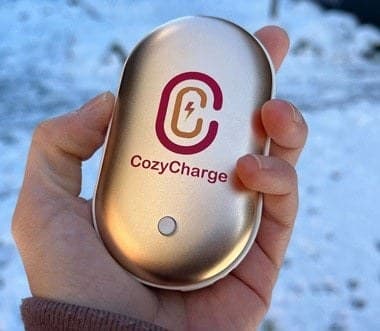
Over a winter of regular use, a rechargeable warmer like CozyCharge is cheaper than disposables and creates far less waste, and you can adjust the heat. Disposables are light and fit inside gloves and boots where a hard device will not, so many outdoor regulars carry both. Heated gloves warm the whole hand, including fingers, and usually work better for skiing, cycling or long outdoor shifts.
| Option | Typical cost | Reusable | Heat time | Best for |
|---|---|---|---|---|
| CozyCharge | $27 to $35 | Yes | Up to 8 h (stated) | Regular outdoor use, phone top-ups |
| Other rechargeable hand warmers | $20 to $40 | Yes | Varies | Same idea; compare battery and settings |
| Disposable air-activated warmers | About $1+ per pair of packs | No | Often 6 to 10 h | Tucking into gloves and boots, light weight |
| Heated gloves | $50 to $200+ | Yes | Varies | Long days in extreme cold, cycling |
| Insulated gloves and mittens | $20 to $80 | Yes | All day | Everyone; mittens are warmer than gloves |
| Reusable gel click warmers | Low | Yes, by boiling | 30 to 60 min | Short bursts of warmth |
CozyCharge vs disposable hand warmers
Disposables are cheap per use, light, and fit inside gloves, mittens and boots where a hard device will not. Over a winter of regular use, a rechargeable warmer is cheaper and creates far less waste. Many outdoor regulars carry both.
CozyCharge vs heated gloves
Heated gloves warm the whole hand, including fingers, which hand warmers held in a palm or pocket do not. They cost more and need charging. For skiing, cycling or long outdoor shifts, gloves usually work better.
Heated gloves can also be bulky and need their own batteries, so many people use them only for the coldest days and rely on a pocket warmer the rest of the time.
CozyCharge vs other rechargeable warmers
Many brands sell near-identical designs. Compare battery capacity in mAh, number of heat settings, maximum temperature, charging port (USB-C is more convenient), whether the shell is split into two magnetic halves to share between hands, and the return policy.
CozyCharge vs a hot water bottle
At home, a hot water bottle in a cover is cheap and comforting for cold hands and feet, especially in the evening. It cannot go outdoors or in a pocket. For indoor use, it is often enough.
CozyCharge vs a power bank alone
If you mainly want to charge your phone, a dedicated power bank of the same size will usually hold more charge and have faster, multiple ports. CozyCharge's appeal is the combination; it is a modest power bank and a decent hand warmer in one.
CozyCharge vs a heated jacket or vest
Battery-heated jackets and vests warm the core, which helps keep hands and feet warmer too, since the body sends more blood to extremities when the core is warm. They cost much more but suit people who spend long periods outside.
If you have decided a rechargeable hand warmer suits you, the CozyCharge order page (opens CozyCharge in a new tab) lists the single and multi-pack offers. Our tech and gadgets hub covers more devices, including the CordBrick cord holder, the Clickfree backup drive and the Anything Speaker. If you mainly need to charge a phone on the go, see our Rush Charge Universe power bank review. If you also go through AA batteries, our Zithion-X review covers lithium AAs that charge by USB-C.
CozyChargeScore 5.9/10
Why people buy it: Reusable, so it replaces boxes of single-use chemical warmers
$34.95 at CozyCharge · Price checked October 3, 2026
Check price at CozyCharge (opens CozyCharge in a new tab)We may earn a commission if you buy through our links.
Is CozyCharge safe, and what should you check before buying?
CozyCharge is a practical warmer, but low-temperature burns are the main risk. Keep it in a pocket or glove rather than gripping it against bare skin for long periods, start on the lowest setting, never sleep with it, and do not leave it against a child's or older person's skin. People with diabetes, neuropathy or Raynaud's should take extra care, and it must fly in carry-on luggage.
Burn safety
What to do: keep it in a pocket or glove rather than gripping it against bare skin for long periods; start on the lowest setting; move it around; check your skin; and never sleep with it or leave it against a child's or older person's skin unattended.
Low-temperature burns can look mild at first, as redness or mottled skin, and blister later. If you notice persistent redness, blistering or skin that stays painful after using a warmer, stop using it on that area and treat it as a burn; see a doctor for blisters larger than a coin or any burn on someone with diabetes.
Reduced sensation
People with diabetes, neuropathy, Raynaud's or poor circulation may not feel when something is too hot.
What to do: use the lowest setting, always with a barrier, for short periods, and ask your doctor if heat is suitable for you.
Children
Children may not report discomfort or may fall asleep holding it.
What to do: supervise use, use low settings, and keep it out of reach of young children.
Older adults
Older skin is thinner and may sense heat less accurately, raising burn risk.
What to do: use low settings and a glove or pocket, and check skin after use, especially for anyone with diabetes or circulation problems.
Flying and lithium batteries
It contains a lithium battery and works as a power bank.
What to do: pack it in your carry-on, not checked luggage, keep it switched off, and check your airline's rules for power banks.
Some airlines limit the number or capacity of power banks per passenger, and may not allow them to be used on board. Because the CozyCharge offer page does not state its capacity, be ready to show the device if asked.
Battery care in the cold
What to do: charge it fully before going out, keep it in an inside pocket when not in use, and expect shorter run times in freezing weather.
Disposal
Lithium batteries should not go in household rubbish.
What to do: when it reaches the end of its life, take it to a battery or electronics recycling point.
Damage and swelling
Like any lithium battery device, a damaged or swollen warmer can be a fire risk.
What to do: stop using it if it is dropped and cracked, swells, smells, or gets much hotter than usual, and do not charge it unattended overnight on a bed or sofa.
Use the cable supplied or a reputable USB charger, and charge it on a hard, non-flammable surface.
Returns
The offer page promises a 30-day money-back guarantee with hassle-free returns.
What to do: charge and test all three settings and the power bank in the first week, and keep the packaging.
How to buy CozyCharge the smart way
- Decide whether you need one for yourself or several for family or a group, then open the CozyCharge offer page (opens CozyCharge in a new tab).
- Buy one unless others will use them; the three-pack brings the price to about $30 each.
- Check the single-unit shipping cost at checkout.
- Decline add-ons you did not plan to buy.
- Save your order confirmation; the 30-day guarantee starts from your order.
- Charge it fully and test it at home before relying on it outdoors.
What do owners say, and how did we score CozyCharge?
CozyCharge scores 5.9 out of 10: claim accuracy 0.9, build durability 1.2, price competitiveness 1.3, usability 1.5 and owner satisfaction 1.0, each out of 2. The offer page's testimonials describe quick heating, gifts for partners, help with cold, numb hands and warm morning walks. We found no Trustpilot profile or independent rating, only sponsored articles and listings for similar warmers.
The testimonials on the page
The offer page's testimonials describe a warmer that heats quickly and gets really hot, a buyer who bought a second for his wife, a user with cold and numb hands who saw a big improvement, someone who takes it on freezing morning walks in a coat pocket, and a buyer who got them for a husband who hunts and fishes, to replace wasteful disposables.
Independent ratings
We found no Trustpilot profile or other independent rating for the brand. Pages ranking for CozyCharge reviews are mostly sponsored articles on local news sites and marketplace listings for similar warmers.
What we would expect owners to report
From the category, we would expect most owners to like the convenience and adjustable heat, and some to find battery life shorter on high than hoped, or the device bulkier than a disposable inside gloves.
Reading hand warmer reviews
Reviews of rechargeable warmers vary a lot with climate and use. Someone using one on a mild autumn walk will report long battery life; someone in sub-zero wind on a high setting will report much less. Look for reviews that mention the setting, temperature and how long it lasted.
The testimonials in context
The page's testimonials fit typical uses: cold hands on walks, a hunting husband replacing disposables, and someone with numbness who felt much better. The last is a reminder that people with numbness are exactly the group who should be most careful with heat, even when it helps.
What we would test with a CozyCharge in hand
If we test it ourselves, we will measure surface temperature on each setting, time how long it lasts on each, test it outdoors below freezing, measure how much charge it gives a phone, and check how hot it feels held against bare skin over time. We will update this review with the results.
How we scored CozyCharge
Every score on the site follows the five criteria on our how we test page.
| Criterion | Score | Why |
|---|---|---|
| Claim accuracy | 0.9 / 2 | Core features plausible; "never burns", circulation and disposable claims misleading |
| Build durability | 1.2 / 2 | Typical rechargeable warmer design; battery lifespan unknown |
| Price competitiveness | 1.3 / 2 | In line with similar rechargeable warmers; cheaper than disposables over time |
| Usability | 1.5 / 2 | One button, three settings, power bank |
| Owner satisfaction | 1.0 / 2 | Seller testimonials only; no independent rating found |
| Total | 5.9 / 10 |
The score would rise with clear battery specifications, accurate burn warnings and an independent owner record.
What we did, and did not, do
Nobody on our team has used CozyCharge, and this review does not claim otherwise. We read the offer page our link opens, a sponsored article and retail listings summarised in search results, and general guidance on low-temperature burns, all on 3 October 2026.
How to use CozyCharge for the best results
Charge CozyCharge fully before first use, then press the button to switch it on and again to change the setting, using the indicator lights to check the level. Start on the lowest setting and turn it back down once your hands warm. Keep it in a coat pocket or glove rather than against bare skin, and pre-warm it 10 minutes before heading out.
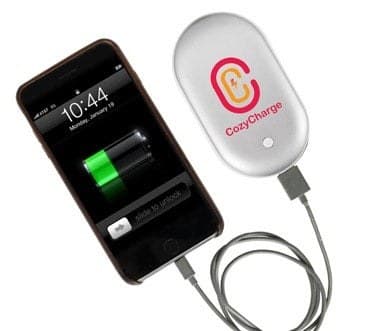
Charging a phone from the built-in power bank
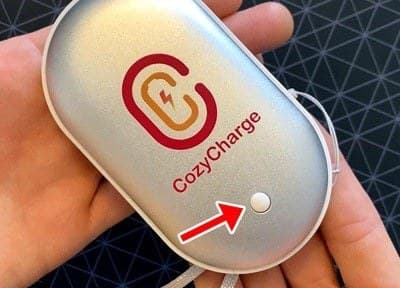
The single button
- Charge it fully before first use.
- Press the button to switch it on and press again to change the heat setting, watching the indicator lights to see which level you are on.
- Start on the lowest setting and increase only if needed, then turn it back down once your hands warm.
- Keep it in a coat pocket, glove or mitten, or hold it through a thin layer, rather than gripping it against bare skin for long periods.
- Move it between hands and pockets, and check your skin now and then.
- Switch it off when you do not need it, to save battery for later in the day.
- Recharge after each outing so it is ready next time, and store it partly charged in summer.
Getting the most battery life
Use the lowest setting that keeps you comfortable, switch off between uses, keep it inside your coat rather than an outer pocket, and avoid using the power bank unless you need to.
Pre-warming is efficient too: switch it on 10 minutes before you head out, put it in your pocket, then turn it down once your hands are warm. Short bursts on high followed by low use the battery better than high all the time.
Dressing for the cold
A hand warmer is a top-up, not a substitute for good clothing. The basics:
- Layers: a base layer that wicks sweat, an insulating middle layer and a windproof outer layer.
- Head and neck: a hat and scarf or neck gaiter, since a lot of heat is lost there.
- Hands: mittens or insulated gloves, with a thin liner glove for dexterity.
- Feet: warm, dry socks and insulated, waterproof boots; wet feet get cold fast.
- Core warmth: a warm core helps keep hands and feet warm.
With these in place, a warmer in a pocket makes a cold day comfortable rather than miserable.
At sporting events and outdoor work
Pre-warm your gloves by putting the warmer inside them before you set off, then keep it in a pocket and hold it during breaks. Pair it with good gloves or mittens, which do most of the work.
Hunting and fishing
Hunters and anglers often sit still for long periods, when hands and feet get coldest. Keep the warmer in an inside pocket and bring hands to it, rather than holding it constantly. Its single button and quiet operation suit hides and boats. Carry spare disposables for long days, in case the battery runs low.
Camping and hiking
On cold camping trips, a warmer can take the chill off hands at camp. Do not take it into your sleeping bag while you sleep; instead, warm the bag with it beforehand, switch it off and remove it. Keep it inside your jacket during the day so the battery stays warm.
On longer trips without charging, bring disposable warmers as backup, and keep the rechargeable one for evenings at camp when you can top it up from a solar panel or larger power bank.
Using it as a power bank
Plug your phone's cable into the warmer's output port. Charge the phone only as much as you need, so the warmer has battery left for heat.
You need your own phone cable; the offer page does not say one is included for the power bank. Keep a short cable in the same pocket as the warmer.
For aching joints
Heat can ease stiffness. Hold it over a sore joint through clothing on a low setting for a short time, and stop if the skin becomes red or uncomfortable. Persistent joint pain needs medical advice.
For winter commuting
Keep it in a coat pocket on the way to the bus or train, and hold it while you wait. Switch it off on the bus to save battery for the way home, and charge it at work if you can.
On icy pavements, keep your hands free for balance rather than holding the warmer as you walk; warm them in your pockets instead.
For cold offices
Many people work in offices kept cooler than they like, or at home trying to save on heating. A warmer on a low setting in your lap or held between tasks can make typing more comfortable. Fingerless gloves help too.
Cleaning and storage
Wipe it with a dry or slightly damp cloth. Keep it away from water. In summer, store it with some charge, and top it up every few months to keep the battery healthy.
Avoid leaving it in a hot car in summer, which is hard on lithium batteries, and avoid storing it fully empty for months, which can stop it charging again.
Sharing it
The smooth shell is easy to pass between people at a match or on a walk. Wipe it occasionally, especially in cold and flu season.
CozyChargeScore 5.9/10
Before you buy: Check the final price, shipping and return terms at checkout.
$34.95 at CozyCharge · Price checked October 3, 2026
Check price at CozyCharge (opens CozyCharge in a new tab)We may earn a commission if you buy through our links.
What else do people ask about rechargeable hand warmers?
Most questions are about value, battery life and safety. Rechargeable hand warmers are worth it for regular users, saving money over disposables and letting you adjust the heat. Lithium batteries typically keep most of their capacity for a few hundred charges, often several winters. Both rechargeable and disposable warmers can cause low-temperature burns with prolonged skin contact, especially during sleep.
Are rechargeable hand warmers worth it?
For people who use hand warmers regularly, yes: they save money over disposables, reduce waste and let you adjust the heat. For occasional use, disposables may be more convenient.
How long do rechargeable hand warmer batteries last?
Lithium batteries typically keep most of their capacity for a few hundred charge cycles, often several winters of use, before run time noticeably drops.
Can a hand warmer burn you?
Yes. Both rechargeable and disposable warmers can cause low-temperature burns with prolonged skin contact, especially when pressed against the skin, used while sleeping, or used by people with reduced sensation.
What temperature should a hand warmer be?
Many guides suggest around 100°F to 115°F is comfortable for direct contact. Higher settings are best kept in pockets or gloves.
Do hand warmers help Raynaud's?
Warming the hands can help during attacks and is a common self-care tip. Use gentle heat and a barrier, since affected skin may not sense heat well, and follow medical advice.
Can I use a hand warmer inside a glove?
Disposable warmers are designed for that. A rigid rechargeable warmer can fit inside a mitten or a glove with a warmer pocket, on a low setting.
Why do my hands get so cold?
In cold weather, the body narrows blood vessels in the hands and feet to keep the core warm, so fingers cool quickly. Some people, including those with Raynaud's, have a stronger response. Keeping the core warm with good layers, wearing mittens rather than gloves, and staying dry all help.
Are mittens warmer than gloves?
Usually, yes. Fingers together in a mitten share warmth and lose less heat than separated in gloves. Many people pair a mitten with a hand warmer inside for maximum warmth.
Do rechargeable hand warmers work in extreme cold?
They work, but batteries deliver less in deep cold, and a single warmer cannot keep hands warm in extreme conditions on its own. For very low temperatures, combine good mittens, heated gloves or multiple warmers, and keep devices inside clothing.
Can I use a rechargeable hand warmer while it is charging?
Some models allow it; the offer page does not say. Charging while heating makes the device and battery work harder and warmer, so it is safer to charge it first and use it unplugged.
How hot is 140°F?
About 60°C: roughly the temperature of a hot drink you would let cool before sipping, or very hot tap water. Comfortable to touch briefly, too hot to hold against bare skin for long.
Can children use rechargeable hand warmers?
With supervision and on a low setting, often yes. Children may not notice or report that something is too hot, so check their skin and keep sessions short.
Frequently asked questions
How long does CozyCharge stay warm?
The offer page says up to 8 hours of heat on a single charge. Battery life depends on the setting: the highest heat drains it fastest. Using it as a power bank also reduces heating time. A 2023 sponsored article listed up to 20 hours and a 6,000 mAh battery, which we could not confirm.
How hot does CozyCharge get?
The page says it reaches up to 140°F (60°C) in about 15 seconds, with three settings. That is hot enough to cause low-temperature burns with long contact against bare skin, so use lower settings for direct contact and keep it in a pocket or glove.
How much does CozyCharge cost?
On 3 October 2026 the offer page showed $34.95 for one, $89.90 for three and $134.85 for five, with free shipping on the multi-packs and a 30-day money-back guarantee. Rechargeable warmers save money over disposables if you use them regularly.
Can CozyCharge charge my phone?
Yes. The page says the built-in power bank can fully charge most smartphones about once. That uses the same battery as the heater, so charging a phone shortens warming time. Charge it fully before heading out if you plan to use both features.
Is CozyCharge safe?
The page says it has over-temperature protection and will never burn skin or clothing. Overheating protection guards against faults; it does not stop a low-temperature burn from a working device held against skin for a long time. Use it in a pocket or glove, start on low, and never sleep with it.
Is CozyCharge good for Raynaud's?
Warming the hands can help during Raynaud's attacks, and many people with the condition use hand warmers. People with Raynaud's or poor circulation may also be less able to feel when something is too hot. Use low heat, a barrier such as a glove, and check skin often, and follow your doctor's advice.
Can I take CozyCharge on a plane?
It contains a lithium battery and works as a power bank. US and international rules generally require power banks and devices with lithium batteries to go in carry-on bags, not checked luggage. Keep it switched off in flight.
Is a rechargeable hand warmer better than disposable ones?
Over a season, usually yes: it costs less than buying disposables regularly, creates less waste and lets you adjust the heat. Disposables are lighter, need no charging and can be tucked into gloves and boots. Many outdoor regulars carry both.
We may earn a commission if you buy through our links.
Prices accurate as of October 3, 2026. Check the seller's checkout for current pricing, promotions and terms.
What we checked: No hands-on use. Claims, specifications shown (three settings, 140°F, 15 seconds, 8 hours, power bank, over-temperature protection), bundles (shown after scrolling), testimonials, company location and product images from the CozyCharge offer page our link opens (getcozycharge.io) on 2026-10-03. A 2023 sponsored article and retail listings summarised in search results, and general guidance on low-temperature burns, were read the same day. We found no brand store or independent owner rating.

About the author
Ryan Mitchell, Consumer Technology Writer
Ryan Mitchell covers new and innovative gadgets for Top10Gadgets: AI devices, wearables, smart accessories, digital services and the beauty tech sold through viral adverts. Ryan likes to find a gadget before it goes main…
- New and innovative gadgets
- AI devices and wearables
- Smart accessories
- Beauty tech
- App and subscription terms
Writing for Top10Gadgets since 2026Full profile