Health Gadgets / Choking rescue devices
LifeVac Review: How the Anti-Choking Suction Device Works, What the FDA and First-Aid Bodies Say, and What It Costs
A plunger-style suction device for choking emergencies. The FDA authorized it in March 2026 as a second-line device after standard first aid fails, but major resuscitation councils still do not recommend suction devices.

By James Wilson, Consumer Tech Writer at Top10Gadgets
Updated 29 min readHow we test
Quick answer
Yes, as a backup, if you are trained in choking first aid and want something to try if back blows and abdominal thrusts fail. LifeVac is a simple suction device that in March 2026 became the first anti-choking device the FDA authorized, as a second-line tool for ages one and over, and many rescue stories exist.
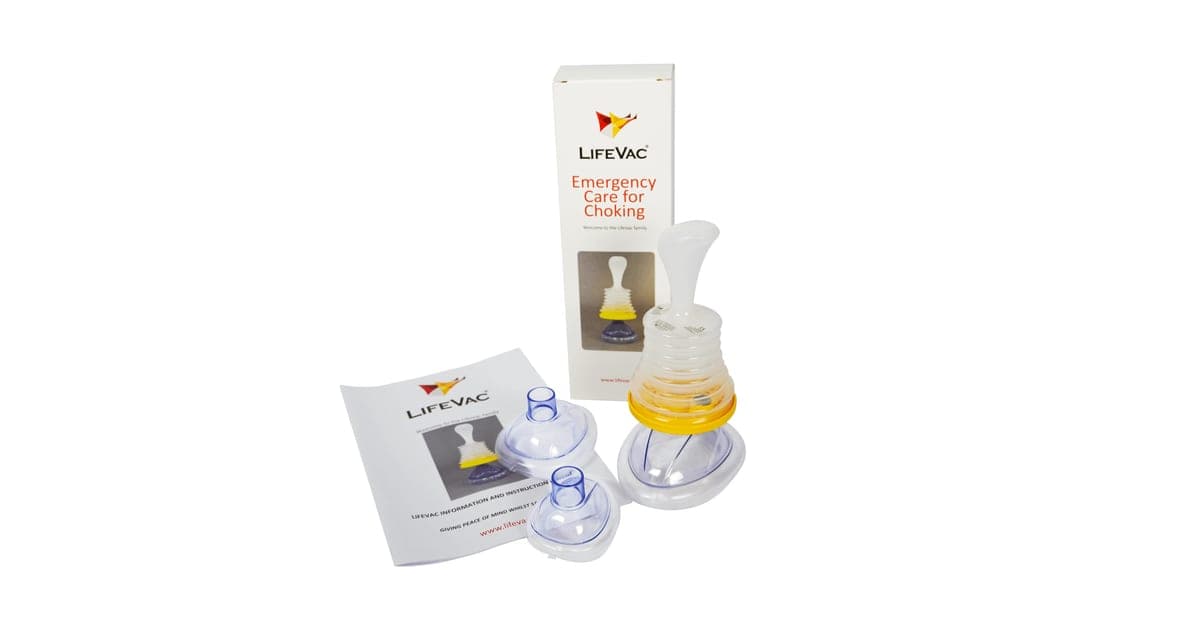
Score 5.4/10EUR 69.95 at LifeVac Europe
Check price at LifeVac Europe (opens LifeVac Europe in a new tab)We may earn a commission if you buy through our links.
- Best for
- Families, carers and care homes who are trained in choking first aid and want a backup if it fails
- Not for
- Anyone who would reach for it instead of calling emergency services and starting first aid
EUR 69.95 at LifeVac Europe
Check price at LifeVac Europe (opens LifeVac Europe in a new tab)We may earn a commission if you buy through our links.
On this page · 14 sections
- 01Our verdict
- 02The short version
- 03Pros & cons
- 04How it works
- 05Who it's for
- 06How much does LifeVac cost, and what's in the kit?
- 07Does LifeVac work, and what does the evidence say?
- 08Are LifeVac's claims true?
- 09Is LifeVac better than back blows and abdominal thrusts?
- 10Is LifeVac legit, and what should you check before buying?
- 11What do owners say, and how did we score LifeVac?
- 12How to use LifeVac for the best results
- 13What else do people ask about anti-choking devices?
- 14Frequently asked questions
Our verdict
Yes, as a backup, if you are trained in choking first aid and want something to try if back blows and abdominal thrusts fail. LifeVac is a simple suction device that in March 2026 became the first anti-choking device the FDA authorized, as a second-line tool for ages one and over, and many rescue stories exist. But resuscitation councils still do not recommend suction devices, the EU page overstates its evidence and use on babies, and €69.95 is a lot. LifeVac scores 5.4 out of 10, held back by claims and guidelines.
The short version
- A plunger-style suction device with face masks for choking emergencies.
- One-way valve: pushing does not force air in; pulling creates suction.
- FDA De Novo authorization in March 2026, as a second-line device for people aged one and over.
- The FDA had previously warned the company for marketing before authorization.
- AHA, ERC and the international resuscitation committee do not recommend suction devices.
- Home kit: device, adult, child and paediatric masks, and a guide.
- €69.95 on the EU offer page on 4 October 2026; multi-packs from €129.90.
- Free replacement after use in an emergency; no expiry date, according to the brand.
- Best trait: a simple backup when standard first aid fails.
- Biggest drawback: claims and child guidance that go beyond the authorization.
- Our score: 5.4 out of 10.
Pros & cons
LifeVac is a real device with a distinctive regulatory history. It sits in a contested space, so the cons are about evidence, guidance and marketing.
What we like
- In March 2026 the FDA granted LifeVac De Novo authorization as a second-line anti-choking device, the first such authorization
- Simple place, push, pull design with a one-way valve intended not to push objects deeper
- Home kit includes adult and child masks plus a paediatric mask; no expiry date, according to the brand
- Free replacement after a reported rescue
- Many published rescue stories, which the brand collects in its Hall of Saves
What we don't
- The FDA authorization is for use after standard choking first aid fails, and for people aged one and over; the EU page talks about babies as young as three weeks
- The American Heart Association, European Resuscitation Council and international resuscitation committee do not recommend suction devices, citing unproven effectiveness
- "Medically proven to be the safest, most effective" overstates the evidence
- The FDA has received reports of failed suction, facial bruising and throat scratches with anti-choking devices
- Priced at €69.95 for one kit on the EU page, and Trustpilot shows 2.5 from 96 reviews for the EU site, with delivery complaints
Sold by LifeVac Europe
LifeVacEUR 69.95
How it works
When someone chokes on food or an object, the airway is blocked. Standard first aid uses force from outside the body: back blows to jolt the object loose and abdominal thrusts (the Heimlich manoeuvre) to push air up from the lungs. Suction devices take a different approach, pulling the object up from above.
Use standard first aid first
Step 1: For a conscious choking adult or child over one, call emergency services and give back blows and abdominal thrusts as you have been trained. The FDA authorization is for LifeVac only if these steps fail.
Place the mask and push
Step 2: Choose the right mask size, place it firmly over the mouth and nose to make a seal, and push the plunger down. The one-way valve lets air out of the device without forcing air into the person's airway.
Pull to create suction
Step 3: Pull the handle back sharply to create suction that aims to draw the obstruction up. Repeat if needed, and continue to follow emergency dispatcher instructions.
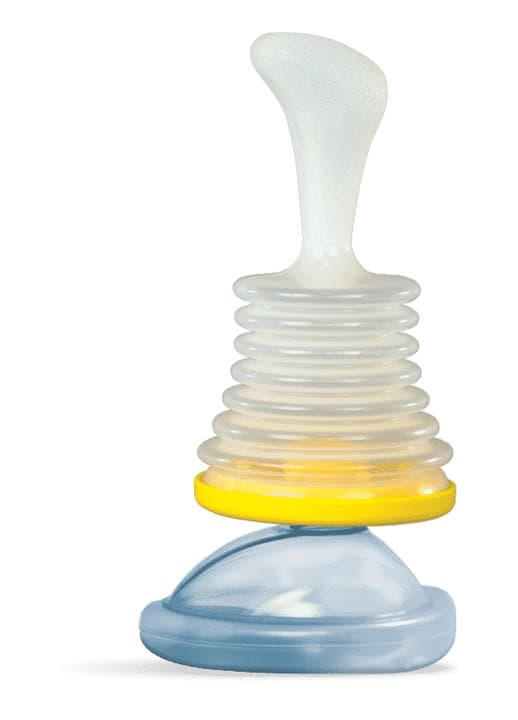
The LifeVac device with a mask fitted
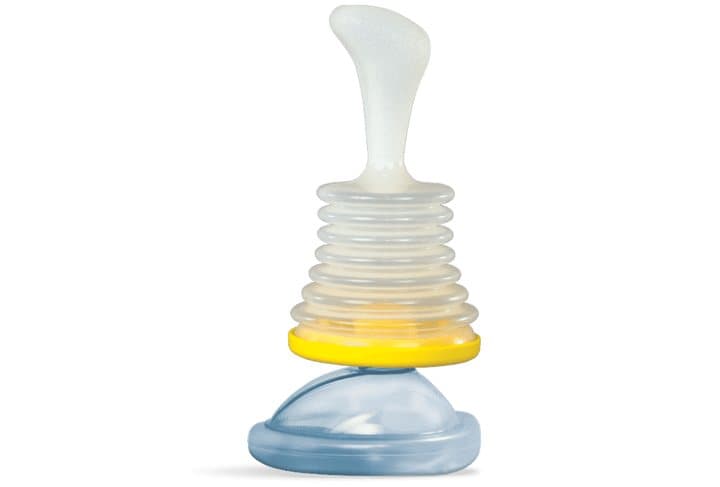
A single LifeVac unit
The one-way valve
The page explains that LifeVac's one-way valve lets air escape from the device when you push down, so it does not push air into the person's airway and drive the object deeper. When you pull up, the valve closes and the bellows create suction through the mask.
The masks
The home kit includes an adult mask, a child mask and a paediatric mask, according to the page. The FAQ says the child mask is for children from 10 kg (22 lb), and that children under 10 kg should use only the paediatric mask.
Replacement after use
The FAQ says LifeVac should be replaced after use in an emergency, for hygiene and because it may have been damaged in a panic, and that the company replaces used units free after a Saved Life Report.
Not a replacement for first aid
The FDA authorization describes LifeVac as a second-line treatment, used only when basic life support choking protocols have not worked. That means calling emergency services and giving back blows and abdominal thrusts first, as trained.
Who is most at risk of choking
Young children and older adults are most at risk. Toddlers put small objects in their mouths and are still learning to chew; round foods such as whole grapes, hot dogs, nuts and hard sweets are common culprits. In older adults, swallowing difficulties (dysphagia) after strokes, with dementia or Parkinson's disease, and poorly fitting dentures raise the risk. Eating quickly, talking while eating and alcohol also play a part.
How to recognise choking
A person who is choking may clutch their throat, be unable to speak, cough weakly or not at all, make high-pitched sounds, and turn blue around the lips. If they can cough forcefully, encourage them to keep coughing, which is often the most effective way to clear a partial blockage. If they cannot cough, speak or breathe, act immediately and call for help.
What a De Novo authorization means
The FDA's De Novo pathway is for new kinds of devices that have no existing equivalent on the market. When a De Novo request is granted, the FDA creates a new device classification with special controls, and future similar devices can then follow it. LifeVac's grant created the category "suction anti-choking device as a second-line treatment". It is a significant regulatory step, but it is based on the FDA's assessment that benefits outweigh risks for that specific use, not on a finding that it is better than first aid.
Who it's for
LifeVac suits households, carers and organisations that already know choking first aid and want an extra option if it fails. It may be particularly relevant where abdominal thrusts are difficult, such as for wheelchair users, people in bed, larger adults or carers of frail older people, always as a backup.
It is not a substitute for first-aid training, and it is not for infants under one under the FDA authorization.
Who should decide
For care settings, the decision to stock a device is best made alongside clinical leads and first-aid trainers, who can fit it into policies and training. For families, a conversation with a GP or paediatrician can help, especially when someone in the household has swallowing difficulties.
Why LifeVac appeals
Choking is frightening and fast, and many people worry they would freeze or that the Heimlich manoeuvre would not work. A device that looks simple, comes with rescue stories and photos of saved children, and is compared to a fire extinguisher, promises reassurance. For carers who have struggled with abdominal thrusts on a frail or larger person, the idea of another option is understandably attractive. The free replacement after use and the brand's Hall of Saves add to that.
A realistic emergency
A family member starts choking at dinner and cannot cough, speak or breathe. Someone calls emergency services. A trained person gives five back blows, then five abdominal thrusts, repeating as taught. If that fails, someone fetches the LifeVac from the kitchen drawer, fits the right mask, places it over the mouth and nose, pushes and pulls. If the person becomes unresponsive, CPR begins. Any device only helps if it is nearby and people know when to use it.
Who gets the most value
Care homes, carers and families with someone at higher choking risk, such as older adults with swallowing difficulties or people with neurological conditions, who are also trained in first aid, get the most value.
Who gets the least
People who would use it instead of first aid, or who would keep it in a cupboard far from where meals happen, get the least.
What it will not do
It will not replace calling emergency services, back blows, abdominal thrusts or CPR. It is not authorized by the FDA for babies under one.
As a gift
LifeVac is often bought as a gift for new parents and grandparents. A first-aid course is the more important gift; a device alongside it can be a sensible extra.
Care homes and carers
Care homes support many residents with swallowing difficulties, and choking incidents are a recognised risk. A backup device may give staff another option, alongside training, texture-modified diets where prescribed, supervision at mealtimes and clear emergency procedures. The testimonial from a care-home worker on the page reflects this setting.
Families with young children
Parents of toddlers often buy anti-choking devices for peace of mind. The FDA authorization covers children aged one and over, so a device may play a role after first aid for toddlers. For babies under one, infant first aid is the response. Cutting food into small pieces, supervising meals and keeping small objects out of reach prevent most incidents.
People with disabilities
For people who use wheelchairs or cannot stand, standard abdominal thrusts can be difficult to perform. First-aid courses teach adapted techniques, and a backup device may also be considered. A carer's training remains the foundation.
- Families, carers and care homes who are trained in choking first aid and want a backup if it fails
- Carers of people for whom abdominal thrusts are difficult, such as wheelchair users or larger adults, as a backup
- Schools, restaurants and workplaces adding a second-line tool alongside first-aid training
Who should skip it
- Anyone who would reach for it instead of calling emergency services and starting first aid
- Parents of babies under one; the FDA authorization is for ages one and over, and infant choking first aid is different
- Anyone who has not learned basic choking first aid; training comes first
- Buyers who think owning it replaces a first-aid course
How much does LifeVac cost, and what's in the kit?
LifeVac costs €69.95 for one home kit on the EU offer page on 4 October 2026, with two for €129.90, three for €179.85 and four for €239.80. The home kit includes the suction device, adult, child and paediatric masks and an instruction guide; a travel bag version holds one device and three masks. The brand says the one-way valve has no expiry date.
The EU page's home kit includes the LifeVac suction device, a paediatric mask, an adult mask, a child mask and an instruction guide. A travel bag version fits one LifeVac and three masks.
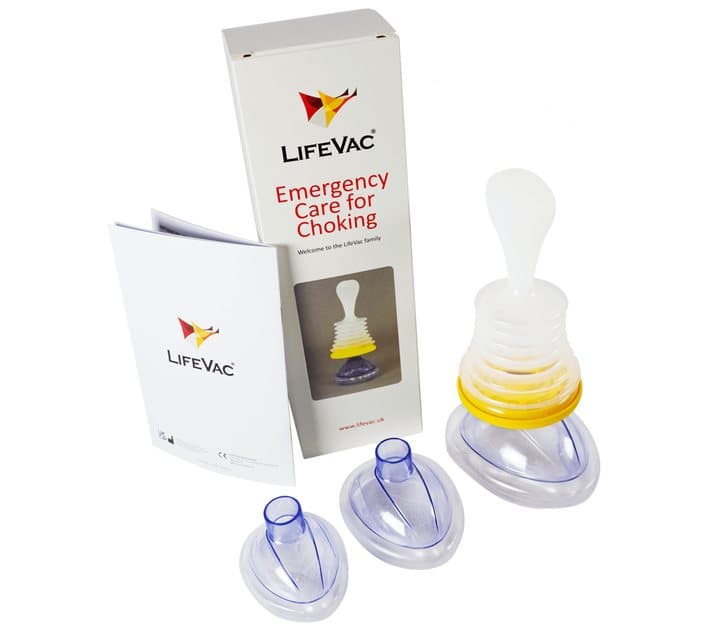
The device with its masks and guide
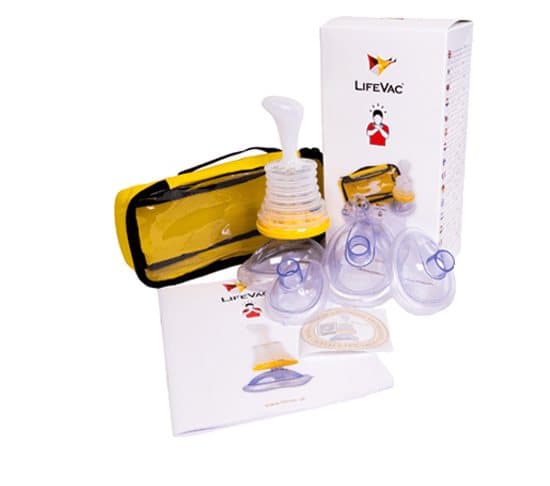
The travel bag version
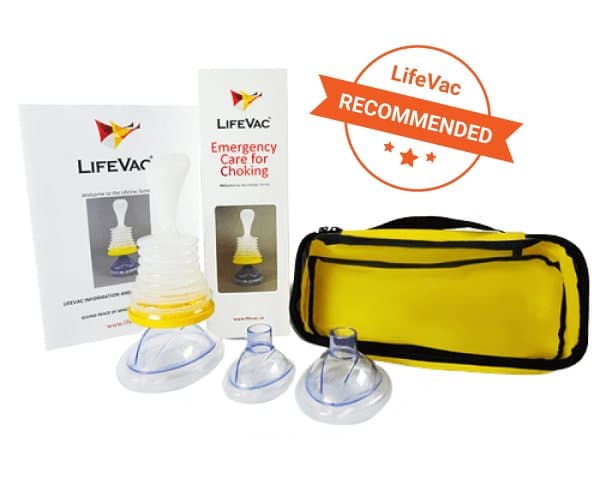
Kit with bag and badge
Specifications
| Item | Detail |
|---|---|
| Type | Manual suction anti-choking device |
| Mechanism | Plunger with one-way valve |
| Masks | Adult, child (10 kg and over) and paediatric, in the home kit |
| Expiry | None, according to the brand |
| Reuse | Replace after use in an emergency; free replacement offered |
| FDA status | De Novo authorization, March 2026, second-line, ages one and over |
| Seller | LifeVac Europe, Ranst, Belgium (per Trustpilot) |
LifeVac price and bundles
On 4 October 2026 the LifeVac offer page (opens LifeVac Europe in a new tab) listed prices in euros:
| Bundle | Price | Per kit | Was |
|---|---|---|---|
| Home kit | €69.95 | €69.95 | €89.95 |
| 2 (1 + 1 at 50% off) | €129.90 | €64.95 | €179.90 |
| Family pack (3) | €179.85 | €59.95 | €269.85 |
| 4 (3 + 1 free) | €239.80 | €59.95 | €359.80 |
The family pack is marked most popular. The page recommends keeping one at home, in the car, at school or at work.
What the bundles are for
Multi-packs make sense for families with grandparents, childminders or several homes, or for keeping one in the car. For most households, one kit kept near the kitchen or dining table is enough.
Is it good value?
For a device you hope never to use, the price is high, and Trustpilot reviewers say so. Compared with the cost of a first-aid course, which teaches skills that work without any device, it is expensive. As an extra for people at higher risk, families may decide it is worth it.
Cost compared with training
Many community organisations, workplaces and charities run first-aid courses, some free or low cost, and online refresher videos from recognised bodies are free. Training costs little, needs no equipment and lasts. A LifeVac kit adds a backup, but the training is where to start.
Who sells it
LifeVac is a US company; the EU offer page is run by LifeVac Europe, which Trustpilot lists in Ranst, Belgium. The page says over 100,000 have been sold in more than 40 countries and lists organisations it says use the device.

LifeVacScore 5.4/10
Best for: Families, carers and care homes who are trained in choking first aid and want a backup if it fails
EUR 69.95 at LifeVac Europe · Price checked October 4, 2026
Check price at LifeVac Europe (opens LifeVac Europe in a new tab)We may earn a commission if you buy through our links.
Does LifeVac work, and what does the evidence say?
LifeVac has real regulatory backing but limited evidence. On 6 March 2026 the FDA granted it De Novo classification as a second-line anti-choking device for ages one and over, for use after standard choking first aid fails. Published studies are mostly small, simulated or observational, and the American Heart Association, European Resuscitation Council and international resuscitation committee still do not recommend suction devices.
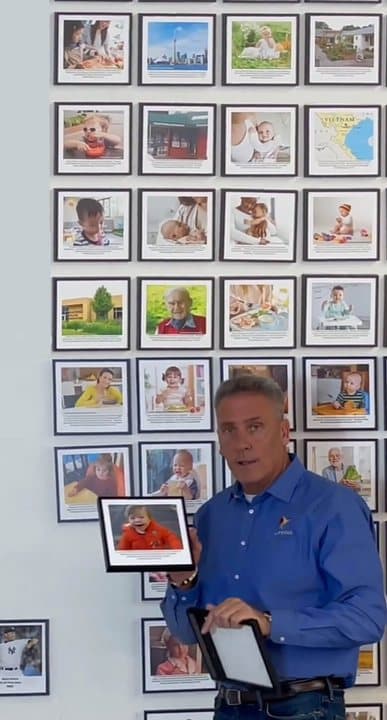
Nobody on our team has used LifeVac, and this section is not first-aid training. It summarises regulators, resuscitation bodies and published reporting as of 4 October 2026.
The FDA's position
In April 2024 the FDA issued a safety communication saying the safety and effectiveness of over-the-counter anti-choking devices had not been established, advising people to follow American Heart Association and American Red Cross protocols first, and noting reports of failed suction, facial bruising and throat scratches. HealthDay's report on the FDA communication summarises it. In September 2025 the FDA sent LifeVac a warning letter for marketing without authorization, according to RAPS's report on the warning letter.
The March 2026 authorization
On 6 March 2026 the FDA granted LifeVac De Novo classification, creating a new device type: a suction anti-choking device as a second-line treatment. It is Class II, for adults and children aged one and over, for use by lay people or professionals aged 18 or over, after basic life support choking protocols fail, according to Medical Device Network's report. That makes LifeVac the only FDA-authorized anti-choking device, and only as a backup.
Resuscitation councils
Published summaries report that the American Heart Association, the European Resuscitation Council and the International Liaison Committee on Resuscitation do not recommend suction-based airway clearance devices, citing a lack of established effectiveness and safety. The American Red Cross has added anti-choking devices as an option when standard methods fail or cannot be given.
Rescue reports
LifeVac reports more than 1,500 lives saved in its Hall of Saves, and many individual stories have been published. These reports are collected by the company and are not controlled studies. In many cases, other first aid may also have been attempted. They show the device can work; they do not show how often it fails or how it compares with standard first aid.
The fire extinguisher comparison
The page compares LifeVac to a fire extinguisher: something you hope never to need. It is a fair comparison in one way, because both are backups that need to be nearby and understood in advance. It is also a reminder that, as with fires, the first steps are raising the alarm and following proven procedures, with equipment playing a supporting role.
Infants
The FDA authorization covers ages one and over. The EU page says LifeVac has been effective on children as young as three weeks old and includes a paediatric mask for children under 10 kg. Infant choking first aid uses back blows and chest thrusts, not abdominal thrusts. Parents should follow infant first-aid training and local guidance.
What the studies look like
Most published research on suction anti-choking devices consists of case reports, case series, manikin or cadaver simulations, and surveys. Such studies can show a device can work and is usable, but they cannot reliably compare outcomes with standard first aid. Randomised trials in real choking emergencies are very difficult to run ethically, which is part of why guideline bodies remain cautious.
Why guidance differs between organisations
Different organisations weigh limited evidence differently. Resuscitation councils focus on interventions with strong evidence for first-line use, so they have not recommended suction devices. The Red Cross has included anti-choking devices as an option when standard methods fail, and the FDA has authorized LifeVac as a second-line device. These positions are consistent on one point: standard first aid comes first.
What owners say about using it
The page's testimonials describe a care-home patient who choked on medication, an ER physician recommending it for parents, and parents whose daughters were saved. Trustpilot reviewers include a parent who used it when a child choked on vomit. Complaints focus on price, non-delivery and slow support; a few question the suction strength.
Reading the testimonials
The testimonials are emotional and specific, as rescue stories tend to be. One, attributed to an ER physician, says standard practices do not work for babies and can damage soft tissue; that view conflicts with mainstream infant first-aid guidance, which recommends back blows and chest thrusts for infants. Treat individual testimonials as stories, not guidance.
Are LifeVac's claims true?
LifeVac's FDA authorization and the many rescue stories are real, but its strongest claims are not supported. "Proven to be the most effective way" to help in a choking emergency and "medically proven to be the safest" device overstate the evidence, because no study shows it beats standard first aid. The FDA authorization is for second-line use from age one, not for infants, despite the EU page's claims.
"Proven to be the most effective way to help a child or adult during a choking emergency"
Not supported. No study shows it is more effective than standard first aid, and resuscitation councils do not recommend it.
"Medically proven to be the safest, most effective and easiest to use airway clearance device in the world"
Overstated. The FDA authorized it as a second-line device; that is not a finding that it is the most effective.
"Backed by independent studies"
There are published case reports and some studies, mostly small, simulated or observational. Evidence is not strong enough for guideline bodies to recommend suction devices.
"Works on children and adults" and "safe to use on all children"
The FDA authorization covers ages one and over.
"Can't push the obstruction further down"
The one-way valve is designed for this. It is a plausible design feature.
"Unlike the Heimlich, effective on those with illness or disorder"
Plausible as a reason it may help where thrusts are hard, but not proven to be more effective.
"1,557 lives saved"
Company-collected reports.
Claims scorecard
| Claim | Our view |
|---|---|
| Most effective method | Not supported |
| Medically proven safest | Overstated |
| Independent studies | Limited evidence |
| Safe on all children | FDA covers ages one and over |
| Won't push object deeper | Plausible design |
| 1,557 lives saved | Company reports |
| No expiry date | According to the brand |
Is LifeVac better than back blows and abdominal thrusts?
No. Back blows and abdominal thrusts are the established first-line response for adults and children over one in major guidelines, need no equipment and cost nothing, while infants need back blows and chest thrusts. LifeVac is authorized only as a backup if those fail. A first-aid course that covers choking for adults, children and infants is the most valuable step, with or without a device.
| Option | Cost | Guideline status | Notes |
|---|---|---|---|
| Back blows and abdominal thrusts | Free | First-line in major guidelines | Needs training |
| Infant back blows and chest thrusts | Free | First-line for infants | Needs training |
| CPR if unresponsive | Free | Standard | Call emergency services |
| LifeVac | €69.95 | FDA-authorized as second-line; not recommended by AHA or ERC | Backup |
| Other suction devices | Varies | Not FDA authorized | Check status |
| First-aid course | Varies, sometimes free | Recommended | Teaches all of the above |
LifeVac vs abdominal thrusts
Abdominal thrusts are the established first-line response for adults and children over one in many countries. They need no equipment. LifeVac is an option if they fail.
LifeVac vs other suction devices
Other anti-choking suction devices are sold. As of 4 October 2026, coverage of the FDA decision describes LifeVac as the only one authorized by the FDA.
LifeVac vs a first-aid course
A first-aid course teaches choking response, CPR and much more. If you can only do one, take the course.
LifeVac vs back blows alone
For adults and children over one, guidelines combine back blows with abdominal thrusts, alternating as needed. Learning both, and when to switch to CPR, is the core skill. A device adds one more step at the end of that sequence.
LifeVac vs prevention
Most choking incidents can be prevented. Cut food for young children into small pieces, avoid giving whole grapes, nuts and hard sweets to toddlers, supervise mealtimes, keep small toys and button batteries out of reach, and follow swallowing advice for people with dysphagia. Prevention saves more lives than any device.
Swallowing assessments
For older adults and people with conditions affecting swallowing, a speech and language therapist can assess swallowing and recommend food textures, drink thickness and eating positions. This is one of the most effective ways to reduce choking risk in vulnerable people, and it is often available through healthcare services.
Other health gadgets we have reviewed
Our Hale breathing review and AirPhysio review cover breathing devices. Our Hume Body Pod review looks at a smart scale, and our CoolCura review a cooling device. Browse more in our health gadgets category.
LifeVacScore 5.4/10
Why people buy it: In March 2026 the FDA granted LifeVac De Novo authorization as a second-line anti-choking device, the first such authorization
EUR 69.95 at LifeVac Europe · Price checked October 4, 2026
Check price at LifeVac Europe (opens LifeVac Europe in a new tab)We may earn a commission if you buy through our links.
Is LifeVac legit, and what should you check before buying?
LifeVac is a real device and, as of March 2026, the only anti-choking device the FDA has authorized, but the EU seller's Trustpilot score is 2.5 from 96 reviews, with complaints about price, non-delivery and slow responses. Before buying, learn choking first aid first, use LifeVac only after standard steps fail, check the delivery terms, and plan to keep it near where you eat.
Training first
A device is not a substitute for knowing first aid.
What to do: take a first-aid course that covers choking for adults, children and infants, and refresh it every few years.
The order of steps
Using a device first could waste time.
What to do: call emergency services, give back blows and abdominal thrusts as trained, and use LifeVac only if these fail.
Infants
The FDA authorization does not cover babies under one.
What to do: learn infant choking first aid, and follow local guidance on devices.
Where to keep it
A device in a drawer upstairs will not help at dinner.
What to do: keep it where people eat, and make sure everyone in the household knows where it is.
Prices and delivery
The EU page prices are in euros, and Trustpilot reviewers report delivery problems.
What to do: check the total and delivery estimate, and keep your order confirmation.
Outside the EU
The offer page sells in euros through LifeVac Europe. Regulatory status, instructions and support may differ by country.
What to do: buy from the official seller for your region, and check local first-aid guidance.
Practising
You cannot practise suction on a person, but you can practise the steps.
What to do: practise fitting the masks and the push-pull motion in the air, and rehearse the full sequence: call for help, first aid, then device.
Restaurants, schools and workplaces
Organisations adding devices should treat them as part of an emergency plan.
What to do: train staff in first aid, place the device near eating areas with clear signage, and include it in drills. Check local regulations and liability guidance.
How to buy LifeVac the smart way
- Book a first-aid course, then decide whether you want a backup device from the LifeVac order page (opens LifeVac Europe in a new tab).
- Start with one home kit unless you need kits for several places.
- Check the delivery country and total in euros.
- When it arrives, read the guide, check all masks are there and practise fitting a mask (without suction) on yourself.
- Store it where meals happen.
What do owners say, and how did we score LifeVac?
LifeVac scores 5.4 out of 10: claim accuracy 0.6, build durability 1.3, price competitiveness 1.0, usability 1.4 and owner satisfaction 1.1, each out of 2. On Trustpilot the EU seller shows 2.5 from 96 reviews, with 67% five-star and 31% one-star. Owners who used it in an emergency are deeply grateful; most complaints concern price, missing deliveries and support.
Reviews on the page
The page shows testimonials from a care-home carer, an ER physician and parents describing rescues, with photos of children the brand says were saved.
Trustpilot
On 4 October 2026 the Trustpilot profile for lifevac.eu showed a TrustScore of 2.5 from 96 reviews: 67% five-star and 31% one-star. Praise focuses on rescues and helpful support. Complaints focus on price, non-delivery and slow responses, with a few questioning suction strength. The company replied that some complaints concerned other regional sellers.
What the reviews agree on
Owners who have used it in an emergency are deeply grateful, which is understandable. Most negative reviews are about buying, not using: price, missing deliveries and support. A few raise doubts about suction strength, which echoes the FDA's mention of reports of inadequate suction.
The regional seller issue
LifeVac is sold by different regional entities. If you buy through the EU page, your order, returns and replacement are handled by LifeVac Europe. Make sure you contact the right seller if anything goes wrong.
What we would test with LifeVac
We will not test a choking device on people. If we evaluate it further, we will review published studies as they appear, compare guidance from resuscitation councils, and check how clearly the instructions explain the second-line role. We will update this review if guidance changes.
How we scored LifeVac
Every score on the site follows the five criteria on our how we test page.
| Criterion | Score | Why |
|---|---|---|
| Claim accuracy | 0.6 / 2 | Most effective and safest claims, and infant guidance, go beyond the evidence and authorization |
| Build durability | 1.3 / 2 | Simple device, no expiry, free replacement after use |
| Price competitiveness | 1.0 / 2 | High for a backup device |
| Usability | 1.4 / 2 | Simple place, push, pull |
| Owner satisfaction | 1.1 / 2 | Many rescue reports; Trustpilot 2.5 with delivery complaints |
| Total | 5.4 / 10 |
The score would rise with marketing that matches the FDA second-line authorization, clear infant guidance, and stronger independent evidence.
What we did, and did not, do
We read the EU offer page and FAQ, reporting on the FDA's 2024 safety communication, 2025 warning letter and March 2026 authorization, published summaries of resuscitation guidance, and the Trustpilot profile, all on 4 October 2026. Nobody on our team has used LifeVac, and this review is not first-aid training.
How to use LifeVac for the best results
Learn choking first aid for adults, children and infants first, and read the LifeVac guide when it arrives so you know which mask fits whom. Keep it near the dining area. In an emergency, call emergency services and start standard first aid; use LifeVac only if that fails, following the guide's steps, and have the person checked by a medical professional afterwards.
- Learn choking first aid for adults, children and infants.
- Read the LifeVac guide when it arrives and learn which mask fits whom.
- Keep it near the dining area, in its box or bag, with masks attached or ready.
- In an emergency, call emergency services and start standard first aid.
- If first aid fails, fit the correct mask, seal it over the mouth and nose, push and pull.
- Repeat if needed and follow the dispatcher's instructions.
- Seek medical assessment afterwards, even if the object comes out.
After an emergency
Anyone who has had a serious choking episode should be checked by a medical professional, as thrusts and suction can cause injury. Report the use to LifeVac for a free replacement.
Talking to children about choking
Older children can learn the universal choking sign, hands at the throat, and to get an adult. They can also learn to sit while eating, chew well and not run with food. Simple rules help prevent incidents in the first place.
Teaching the household
Show older children and other adults where it is and how it works, and make sure they understand it comes after calling for help and first aid.
Keeping it ready
Check the kit every few months: masks present and clean, device undamaged, box or bag easy to open. Keep it out of reach of young children but not locked away, and never store it where heat could warp the plastic.
Staying calm
In a real emergency, panic is normal. Having rehearsed the sequence, call for help, back blows, abdominal thrusts, device, CPR if unresponsive, makes it easier to act. Assign roles if others are present: one person calls, one gives first aid, one fetches the kit.
Food safety at home
Simple habits cut choking risk for everyone: sit down to eat, take small bites, chew thoroughly, and avoid talking or laughing with a full mouth. For older relatives, make sure dentures fit well and meals are not rushed. For toddlers, quarter grapes and cherry tomatoes lengthways, and avoid popcorn and whole nuts until they are older.
First-aid refreshers
Skills fade. Many first-aid organisations recommend refreshing training every couple of years, and short online refreshers can help in between. Keep a printed choking chart on the fridge as a reminder for everyone in the house, including babysitters and visiting grandparents. A chart takes seconds to read in a crisis, and it reminds everyone that calling for help and standard first aid come before any device.
Recording what happened
After an incident, note the time, what was done and how the person responded. Paramedics and doctors find this useful, and LifeVac asks for a report to send a replacement.
Mask fitting tips
A good seal matters for suction. Choose the mask that covers both mouth and nose without gaps, press it firmly against the face, and keep the device upright. Facial hair, dentures or a very small or large face can make sealing harder; practising the fit on yourself helps you learn the feel.
Troubleshooting
| Problem | Likely cause | What to try |
|---|---|---|
| No suction | Poor seal | Press the mask firmly over mouth and nose |
| Wrong mask size | Mask too big or small | Swap to the correct size |
| Object not cleared | Device ineffective in this case | Continue first aid; follow dispatcher |
| Person unresponsive | Airway blocked too long | Start CPR as trained |
| Device damaged | Prior use or storage | Replace before relying on it |
LifeVacScore 5.4/10
Before you buy: Check the final price, shipping and return terms at checkout.
EUR 69.95 at LifeVac Europe · Price checked October 4, 2026
Check price at LifeVac Europe (opens LifeVac Europe in a new tab)We may earn a commission if you buy through our links.
What else do people ask about anti-choking devices?
Most questions are about safety and what to do first. The FDA has authorized LifeVac as a second-line device for ages one and over, and it has received reports of bruising and throat scratches with anti-choking devices. If someone is choking and you are alone with them, call emergency services on speakerphone and start first aid as trained, so the dispatcher can guide you.
Are anti-choking devices safe?
The FDA has authorized LifeVac as a second-line device for ages one and over. The FDA has received reports of bruising and throat scratches with anti-choking devices. Use only as directed, after standard first aid.
What should I do if someone is choking and I am alone with them?
Call emergency services on speakerphone so you can keep your hands free, and start first aid as trained. The dispatcher can guide you.
Is LifeVac available in pharmacies?
Availability varies by country. The EU offer page sells directly; in the US, LifeVac sells through its own website, lifevac.net, among other channels.
What if I am choking and alone?
Call emergency services if you can. First-aid courses teach self-abdominal thrusts, including pressing your upper abdomen against the back of a chair. The brand says LifeVac can be self-administered.
Is LifeVac better than the Heimlich?
No study shows it is better. It is authorized as a backup if the Heimlich manoeuvre and back blows fail.
Why do resuscitation councils not recommend suction devices?
They cite a lack of strong evidence on effectiveness and safety. Guidance may change as more evidence appears.
Can schools use LifeVac?
Some schools stock it. It should be part of a plan that includes trained staff and standard first aid.
Does LifeVac work on dentures?
The brand does not address dentures on the page. Remove loose dentures if you can do so quickly and safely, as taught in first aid.
How long does LifeVac last?
The brand says it has no expiry date.
Can LifeVac be used on someone who is unconscious?
If a choking person becomes unresponsive, standard guidance is to call emergency services and start CPR. Follow the dispatcher's and your training's instructions.
Is LifeVac covered by insurance?
Coverage depends on your country and insurer. Some health accounts or insurers may treat it as a first-aid supply; check before buying.
What is the difference between LifeVac and Dechoker?
Both are suction-based anti-choking devices. Dechoker uses a different design with a tube inserted into the mouth. As of 4 October 2026, coverage of the FDA's March 2026 decision describes LifeVac as the only anti-choking device the FDA has authorized.
Can LifeVac be used in a car?
It can be kept in a car, as the page suggests, so it travels with you. In a car, the first priority is getting the person out safely, calling for help and starting first aid.
Does LifeVac come with training?
The kit includes an instruction guide, and the brand publishes videos. These do not replace a hands-on first-aid course.
Does LifeVac work for liquids or vomit?
The page focuses on food and objects. One Trustpilot reviewer describes clearing vomit from a child's airway. For anyone vomiting and unresponsive, standard guidance is to call emergency services, place them in the recovery position if breathing, and start CPR if not.
How heavy is LifeVac?
The page does not give a weight. The device is small enough to fit in a bag with three masks, according to the travel kit description.
Can I clean and reuse LifeVac after practising?
Practising without a person should not damage it. After real use in an emergency, the brand recommends replacement and offers a free one.
What is the difference between the home kit and travel kit?
The travel kit adds a bag sized for one LifeVac and three masks, according to the page.
Is LifeVac worth it?
For trained households, carers and care settings that want a backup, it can be a reasonable addition. It is not a replacement for first-aid training or calling emergency services, and it is authorized by the FDA only for people aged one and over after standard steps fail.
Frequently asked questions
What is LifeVac?
LifeVac is a plunger-style suction device with face masks, designed to draw out an object blocking someone's airway. It has a one-way valve so that pushing the plunger does not force air into the airway. The FDA authorized it in March 2026 as a second-line device for ages one and over.
Is LifeVac FDA approved?
In March 2026 the FDA granted LifeVac De Novo authorization as a second-line anti-choking device for people aged one and over, to be used when standard basic life support choking steps have not worked. Earlier, the FDA had warned the company over marketing before authorization.
Should I use LifeVac before the Heimlich manoeuvre?
No. The FDA authorization is for use after established choking first aid fails. Call emergency services and give back blows and abdominal thrusts first, as trained. Major resuscitation councils still do not recommend suction devices, so training matters more than the device.
Can LifeVac be used on babies?
The FDA authorization covers people aged one and over. The EU offer page mentions a paediatric mask for children under 10 kg and use on very young babies. Infant choking first aid uses back blows and chest thrusts; follow your local guidance and training.
How much does LifeVac cost?
On 4 October 2026 the EU offer page listed the home kit at €69.95, two for €129.90, three for €179.85 and four for €239.80. Trustpilot reviewers complain about price and non-delivery, so check delivery terms and keep your order confirmation.
Does LifeVac expire?
The brand says the one-way valve has no expiry date. It recommends replacing a unit after use in an emergency and offers a free replacement. Practise with the device and masks, without a person, so you know how they fit together.
Can I use LifeVac on myself?
The brand says it can be self-administered. If you are alone and choking, call emergency services if you can, and try self-abdominal thrusts as taught in first-aid courses. Use LifeVac only as directed in its guide, after standard steps fail.
Do first-aid organizations recommend LifeVac?
The American Heart Association, European Resuscitation Council and international resuscitation committee do not recommend suction devices, citing unproven effectiveness and safety. The American Red Cross has included anti-choking devices as an option when standard methods fail. The FDA authorization is for use only after standard first aid fails.
We may earn a commission if you buy through our links.
This content is for informational purposes and is not medical advice. Talk to a qualified professional before using any product that affects your health.
Prices accurate as of October 4, 2026. Check the seller's checkout for current pricing, promotions and terms.
What we checked: No hands-on use. Claims, steps, kit contents, prices in euros, FAQ answers (valve, ages, reuse, expiry, self-use, children), testimonials and images from the LifeVac Europe offer page our link opens (go.getlifevac.eu) on 2026-10-04. FDA authorization details from coverage of the March 2026 De Novo decision; FDA's 2024 safety communication and 2025 warning letter from FDA-sourced reporting by HealthDay and RAPS; resuscitation council positions from published summaries. Owner sentiment from the Trustpilot profile for lifevac.eu (2.5 from 96 reviews on 2026-10-04). This review is not first-aid training.

About the author
James Wilson, Consumer Tech Writer
James Wilson covers health and wellness technology for Top10Gadgets: breathing devices, massagers, hearing aids, dental and weight-loss products, and the other gadgets sold with a promise to make life easier. James write…
- Health and wellness gadgets
- Over-the-counter hearing aids
- Breathing and massage devices
- FDA clearance and registration
- Tech for beginners
Writing for Top10Gadgets since 2026Full profile