Sleep / Anti-snoring aids
SnoreRX Review: An FDA-Cleared, Adjustable Anti-Snoring Mouthpiece, What It Can Fix and the Claims That Go Too Far
An FDA-cleared boil-and-bite mouthpiece with a dial that sets how far your jaw moves forward. This kind of device has real evidence, but 'zero side effects' goes too far.

By Daniel Brooks, Technology & Buying Guide Editor at Top10Gadgets
Updated 26 min readHow we test
Quick answer
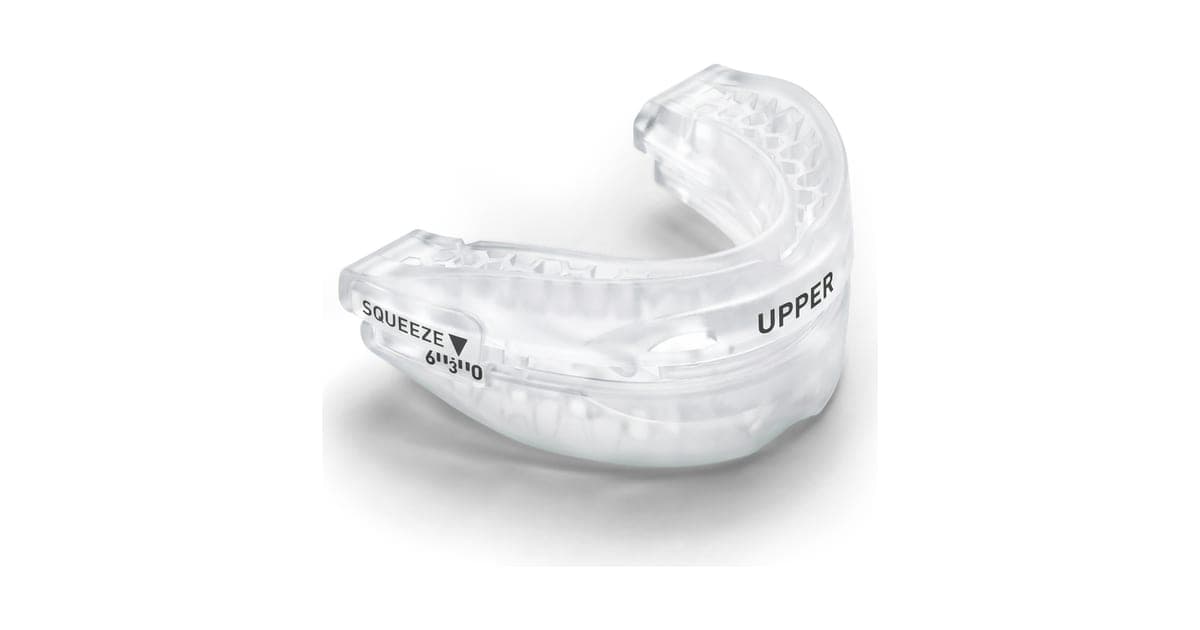
Yes, if your snoring comes from the throat and you have ruled out sleep apnea. SnoreRX is an FDA-cleared, boil-and-bite mouthpiece that holds your lower jaw slightly forward, with a numbered adjuster so you can start gently.
Score 5.1/10$59.99 at SnoreRX
Check price at SnoreRX (opens SnoreRX in a new tab)We may earn a commission if you buy through our links.
- Best for
- People whose snoring comes from the throat and tongue rather than the nose
- Not for
- Anyone with signs of sleep apnea who has not seen a doctor
$59.99 at SnoreRX
Check price at SnoreRX (opens SnoreRX in a new tab)We may earn a commission if you buy through our links.
On this page · 13 sections
- 01Our verdict
- 02The short version
- 03Pros & cons
- 04How it works
- 05Who it's for
- 06Does SnoreRX work, and is it FDA approved?
- 07Are SnoreRX's health claims accurate?
- 08How much does SnoreRX cost, and what are the return terms?
- 09Is SnoreRX better than SleepZee, a nose clip or a dentist-made device?
- 10Is SnoreRX legit, and what should you check before buying?
- 11How did we score SnoreRX?
- 12How to use SnoreRX comfortably
- 13Frequently asked questions
Our verdict
Yes, if your snoring comes from the throat and you have ruled out sleep apnea. SnoreRX is an FDA-cleared, boil-and-bite mouthpiece that holds your lower jaw slightly forward, with a numbered adjuster so you can start gently. This type of device has solid evidence, and the Sleep Foundation has rated SnoreRx highly. But the page's "zero side effects" and heart disease claims go too far, and it does nothing for nasal snoring. SnoreRX scores 5.1 out of 10, held back by overstated claims rather than the device.
The short version
- What it is: an adjustable mandibular advancement mouthpiece that reduces snoring by moving your lower jaw forward.
- Price: $59.99 for one on 4 October 2026, $89.99 for two and $119.98 for three.
- Best trait: an FDA-cleared design with fine adjustment, the main thing that makes these devices comfortable.
- Biggest drawback: the page understates side effects and overstates health benefits.
- Our score: 5.1 out of 10.
Pros & cons
The pros come from the device type and its adjustability. The cons are about the marketing claims, who should not use it and the return terms.
What we like
- FDA-cleared anti-snoring device, with 510(k) clearances on record for SnoreRx
- Mandibular advancement devices have good evidence for reducing snoring
- Adjustable jaw advancement in small steps, so you can start gently
- Boil-and-bite fitting moulds it to your teeth at home
- Made in the USA, according to the page, with a 30-day return window
What we don't
- The page claims 'zero side effects', but jaw soreness, tooth tenderness and drooling are common
- Claims about lowering heart disease and stroke risk are not supported for a snoring device
- It will not treat sleep apnea, and loud snoring can be a sign of it
- Not suitable for people with dentures, loose teeth or some jaw problems
- Return postage is yours and original shipping is not refunded
Sold by SnoreRX
SnoreRX$59.99
How it works
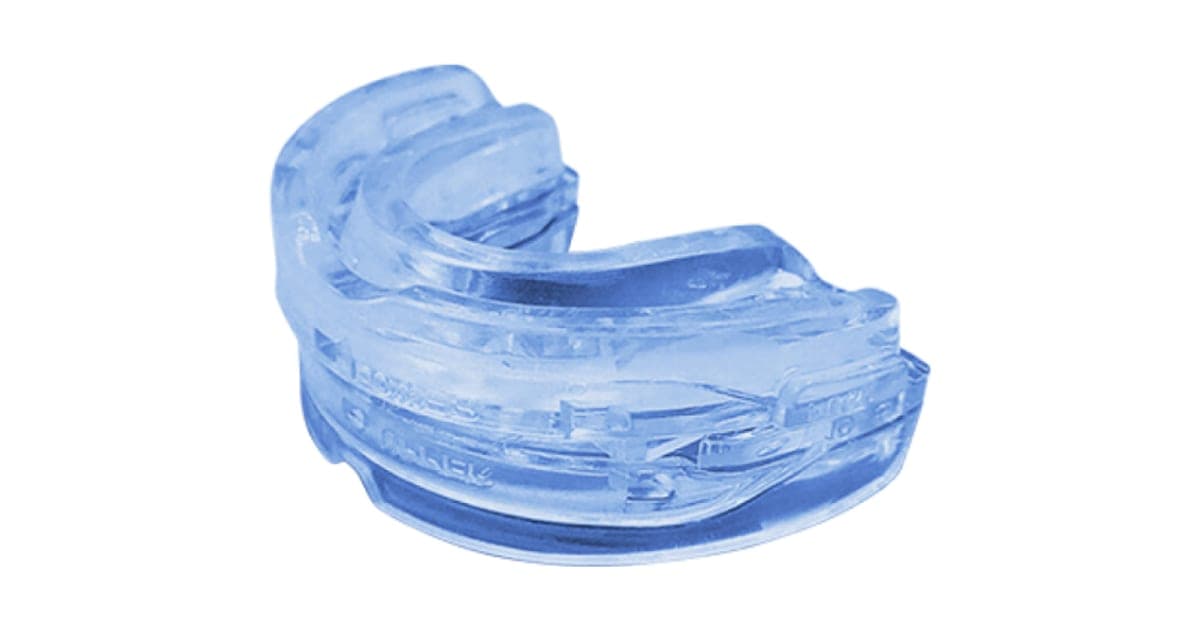
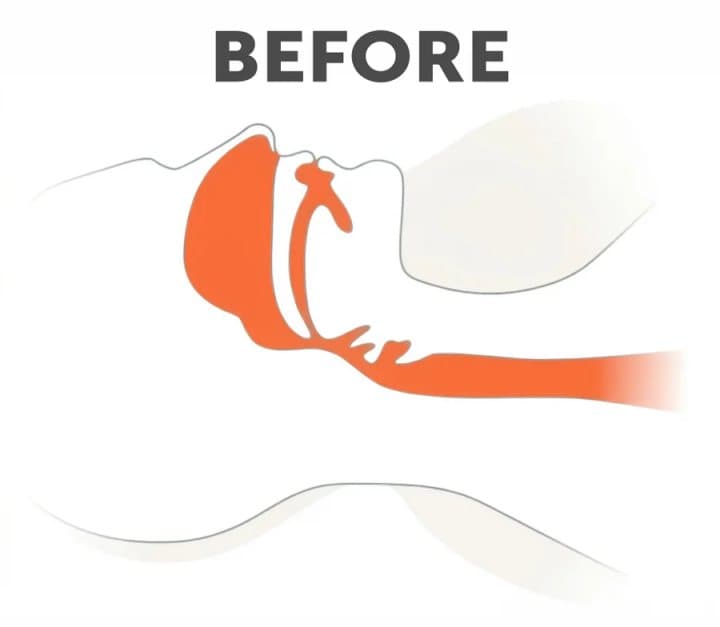
Most snoring happens when the soft palate, tongue and throat tissues relax during sleep, narrow the airway and vibrate as air passes. Lying on your back makes it worse, because the lower jaw and tongue drop backwards. A mandibular advancement device, or MAD, holds the lower jaw a few millimetres forward, which pulls the tongue forward with it and keeps the airway more open.
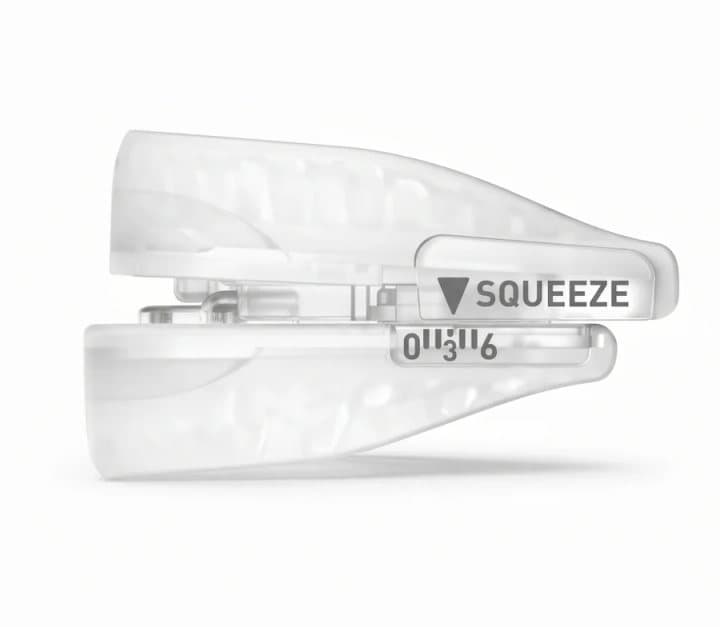
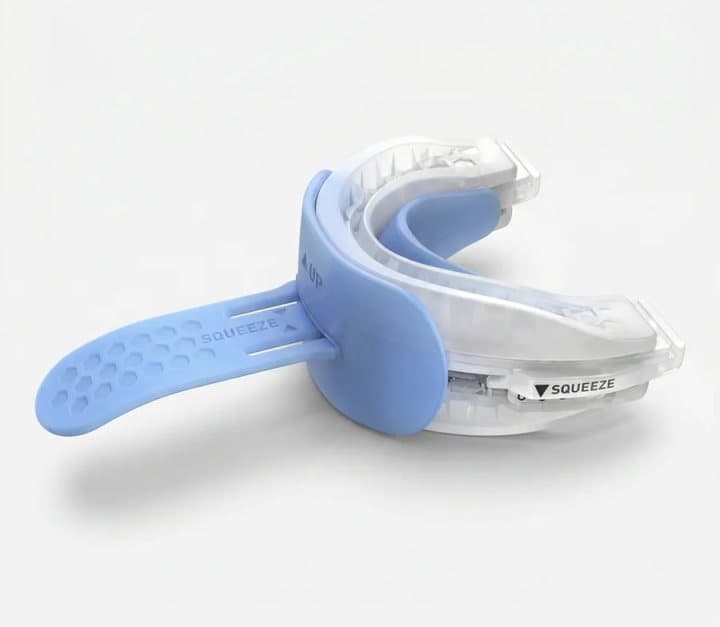
SnoreRX has two clear trays, one for the upper teeth and one for the lower, joined at the front by an adjuster with a numbered scale. You mould the trays to your teeth with hot water, then set how far forward the lower tray sits. The page says you can talk and drink water without removing it, and that it uses a "thermal matrix" material that holds your impression.
Mould it to your teeth
Step 1: Soften the trays in hot water as the instructions describe, then bite into them so the material takes the shape of your upper and lower teeth.
Set the jaw position
Step 2: Use the calibrated adjuster to set how far forward the lower tray sits. Start low and increase in small steps over several nights.
Wear it to sleep
Step 3: Holding your lower jaw slightly forward keeps your tongue and soft tissues from falling back, which opens the airway and reduces the vibration that causes snoring.
Why adjustment matters
Moving the jaw too far, too soon, causes jaw pain and makes people give up. Moving it too little may not stop snoring. A calibrated adjuster lets you find the smallest advancement that works. Studies of mouthpieces have found that more advancement can mean more discomfort, which is why starting low and increasing gradually is the usual advice.
Boil-and-bite fitting
Boil-and-bite trays are made of a thermoplastic that softens in hot water. You bite into it while warm and it sets around your teeth. The Sleep Foundation's review describes heating water in a microwave and placing the device in the cup, rather than boiling it on a stove. A good impression is what keeps the device in place overnight.
What it does not do
A MAD does nothing for snoring that starts in the nose, such as from a blocked nose or narrow nostrils. It also does not treat the causes of snoring, such as weight, alcohol or sleeping position. It holds the airway open only while you wear it.
Snoring versus sleep apnea
Snoring is noise from vibrating tissue. Obstructive sleep apnea is when the airway repeatedly closes, cutting breathing for seconds at a time, often with loud snoring between pauses. Many people snore without apnea, but most people with apnea snore. Because the two sound similar, a doctor's assessment is the only way to tell them apart.
The material
The page describes a "thermal matrix" material of dental lab quality that retains your impression. Boil-and-bite materials soften at temperatures well below boiling and harden as they cool. The device should not be left in hot cars or washed in hot water after fitting, which could soften it again.
Breathing with it in
The front of the device has openings that let you breathe through your mouth if needed, according to the photos, though breathing through the nose is better for sleep. If you have a blocked nose, treat that too, since mouth breathing makes throat snoring worse.
Who it's for
SnoreRX suits people whose snoring comes from the throat and tongue, often worse on their back or after alcohol, who have been checked for sleep apnea or have no warning signs. It suits partners looking for a first device with a good track record. It does not suit people with dentures or loose teeth, jaw joint problems, signs of untreated sleep apnea, or children.
- People whose snoring comes from the throat and tongue rather than the nose
- Snorers who have been checked for sleep apnea, or whose doctor suggests a mouthpiece
- Partners of snorers looking for a well-reviewed first device
Why SnoreRX appeals
Snoring affects two people. Partners lose sleep, move to the spare room and get frustrated, while snorers often do not believe how loud they are. A device that promises quiet nights from the first use, cleared by the FDA, made in the USA and cheaper than a dentist-fitted appliance is exactly what many couples look for.
A quick self-check
A rough way to tell where snoring comes from: if you can make a snoring sound with your mouth closed, the nose may be involved; if the sound comes with your mouth open, or when you push your tongue back, the throat is likely. If snoring stops when you jut your jaw forward, a MAD has a good chance of helping. These checks are rough guides, not diagnoses.
Back sleepers and throat snorers
If your snoring is loudest on your back and quieter on your side, it probably comes from the tongue and throat. That is the type MADs help most. Many people find a mouthpiece plus side sleeping works best.
People who sleep apart because of snoring
Many couples end up in separate rooms because of snoring. A mouthpiece is one of the more likely fixes to make sharing a bed possible again, provided it works for the snorer. Give it a fair trial before deciding.
People who tried nasal strips without success
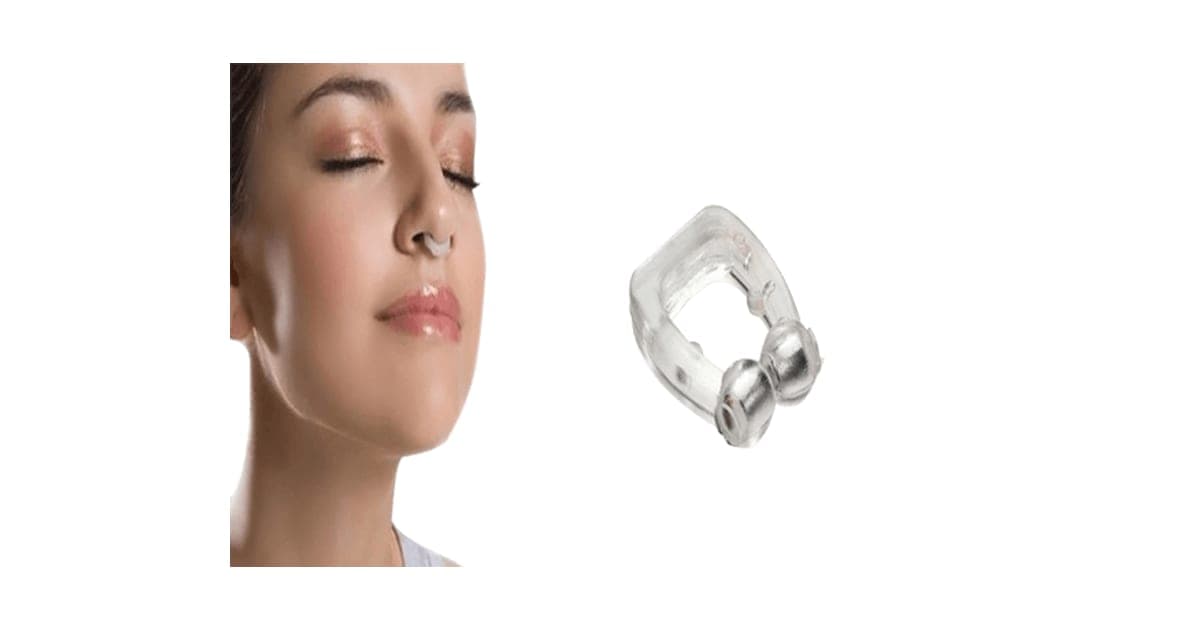
Nasal strips and dilators help only nasal snoring. If they did nothing for you, a mouthpiece is a logical next step. Our SilentSnore review explains when a nose clip can help and when it cannot.
Older adults
Snoring often gets worse with age as throat muscles lose tone. Older adults are also more likely to have dental work, dentures and sleep apnea. A dental check and a conversation with a doctor are especially worthwhile before trying a mouthpiece.
People who drink alcohol in the evening
Alcohol relaxes throat muscles and makes snoring louder. A mouthpiece can help on those nights, but cutting evening drinks often helps as much. Combining both gives the best chance of quiet nights.
Couples
The page sells two-packs and three-packs as "perfect for couples". If both partners snore, two devices make sense. Each must be moulded to its owner and never shared.
People with a sleep study showing no apnea
Some people have had sleep studies that ruled out sleep apnea but still snore. One review on the page describes exactly that. A MAD is a sensible option for them.
Shift workers
People who sleep during the day often sleep more lightly and in less ideal positions. Snoring can still disturb partners or housemates. A mouthpiece works the same day or night.
Travellers sharing rooms
People who share hotel rooms, cabins or bunkhouses sometimes want a reliable way to keep snoring down for a trip. A mouthpiece is small and needs no power. Get used to it at home before the trip.
Who should skip it
Skip SnoreRX if you stop breathing, gasp or feel very sleepy during the day until you have seen a doctor. Skip it if you have dentures, loose teeth, gum disease or ongoing dental treatment. Skip it if you have jaw joint pain without dental advice. And do not use it for children or teenagers, whose jaws are still developing.
- Anyone with signs of sleep apnea who has not seen a doctor
- People with dentures, loose teeth, gum disease or major dental work underway
- Anyone with jaw joint pain or a TMJ disorder without dental advice
- Children and teenagers whose jaws are still growing
Does SnoreRX work, and is it FDA approved?
SnoreRx is FDA cleared, and jaw-advancing mouthpieces are among the best-supported snoring treatments. The FDA's 510(k) database lists three SnoreRx clearances, the latest in 2017 for Apnea Sciences Corporation, in the anti-snoring device category. The Sleep Foundation named SnoreRx Plus its best overall anti-snoring mouthpiece. Results still vary, and it helps throat snoring, not nasal snoring.
What FDA clearance means
The FDA's 510(k) database lists clearance K170825 for SnoreRx, decided in August 2017, with earlier clearances in 2011 and 2016. A 510(k) clearance means the FDA found the device substantially equivalent to existing legal devices. It is not the same as approval after large trials, but it is the normal route for anti-snoring mouthpieces and more than many online snoring products have.
Earlier clearances
The FDA database also lists a 2011 clearance for "SnoreRx 9.0" held by Consumer Health Products, Inc., and a 2016 clearance held by Apnea Sciences Corporation. Several clearances over the years suggest the design has been updated and resubmitted, which is normal for devices sold for a long time.
Independent ratings
The Sleep Foundation's SnoreRx review describes the SnoreRx Plus as a boil-and-bite MAD with fine adjustment and a 30-night trial, and picked it as its best overall anti-snoring mouthpiece. That review covers the Plus version; the offer page names its product SnoreRX and quotes customers who own the Plus. Ask support which model you will receive.
The difference between versions
SnoreRx has been sold in more than one version over the years, including the SnoreRx Plus, which the Sleep Foundation reviewed with lateral movement settings that let the jaw move side to side. The offer page shows a clear device with a squeeze-release adjuster and a numbered scale. If side-to-side movement matters for comfort, ask which version ships.
How well MADs work
Research on oral appliances for snoring generally finds that most users snore less, and many partners report a big difference. They do not work for everyone: people with very large tongues, nasal blockage or severe obesity may see less benefit. Consistent nightly use matters.
What the before-and-after graphics show
The page uses illustrations of an airway before and after, and a sound meter graphic showing loud snoring before and near silence after. These illustrate the idea; they are not measurements from a study of SnoreRX users.
"Stops Snoring In 1 Night, Guaranteed"
Some people notice a difference the first night. Many need several nights to adjust to wearing it and to find the right setting. One customer quoted on the page says it took three to seven days to get comfortable. The guarantee is the 30-day return policy, not a promise that it will work.
What this means for you: give it two to three weeks of nightly use before deciding.
Are SnoreRX's health claims accurate?
The core snoring claim is fair; several health claims are not. The page says SnoreRX has "zero side effects", that it boosts immunity, athletic performance and productivity, and that "it even decreases the risk of heart disease and stroke". Mouthpieces commonly cause jaw soreness, tooth tenderness and saliva changes, and no evidence shows a snoring device lowers heart or stroke risk.
"Drug-Free, Zero side effects"
It is drug-free. But research on mandibular advancement devices consistently reports jaw discomfort, tooth tenderness, excess saliva and dry mouth, especially in the first weeks. Long-term use can cause small changes in how the teeth meet. Those effects are usually mild and manageable, but "zero" is wrong.
What to do: start at the lowest setting, increase slowly, and see a dentist if pain persists or your bite changes.
"Decreases the risk of heart disease and stroke"
Untreated obstructive sleep apnea is linked to high blood pressure, heart disease and stroke, and treating apnea can help. Snoring alone is not the same as apnea, and a mouthpiece sold for snoring has not been shown to reduce cardiovascular risk. This claim could also lead someone with apnea to treat it themselves instead of seeing a doctor.
"Same technology as a dentist-fitted device"
The principle is the same. Custom appliances made by dentists from impressions fit more precisely, adjust more finely and are usually more comfortable for long-term use. One customer quoted on the page mentions a dentist quote of $900 for a custom device. Boil-and-bite devices are a cheaper way to see whether a MAD works for you.
"Made in USA"
The page says SnoreRX is proudly made in California, and the FDA records list a California company as the holder of the latest clearance. Local manufacture does not change how the device works, but some buyers prefer it for quality control.
"The world's #1 anti-snoring mouthguard"
The page says top sleep authorities back SnoreRx. The Sleep Foundation did rate it best overall in its mouthpiece guide. "World's #1" is marketing; there is no single ranking.
"Talk or drink water without removing it"
Many MADs leave a small gap at the front for breathing, which also allows sips of water. Talking clearly with the jaw held forward is harder than the page suggests, but a few words are usually possible.
"Over 1 million satisfied customers"
We could not verify this figure. SnoreRx has been sold for many years, so it is plausible that it has sold widely.
"Enhanced immune system, increased athletic performance"
Better sleep supports health in many ways, and poor sleep affects mood, concentration and recovery. But the page jumps from stopping snoring to specific benefits such as immunity and athletic performance without evidence for this device. If snoring wakes you or your partner, better sleep is a reasonable expectation; the rest is marketing.
"Doctor Recommended"
The page does not name the doctors. Sleep specialists do recommend oral appliances for some patients, usually after assessment. That is different from a doctor endorsing this product for everyone.
Sleep apnea warning signs
Signs include loud snoring with pauses, gasping or choking, morning headaches, and heavy daytime sleepiness. If any apply, see a doctor. A sleep study is the only way to diagnose apnea.
How much does SnoreRX cost, and what are the return terms?
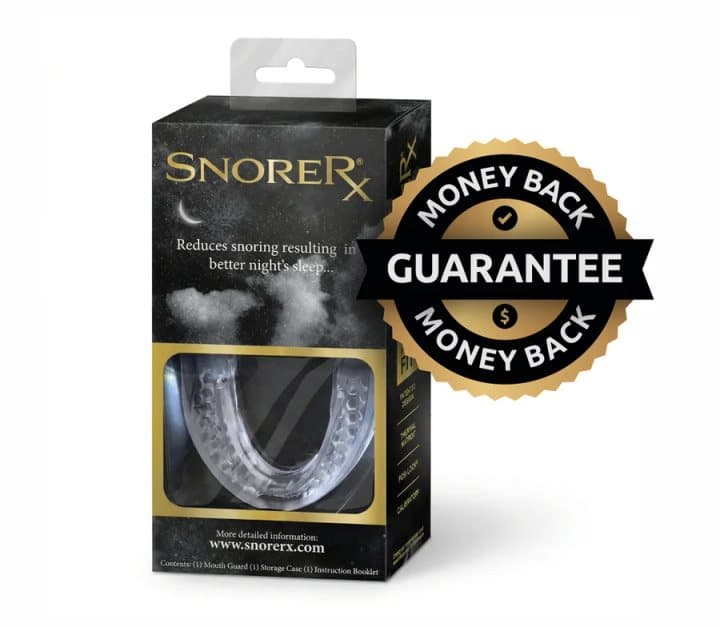
On 4 October 2026, one SnoreRX cost $59.99, two cost $89.99 and three cost $119.98. The page labels the two-pack "most popular" and the three-pack "best deal", and lists free shipping on qualifying offers. The return policy accepts returns from new customers postmarked within 30 days of delivery, with return shipping paid by you and original shipping not refunded.
SnoreRX price and bundles
| Bundle | Price | Per device |
|---|---|---|
| 1 SnoreRX | $59.99 | $59.99 |
| 2 (buy 1, get 1 50% off) | $89.99 | About $45 |
| 3 (buy 2, get 1 free) | $119.98 | About $40 |
The "retail" prices shown, $119.98 for two and $179.97 for three, are simply $59.99 per device.
Is the two-pack worth it?
At $89.99 for two, the second device costs $30. That suits couples who both snore, or one person who wants a spare to mould later. Do not share a moulded device between people.
Compared with other mouthpieces
The Sleep Foundation lists the SnoreRx Plus at about $100. Our SleepZee review covers a cheaper boil-and-bite mouthguard at $49.95. Dentist-made custom appliances often cost several hundred to more than a thousand dollars, but may be covered by insurance when prescribed for sleep apnea.
What is in the box
The page does not list box contents. Boil-and-bite mouthpieces usually come with the device, a storage case and fitting instructions. The photos show a retail box with the clear device inside.
The return policy
According to the return policy, the seller accepts returns and exchanges from new customers for eligible products postmarked within 30 days of delivery. Return shipping fees are your responsibility, and original shipping and handling charges are non-refundable. The page also mentions a "30-night" guarantee. A moulded mouthpiece is a personal item, so ask support how used devices are handled.
What to do: email support@snorerx.com before you return anything, and keep your order confirmation.
Returning a moulded device
Once moulded and worn, a mouthpiece cannot be resold. The return policy speaks of eligible products, without defining which items are eligible. Ask support whether a moulded, used device can be returned under the 30-day window before you mould it, especially if you are unsure about your teeth or jaw.
Replacement costs
Mouthpieces wear out, especially if you grind your teeth. Budget for a replacement every so often. The multi-packs effectively include spares, though each must be moulded fresh when needed.
Comparing per-night cost
At $59.99 for a device that lasts perhaps six months to a year, SnoreRX costs roughly 15 to 30 cents a night. For a household where snoring causes separate bedrooms, that is modest. A custom dental appliance costs more upfront but often lasts several years.
Who sells it
The offer page lists support at support@snorerx.com and says SnoreRX is made in California. The FDA clearances are held by Apnea Sciences Corporation of Aliso Viejo, California, and earlier by Consumer Health Products, Inc.

SnoreRXScore 5.1/10
Best for: People whose snoring comes from the throat and tongue rather than the nose
$59.99 at SnoreRX · Price checked October 4, 2026
Check price at SnoreRX (opens SnoreRX in a new tab)We may earn a commission if you buy through our links.
Is SnoreRX better than SleepZee, a nose clip or a dentist-made device?
For throat snoring, SnoreRX is a stronger choice than a nose clip and a better-documented one than many cheaper mouthguards. SleepZee costs less but has fewer independent endorsements. Nose clips help only nasal snoring. A dentist-made appliance fits best and is the right route for diagnosed sleep apnea, but costs far more. SnoreRX sits in a sensible middle.
| SnoreRX | SleepZee | SilentSnore nose clip | Dentist-made appliance | |
|---|---|---|---|---|
| Price seen | $59.99 | $49.95 | $49 | Several hundred dollars or more |
| Type | Adjustable MAD | Boil-and-bite MAD | Nasal dilator | Custom MAD |
| FDA cleared | Yes (510(k)) | See our review | Not stated | Yes, typically |
| Adjustable | Yes, calibrated | See our review | No | Yes |
| Best for | Throat snoring | Throat snoring | Nasal snoring | Snoring and diagnosed apnea |
SnoreRX vs SleepZee
Both are boil-and-bite mouthpieces. Our SleepZee review found a cheaper device with less independent backing. SnoreRX's calibrated adjuster and Sleep Foundation rating give it the edge if you can pay a little more. Our SleepZee vs Sleep Connection vs Hale comparison weighs three anti-snoring approaches on evidence and cost.
Combining approaches
Some people need more than one change: a mouthpiece for throat snoring, saline spray for a stuffy nose, and side sleeping. Try one change at a time for a week so you can tell what helps.
SnoreRX vs a nose clip
Nose clips and dilators only help when the nose is the source of snoring. They are cheaper and less intrusive, so they are worth trying first if your nose feels blocked at night.
SnoreRX vs a custom appliance from your dentist
If SnoreRX works but feels bulky after a few months, that is a good sign a custom appliance would work too. Some people use a boil-and-bite device as a trial before investing in a dentist-made one, which is slimmer and more precisely adjusted.
SnoreRX vs a tongue-retaining device
Tongue-retaining devices hold the tongue forward by suction instead of moving the jaw. They suit people with dentures or jaw problems who cannot use a MAD. They take getting used to. Mouth tape is another trend for mouth-breathing snorers, with weaker evidence and real safety caveats, as our Ugly Sleep Club review explains.
SnoreRX vs a wristband or app
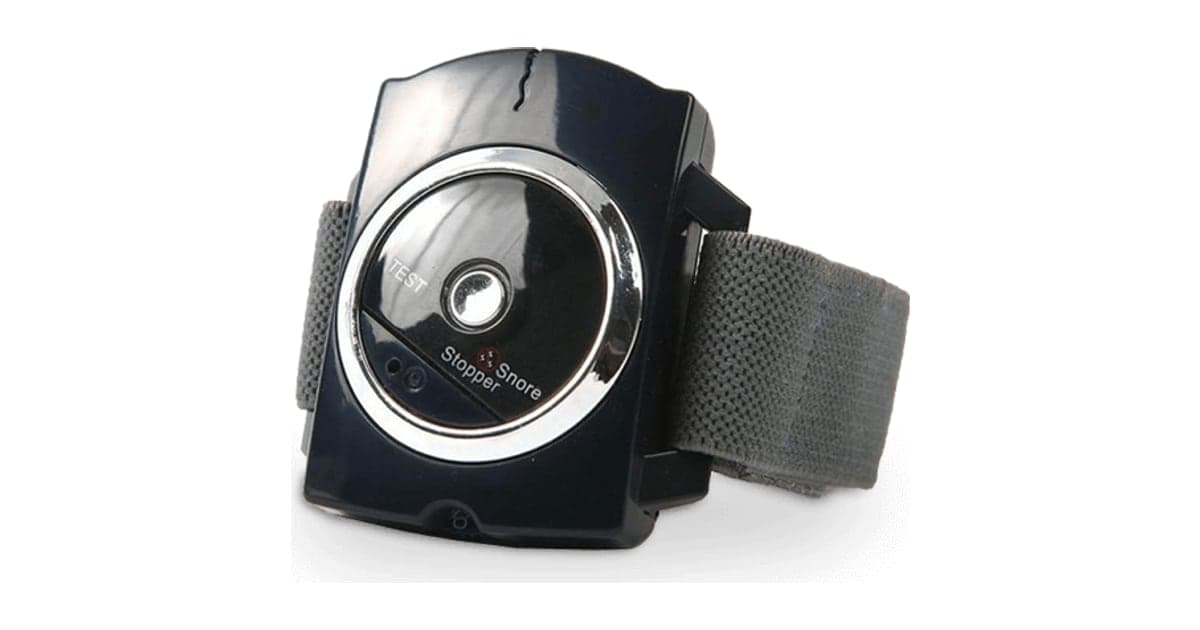
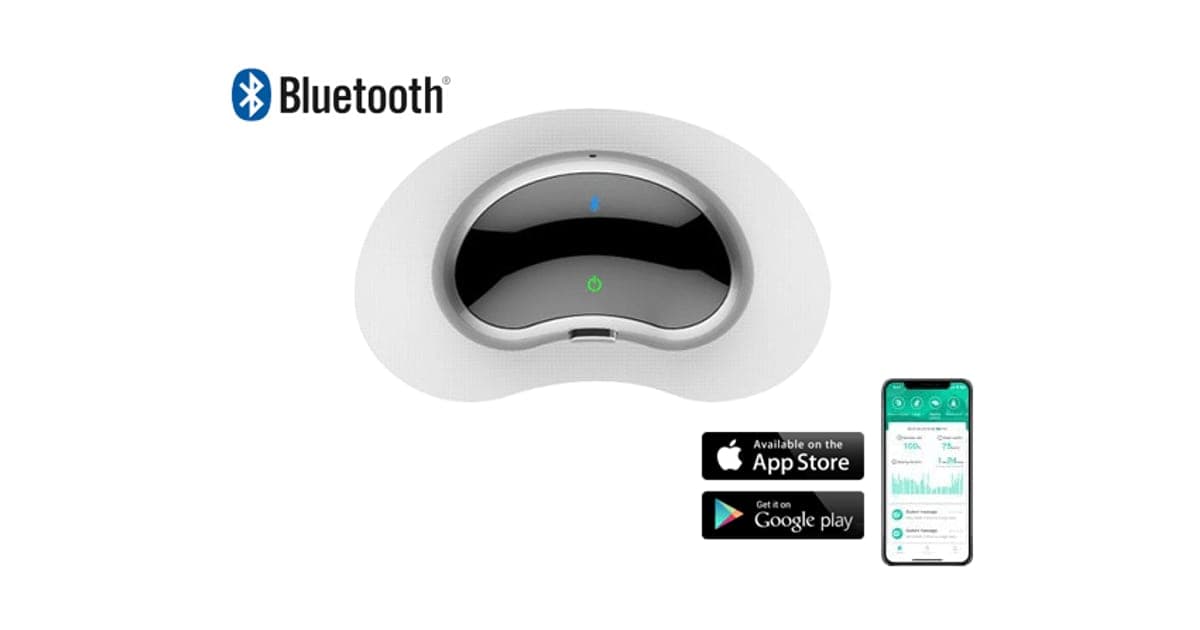
Some products claim to stop snoring with vibrations or sounds. Our Sleep Connection wristband review looks at one with limited evidence. A MAD has stronger support.
SnoreRX vs lifestyle changes
Losing weight, cutting alcohol in the evening, quitting smoking and sleeping on your side reduce snoring for many people. They cost nothing and help alongside any device.
SnoreRX vs positional therapy
If you only snore on your back, devices that keep you on your side, from a tennis ball sewn into a T-shirt to vibrating sensors, can work without anything in your mouth. Try side sleeping first and see if that alone helps.
SnoreRX vs CPAP
CPAP machines blow air through a mask to keep the airway open and are the standard treatment for moderate to severe sleep apnea. They are not used for simple snoring. If you have apnea, follow your doctor's advice rather than replacing CPAP with a mouthpiece.
When a dentist wins
If you have sleep apnea, dental problems, or a MAD that hurts after several weeks, a dentist can make and adjust a custom appliance and monitor your teeth over time.
SnoreRXScore 5.1/10
Why people buy it: FDA-cleared anti-snoring device, with 510(k) clearances on record for SnoreRx
$59.99 at SnoreRX · Price checked October 4, 2026
Check price at SnoreRX (opens SnoreRX in a new tab)We may earn a commission if you buy through our links.
Is SnoreRX legit, and what should you check before buying?
SnoreRX is a legitimate, long-established, FDA-cleared mouthpiece that independent reviewers rate well. The checks are medical and practical: rule out sleep apnea, check your teeth and jaw are suitable, confirm which model you will receive, and know the return terms. Returns must be postmarked within 30 days of delivery, return shipping is yours, and original shipping is not refunded.
Rule out sleep apnea
What to do: if a partner notices breathing pauses or gasping, or you feel very tired during the day, see a doctor about a sleep study before using any snoring device.
Check your teeth
You need enough healthy teeth on the top and bottom to hold the trays. Dentures, loose teeth, gum disease and large bridges can make MADs unsafe or uncomfortable. Ask your dentist if unsure.
Check your jaw
What to do: open and close your mouth slowly in front of a mirror. If your jaw clicks painfully, locks or aches regularly, see a dentist before using any device that holds it forward.
Ask which model ships
The page calls the product SnoreRX, while customer reviews mention the SnoreRx Plus. Ask support which version you will receive.
Check with your dentist
What to do: mention to your dentist that you plan to use a mouthpiece. They can check your teeth and gums, advise on a starting setting and watch for bite changes at future check-ups.
Mould it carefully
A poor impression makes the device loose or uncomfortable. Follow the instructions exactly, especially water temperature and timing, and do not chew or move your jaw while it sets.
Check the guarantee wording
The page uses both "30-night" and "30-day" money-back language. The written policy says returns must be postmarked within 30 days of delivery. Count from the delivery date, not from your first night.
Cleaning and hygiene
Mouthpieces collect bacteria. Rinse after use, brush gently with a soft brush, and let it dry in its case. Do not use hot water after moulding, which could reshape it.
Keep notes for the first weeks
Write down the setting you use, how you slept and any jaw or tooth discomfort each morning. Notes make it easier to decide within the 30-day window whether the device suits you.
How to buy SnoreRX the smart way
- Check for sleep apnea warning signs and see a doctor if any apply.
- Ask your dentist if your teeth and jaw suit a mouthpiece.
- Open the SnoreRX order page (opens SnoreRX in a new tab) and choose one device unless both partners snore.
- Ask support which model ships and how returns work for a moulded device.
- Start at the lowest setting and give it two to three weeks.
How did we score SnoreRX?
SnoreRX scores 5.1 out of 10: claim accuracy 0.8, build durability 1.2, price competitiveness 1.2, usability 1.1 and owner satisfaction 0.8, each out of 2. The device itself is well regarded, FDA cleared and adjustable, at a fair price. Points come off for "zero side effects" and cardiovascular claims, mixed model naming, a return policy that charges postage, and no independent owner rating we could check for this store.
What owners and reviewers say
The Sleep Foundation rated SnoreRx Plus its best overall anti-snoring mouthpiece. Customer reviews quoted on the page describe a few nights to adjust and big reductions in snoring, with one owner measuring the change with a snoring app. Users of MADs generally report morning jaw soreness that fades. We found no Trustpilot or similar rating for this store.
How the score breaks down
We use the five criteria on our how we test page, each out of 2.
| Criterion | Score | Why |
|---|---|---|
| Claim accuracy | 0.8 / 2 | FDA clearance is real; "zero side effects" and heart claims are not supported |
| Build durability | 1.2 / 2 | Made in the USA, adjustable, durable thermoplastic |
| Price competitiveness | 1.2 / 2 | Fair for an FDA-cleared adjustable MAD |
| Usability | 1.1 / 2 | Home fitting and adjustment; a learning curve |
| Owner satisfaction | 0.8 / 2 | Strong editorial rating; no independent owner ratings for this store |
| Total | 5.1 / 10 |
What we did, and did not, do
Nobody on our team has used SnoreRX. We read the offer page and its return policy on 4 October 2026, checked the FDA's 510(k) database, and read the Sleep Foundation's review and research on mouthpiece side effects. Our sleep hub and best sleep products guide list the sleep products we rate.
How to use SnoreRX comfortably
Mould SnoreRX carefully following the instructions, start at the lowest jaw setting, and wear it every night for two to three weeks, increasing one step at a time only if snoring continues. Expect some jaw stiffness in the mornings at first, which usually eases within minutes of removing it. Clean it daily and see a dentist if pain lasts or your bite feels different.
- Read the leaflet. Follow water temperature and timing exactly.
- Mould it. Bite gently and evenly, then let it set.
- Start low. Use the smallest advancement first.
- Wear it nightly. Consistency helps you adjust.
- Increase slowly. One step every few nights if needed.
- Do jaw exercises. Gently move your jaw back into place in the morning.
- Clean it daily. Rinse, brush gently and air dry.
Fitting it the first time
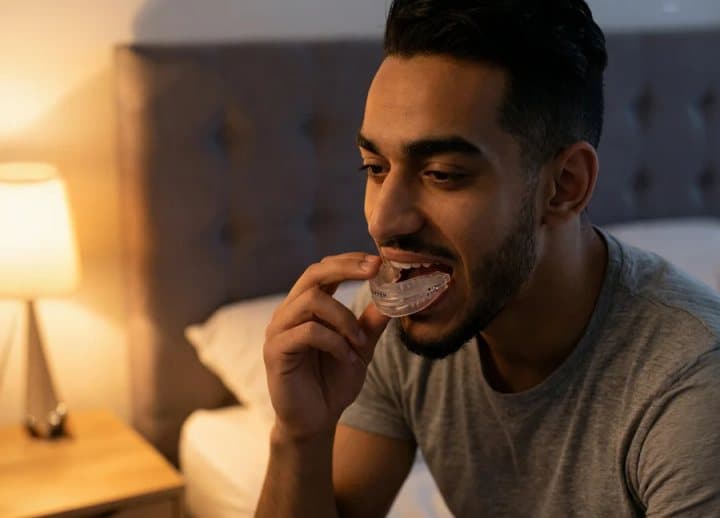
Have everything ready before you start: the device, a cup of hot water at the temperature in the instructions, a timer and a mirror. Practise placing it in your mouth cold first, so you know how it goes in before the material is soft.
If the fit feels wrong
If the trays rock, press on your gums or feel loose, the impression may not have taken. Check whether the leaflet allows re-moulding before trying again.
Morning jaw stiffness
After removing the mouthpiece, your back teeth may not meet normally for a few minutes. Gently biting together, or chewing gum, helps the jaw settle. If the feeling lasts into the afternoon, reduce the setting.
The first week
Most people find the first nights strange: more saliva, a full feeling in the mouth and some trouble falling asleep. Persist for a week if you can. Some find it easier to put the device in after a few minutes of lying in bed, rather than before.
Finding the right setting
Use a snoring app or ask your partner. If snoring stops at a low setting, stay there. More advancement adds discomfort without benefit once snoring is controlled.
Using it with a stuffy nose
If your nose is blocked from a cold or allergies, a mouthpiece can feel harder to tolerate because you rely on mouth breathing. A saline rinse or a pharmacist's advice on nasal treatment can make nights more comfortable.
Drooling and dry mouth
Extra saliva is common in the first nights and usually settles. Dry mouth can happen if your lips do not close. Drinking water before bed helps.
When it falls out at night
If the device ends up on the pillow, the impression may be loose or the setting too high. Check that the trays snap firmly onto your teeth. Reduce the advancement one step and see if it stays in.
Tooth grinders
If you grind your teeth, a MAD may wear faster. Some people find it reduces grinding, others do not. Check it regularly for cracks.
Replacing it
Replace the device if it cracks, if the impression wears so it no longer grips your teeth, or if it starts to smell after cleaning. Worn devices hold the jaw less effectively.
Travelling with it
Keep it in its case in your toiletry bag. It is small, needs no power and fits easily in hand luggage.
Cleaning tablets
Denture or retainer cleaning tablets, used as directed in cool water, help keep a mouthpiece fresh. Avoid toothpaste with harsh abrasives, which can scratch the surface and trap bacteria.
Storing it
Keep it in a ventilated case, away from heat and pets. Dogs in particular are drawn to chew mouthguards. Replace the case if it gets dirty.
When to see a dentist
See a dentist if jaw pain lasts beyond the first couple of weeks, if teeth feel loose or sore all day, if your bite feels different by the afternoon, or if the device damages any dental work. These are signs to stop or adjust.
Tracking progress
A snoring app gives a nightly score, as one customer quoted on the page used. Compare a few nights at each setting so you can see which works, rather than judging by one night.
Other questions about anti-snoring mouthpieces
Can I wear it with braces? Usually not. Ask your orthodontist.
Can I re-mould it? Some boil-and-bite devices can be re-moulded. Follow the leaflet.
Will it change my bite? Small changes are possible with long-term use. See a dentist regularly.
Can I drink water while wearing it? The page says you can.
More questions about SnoreRX
Can I sleep on my side with it? Yes. Mouthpieces work in any position, and side sleeping often reduces snoring further.
Does insurance cover SnoreRX? Over-the-counter snoring devices are rarely covered. Insurance more often covers custom oral appliances prescribed for diagnosed sleep apnea.
How do I know it is working? Ask your partner, or use a snoring app that records sound overnight and compare nights with and without the device.
Is it safe to use every night? Most people use MADs nightly. Regular dental check-ups help catch any bite changes early.
SnoreRXScore 5.1/10
Before you buy: Check the final price, shipping and return terms at checkout.
$59.99 at SnoreRX · Price checked October 4, 2026
Check price at SnoreRX (opens SnoreRX in a new tab)We may earn a commission if you buy through our links.
Frequently asked questions
Is SnoreRX FDA approved?
It is FDA cleared, which is the usual route for devices like this. The FDA's 510(k) database lists SnoreRx clearances, most recently K170825 for Apnea Sciences Corporation in 2017, under the anti-snoring device category. Clearance means it was found substantially equivalent to existing devices.
Does SnoreRX work?
Mouthpieces that move the lower jaw forward have good evidence for reducing snoring, and the Sleep Foundation has rated SnoreRx Plus its best overall anti-snoring mouthpiece. They work best for snoring from the throat and tongue, not the nose, and results vary from person to person.
How much does SnoreRX cost?
On 4 October 2026, one SnoreRX cost $59.99. Two cost $89.99 and three cost $119.98. The page lists free shipping on qualifying offers and a 30-day money-back guarantee.
What are the side effects of SnoreRX?
Common effects of jaw-advancing mouthpieces include jaw soreness in the morning, tooth tenderness, extra saliva or dry mouth. Over years, they can shift the bite slightly. Start at a low setting, increase slowly, and see a dentist if pain lasts or your bite feels different.
Can SnoreRX treat sleep apnea?
It is sold for snoring, not sleep apnea. Some oral appliances are prescribed for mild to moderate sleep apnea after a diagnosis, under a doctor's or dentist's care. If you stop breathing, gasp or feel very sleepy in the day, see a doctor first.
How long does SnoreRX last?
The page does not say. Boil-and-bite mouthpieces usually last months to a year or more, depending on grinding and care. Replace it if it cracks, loses its shape or no longer holds your jaw comfortably.
Is SnoreRX legit?
Yes. SnoreRx is a long-established, FDA-cleared mouthpiece that independent reviewers have rated well. The cautions are overstated health claims on the page, the risk of missing sleep apnea, and returns with postage paid by you.
We may earn a commission if you buy through our links.
This content is for informational purposes and is not medical advice. Talk to a qualified professional before using any product that affects your health.
Prices accurate as of October 4, 2026. Check the seller's checkout for current pricing, promotions and terms.
What we checked: No hands-on use. Features, claims, photos, bundle prices and the return policy from the SnoreRX offer page our link opens on 2026-10-04. FDA 510(k) clearances for SnoreRx checked in the FDA's device database the same day. The Sleep Foundation's SnoreRx review and published research on side effects of mandibular advancement devices were read the same day. No independent owner rating data was found for this store.
See how SnoreRX compares in The Best Sleep Products of 2026

About the author
Daniel Brooks, Technology & Buying Guide Editor
Daniel Brooks edits the buying guides and comparisons at Top10Gadgets, and covers the sleep, supplement and travel categories where products are hardest to tell apart. Daniel approaches every purchase like a careful shop…
- Buying guides and product comparisons
- Budget and value-for-money products
- Sleep products
- Travel gear
- Subscriptions and return terms
Writing for Top10Gadgets since 2026Full profile