Health Gadgets / Bunion correctors
Treatmedy Bunion Fix Review: The Hinged Bunion Corrector, What Splints Can and Cannot Do, and the Doctor Behind It
An adjustable hinged splint that gently pulls the big toe straighter. Splints may ease bunion discomfort while worn, but they do not reverse the bone deformity, and returns must show no signs of use.

By James Wilson, Consumer Tech Writer at Top10Gadgets
Updated 26 min readHow we test
Quick answer
Worth trying for bunion discomfort if you expect comfort rather than a cure. Treatmedy Bunion Fix is an adjustable hinged splint that gently pulls the big toe towards a straighter line.
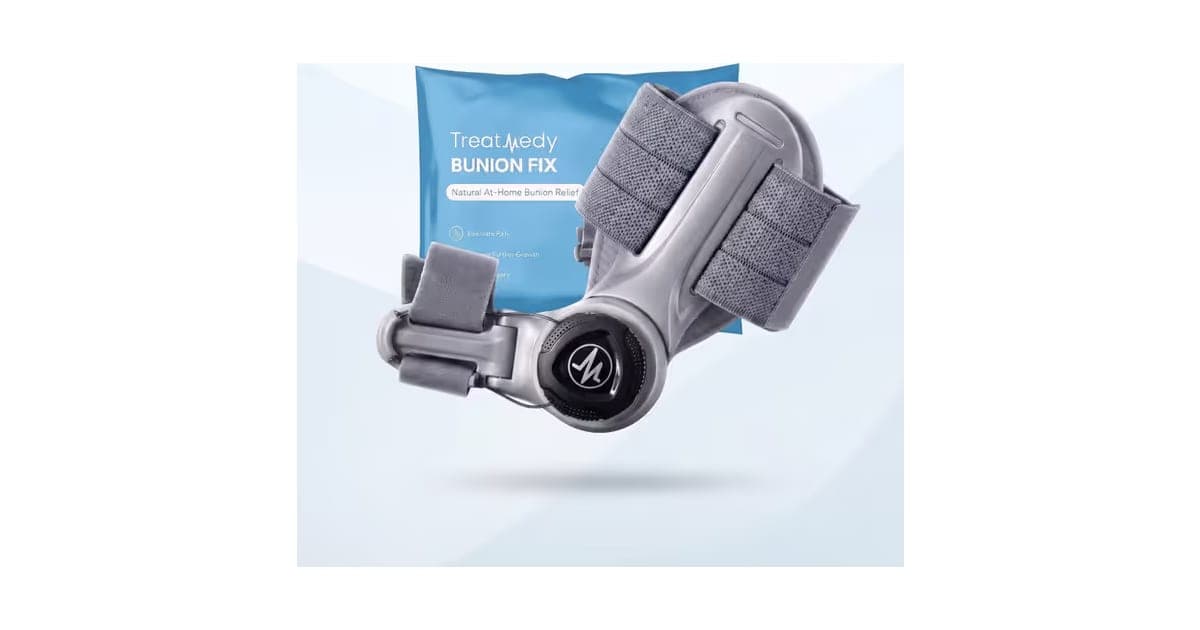
Score 4.6/10$49.99 at Treatmedy
Check price at Treatmedy (opens Treatmedy in a new tab)We may earn a commission if you buy through our links.
- Best for
- People with mild to moderate bunions who want a non-surgical way to ease discomfort
- Not for
- Anyone expecting the bump to shrink or the bone to straighten permanently
$49.99 at Treatmedy
Check price at Treatmedy (opens Treatmedy in a new tab)We may earn a commission if you buy through our links.
On this page · 13 sections
- 01Our verdict
- 02The short version
- 03Pros & cons
- 04How it works
- 05Who it's for
- 06Do bunion correctors work? What the research says
- 07Who is Dr. Blane Schilling, and are the other claims true?
- 08How much does Treatmedy Bunion Fix cost, and what are the return terms?
- 09Is Treatmedy better than toe separators, wider shoes or surgery?
- 10Is Treatmedy legit, and what should you check before buying?
- 11How did we score Treatmedy Bunion Fix?
- 12How to use Treatmedy Bunion Fix for the best results
- 13Frequently asked questions
Our verdict
Worth trying for bunion discomfort if you expect comfort rather than a cure. Treatmedy Bunion Fix is an adjustable hinged splint that gently pulls the big toe towards a straighter line. Research suggests splints and toe separators can ease pain and slightly improve toe angle while worn, but not reverse the bone deformity or "shrink the bump". We could not find the named doctor in the US provider registry, and returns must show no signs of use. Treatmedy Bunion Fix scores 4.6 out of 10, held back by cure-style claims and the return conditions.
The short version
- What it is: an adjustable hinged splint for the big toe, worn at home or overnight.
- Price: $49.99 for one, $89.99 for two and $143.98 for four on 4 October 2026.
- Best trait: a gentle, adjustable stretch that may ease bunion discomfort.
- Biggest drawback: it will not reverse a bunion, despite the page's promises.
- Our score: 4.6 out of 10.
Pros & cons
The pros come from the adjustable design and modest evidence for splints. The cons are about claims that go beyond the research, the doctor credential, the return conditions and practical limits.
What we like
- Adjustable hinge lets you set a gentle, comfortable pull on the big toe
- Splints and toe separators may ease bunion pain and slightly improve toe angle while worn
- Fits either foot, one size
- 90-day return window, longer than most
- Treatmedy shows 4.2 from 468 reviews on Trustpilot across its products
What we don't
- No good evidence that splints reverse a bunion or prevent surgery
- We could not find 'Dr. Blane Schilling, M.D.' in the US national provider registry
- Returns must show no visible signs of use, and you pay return shipping
- Bulky in most shoes, so mainly for home or night use
- 'Shrinks bumps' and 'fixes the root cause' are not supported
Sold by Treatmedy
Treatmedy Bunion Fix$49.99
How it works
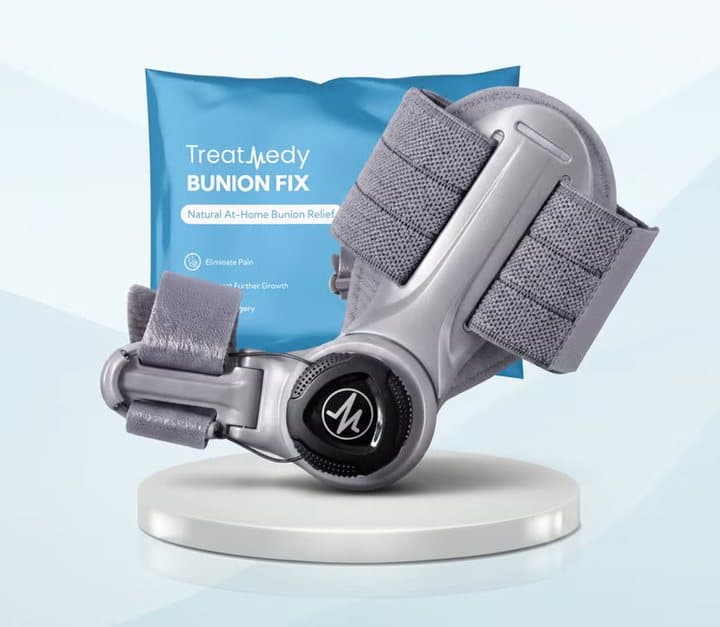
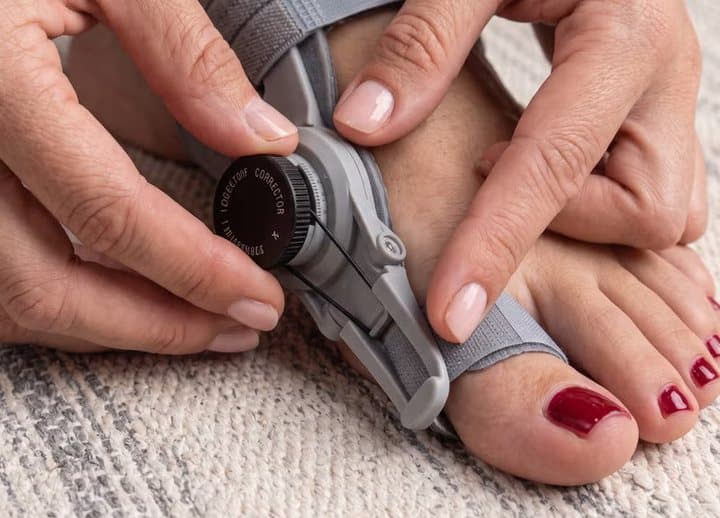
Treatmedy Bunion Fix is a grey plastic splint that runs along the inside of the foot, with a hinge at the big toe joint and straps around the forefoot and toe. A round dial on the hinge sets the angle. As you tighten it, the splint pulls the big toe outward, away from the second toe, towards a straighter line.
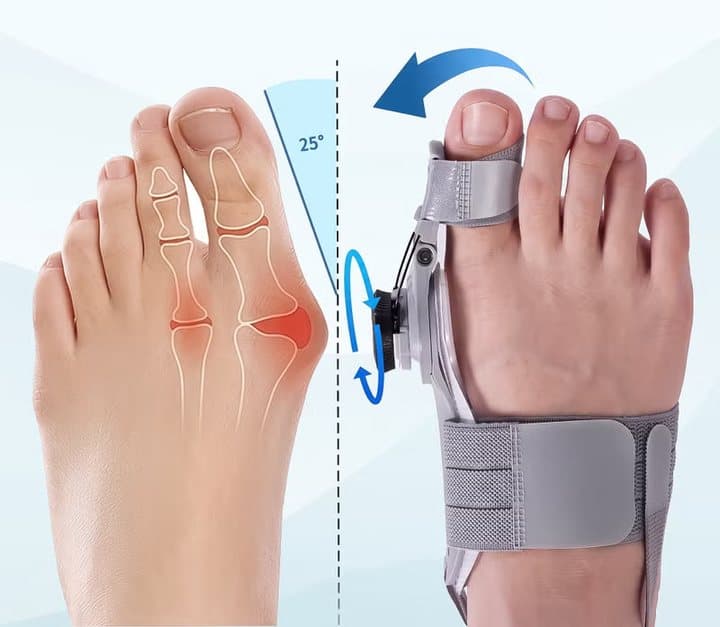
The page calls the hinge patented and says it eases pain, realigns the toe, strengthens toe muscles and shrinks the bump with daily use. The maker suggests 30 minutes a day, and says it can be worn seated, walking at home or while sleeping. Cushioned insoles take a different approach to foot comfort, as our Akusoli Insoles review explains.
Strap it around your foot
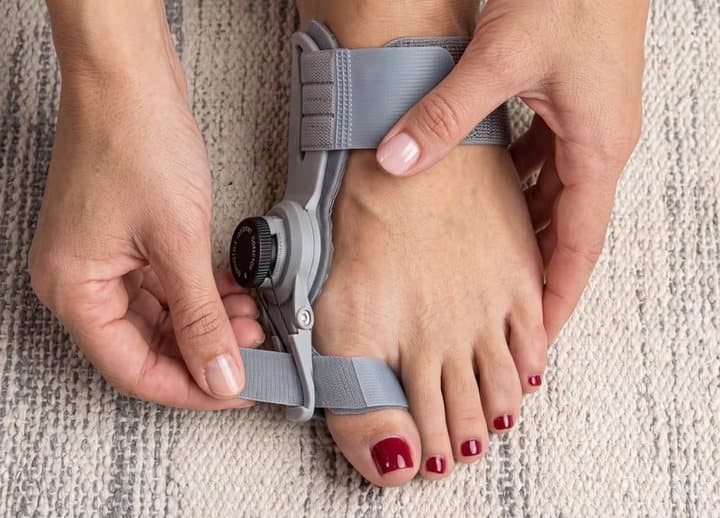
Step 1: Place the splint along the inside of your foot with the hinge at the big toe joint, and fasten the straps around the forefoot and the big toe.
Adjust the hinge
Step 2: Turn the dial on the hinge to set how strongly it pulls the big toe outward. Start gently and stay within a comfortable stretch.
Wear it daily
Step 3: The maker suggests 30 minutes a day, seated, walking at home or while sleeping, adjusting the angle gradually over time.
What a bunion is
A bunion (hallux valgus) is a bony bump at the base of the big toe, where the toe has drifted towards the other toes and the joint has angled outward. It develops over years, influenced by genetics, foot shape and footwear. The bone position changes, not just the soft tissue.
Why bunions hurt
The bump rubs against shoes, the joint can become inflamed, and a fluid-filled sac (bursa) over the bump can swell. Arthritis can develop in the joint over time. Much of the day-to-day pain comes from pressure and rubbing, which is why reducing pressure helps.
How severe is yours?
Doctors grade bunions by the angle of the big toe on an X-ray, from mild to severe. Mild bunions often cause little trouble with good shoes. Severe ones may cause constant pain and overlapping toes. Splints are most often suggested for mild to moderate cases.
What a splint does
A splint holds the toe in a straighter position while worn and stretches tight soft tissues around the joint. That can relieve pressure and discomfort. When the splint comes off, the toe tends to drift back, because the bones and joint shape have not changed.
Why the toe drifts back
Bones, ligaments and tendons around the big toe joint settle into the new position over years. A splint stretches soft tissue for a while, but tendons that pull the toe inward keep working once it comes off. That is why corrections seen while wearing a splint rarely last on their own.
Who gets bunions
Bunions are common, especially in women and older adults, and often run in families. Flat feet, loose joints and some forms of arthritis increase the risk. Tight, pointed footwear makes symptoms worse.
What podiatrists usually suggest first
Typical first-line advice includes shoes with a wide, deep toe box, padding over the bump, toe separators, orthotic insoles for foot posture, ice for flare-ups and simple pain relief. Splints are one of several options.
The hinge
A hinged splint lets the toe bend slightly while worn, which makes walking at home possible. Rigid night splints do not. The dial lets you adjust the stretch gradually.
The dial
The black dial on the hinge sets how far the toe is pulled outward. The page's illustrations show about 25 degrees of movement. Small turns make a big difference to comfort, so adjust a little at a time.
Comfort features
The straps are padded fabric, and the frame sits along the inside of the foot rather than under it. That design lets you rest your foot flat while seated. Thin socks under the straps may reduce rubbing for some people.
Wearing it with socks
Thin socks can protect skin from the straps, but thick socks may stop the splint fitting snugly. Check the toe strap sits on the big toe, not the joint.
One size
The page says one size fits both left and right feet and all foot sizes. Straps adjust for width. People with very small or large feet should check fit early.
Materials
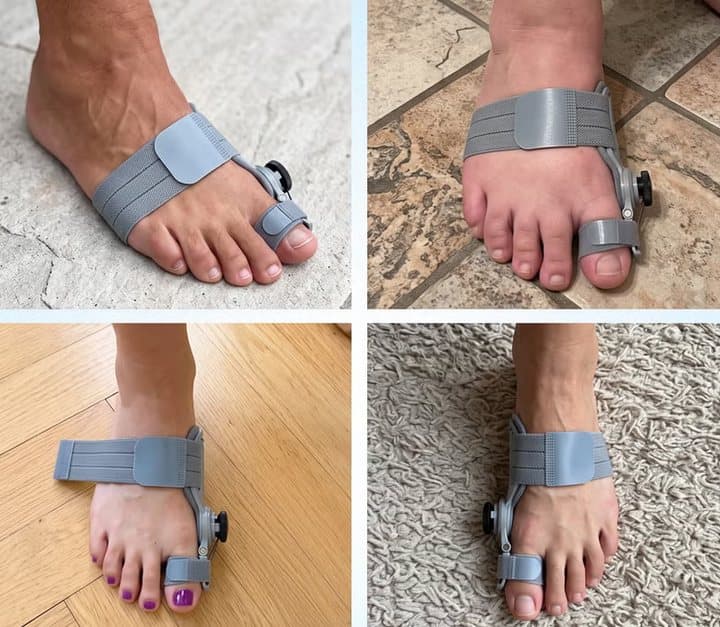
The photos show a grey plastic frame, a black dial and grey fabric straps with hook-and-loop fastening. The page does not list materials or say whether the straps can be washed.
Cleaning
The page does not give care instructions. Wipe the frame with a damp cloth and let it dry. If the straps can be washed, hand wash and air dry them to keep the hook-and-loop fastening working.
Why hinged splints became popular
Hinged bunion correctors spread through social media ads, often with similar grey frames and dials. They appeal because they look more technical than a gel separator. The underlying principle, holding the toe straighter, is the same.
What it cannot do
It cannot remove bone, change the joint shape permanently, or replace surgery for severe, painful bunions. It is also too bulky for most shoes.
Who it's for
Treatmedy Bunion Fix suits people with mild to moderate bunions who want a non-surgical way to ease discomfort, anyone advised by a podiatrist to try a splint, and people who can wear one at home or overnight. It does not suit anyone expecting the bump to disappear, people with diabetes or poor circulation without medical advice, very severe or arthritic bunions, or anyone wanting to wear it in normal shoes.
- People with mild to moderate bunions who want a non-surgical way to ease discomfort
- Anyone advised by a podiatrist to try a splint or toe separator
- People who can wear a splint at home, seated or overnight
Why Treatmedy appeals
Bunions hurt, make shoes uncomfortable and change how feet look. Surgery means weeks of recovery, so a device that promises relief at home is naturally appealing. The page's customer quotes describe less throbbing, less stiffness and straighter toes.
Women in fashion shoes
The page's photos include strappy heels, and bunions are more common in women. Narrow, pointed shoes and heels worsen bunion pain. A splint at home helps less than changing everyday shoes, though both together may help most.
People with corns and calluses
Bunions can push the big toe against the second toe, causing corns and calluses. One customer says the toe no longer presses as hard, easing sores. Reducing pressure between toes is a realistic benefit of separators and splints.
People who cannot have surgery
Some people cannot have surgery because of other health problems, or prefer not to. For them, managing symptoms with shoes, padding and splints is the main option, and a comfortable splint can be part of that.
People on their feet all day
A nurse quoted on the page wears it in the evenings after 12-hour shifts and reports less throbbing. Evening use after a long day is a sensible routine for splints.
People waiting for or avoiding surgery
Some people with bunions are not ready for surgery or are advised to wait. Splints, wider shoes and padding can help manage symptoms meanwhile.
Runners and active people
Bunions can make running and long walks painful. A splint at night will not change how the foot works when running. Proper footwear with a wide toe box, and advice from a sports podiatrist, matter more.
Families
A customer from Singapore describes giving the device to her sister and sister-in-law. Because bunions run in families, relatives often share the problem and swap tips. Each person should still check fit and comfort.
People who sit a lot
Office workers can wear it under a desk while seated, as the page suggests. Get up and move regularly, and take it off before walking far.
Older adults
Customers in their 60s and 70s describe using it overnight. Older skin can be more fragile, so check for pressure marks.
People with bunionettes
A bunionette, or tailor's bunion, forms at the base of the little toe. Treatmedy targets the big toe, so it will not help a bunionette.
People after bunion surgery
After surgery, any splint should be used only on the surgeon's advice. Do not use a consumer splint on a healing foot without checking.
People with mild, flexible bunions
If you can gently push your big toe into a straighter position with your hand without pain, the bunion is flexible. A splint is more likely to feel comfortable and help symptoms in this case than with a stiff joint.
Gift buyers
A splint is a thoughtful gift for a relative with sore bunions, but fit and comfort are personal and refunds need the device to look unused. Consider buying one and letting them try it gently before opening a second.
Who should skip it
Skip Treatmedy if you expect it to make the bump go away. Skip it without medical advice if you have diabetes, numb feet, poor circulation or skin problems on your feet. Skip it for very severe, rigid or arthritic bunions, where a podiatrist or surgeon should advise. And skip it if you want something to wear in shoes.
- Anyone expecting the bump to shrink or the bone to straighten permanently
- People with diabetes, poor circulation or numb feet without medical advice
- Those with rigid, arthritic or very severe bunions
- People who need to walk in normal shoes while wearing it
Do bunion correctors work? What the research says
Splints and toe separators may ease pain and slightly reduce the toe angle while used, but they do not reverse the deformity. A 2021 BMJ Open meta-analysis of nine studies found orthoses with a toe separator had the best effect on the hallux valgus angle and pain. A 2024 systematic review found insufficient high-quality evidence that orthoses change the deformity over time. No study of Treatmedy itself is published.
The 2021 meta-analysis
The BMJ Open systematic review found that orthoses with a toe separator or an element that aligns the toe reduced the hallux valgus angle and relieved pain, with a moderate effect size. Bias risks included missing outcome data and measurement error.
Which orthoses were studied
The studies in the 2021 review included toe separators, night splints, insoles and combinations. Not all were hinged splints. The finding that alignment elements help supports the general idea of Treatmedy, without testing it directly.
The 2024 review
A 2024 review in the Journal of the American Podiatric Medical Association concluded that current evidence does not support orthotics for altering the progression of bunions on X-rays, while noting they may provide symptomatic relief.
Measurement problems
Studies measure toe angle on X-rays, which requires careful technique. Small angle changes can fall within measurement error. That is one reason the 2024 review found mixed results.
Toe separators in the research
Toe separators are simple gel or silicone spacers between the big and second toes. Their good showing in the 2021 review is useful for budget-conscious buyers, as they are cheap and can be worn in shoes.
What this means for the claims
Comfort and a small change in angle while wearing a splint are plausible. "Shrink unsightly bumps", "reverse bunion bulge", "fix the root cause" and "lasting correction" are not supported.
Pain relief vs correction
Most studies measure two things: pain and the toe angle on X-rays. Pain relief is the more consistent finding. Changes in angle are small, vary between studies and are often measured while the orthosis is in place, not after it is removed.
Pain relief compared
The 2021 review found that orthoses relieved foot pain. Pain relief matters most to most people with bunions, so this is a meaningful finding even though the bone is not corrected.
Hinged vs other splints
The research covers many orthosis types: toe separators, night splints and insoles. There is no evidence that a hinged design is better than others for long-term correction.
Exercises with evidence
Some studies combine splints with exercises, such as toe spreading and strengthening the muscle that pulls the big toe outward. Exercise programmes have shown some benefit for pain and function. A podiatrist or physiotherapist can show you the right ones.
Why results vary
Bunion severity, flexibility, footwear and how long a splint is worn each day all differ between people. Two people using the same device may have very different experiences, which is why studies show average effects with wide ranges.
How long before you notice anything
Customers describe changes after four weeks to two months of regular use. Pain often eases sooner, as pressure on the joint reduces. Any change in toe position is likely to be small and depend on continued wear.
Customer reports
One customer says her bunion is down by about a third after four weeks. Swelling around a bunion can go down with less pressure, which may look like a smaller bump. The bone itself is unlikely to change that quickly.
What this means for you: buy it for comfort, not to avoid a surgery you have been advised to have.
Who is Dr. Blane Schilling, and are the other claims true?
We could not verify the doctor behind the product. The page names Dr. Blane Schilling, M.D., and quotes him describing decades of treating bunions, 300+ prototypes and a private clinic. On 5 October 2026, the US National Provider Identifier registry returned no provider with that name, and the page gives no clinic, licence, speciality or publications.
The provider registry
Doctors who bill US health insurance must have a National Provider Identifier. Searching the NPI registry for Blane Schilling returned no results. A doctor who has retired, works outside the US or never billed insurance might not appear, so this is not proof he does not exist, but it means the credential cannot be checked.
Why credentials matter
A named doctor lends authority to a medical product. When the name cannot be checked, readers cannot judge the expertise behind the design. Reputable medical device makers usually give a doctor's full name, speciality and where they practise.
"Patented hinge technology"
The page does not give a patent number. Hinged bunion correctors with adjustment dials are sold by many brands. Without a number, the patent claim cannot be checked.
"Now available outside Dr. Schilling's private clinic"
The page presents the device as previously exclusive to a private clinic. Hinged bunion correctors of very similar design are widely sold online. We found no evidence of the clinic.
"Doctor-designed and recommended" and "podiatrist-approved"
No podiatrist or organisation is named as approving it. Podiatrists do recommend splints and separators for symptom relief, so the general approach has support.
"Guaranteed results"
The page shows a "guaranteed results" badge. The guarantee is a money-back promise with conditions, not a promise that the device will work. Read the return terms carefully.
"Rated 4.9/5" and "295,000+ bunions soothed"
The page gives no source. Treatmedy's Trustpilot page, covering all its products, showed 4.2 from 468 reviews on 5 October 2026.
"The only device with a patented mechanism that targets the root cause"
Bunions are caused by a combination of inherited foot structure, joint laxity and footwear. A splint does not change those, and other hinged splints exist.
"Relief that only comes from surgery"
The page says the device provides relief you have been told only surgery can give. Surgery corrects the bone; a splint does not. Pain relief from padding, shoes and splints is real, but different from correction.
"Fits all foot sizes and all types of bunions"
Bunions range from mild and flexible to severe and rigid with arthritis. A splint can only move a flexible toe. For a rigid joint, forcing it can cause pain.
"300+ prototypes"
The quote says the doctor developed over 300 prototypes across a decade. We could not verify this or any of the doctor's background.
"Strengthens toe muscles"
A passive splint holds the toe; it does not exercise muscles. Toe exercises, such as spreading the toes and pressing the big toe down, are what strengthen foot muscles.
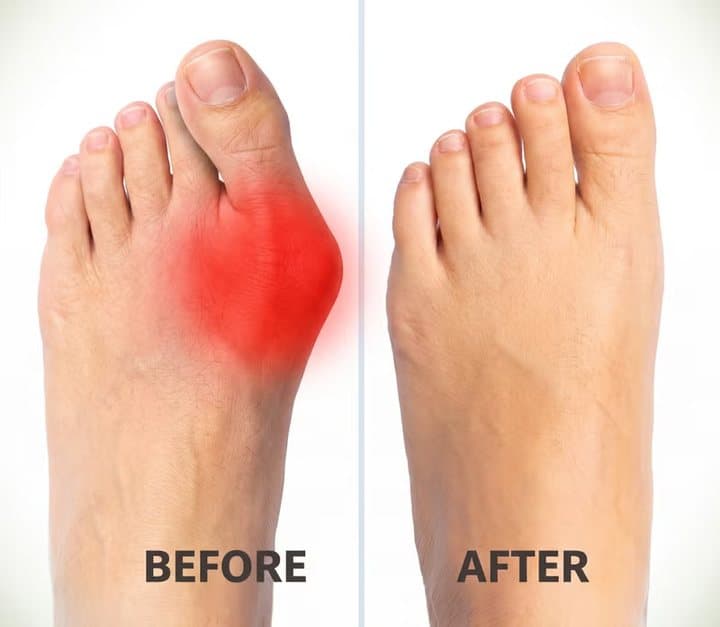
The before and after image
The page's before and after picture shows a red, swollen bunion and a straight foot. It is an illustration, not a photo of a customer's result. Treat it as marketing.
"Bye bye bunion pain"
Splints can ease pain for some people. "Bye bye" suggests the pain goes for good, which depends on continued use, footwear and the bunion's severity.
"Recommended against" graphic
One page image lists bunion pain, misalignment, hammer toes and corns under "Recommended Against". It seems to mean the device is recommended for those problems. Hammer toes and corns are different conditions that a bunion splint does not target directly.
How much does Treatmedy Bunion Fix cost, and what are the return terms?
On 4 October 2026, one Treatmedy Bunion Fix cost $49.99, a two-pack cost $89.99 and a four-pack cost $143.98, with free shipping on the multi-packs. Each device fits one foot, so people with bunions on both feet need two. There is a 90-day money-back guarantee, but returns must show no visible signs of use, and you pay tracked return shipping.
Treatmedy prices
| Pack | Price | Devices | Per device | Shipping |
|---|---|---|---|---|
| Single | $49.99 | 1 | $49.99 | Qualifying offers only |
| 2-pack (most popular) | $89.99 | 2 | About $45.00 | Free |
| 4-pack (best deal) | $143.98 | 4 | About $35.99 | Free |
Is it good value?
Hinged bunion correctors from other brands are sold at a wide range of prices, often less. Toe separators are cheaper still. At $49.99, Treatmedy sits in the middle, with a longer return window than many.
The crossed-out prices
The page shows $89.99 crossed out against $49.99 for one, and 44% to 60% savings on packs. We found no evidence the device sells at the higher price, so judge the price on its own.
One foot or two
A single device fits either foot, but only one at a time. For bunions on both feet, the two-pack lets you wear one on each foot.
The return policy
The guarantee lasts 90 days. You email support@treatmedy.com, follow the instructions and wait for approval. Items must be in original packaging, in good working condition, with no visible signs of use and all accessories. You pay tracked return shipping, which is not refunded, and must not send it to the address on the package.
What to do: keep the packaging, wear it carefully, and contact support early if it does not help.
Insured shipping
The checkout offers insured shipping. Without it, the policy says the company cannot guarantee a refund or replacement if a parcel is lost or stolen. For a $50 item, consider whether the extra is worth it.
Why the 90-day window helps
A 90-day guarantee gives more time than most to judge comfort and whether pain eases. That is a point in Treatmedy's favour, as long as the condition of the device meets the policy.
Customs and international orders
The page says it ships internationally. Customers outside the US may face import fees and costly return postage. A customer from Singapore mentions buying through the page.
"No visible signs of use"
A splint worn for weeks will show some wear on the straps. That condition could limit refunds for people who used it as directed and found it did not help. Ask support how they apply it before buying.
Contacting support
The policy says support replies within 24 hours by email. Include your order number, the issue and your purchase email. It also warns that some companies pose as Treatmedy, so order only from the page you intend to.
Tracked returns
The policy requires a tracking number for returns. Use a tracked postal service and keep the receipt until your refund arrives.
Damaged items
Damaged products must be reported within three days of delivery with photos or video for a replacement.
Size and fit issues
The device is one size. If it does not fit, contact support quickly. Refunds depend on the device looking unused, so test fit briefly with clean feet and keep it in good condition.
Shipping and cancellations
Orders can be cancelled within 12 hours. The page offers insured shipping; without it, the company does not guarantee a refund or replacement for lost or stolen parcels.

Treatmedy Bunion FixScore 4.6/10
Best for: People with mild to moderate bunions who want a non-surgical way to ease discomfort
$49.99 at Treatmedy · Price checked October 4, 2026
Check price at Treatmedy (opens Treatmedy in a new tab)We may earn a commission if you buy through our links.
Is Treatmedy better than toe separators, wider shoes or surgery?
For most people, wider shoes and toe separators are the first step, and a splint is an add-on. Shoes with a wide toe box reduce pressure on the bunion. Silicone toe separators are cheap and can be worn in shoes. A hinged splint gives a stronger stretch at home. Surgery is the only way to correct the bone, for people whose pain is not controlled.
| Treatmedy Bunion Fix | Toe separator | Wider shoes | Surgery | |
|---|---|---|---|---|
| Cost | $49.99 | Usually low | Varies | High |
| Wear in shoes | No | Often yes | Yes | n/a |
| Eases pain | May help | May help | Often helps | Usually, after recovery |
| Corrects bone | No | No | No | Yes |
| Recovery time | None | None | None | Weeks to months |
Treatmedy vs a toe separator
Toe separators are soft gel pieces between the big and second toes. In the 2021 review, orthoses with a toe separator element had the best effect on toe angle. They cost little and fit in shoes, so they can be worn for longer each day.
Treatmedy vs doing nothing
Many mild bunions cause little pain with good shoes and need no device at all. If yours does not hurt, a splint may not add much.
Treatmedy vs a generic hinged corrector
Generic hinged correctors look very similar and are often cheaper. Treatmedy's advantages are its 90-day window and a company with a Trustpilot track record. Compare return terms before choosing.
Treatmedy vs a bunion pad
Gel bunion pads cushion the bump in shoes and reduce rubbing. They do nothing for alignment but can make walking much more comfortable. Many people use pads by day and a splint at night.
Treatmedy vs a rigid night splint
Rigid night splints hold the toe in one position overnight. A hinged splint allows some movement and can be worn while walking at home. Comfort decides which suits you.
Combining approaches
Many people get the best results from a mix: wider shoes all day, a separator or pad in shoes, a splint at night, and simple toe exercises. No single product does everything.
Treatmedy vs custom orthotics
A podiatrist can prescribe custom insoles that change foot posture, which may help if flat feet contribute to the bunion. They cost more but are worn in shoes all day.
Treatmedy vs physiotherapy
A physiotherapist can teach exercises, mobilise the joint and check walking patterns. That costs more but addresses more than a splint can. Some people use both.
Treatmedy vs wider shoes
Shoes with a roomy toe box, low heels and soft uppers often help bunion pain more than any device. They are the first advice most podiatrists give.
When to consider surgery
Surgeons usually consider surgery when pain persists despite good shoes and other measures, when it limits daily activity, or when the toe overlaps others. Surgery is not usually done for appearance alone.
Treatmedy vs surgery
Surgery realigns the bones and is considered for persistent pain that limits daily life. It involves recovery time and risks. A splint may help some people manage symptoms long enough to avoid or delay it.
Choose Treatmedy if
You have a flexible bunion that aches, can wear a splint at home or overnight, and want a stronger stretch than a toe separator gives. Choose separators and wider shoes first if you want something cheap to wear all day.
Other foot products we have reviewed
Our Soul Insole review covers an insole sold for alignment, and our TheraFoot Pro review looks at an EMS foot mat. Our My Happy Feet Socks review covers toe-separating socks, a lower-tech alternative.
Treatmedy Bunion FixScore 4.6/10
Why people buy it: Adjustable hinge lets you set a gentle, comfortable pull on the big toe
$49.99 at Treatmedy · Price checked October 4, 2026
Check price at Treatmedy (opens Treatmedy in a new tab)We may earn a commission if you buy through our links.
Is Treatmedy legit, and what should you check before buying?
Treatmedy is a real company with a 4.2 Trustpilot score from 468 reviews across its products, but its claims and doctor credential need caution. Talk to a podiatrist if your bunion is painful, swollen or worsening, check your feet for pressure marks, and understand that refunds depend on the device showing no signs of use.
See a podiatrist for painful bunions
What to do: if your bunion is very painful, red, swollen, or stopping you walking normally, see a podiatrist or doctor before relying on a splint.
Watch for warning signs
Sudden severe pain, redness and heat in the big toe joint may be gout or infection rather than a bunion. See a doctor promptly.
Check skin and circulation
Remove the splint if your toe goes pale, blue, numb or tingly, or if the straps leave deep marks. People with diabetes should check with their care team first.
Do not ignore worsening pain
If pain increases while using the splint, stop. A splint that pulls too hard can irritate the joint or the skin over the bunion.
Start gently
Set a low angle at first and increase slowly over days or weeks. Forcing the toe can cause pain.
Keep a photo record
Take a photo of your feet from above before you start, in the same light and position, and again after a few weeks. It gives you an honest view of any change.
Read the Trustpilot reviews
Treatmedy's Trustpilot page showed 67% five-star and 13% one-star reviews on 5 October 2026, across all its products. Read reviews that mention the bunion device specifically.
How to buy Treatmedy the smart way
- Decide whether you need one foot or two, then open the Treatmedy Bunion Fix order page (opens Treatmedy in a new tab).
- Pick a single device to test, or a two-pack for both feet.
- Check the shipping cost on a single device.
- Keep the packaging and parts for the 90-day window.
- Ask support how "no signs of use" is applied before you start.
How did we score Treatmedy Bunion Fix?
Treatmedy Bunion Fix scores 4.6 out of 10: claim accuracy 0.4, build durability 1.1, price competitiveness 1.0, usability 1.2 and owner satisfaction 0.9, each out of 2. It earns points for an adjustable design that matches what research supports for symptom relief, and a reasonable Trustpilot score. Points come off for claims to shrink bunions and fix the root cause, an unverified doctor credential, and refunds that require no signs of use.
How the score breaks down
We use the five criteria on our how we test page, each out of 2.
| Criterion | Score | Why |
|---|---|---|
| Claim accuracy | 0.4 / 2 | "Shrinks bumps", "root cause", unverified doctor |
| Build durability | 1.1 / 2 | Plastic hinge and fabric straps |
| Price competitiveness | 1.0 / 2 | Mid-priced for hinged splints |
| Usability | 1.2 / 2 | Easy to fit; too bulky for shoes |
| Owner satisfaction | 0.9 / 2 | Trustpilot 4.2; strict return conditions |
| Total | 4.6 / 10 |
What we did, and did not, do
Nobody on our team has used Treatmedy Bunion Fix. We read the offer page and return policy on 4 and 5 October 2026, and checked PubMed, the NPI registry and Trustpilot on 5 October 2026. Our health gadgets hub lists other foot and pain products we have reviewed.
How to use Treatmedy Bunion Fix for the best results
Strap it on with the hinge at your big toe joint, set a gentle angle, wear it for 30 minutes at first while seated, and increase time and angle slowly. Check your skin after each session, combine it with wider shoes and toe exercises, and stop if it causes pain, numbness or marks.
- Position the hinge at the big toe joint.
- Fasten the straps snugly but not tight.
- Set a gentle angle with the dial.
- Start with 30 minutes seated.
- Increase slowly over days.
- Check your skin after each session.
- Add toe exercises and roomy shoes.
Wearing it overnight
Some customers sleep in it. Start with daytime sessions to make sure it is comfortable, then try nights at a gentle setting.
Taking it off
Loosen the dial before removing the straps, so the toe is not released suddenly from a stretched position. Move your toes gently afterwards.
Store it carefully
Keep the splint somewhere dry and flat, out of reach of pets that might chew the straps. Close the hook-and-loop fastening so it does not snag clothing.
Ice for flare-ups
When the bunion is red and sore after a long day, a wrapped ice pack for 10 to 15 minutes can calm it. Do not wear the splint over an inflamed, very painful joint.
Toe exercises
Try spreading your toes wide, holding for a few seconds, and pressing the big toe into the floor while lifting the others. Doing these daily alongside the splint may help comfort.
Night use tips
Fasten straps snugly but not tightly before sleep, since feet can swell slightly overnight. If you wake with numbness or pain, loosen the dial or stop night use.
Walking in it
The hinge allows careful walking at home. Avoid stairs and slippery floors, and do not wear it in shoes unless they are very roomy.
Other questions about bunion splints
Can I wear it on both feet? You need two devices to wear one on each foot.
Will my bunion come back if I stop? Any change in toe position while wearing it is likely to fade when you stop.
Can teenagers use it? Ask a doctor; growing feet need professional advice.
Treatmedy Bunion FixScore 4.6/10
Before you buy: Check the final price, shipping and return terms at checkout.
$49.99 at Treatmedy · Price checked October 4, 2026
Check price at Treatmedy (opens Treatmedy in a new tab)We may earn a commission if you buy through our links.
Frequently asked questions
Does Treatmedy Bunion Fix work?
It may ease discomfort and slightly improve toe angle while worn. A 2021 BMJ Open meta-analysis found orthoses with a toe separator improved the hallux valgus angle and pain, but a 2024 review found insufficient evidence that orthoses slow or reverse the deformity.
Can a bunion corrector fix a bunion without surgery?
No device has been shown to permanently correct the bone deformity. Splints and separators can help symptoms and may help some people delay or avoid surgery if pain is controlled, but the bunion itself usually remains.
How much does Treatmedy Bunion Fix cost?
On 4 October 2026, one cost $49.99, a two-pack cost $89.99 and a four-pack cost $143.98, with free shipping on the multi-packs. Each device fits one foot, so two are needed for both feet at once.
Who is Dr. Blane Schilling?
The page names Dr. Blane Schilling, M.D., as the designer. We could not find a doctor of that name in the US National Provider Identifier registry on 5 October 2026, and the page gives no clinic, licence or publications.
What is the Treatmedy return policy?
There is a 90-day money-back guarantee. Returns must be approved by email, in original packaging with all parts and no visible signs of use, and you pay tracked return shipping, which is not refunded.
How long should I wear a bunion corrector?
The page suggests 30 minutes a day, and customers describe wearing it for hours or overnight. Start with short sessions at a gentle setting, and stop if it causes pain, numbness or skin marks.
Is Treatmedy legit?
Treatmedy is a real company with a Trustpilot score of 4.2 from 468 reviews across its products. The concerns are claims that splints shrink bunions, an unverified doctor credential and strict return conditions.
We may earn a commission if you buy through our links.
This content is for informational purposes and is not medical advice. Talk to a qualified professional before using any product that affects your health.
Prices accurate as of October 4, 2026. Check the seller's checkout for current pricing, promotions and terms.
What we checked: No hands-on use. Claims, photos, prices and the return policy from the Treatmedy Bunion Fix offer page our link opens on 2026-10-04 and 2026-10-05. Systematic reviews on PubMed, the US NPI registry and Treatmedy's Trustpilot page were checked on 2026-10-05.

About the author
James Wilson, Consumer Tech Writer
James Wilson covers health and wellness technology for Top10Gadgets: breathing devices, massagers, hearing aids, dental and weight-loss products, and the other gadgets sold with a promise to make life easier. James write…
- Health and wellness gadgets
- Over-the-counter hearing aids
- Breathing and massage devices
- FDA clearance and registration
- Tech for beginners
Writing for Top10Gadgets since 2026Full profile