Health Gadgets / Insoles and foot care
Soul Insole Review: A Small Stick-On Gel Insert for Foot Pain, What It Can Help and the Whole-Body Claims to Discount
A clear, reusable gel insert that sticks inside shoes under the heel and arch. A cheap, washable first step for heel pain, but the knee, hip and neck claims go well beyond the evidence.

By James Wilson, Consumer Tech Writer at Top10Gadgets
Updated 26 min readHow we test
Quick answer
Worth trying if you have mild heel or arch pain and want a cheap, simple first step. Soul Insole is a small, clear memory-gel insert that sticks inside most shoes, cushions the heel and lightly supports the arch, and costs $29.99 with a genuine 60-day guarantee.
Score 5.0/10$29.99 at Soul Insole
Check price at Soul Insole (opens Soul Insole in a new tab)We may earn a commission if you buy through our links.
- Best for
- People with mild heel or arch pain who want a cheap first step
- Not for
- Anyone with severe, worsening or long-lasting foot pain who has not seen a clinician
$29.99 at Soul Insole
Check price at Soul Insole (opens Soul Insole in a new tab)We may earn a commission if you buy through our links.
On this page · 13 sections
- 01Our verdict
- 02The short version
- 03Pros & cons
- 04How it works
- 05Who it's for
- 06Does Soul Insole work for foot pain?
- 07Are Soul Insole's claims accurate?
- 08How much does Soul Insole cost, and what is the return policy?
- 09Is Soul Insole better than Akusoli, Liftly or a full orthotic?
- 10Is Soul Insole legit, and what should you check before buying?
- 11How did we score Soul Insole?
- 12How to use Soul Insole for the best results
- 13Frequently asked questions
Our verdict
Worth trying if you have mild heel or arch pain and want a cheap, simple first step. Soul Insole is a small, clear memory-gel insert that sticks inside most shoes, cushions the heel and lightly supports the arch, and costs $29.99 with a genuine 60-day guarantee. Off-the-shelf inserts do help many people with plantar fasciitis. But the page's claims that it realigns your knees, hips, back and neck, with "zero side effects", go far beyond the evidence. Soul Insole scores 5.0 out of 10, held back by those claims.
The short version
- What it is: a reusable, stick-on memory-gel insert that sits under the heel and arch inside your shoe.
- Price: $29.99 for one on 4 October 2026, $59.98 for three and $89.97 for five.
- Best trait: a cheap, washable insert that moves between shoes, with a 60-day guarantee.
- Biggest drawback: marketing claims about whole-body alignment that an insert cannot support.
- Our score: 5.0 out of 10.
Pros & cons
The pros come from the design and the evidence for shoe inserts in general. The cons are about overstated claims and the limits of a small insert.
What we like
- Small, clear gel insert that fits inside most shoes, including some sandals and heels
- Sticks in place and moves between shoes; washes with water to restore the grip
- Shoe inserts are a recommended first step for plantar fasciitis heel pain
- Men's, women's and children's sizes, according to the page
- Genuine 60-day money-back guarantee
What we don't
- Claims it realigns your knees, hips, back and neck, which an insert cannot be shown to do
- 'Zero side effects' overstates it; any new insert can cause aches while you adjust
- Covers only part of the foot, so it offers less arch control than a full orthotic
- The quoted podiatrist and her photo cannot be verified
- Return postage is yours, and shipping is not refunded
Sold by Soul Insole
Soul Insole$29.99
How it works
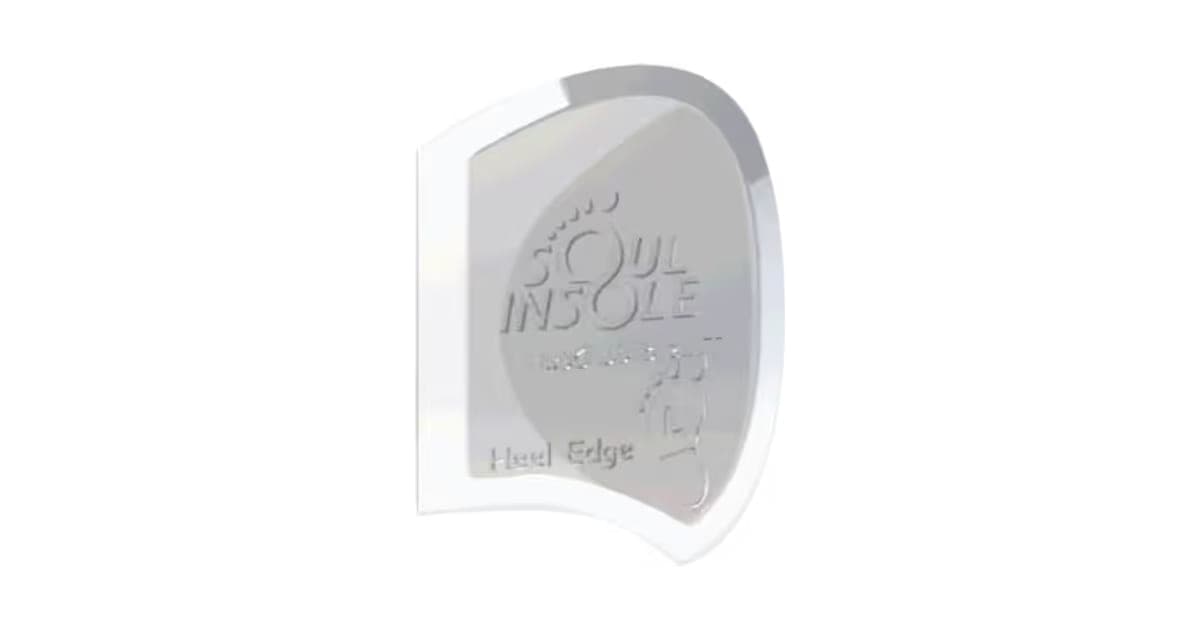
Soul Insole is a thin, clear gel pad shaped to sit under the heel and the first part of the arch. The underside is sticky, so it stays put inside a shoe without glue. According to the page, the memory gel and its shape spread pressure across the foot, take load off the heel and forefoot, and gently guide the foot into better alignment.
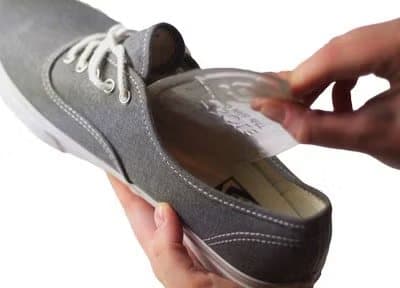
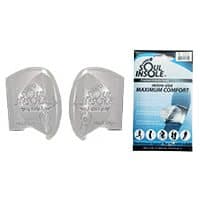
The photos show a clear pad embossed with the Soul Insole logo, with a marked heel edge, and a retail pack labelled "micro-size Maximum Comfort". You peel off a film, stick it in, and walk. When it gathers dust and loses grip, you rinse it under water and it becomes sticky again.
Peel off the film
Step 1: Peel the protective film from the sticky underside of the clear gel insert.
Stick it in your shoe
Step 2: Place it inside the shoe so it sits under your heel and the start of your arch, and press it down.
Wear and move it
Step 3: Walk as normal. The gel cushions the heel and gently supports the arch. Peel it out and stick it into another pair, and rinse it with water when the grip fades.
Why cushioning and support help heel pain
Plantar fasciitis, the most common cause of heel pain, is irritation of the thick band of tissue under the foot that runs from heel to toes. Cushioning under the heel reduces impact, and a little arch support reduces the strain on that band with each step. That is why inserts, heel cups and supportive shoes are standard first steps.
Heel fat pad
Under the heel bone sits a pad of fat that cushions each step. It thins with age and with years of standing, which can cause heel pain that feels similar to plantar fasciitis. A gel pad adds cushioning where the natural pad has thinned, which is one situation where a heel cushion can make a clear difference.
A partial insert, not a full orthotic
Full-length insoles and orthotics support the whole foot and can control how it rolls inward. Soul Insole covers only the heel and part of the arch. That makes it slimmer, so it fits shoes full insoles do not, but it offers less control for people with marked flat feet or over-pronation.
The pressure map
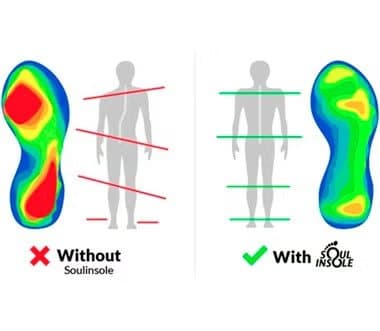
The page shows a coloured pressure map with red hot spots "without" and even green "with" the insert. It is an illustration, not a measurement from a study of Soul Insole wearers.
The memory gel
Polyurethane gel compresses under load and slowly returns to shape, which spreads pressure and absorbs some impact. It is denser than foam, so it holds its shape longer, but it can feel warm in hot weather and heavier than foam pads of the same size.
The founder's story
The page says inventor Laina Gossman spent more than 15 years hand-carving custom orthotics and apprenticed under a biomechanist before designing a mass-market insert. Background published elsewhere describes her working in an orthotics shoe shop in San Diego and patenting the design. That history explains the focus on a small, discreet shape.
Sizes
The page says men's, women's and children's sizes are available at checkout, and published product descriptions mention three sizes. A small insert is more forgiving than a full insole, because it does not need to match shoe length exactly.
Who it's for
Soul Insole suits people with mild heel or arch pain, people who stand or walk all day and want more heel cushioning, and anyone who wants one insert to move between work shoes, trainers and casual shoes. It does not suit people with severe or long-lasting foot pain who have not been assessed, people with diabetes or numb feet, or anyone expecting it to cure knee, hip or back pain.
- People with mild heel or arch pain who want a cheap first step
- Anyone who stands or walks for long hours and wants extra heel cushioning
- People who want one insert to move between several pairs of shoes
Why Soul Insole appeals
Foot pain makes everything harder: walking the dog, standing at work, playing sport. Many people have tried full insoles that crowd their shoes or custom orthotics that cost hundreds of dollars. A thin, clear insert that slips into almost any shoe for $29.99 is an easy thing to try, and the founder's story, a biomechanist who hand-carved orthotics, gives it credibility.
People on their feet all day
Nurses, retail staff, warehouse workers and teachers often feel heel pain by the end of a shift. A cushioning insert in work shoes can make a noticeable difference to comfort. One customer quoted on the page wears it in boots for 12-hour days.
People with flat feet
Flat feet, or over-pronation, mean the arch drops and the foot rolls inward. Many flat-footed people have no pain at all. For those who do, arch support can help, but a small pad gives only mild support. Full-length orthotics with a firmer arch suit marked flat feet better.
People with mild plantar fasciitis
Early heel pain, worst with the first steps in the morning, is classic plantar fasciitis. An insert, daily calf and foot stretches, and supportive shoes are the usual first steps. Most cases improve over months with these measures.
People who switch shoes often
Because it sticks rather than replacing the shoe's insole, Soul Insole can move between pairs. That suits people who wear different shoes for work, gym and weekends, though moving it often wears the sticky surface faster.
Pregnant people
Pregnancy changes posture and weight, and many people notice foot and arch pain, especially later on. A cushioning insert can help comfort. Swelling, sudden foot pain or numbness in pregnancy should be checked by a midwife or doctor.
Travellers
Long days on foot sightseeing cause sore heels even in people who rarely have foot pain. Because Soul Insole is small and moves between shoes, it packs easily for a trip.
Older adults
Feet change with age: the fat pad under the heel thins and arches can drop. Extra heel cushioning can help comfort. Older adults should still have new or worsening foot pain checked, and take care that any insert does not make shoes tight.
Runners and walkers
Walkers covering long distances may like extra heel cushioning. Runners usually do better with full-length insoles or shoes designed for their gait, since small pads can shift at speed. Try it on walks first.
People with high arches
High arches concentrate pressure on the heel and ball of the foot. A heel and arch pad can spread some of that load. People with very high arches may need more cushioning under the forefoot too.
People who wear dress shoes and heels
Slim dress shoes and heels rarely have room for insoles. A thin insert may be the only support that fits. Heels shift weight forward onto the ball of the foot, so a heel pad helps less there than in flat shoes.
Who should skip it
Skip Soul Insole if your pain is severe, getting worse or has lasted months without improvement, until a clinician has assessed it. Ask a professional first if you have diabetes, poor circulation or numbness. Skip it if you need firm arch control from a full orthotic. And do not buy it expecting it to fix pain in your knees, hips, back or neck.
- Anyone with severe, worsening or long-lasting foot pain who has not seen a clinician
- People with diabetes or poor foot sensation without professional advice
- Those who need firm arch control from a full-length orthotic
- Buyers hoping an insert will fix knee, hip or neck pain
Does Soul Insole work for foot pain?
Inserts like it are a sensible, evidence-backed first step for heel pain, though Soul Insole itself has not been tested in published trials. An American Academy of Family Physicians evidence review found that prefabricated and custom orthotics both reduce plantar fasciitis pain, with off-the-shelf options giving similar relief for less money. The NHS also suggests insoles for heel pain alongside stretching and rest.
What the evidence says
The American Academy of Family Physicians' evidence-based review of plantar fasciitis describes prefabricated orthoses as a worthwhile first step, often combined with stretching. The NHS page on plantar fasciitis advises supportive shoes, insoles or heel pads, stretches, rest and pain relief, and says most people recover within months.
How long plantar fasciitis takes
Most plantar fasciitis improves within six to twelve months with simple measures, according to the NHS. Inserts can make the wait more comfortable and may speed recovery for some people. If pain is no better after several months of consistent self-care, a clinician may suggest other treatments, such as physiotherapy or injections.
Combining measures
Studies of foot pain treatments often combine inserts with stretching, and stretching itself has good evidence. One trial cited in reviews found prefabricated insoles plus stretching worked better than custom orthotics plus stretching. In practice, the stretches matter as much as the insert.
What patients often try first
Many people with heel pain try new shoes, a heel pad, stretches and over-the-counter pain relief before seeing anyone. That sequence is reasonable for mild pain. Soul Insole fits into it as the insert step.
Why results vary
Foot pain has many causes: plantar fasciitis, a thinning heel fat pad, Morton's neuroma, bunions, arthritis, nerve problems and stress fractures. An insert helps some of these more than others. A small heel and arch pad is most likely to help heel pain and general fatigue, and less likely to help forefoot problems such as neuromas and bunions.
"Relieves pain in minutes"
Some people feel more comfortable straight away with extra cushioning. Underlying conditions like plantar fasciitis take weeks to months to settle. Customer stories on the page describe instant relief, which is possible for comfort, but long-term improvement depends on treating the cause.
What this means for you: give it a few weeks alongside stretches, and judge it by morning heel pain as well as end-of-day comfort.
Are Soul Insole's claims accurate?
The comfort claims are fair; the whole-body claims are not. Cushioning the heel and supporting the arch can ease foot pain, and the gel is washable and reusable. But the page says the insert aligns the body "all the way to your neck", "trains your foot to strengthen its natural arch", is recommended by podiatrists for bunions and neuromas, and has "zero side effects". None of that is shown for this insert.
"Aligns your body from the bottom up"
Foot position does affect how forces travel up the leg, and some people with knee pain benefit from specific orthotics prescribed after assessment. There is no evidence that a small gel heel and arch pad realigns hips, back and neck. Pain in those areas needs its own assessment.
"Helps train your foot to strengthen its natural arch"
Arch supports hold the foot rather than strengthen its muscles. Strengthening comes from exercises such as toe curls, short-foot exercises and barefoot balance work. This claim has no evidence for passive inserts.
Where neck and back pain really come from
Neck and back pain have many causes, including posture, sleep position, muscle strain and joint changes. Shoes and inserts can play a small part for some people, but the main fixes usually lie elsewhere. For neck pain at night, for example, pillow height matters more; our Derila Ergo pillow review looks at one contoured option.
"Doctor recommended"
The page quotes "well-respected Podiatrist Dr. Karen Anderson" with a photo of a doctor beside a seal. We could not verify who she is or where she practises. Unverifiable endorsements carry little weight.
What to do: if you want a podiatrist's view, ask your own podiatrist or physiotherapist about Soul Insole.
"Podiatrists recommend Soul Insoles for plantar fasciitis, Morton's neuroma, bunions, over-pronation and metatarsalgia"
Podiatrists do recommend inserts and pads for these conditions, but different conditions need different shapes. Forefoot problems such as neuromas and metatarsalgia usually need pads placed under or behind the ball of the foot, not a heel and arch pad.
"Instantly relieve your tired achy feet"
Tired, aching feet at the end of a long day often respond quickly to extra cushioning, so this claim is plausible for comfort. Aches from an injury or condition need more than a pad.
"All natural, 100% drug-free, zero side effects"
It is drug-free, but it is made of polyurethane gel, not a natural material. New inserts can cause aches in the feet, calves or knees while your body adjusts, and a pad that makes shoes tight can rub. Those effects are usually minor, but "zero" is an overstatement.
The patent
The page calls the design patented and award-winning. Background on the product says the inventor patented the micro-sized orthotic design. A patent protects a design; it does not show that the design works better than alternatives.
"Works in every shoe, even sandals"
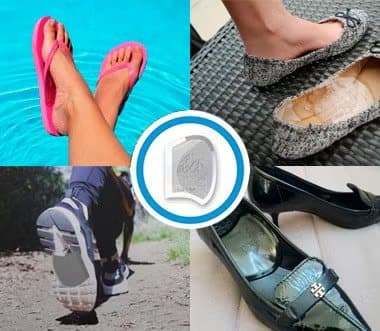
A thin, clear insert fits more shoes than most insoles, including some heels, flats and dress shoes. Open sandals and flip-flops are harder: the pad may slip on smooth footbeds or show at the edges.
"Odorless and washable"
Gel does not soak up sweat, so it should stay fresher than foam. Shoes themselves still need airing, and socks still need changing. If shoes smell, the insert is unlikely to be the cause.
"Lasts for years" and "odourless"
Non-porous gel does not absorb sweat like foam, so odour claims are reasonable. "Lasts for years" depends on use; the sticky layer wears with frequent moving and washing.
"400,000+ units sold" and "90% positive user rating"
We could not verify either figure, and the rating comes from the seller.
How much does Soul Insole cost, and what is the return policy?
On 4 October 2026, one Soul Insole cost $29.99, three cost $59.98 and five cost $89.97, with free shipping on the multi-packs. Men's, women's and children's sizes are chosen at checkout. The return policy is a genuine 60-day money-back guarantee, though you pay return shipping and the refund covers the purchase price, not shipping. Size exchanges are offered, with the brand covering postage for the new size.
Soul Insole price and bundles
| Bundle | Price | Per unit |
|---|---|---|
| 1 Soul Insole | $29.99 | $29.99 |
| 3 (buy 2, get 1 free) | $59.98 | About $19.99 |
| 5 (buy 3, get 2 free) | $89.97 | About $17.99 |
The page shows "retail" prices of $35 per unit. The multi-packs are good value if you want inserts in several pairs of shoes or for family members.
Is the five-pack worth it?
At about $18 per unit, the five-pack suits a household where several people have foot pain, or someone who wants an insert in each of five pairs. Each insert can move between shoes, so most single users need one or two.
Shipping
The single unit's shipping is shown at checkout; the three- and five-packs ship free. The page says it ships to more than 30 countries.
What one unit includes
The page does not spell out whether one unit is one insert or a pair. The product photo shows two inserts beside one retail pack, which suggests a pair per pack. Confirm at checkout.
Cost per pair of shoes
Because one insert moves between shoes, the real cost depends on how many pairs you want covered at once. One unit at $29.99 for a single pair you swap around is cheap. Five units at about $18 each lets you leave one in every pair.
Compared with other inserts
Pharmacy gel heel cups and arch cushions often cost $10 to $20. Full-length supportive insoles from established brands cost $30 to $60. Custom orthotics from a podiatrist cost hundreds of dollars. Soul Insole sits at the lower end, especially in multi-packs.
Value against a podiatrist visit
A podiatry appointment costs more than an insert, but gives a diagnosis. If you are unsure what is causing your pain, one appointment may save money on products that do not suit your problem.
The return policy in full
According to the policy, Soul Insole offers a 60-day money-back guarantee. You are responsible for shipping costs, and you are reimbursed for your original purchase amount, not including shipping. The policy adds that customers outside the 60 days can contact the company, which will try to help. To request a refund or exchange, email info@soulinsole.com.
What to do: keep the packaging and order details, and email before posting anything back.
Exchanges
If you order the wrong size, the policy says to contact support. You pay to send the item back, and the company covers shipping the new size to you.
Who sells it
The page says Soul Insole is owned and operated in San Diego, California, and names its inventor, biomechanist Laina Gossman. Customer service is at info@soulinsole.com.

Soul InsoleScore 5.0/10
Best for: People with mild heel or arch pain who want a cheap first step
$29.99 at Soul Insole · Price checked October 4, 2026
Check price at Soul Insole (opens Soul Insole in a new tab)We may earn a commission if you buy through our links.
Is Soul Insole better than Akusoli, Liftly or a full orthotic?
It is better for people who want a discreet insert that fits many shoes, and worse for those who need full-foot support. Our reviews found Akusoli adds magnets and acupressure claims with little evidence, while Liftly is a full cushioned insole with a heel cup. A full-length orthotic gives more arch control. Soul Insole's advantage is its small size and portability.
| Soul Insole | Akusoli | Liftly | Custom orthotic | |
|---|---|---|---|---|
| Price seen | $29.99 | $29.99 | See our review | Usually hundreds |
| Coverage | Heel and arch pad | Full insole | Full insole | Full insole |
| Fits slim shoes | Yes | Less so | Less so | Depends |
| Our score | 5.0 / 10 | 5.8 / 10 | 5.4 / 10 | Not reviewed |
| Main claim | Cushion and alignment | Acupressure and magnets | Cushioning and support | Prescribed correction |
Soul Insole vs Akusoli
Our Akusoli review covers full-length insoles with magnetic and acupressure claims we found unsupported, though the arch support itself may help. Soul Insole avoids the magnet claims but makes whole-body claims of its own. For slim shoes, Soul Insole fits better.
Soul Insole vs Liftly
Our Liftly review looks at a cushioned full-length insole with a heel cup. Full insoles give more consistent support across the foot and suit trainers and work boots. Our Akusoli vs Liftly comparison weighs those two on comfort, heel pain, sizes and returns. If a bunion rather than heel pain is the problem, our Treatmedy Bunion Fix review covers a hinged corrector and what splints can and cannot change.
Soul Insole vs compression socks and sleeves
Some people with plantar fasciitis wear compression sleeves for the arch or ankle. Evidence for them is limited, but they may feel supportive. They can be combined with an insert.
Soul Insole vs a heel cup
A simple gel heel cup costs less and cushions the heel well. It does not support the arch. Soul Insole combines both in one pad.
Soul Insole vs pharmacy gel insoles
Full-length gel insoles from pharmacies cushion the whole foot and usually cost less. They can make shoes tight and are less suited to dress shoes. Soul Insole's smaller footprint is its main advantage over them.
Soul Insole vs a custom orthotic
Custom orthotics are made from a scan or cast of your foot after assessment. They are the right choice for complex problems, significant flat feet or when off-the-shelf options fail. Many people with simple heel pain do just as well with prefabricated inserts first.
Soul Insole vs better shoes
Shoes with a firm heel counter, cushioning and some arch support often help as much as any insert. If your everyday shoes are flat and worn, replacing them may be the best first step.
Soul Insole vs a metatarsal pad
If your pain is in the ball of the foot, such as metatarsalgia or Morton's neuroma, a metatarsal pad placed just behind the ball of the foot is usually more targeted. Soul Insole sits under the heel and arch, so it is not the obvious choice for forefoot pain.
Soul Insole vs night splints
For stubborn plantar fasciitis, night splints that keep the foot gently flexed overnight can reduce morning pain. They are used alongside inserts and stretches, not instead of them.
When something else wins
Choose a full insole for running shoes and work boots, a custom orthotic for complex problems, and better shoes if yours are worn. Choose Soul Insole for slim shoes, multiple pairs and a cheap first try.
Soul InsoleScore 5.0/10
Why people buy it: Small, clear gel insert that fits inside most shoes, including some sandals and heels
$29.99 at Soul Insole · Price checked October 4, 2026
Check price at Soul Insole (opens Soul Insole in a new tab)We may earn a commission if you buy through our links.
Is Soul Insole legit, and what should you check before buying?
Soul Insole is a real product from a San Diego company, with a clear 60-day money-back guarantee and size exchanges. The checks are about expectations: it is a heel and arch cushion, not a body-alignment device; the podiatrist quote cannot be verified; and you pay return postage. People with diabetes, numb feet or severe pain should get professional advice first.
See a professional for persistent pain
What to do: if foot pain is severe, sudden after an injury, or has lasted more than a few months despite self-care, see a GP, podiatrist or physiotherapist.
Warning signs that need a doctor
See a doctor promptly if heel pain follows a fall or injury, if your foot is swollen, red or hot, if you have numbness or tingling, or if pain wakes you at night. These can point to problems that inserts will not fix.
Diabetes and poor sensation
People with diabetes or reduced feeling in the feet can develop sores from shoes that rub or feel tight without noticing. Check your feet daily and ask a podiatrist before adding any insert.
Check what you are buying
What to do: confirm at checkout whether one unit is a pair of inserts and which size suits your shoe size. Ask support if the size guide is unclear.
Choose the right size
Sizes are chosen at checkout. If unsure, ask support before ordering, since you pay return postage for exchanges.
Children
The page lists children's sizes. Children's feet are still developing, and foot or heel pain in active children, such as Sever's disease in growing heels, needs a doctor's or physiotherapist's assessment. Inserts may be part of treatment, but should not replace that check.
Check your shoes have room
A pad adds a little height under the heel. In tight shoes, that can push the heel up and make the shoe slip or rub. Try it in roomier shoes first.
Allergies and skin
The gel sits under your sock, so skin contact is limited. If you are sensitive to adhesives or polyurethane, watch for redness or itching and stop if it occurs.
Keep track of the 60 days
The guarantee is generous. Note the delivery date and give the insert several weeks of fair use, but email support before day 60 if it has not helped.
How to buy Soul Insole the smart way
- Check your pain fits a heel and arch problem, and see a professional if it is severe.
- Open the Soul Insole order page (opens Soul Insole in a new tab) and pick the right size at checkout.
- Choose one unit first, or the three-pack if you want inserts in several shoes.
- Wear it for a few weeks alongside stretches.
- Keep the packaging and email info@soulinsole.com within 60 days if it does not help.
How did we score Soul Insole?
Soul Insole scores 5.0 out of 10: claim accuracy 0.7, build durability 1.1, price competitiveness 1.3, usability 1.3 and owner satisfaction 0.6, each out of 2. It is a cheap, washable, portable insert of a type with good evidence for heel pain, backed by a genuine 60-day guarantee. Points come off for whole-body alignment and "zero side effects" claims, an unverifiable doctor quote, and no independent ratings we could check.
What owners say
We found no independent rating source for this store. Reviews quoted on the page describe quick relief from plantar fasciitis and comfort over long shifts, and one notes the insert does not crowd shoes. Reviews collected by the seller are not counted in our score.
How the score breaks down
We use the five criteria on our how we test page, each out of 2.
| Criterion | Score | Why |
|---|---|---|
| Claim accuracy | 0.7 / 2 | Comfort claims fair; alignment, arch-training and "zero side effects" are not |
| Build durability | 1.1 / 2 | Washable, reusable gel; sticky layer wears with moving |
| Price competitiveness | 1.3 / 2 | Reasonable, especially in multi-packs |
| Usability | 1.3 / 2 | Peel, stick and move between shoes |
| Owner satisfaction | 0.6 / 2 | No independent ratings found |
| Total | 5.0 / 10 |
What we did, and did not, do
Nobody on our team has used Soul Insole. We read the offer page and return policy on 4 October 2026 and read evidence reviews on plantar fasciitis. Our health gadgets hub lists the other health products we have reviewed.
How to use Soul Insole for the best results
Stick Soul Insole into a supportive pair of shoes first, positioned so the heel edge sits at the back of the heel, and wear it for short periods for the first few days. Combine it with daily calf and foot stretches if you have heel pain, rinse it when the grip fades, and judge it over two to four weeks, especially by how your first steps feel in the morning.
- Choose good shoes. A firm heel and enough room help most.
- Position it correctly. Heel edge to the back, under the heel and arch.
- Press it down. Make sure it sticks flat without wrinkles.
- Build up wear time. A few hours on the first days.
- Stretch daily. Calf and foot stretches for heel pain.
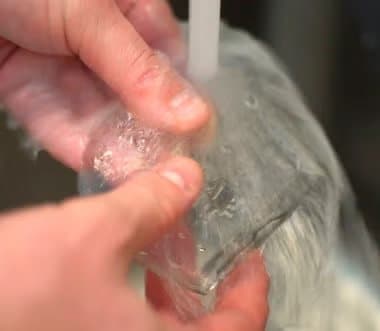
- Rinse to refresh. Wash with water when it stops sticking.
- Track progress. Note morning heel pain each week.
Morning routine
Morning heel pain is the hallmark of plantar fasciitis. Before getting out of bed, flex and point your feet and pull your toes back gently for a minute. Put on supportive shoes or slippers with the insert soon after rising, rather than walking barefoot on hard floors.
Stretches that help heel pain
Common stretches include leaning against a wall with one leg back to stretch the calf, pulling the toes back to stretch the sole, and rolling the foot over a cold bottle. Do them gently, several times a day, especially before the first steps in the morning.
First week
New inserts can make feet, calves or knees feel different as your gait adjusts. Start with a few hours a day and build up. Mild tiredness is normal; sharp pain is not, and is a reason to stop.
Breaking in new shoes
If you are also buying new shoes, wear them for short periods first, then add the insert. Changing shoes and adding an insert at once makes it hard to know which caused any new aches.
Positioning tips
If the insert feels like it presses into the arch, slide it slightly back towards the heel. If your heel slips out of the shoe, the insert may be lifting it; try a roomier shoe or a thinner position.
Moving it between shoes
Peel it out slowly from the edge, so the gel does not stretch. Stick it in the next shoe straight away, so dust does not land on the sticky side.
Combining with supportive shoes
The insert works best in shoes that already have a firm heel counter and some structure. In very soft, unstructured shoes, the foot can still roll inward despite the pad. Pair the insert with your most supportive everyday shoes for the first weeks.
When it does not help
If two to four weeks of consistent use, with stretches, brings no change, the insert may not suit your problem. Use the 60-day guarantee and consider seeing a podiatrist or physiotherapist, who can identify the cause and suggest targeted treatment.
Cleaning
Rinse under lukewarm water without harsh soap, shake off the water and let it air dry sticky side up. Do not dry it on a radiator or in the sun.
Storing spares
Keep spare inserts on their original backing film, flat and away from heat. Dust and fluff on the sticky side reduce grip, though rinsing usually fixes it.
When to replace it
Replace it if the gel tears, stays flat, or no longer sticks after rinsing.
Ice and rest
On bad days, rolling the sole of the foot over a frozen water bottle for ten minutes eases plantar fasciitis pain for many people. Cutting back on long walks or runs for a while also gives the tissue time to settle, alongside the insert and stretches.
Other questions about gel inserts
Can I wear it with socks? Yes; it sits in the shoe under the sock.
Can children use it? The page lists children's sizes. Children with foot pain should see a doctor first.
Will it make my shoes tight? It is thin, but in snug shoes it can lift the heel slightly.
Can I run in it? The page does not say. For running, a full-length insole designed for sport is usually more secure.
More questions about Soul Insole
Does it come in different thicknesses? The page does not offer options beyond size. The pack is labelled "micro-size".
Can I use it with my own orthotics? Usually not; it is designed to sit on the shoe's own footbed.
Is it visible in open shoes? It is clear, so it is less noticeable than coloured pads, but edges may show in open sandals.
How long does the stickiness last? Rinsing restores it, according to the page. Heavy daily moving will wear it faster.
Soul InsoleScore 5.0/10
Before you buy: Check the final price, shipping and return terms at checkout.
$29.99 at Soul Insole · Price checked October 4, 2026
Check price at Soul Insole (opens Soul Insole in a new tab)We may earn a commission if you buy through our links.
Frequently asked questions
Does Soul Insole work for plantar fasciitis?
Shoe inserts are a recommended first step for plantar fasciitis, and studies find that off-the-shelf insoles help many people about as much as custom ones. Soul Insole is a small gel insert of this kind. It works best alongside calf and foot stretches and supportive shoes.
How much does Soul Insole cost?
On 4 October 2026, one Soul Insole cost $29.99. Three cost $59.98 and five cost $89.97, both with free shipping. Men's, women's and children's sizes are chosen at checkout. The page lists a 60-day money-back guarantee.
How do you put Soul Insole in your shoe?
Peel off the protective film, place the sticky gel insert inside the shoe under your heel and arch, and press it down. It can be peeled out and moved to another shoe. Rinse it with water when it loses its stickiness.
Can Soul Insole fix back or knee pain?
The page says the insert aligns your body from the feet up, helping knees, hips, back and neck. There is no good evidence that a small insert does that. If you have knee, hip or back pain, see a clinician.
Is Soul Insole washable?
Yes. The page describes non-porous, medical-grade gel that does not absorb odour, and says washing it with water restores the stickiness. Let it dry before putting it back in a shoe.
What is Soul Insole's return policy?
The return policy offers a 60-day money-back guarantee. You pay return shipping, and you are refunded the original purchase amount, not shipping. Size exchanges are offered, with the brand covering the cost to ship the new size. Contact info@soulinsole.com.
Is Soul Insole legit?
Yes. It is a real product created by a biomechanist, sold for several years, with a clear 60-day guarantee. The concerns are exaggerated whole-body claims, an unverifiable podiatrist quote and return postage at your cost.
We may earn a commission if you buy through our links.
This content is for informational purposes and is not medical advice. Talk to a qualified professional before using any product that affects your health.
Prices accurate as of October 4, 2026. Check the seller's checkout for current pricing, promotions and terms.
What we checked: No hands-on use. Claims, photos, bundle prices and the return policy from the Soul Insole offer page our link opens on 2026-10-04. The American Academy of Family Physicians' evidence review on plantar fasciitis, the NHS plantar fasciitis page and published background on the product were read the same day. No independent owner rating data was found for this store.

About the author
James Wilson, Consumer Tech Writer
James Wilson covers health and wellness technology for Top10Gadgets: breathing devices, massagers, hearing aids, dental and weight-loss products, and the other gadgets sold with a promise to make life easier. James write…
- Health and wellness gadgets
- Over-the-counter hearing aids
- Breathing and massage devices
- FDA clearance and registration
- Tech for beginners
Writing for Top10Gadgets since 2026Full profile